Monday, June 18, 2012

Summer Book Report: Two for Two!


A recent week at the beach gave me the opportunity to get off the computer and away from the "to-do's" at home and actually sit down with a book. Not an electronic device with a glowing screen, but an actual, real live book. Pages and everything!

My first task was to finish a book I'd barely started on my last out-of-town trip, a nonfiction travelogue by Portland journalist, photographer and Fulbright grant recipient Judy Blankenship, about a year that she and her husband Michael spent in the highlands of Ecuador.

Part memoir, part cultural study, Cañar: A Year in the Highlands of Ecuador documents the lives and rituals of the people of Cañar as Blankenship records them in words and in her startlingly intimate photographs. From the foods they eat, to childbirth, to healing ceremonies, weddings and funerals, she writes with compassion about the people she gradually comes to call friends.

Not just some rich Westerner who drops in, takes some pretty pictures of colorful natives and then drops out again, she conducts photography workshops for the local people, especially the Cañari women, so that they can preserve their own visions of their culture as they struggle to merge ancient traditions with new technologies. In one scene, she's scheduled to teach photography to several cloistered nuns:

"Over the centuries, the cloister has grown to encompass an entire city block. all of which is enclosed by a twenty-foot wall, except for the beautiful church on one corner. As I stand waiting, an ancient woman who works in a stall nearby selling the herbal drinks and pastries made by the nuns hobbles down the street toward me, holding an enormous key on a metal ring. How old is that key? It is her job to open the outer doors of the convent twice a week, on Tuesday and Thursday, for one hour, when outsiders can have limited contact with the cloister.

"Inside the dark, stone-floored anteroom, I pull the thick rope hanging from the ceiling that rings a brass bell announcing a visitor. I have a few delicious minutes to sit quietly on the stone bench built into one wall, and I try to imagine what it would be like to pass through this entry as a young novice, knowing you will never see the outside world again."

This is a terrific book for armchair travelers and seasoned globe-trotters alike, or anyone who wants a good book to curl up with on a long flight,  while looking out at a rainy beach or even in your own favorite chair.

* * *

I have to confess that this second book, HugoSF, was written by a friend. Fortunately he's a terrific writer, which I knew already from reading his blog, A Gentle Iconoclast in Paradise.

In this self-published first novel, author Jeffrey Hannan introduces us to Hugo Storm, a somewhat hapless denizen of the dot-com bubble that held millions of cubicle-dwelling Americans in its thrall. The bursting of that bubble, as might be expected, swamped him in its wake, but being the surviving sort he jumped into the booming real estate business.

Oops.

Hannan's way with words paints Hugo's world in deft and humorous strokes, the story never taking itself too seriously as it explores its hero's world: the post-millennial worker bees, queens, queers and movers that inhabited Bagdad by the Bay at the turn of the 21st century. It reminded me of other books that draw portraits of time and place and people, like John Berendt's dark poem to Savannah, Midnight in the Garden of Good and Evil.

"The Internet leveled the playing field among everyone—at least that was the theory. Standing on the deck of the Industry Standard bulding at the corner of Battery and Pacific, the ambient buzz was intoxicating and real. The social air was ripe with the smell of equal economic opportunity. You could see it condensing like spittle in the smiles of nouveau hipsters sipping wine and swilling beer."

Or this:

"In Silicon Valley there were myriad characters of varying means and intellect, but none that was as revered, feared, envied, loved or despised as much as the VC. The Venture Capitalist. They scoured the region for ideas and when they found what seemed like a good one they stuffed the underneath of it with cash as if it were kindling and set the whole thing on fire. They recruited a management team then took over the Board and stoked the flames to their ultimate end, which sometimes included walking away to let the fire burn out on its own."

This is a fun read and one that makes a perfect vacation book…an enjoyable trip to take on your next trip.

Photo at top by Judy Blankenship.

Sunday, June 17, 2012

Farm Bulletin: A Tour and a Sale!


Exciting news arrives from contributor Anthony Boutard of Ayers Creek Farm…he's written a book! Scroll to the bottom to get your prepublication discount.

Next Sunday, the 24th of June, we will open the farm to visitors from 3:00  to 5:30 pm. It is our chance to show you all the food while it is still in the field, and engage in the longer conversations so difficult in the commercial venue of the Hillsdale Farmers' Market. It is a working farm, so sturdy shoes are recommended. Linda Colwell is helping us prepare a light and tasty snack.

This has been an extraordinary spring, and we looking forward to a wonderful summer season as a result. Of course, crap can happen, but it helps to enter the season on a good note. Corn and beans were planted about three weeks earlier than last year, and they are doing well. We will even have fresh shell beans this year, after two years of absence.

If you have a few drachmas restless in your pocket, we recommend a dinner at one of the nearby restaurants in Forest Grove, Newberg and McMinnville. There are more excellent choices each year. Our friend Henry Richmond is particularly keen on the Blue Goat down in Amity.

Now a word from our commercial sponsor:

Too often you have experienced the frustration of reading a Farm Bulletin from Ayers Creek, wading through the sloppily edited essays, impulsively grasping for a red pen. You want to pick up all the dropped articles, reunite the split infinitives, reign in those wayward prepositions, but you know it is a lost cause. Anthony puts the task off to the last minute and churns it out in an hour without any consideration for his readers. It is clear he could do with a bit of professional help.

New Society Publishers has come up with a solution. With the help of their professional staff and editors, they have cleaned up his writing, and even managed to find some people to say kind things about his work. Yes, there is a very modest cost for what is usually free, but New Society is confident that you will appreciate their efforts. The cornmeal cookie recipe you keep losing is in the book. There is the additional pleasure of knowing that you may have had polenta or a cookie made from one of kernels so fetchingly portrayed on the cover. Not often you can claim that distinction.

* * *

Beautiful Corn
America’s Original Grain from Seed to Plate

By Anthony Boutard

Cultivated from sea level to mountaintop, from parched deserts to
 sodden rain forests, from the rocky Gaspé Peninsula to the plains of Argentina, corn is the grain of the Americas. In terms of culinary uses, it is amazingly diverse, reflecting the breathtaking variety of the continents and environments from which it evolved. The consummate immigrant, corn is grown extensively on every continent except Antarctica.

Market farmer and naturalist Anthony Boutard weaves together this unique plant’s contribution to our culture, its distinctive biology and the practical information needed to grow and enjoy it at home. Beautiful Corn advocates a return to the nourishing whole grain that built America, in place of today’s genetically modified crops processed by industrial agriculture into synthetic sweeteners and cheap meat. Come along on this lyrical and inspiring journey through the seasons, learning about growing and using corn in the traditional way.

Gardeners and market farmers can lead the way to a healthier country by restoring heritage corn varieties to our tables. An unabashed celebration of a much-maligned culinary treasure, Beautiful Corn will forever change the way you view this remarkable plant.

Offer valid until 7/20/12.

A Happy Father's Day Staycation


Going out for brunch is all well and good, but when you can sit on the front porch in your sweats, unshowered and unshaven, newspapers strewn about and coffee in hand, doesn't that sound preferable?

My house bacon-maker.

Especially when the help (that's me) is bustling about the kitchen making scrambled eggs, frying some homemade bacon and then sautéeing mustard greens from the garden in the fat. Add in a slice of sourdough bread (again homemade) toasted to perfection, and I'd say that's a pretty nice way to celebrate Father's Day, wouldn't you?

Thursday, June 14, 2012

Supermarket Pork: Not Cheap at Any Price


In the second installment of my interview for Food Farmer Earth, Kendra Kimbirauskas of Goat Mountain Pastured Meats explains the costs that we all pay, in our health, in damage to the environment, in our tax dollars subsidizing big corporations, for conventionally raised pork.

What is it really costing us to feed our families, and which would you rather put on your table?

Watch Part One: A Passion for Pigs.

Wednesday, June 13, 2012

Food Farmer Earth: A Passion for Pigs


It's no secret that I love the farmers, food producers and chefs of the Northwest. So when Rebecca and Fred Gerendasy of Cooking Up a Story asked me if I'd be interested in working with them on their new series called Food Farmer Earth they barely had time to finish making the offer before I said, "I'm in!" This interview with passionate pastured meat rancher Kendra Kimbirauskas is the first of the stories I worked on in the capacity of producer, and the first of many you'll be seeing on GoodStuffNW.

Kendra Kimbirauskas (left, with her "bacon maker" LV) grew up on a small farm in the Midwest watching her parents working long hours to make ends meet. With an intimate knowledge of the day-to-day struggles farmers face, after college she became an activist on the issues affecting small farms, working on factory farm issues in Iowa.

Baby pigs napping in their pasture.

While there, she also spent time at Niman Ranch, working with a co-op that supplies pork to Chipotle restaurants. The experience of raising pigs outdoors on pasture resonated with her and in 2006 she decided that it was time to "walk her talk." Putting her beliefs into action, she and her husband, Ivan Maluski, started a small, organic farm on a few acres in Colton, Oregon.

Gretel and her brood.

At Goat Mountain Pastured Meats they raise goats, whose milk Ivan uses to make cheese, along with chickens, horses, pigs and two rescued oxen. They are committed to farming in a way that provides high quality, healthy and affordable organic food while protecting the biodiversity of the land and its water. 

Read the rest of Kendra's story and consider subscribing to future Food Farmer Earth posts! Also, Kendra explains what it really costs to raise pork conventionally in Supermarket Pork: Not Cheap at Any Price.

Farm Bulletin: Owl Update


Even with all the work to do on the farm at this time of year, what with plants surging out of the ground, torrential rain and hail, plus a farm tour to prepare for (bunting, anyone?), contributor Anthony Boutard takes time to fill us in on the latest chapter of the Ayers Creek Farm Great Horned Owl Saga.

Sunday evening, I noticed the owl on her regular hunting perch, in silhouette with the sun streaking through the big leaf maple leaves.

No thanks, no photos today.

With two young to feed, she is hunting whenever the opportunity allows. She was so nicely framed in the branches that I hauled out the camera with the 400 mm chunk of glass, though I expected her to flush. She spotted me but had no intention of moving from her prime hunting spot, and getting nattered at by robins and kestrels in the bargain. Then again, she had little interest in being a model either.

Now please go away.

Instead, she gave me the stink-eye and, as you see in the second shot, moved in a deliberate fashion a bit further up the branch. She settled behind a bunch of leaves that obstructed my view and returned to her task. I left her be for the rest of the evening. 

Photos by Anthony Boutard. Track the progress of this owl family with Who's Minding the Frogs, the Great Horned Owl Follow-Up and Leaving the Nest.

Monday, June 11, 2012

New Treat: Crispy Chicken Skin


I love chicken skin. As a matter of fact, after I carve a roasted chicken, I go so far as to tear off the skin left on the carcass and make a little pile of it on the platter along with the meaty pieces. So you can only imagine how delighted I was on receiving this post from contributor Jim Dixon of Real Good Food.

One indication of the confusion over what constitutes food that’s good for us is the reluctance to eat chicken skin (I won’t get on the soapbox, but if you think it’s bad for you, read Why We Get Fat: And What to Do about It by Gary Taubes). If we’ve got guests for dinner, and I cooked a chicken, I ask them to save any skin they’re not eating so I can make crispy chicken skin (see How to Eat a Chicken for details).

But there’s only so much skin on one chicken, like the sublime example at left. Sometimes you want more. Fortunately, it’s not too hard to get—just ask your butcher. Any meat counter that does more than open boxes of already processed chicken parts can usually get you some skin if you’re willing to wait a few days. I get mine from New Seasons. Just ask.

Once you’ve got some skin (a pound is a nice place to start), spread the pieces out in a heavy skillet or other suitable baking dish (be sure use one with a bit of depth to hold the fat that cooks out). Salt well and roast at 350° for about 45 minutes or until the skin gets, well, crispy. Let cool and store in the refrigerator so you’ve got a ready supply for things like grilled cheese with crispy chicken skin or anything else where you want a crisp, savory note.

Be sure to pour off and save all that good chicken fat, too. You can use it to make this:

Mushrooms with Crispy Chicken Skin

Wash and thickly slice a pound or so of button mushrooms. Start cooking them without any fat in a heavy skillet over medium heat. The liquid in the mushrooms will soon cook out, and when it’s about to disappear altogether, add a couple of tablespoons or so of the chicken fat (if you’re using crispy skin from a leftover roast chicken, use extra virgin olive oil). Cook the mushrooms in the fat for at least another 20 minutes.

Coarsely chop some crispy skin, enough to give you about a half cup or so after chopping. Add it to the mushrooms and cook a bit longer. Add a little fresh rosemary if you feel so inclined. Or sprinkle liberally with pimenton (smoked Spanish paprika) and, if you like heat, a little cayenne or piment d’Espelette.

Sunday, June 10, 2012

Garden 2012: Tomatoes On Parade


I was beginning to think that, for the first time in memory, we might not be planting tomatoes in our garden. My neighbor, Susana, had planted hers a good three weeks earlier and I'd been watched them gradually pop out of the tops of their protective teepees. Plus we'd been gone for a week at the beach, losing even more precious planting time.


I was somewhat comforted when the weather took a turn for the colder, followed a couple of days later by a horrendous hailstorm that blasted through the area, leaving pellet-sized residue a good half inch deep on the ground. So yesterday we downed some coffee and headed for our favorite neighborhood nursery, Garden Fever, hoping that they hadn't sold out of our favorite varieties.

The younger starts we normally plant in the spring had been replaced by larger, sturdier plants in gallon pots that were a bit more expensive, but we decided to pay the penalty for not planting earlier and bought six: two Cherokee purples and one each of green zebra, yellow pear, Sungold and red cherry. And with the weather for the coming week predicted to hover in the 60s and 70s, and consequent warmer nights bringing the soil temperature up to the desired 60 degrees, we also invested in pepper starts: two Jimmy Nardellos, two pasillas and a Melrose.

With those and a six-pack of lacinato, we bought, we came home, we planted. Add in the tiny leafy greens, carrots and herbs in the raised beds and the pea shoots climbing up the fence behind them, and we're pretty much done for the time being. Now to sit back and pray for nice balance of sun and rain for the duration!

Wednesday, June 06, 2012

Crustacean Celebration: Beach Cioppino


There's nothing like a trip to the beach in the spring when oysters, Dungeness crabs and clams of many kinds are all in season at the same time. Plus the hordes of tourists and vacationers haven't yet descended on our shores, unaware as they are of the sometimes stellar weather that can occur at that time of year.

We recently returned from just such a trip, a week where there was only one day that was too rainy to get the dogs out on the beach and most days came with a sunset included. We also took advantage of the opportunity to get our seafood on, indulging in oysters fresh and fried, clams steamed and stirred into pasta and at least three dinners that featured the crazy deliciousness of crab from Kelly Laviolette (left) of Kelly's Brighton Marina in Rockaway.

We made not one but two trips to Kelly's, loading up on his fresher-than-fresh seafood cooked and steamed in his outdoor kitchen. He fishes them snapping and grasping out of the tank with his custom-designed tool (right) which he swears will someday fund his retirement. The creatures in his tanks are nothing like the tame ones you see in the city with their sluggish, barely-moving inhabitants. Filled with a constant circulating rush of clear Nehalem Bay water, Kelly said he can tell when the tide is in or out by the activity of the crabs in the tank, sensitive as they are to the changing oxygen levels in the water.

If you go there for crab, whether you sit on the deck that surrounds the bait-and-tackle shop, sipping a beverage and overlooking the beautiful bay, or take it home for your own uses, make sure to ask for his signature "crab butter" (left). It's the shell of your freshly shucked crab, still holding the crabby fat and a good portion of melted butter, with the crab heart on a crab claw skewer. Eat the crab heart before or after, but definitely pick up the shell, tip it back and drink in the crabby goodness…pure pleasure!

One of the standout meals we made after a trip to Kelly's place, and Dave's request for his birthday dinner that night, was a fantastic cioppino accented with odds and ends from the produce we'd brought with us. Simple and sensational, all it required was a salad and a loaf of bread, plus a terrific pinot gris my brother had supplied, to make this a highlight of the week.

Beach Cioppino

3 Tbsp. olive oil
1 yellow onion, chopped fine
3 large cloves garlic, minced
2 med. carrots, chopped in dice
1 large green pepper, chopped in dice
1 spring onion or leek, halved and cut into 1/2” slices
1/2 fennel bulb, chopped
1 tsp. dried thyme

1 tsp. dried basil
1/8 tsp. cayenne
1 qt. roasted tomatoes or 1 28-oz. can crushed tomatoes
2 c. water

Salt and freshly ground black pepper

1 lb. large shrimp, peeled and deveined

2 whole Dungeness crabs, meat picked out

2 c. dry white wine

2 lbs. steamer clams, scrubbed

1⁄2 bunch parsley, chopped

Heat oil in a large pot over medium heat. Add onions and cook, stirring often, for about 2 minutes. Add carrots, celery, green pepper, spring onion and fennel and cook, stirring often, for about 5 minutes. Add crushed tomatoes, 2 cups water, bay leaves, oregano, thyme, basil, and cayenne and season to taste with salt and pepper. Bring to a boil, reduce heat to low, and simmer, stirring occasionally, for 2 hours.

Transfer seafood to pot with sauce, and add crabmeat, cover, and simmer for 10–15 minutes.

Pour wine in a skillet over high heat. Add clams, cover and cook until shells open, about 5 minutes. (Discard any clams that don't open.) Add clams and broth to pot; adjust seasonings. Ladle soup into large bowls, garnish with parsley and serve.

This year's Crustacean Celebration also features a fabulous Crab and Corn Chowder and Crab Niçoise. Read last season's series starting with And They're Off!, and the previous year's series kicking off with a Hot Artichoke and Crab Dip (with links to other posts in the series).

Livin' in the Blurbs: Adding to Your Skillez


One of the highlights of my year is the annual spring tour of Ayers Creek Farm in Gaston with Anthony and Carol Boutard. Not only is it one of the few times of the year that they open their amazing organic farm to the public, it's one of the rare moments that you can actually chat with them for longer than it takes to ring up your purchases at their popular stand at the Hillsdale Farmers' Market.

His lofty eminence.

As usual, there will be a short tour of the farm narrated by the always-informative Anthony, to be followed by some snacky bits. Plus I hear they've arranged to have a celebrity greeter, the not-so-secret power behind the throne known as Tito. (If we're very lucky he might demonstrate his vole-fetching skills!)

Details: Ayers Creek Farm Ramble, Sun., June 24, 3-5:30 pm. 15219 SW Spring Hill Rd. near Gaston. This is a real farm, so bring your wellies in case of mud, or at the least wear sturdy shoes for walking.

* * *

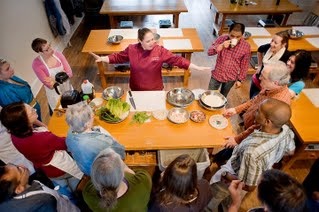
Summer is an ideal time to pick up some new skills, whether its at the grill, learning to preserve summer's bounty or picking up pointers on a new cuisine. Whether you're an experienced hand in the kitchen or someone who's more familiar with a take-out menu than a chef's knife, there's a plethora of excellent classes available this summer. Here are some of my faves and a sampling of what they're offering; most are small classes of no more than a dozen students at a time and are very reasonably priced.
  • Sophie Rahman of Masala NW: Learn the basics of Indian cooking, including how to prepare lentils (vegetarian and gluten-free), flatbreads and classic biryani, as well as dishes from Goa, Chowpatty street food and how to grill tandoori-style.
  • Melinda Casady and Susana Holloway of Portland's Culinary Workshop: These gals are making waves on the Portland scene for their fun-yet-informative approach. Both were professional instructors at culinary schools, and bring their extensive knowledge and love of teaching to their classes on a dizzying array of classes on grilling, smoking, preserving, butchery, vegetarian and vegan cooking, knife skills, sushi…you name it, they teach it!
  • Katherine Deumling of Cook With What You Have: Katherine teaches how to cook simple, nutritious family meals, how to stock your pantry to avoid endless trips to the store and how to make the most of seasonal produce. Upcoming classes, which she offers in her home kitchen, include how to use fresh herbs in your dishes and kitchen fundamentals.
* * *

Summer's a time when kids are off from school and parents are desperately looking for quality classes for their young'uns. If you've got a budding Scorsese or Coppola in your house, then the Hollywood Theatre has a camp for you. Project Youth Doc for teens still has a few scholarships available, and if I could still pass for 19 I'd be all over this: Kids will work with industry pros and world-class gear to make a film from start to finish.  Check it out!

Details: Project Youth Doc, a filmmaking class for teens. Two sessions: June 18-July 13 and July 2-27. Scholarships available. Classes at the Hollywood Theatre, 4122 NE Sandy Blvd.  503-493-112.

Thursday, May 31, 2012

Glorious Gloria's!


Lots of people know Gloria Vargas (below left) from her long-running gig at the Beaverton Farmers' Market, dishing out signature Salvadoran-style tamales with their sensuous banana leaf wrappers and lighter-than-air cornmeal filling wrapped around fall-apart tender chicken, pork or vegetables. But even area locals haven't picked up on the fact that just blocks away lies Gloria's home base, from whence flows her market goodness.

From the outside a cheery storefront with café tables and flowers on the sidewalk, step inside Gloria's Secret Café and you're instantly transported to sunnier climes with intriguing aromas of chiles and spices wafting through the air. Salvadoran cuisine, while not spicy hot, still has the signature complex mix of herbs and spices found in most Latin cuisines. Sauces often contain dozens of ingredients, and can take a couple of days to simmer to perfection.

My luck was on overdrive when I stopped in for lunch the other day, since Gloria was featuring Salvadoran chile rellenos (top photo) as the daily special. Made with green bell peppers rather than the more typical Anaheim or poblanos, she somehow roasted them so that instead of having an acidic bite they had a sweeter, fuller character.

Stuffed with long-braised, fork-tender pork and covered with an intriguing chunky tomato-based sauce, every forkful caused my eyes to roll back in my head. The brightly colored plate also held Gloria's outstandingly flavorful black beans, a beautiful serving of saffron-colored rice and a small vinaigrette-infused salad of seasonal greens. If this dish is on the menu when you go, order it immediately before someone else takes the last one…it goes quickly and when it's gone, it's gone.

My friend's pupusas (right), essentially a layer of meat sealed and pressed between two masa pancakes, were the best I've had of this quintessential Salvadoran dish, with their fresh corn flavor, rich filling and the lightness that comes from skilled, caring hands (any hint of oiliness or overcooking can make these heavy and tough). These were accompanied by the same terrific beans, rice and salad that I had, along with the traditional sides of quick-pickled cabbage and a tangy salsa.

If there's any better, fresher Latin food in town, especially at such reasonable prices, I have yet to find it. And with authentic Salvadoran cuisine in short supply in Portland, it's definitely worth a quick trip out to the burbs for lunch. I'm intrigued by Gloria's dinner offerings, which are only available by calling ahead and making a reservation…I'll be sure and report back when I do!

Details: Gloria's Secret Café, 12500 SW Broadway St., Beaverton. 503-268-2124.

Wednesday, May 30, 2012

New Creole: Jambalaya with Brown Rice


I've never had Creole food straight from the source. My exposure has been limited to what's available in the Northwest, so I wouldn't know an authentic jambalaya if I tripped over it on the sidewalk. But I trust contributor Jim Dixon of RealGoodFood to point me in the right direction, since he's a regular habitué of the Big Easy.

For years my go-to rice was Calrose, a medium grain japonica rice developed in the 1940s for California rice growers. But while I’d always been troubled by the nutritional void of white rice, I’d never found a brown rice I liked as much. Then Albert Katz introduced me to Koda Farms incredible heirloom rice, Kokuho Rose. Like the other products I sell, I eat it all the time.

But because of the longer cooking time, I’d never used the Kokuho Rose brown rice, also a medium grain japonica, in dishes where it cooks in some kind of flavorful sauce. And I couldn’t find a source of reliable information for using it that way. So I tried a simple experiment. I made jambalaya.

Brown Rice Jambalaya

The basics of this traditional Creole dish are simple: make a tomato sauce using the aromatic “trinity” of onion, celery and green pepper, use some hearty seasoning, cook at least one but more often several forms of animal protein in the sauce, add rice and either stock or water, and cook until done.

I’d learned from cooking Kokuho Rose that soaking makes the difference. The brown rice, like all whole grains, takes longer to rehydrate, and the results are much better if you let it happen before you start cooking. When I make it in the rice cooker, I soak for 20-30 minutes, drain, add the measured cooking water and then turn on the heat. My light bulb moment was, “I can soak the brown rice for jambalaya!”

First I cooked chopped onion, celery, and green bell pepper in extra virgin olive oil, added some crushed tomatoes and a bit of tomato paste, and a little Dulcet Creole seasoning. Into the sauce went slices of smoky andouille sausage and boneless chicken thigh; when those had cooked a bit, I added the rice.

I’d soaked it for a half hour, then poured off most of the water. For each cup of dry, unsoaked brown rice, I added 1 3/4 cup water. I covered the pot, turned the heat down to simmer, and let it cook. After 45 minutes the rice was getting tender, but the jambalaya seemed soupy, so I let it simmer uncovered for a bit longer.

I won’t claim this jambalaya is the same as you’d find on the Gulf Coast, but the rice was tender and it tasted great. Next experiment: paella.

(Wikipedia says jambalaya comes from transplanted Spanish cooks substituting new world tomatoes for old world saffron when making paella. Food writers and cooks striving for the elusive authenticity claim paella can only be made using Spanish bomba rice and a special pan. We’ll see.)

Photo by Polyparadigm.

A Brilliant (If Random) Solution For Dinner


I've already confessed to being a cookbook addict, with shelves of titles from well-known authors like Diana Kennedy, James Beard, Marcella Hazan and Betty Crocker. Then there are those that cover cuisines ranging from Moroccan to Chinese to Latin American, and more that focus on a technique like pickling or grilling.

And then, of course, there's the internet, with millions of recipes available at the stroke of a few keys. But, honestly, some of our best meals have come from random rummaging in the fridge and the pantry for something…anything…to make for (yet another) dinner.

For example, the other evening I'd spent far too long bouncing around on Facebook or Twitter, trying to keep up with the endless conversations and very important links to the latest cat-in-a-box videos. Then I heard Dave's truck drive up outside and thought, Holy crap! Dinner!

I ran to the fridge like some demented TV housewife, hoping that somewhere in it would be the solution to my family's evening repast. Now, it's not like anyone at our house gets bent out of shape having scrambled eggs or leftovers for dinner, but I do feel a certain obligation to put an at-least-decent meal on the table.

After a few minutes I'd found a bulb of fennel and some spring onions from the farmers' market, and with chicken broth made from our last grilled roaster and some rice from the pantry, I had my answer. One that I think Di, Jimmy, Marcella and Betty would approve of!

Roasted Fennel and Spring Onion Risotto

1 fennel bulb, chopped
1 large spring onion or leek, chopped
3 Tbsp. olive oil, divided
1 Tbsp. butter or margarine
1 Tbsp. garlic, minced
2 c. arborio rice
1 tsp. fennel seed
1 tsp. tarragon
1/2 c. dry white wine or dry vermouth
4 1/2 c. chicken stock
Zest of 1 lemon
Juice of 1 lemon
1 c. parmesan
Salt and pepper to taste
Fennel fronds, chopped fine, for garnish (optional)

Preheat oven to 400°.

Toss chopped fennel and onion in 1 Tbsp. olive oil and a sprinkling of salt. Place in small roasting pan and roast for 20 minutes or until vegetables are slightly brown on the edges and tender.

Over medium to medium-high heat, melt 2 Tbsp. oil and butter in medium saucepan. When it's bubbling, add garlic and heat briefly, then add rice to pan and stir till heated, about 1-2 minutes. Add fennel, tarragon and wine and stir until the liquid is absorbed. Add stock a ladle at a time, stirring after each addition until it is absorbed into the rice. After second ladle of stock, add the roasted vegetables. Continue ladling the rest of the stock, and when rice is still toothy, remove from heat. Add lemon zest, juice and parmesan and stir. Salt and pepper to taste, then garnish with fennel fronds, if desired, and serve.

Tuesday, May 22, 2012

The Zen of Dining in Oregon Wine Country


Self-described "bookstore Buddhists," David and Tina Bergen of Dundee's landmark Tina's closed the restaurant and took a month-long sabbatical to reflect and rejuvenate. They returned with both personal insights—David's become a vegetarian—and with a renewed sense of mission to serve all of their customers the freshest locally sourced food and wine available, especially those with special dietary needs.

Read my article in this week's Oregonian Spring Wine Guide titled Food for Thought: Tina's in Dundee.

Photo by Beth Nakamura for the Oregonian.

Monday, May 21, 2012

Master of Meat: Dario Cecchini


My profile of storied Italian butcher Dario Cecchini and his recent trip to Portland appears in this week's FoodDay section of the Oregonian.

Cecchini said of this shot, "Two pig."

There was so much to this story that I couldn't squeeze into the article, so I hope to post about it in the future. But for now, you can read what I think of as Part One: "Portland Butchers Learn from an Italian Master of the Craft."

Leftover Salmon? Make Cakes!


With salmon filets and steaks running up toward twenty bucks a pound at the fish counter, this time of year, when I'm craving it, I buy the whole fish, head on, for much less per pound. This way you get the (cleaned) fish, which you can throw on the grill with herbs and lemon stuffed into the cavity. You can also have your fishmonger filet it, or you can slice it into steaks yourself. But any way you choose to cook it, make sure to save the head, fins and tail to make a terrific fish broth for your next risotto or paella.

Cake for breakfast? Oh, yeah!

With out-of-town friends coming over for dinner, and wanting to share some of the crazy goodness of the Northwest, we grilled a whole salmon with a side of wild mushroom risotto and a salad of seasonal greens. Throw in some local red to go with the fish, a fruit crisp made with the last of the frozen berries to top off the meal, and they were putty in our hands. Even with everyone eating their fill, there was a good amount of fish left over…which fit into my clever plan to make salmon cakes for dinner a couple of nights later.

These cakes are great as an appetizer or with a salad for a simple dinner, and they also make a great breakfast with eggs, sautéed greens and a slice of homemade bread. It's not necessary to have all the ingredients—the fish, mayo and eggs are the critical ingredients—so the seasonings can go in any direction you desire. These are meant to be mostly meat, with just enough of the other ingredients to (barely) hold it together.

And if you ever happen to have any leftover smoked salmon (does that really happen?), that would be the gilding on this particular lily.

Salmon Cakes

2 c. cooked salmon, flaked
1-2 Tbsp. mayonnaise
1/4 c. minced red or green onion
2 cloves garlic, minced
1 serrano pepper, seeded and finely minced
2 Tbsp. cilantro, minced
1/4 c. bread crumbs
Zest of 1 lime

Whisk together and add:
Juice of 1 lime
1 egg

2 Tbsp. olive oil or vegetable oil for frying

Combine salmon with other ingredients (except oil) and mix thoroughly. Form into loose cakes about 2" across. Can be refrigerated at this point, which will firm up the cakes a bit, but it's not necessary. Heat 2 Tbsp. olive oil in medium frying pan until it shimmers. Put cakes in pan, but don't crowd them—do them in batches if necessary. Cook until browned, then carefully flip them over and brown on the other side. Makes about eight cakes.

Sunday, May 20, 2012

Garden 2012: Blueberries, Peas and Leafy Greens


The blueberries were the first to go in, a selection that included Duke, Blueray, Earliblue and a mature Bluecrop bush from a friend who was removing a few of hers. I'm hoping to baby the young bushes through the summer, though it'll be a year or two before they start to bear fruit. But we should be in for a haul assuming they all survive.

After getting the blueberries settled into their new homes, I poked sugar and snap peas along the chain link fence behind them. It took about a week, but with regular watering and a string of warm, sunny days, they began to pop out of the soil and wrap their little tendrils around the fence wire.

This year I'm dedicating the raised beds to salad greens and carrots, planting rows of individual varieties rather than combining the seeds from the packets and sowing them in large patches. As usual, I got a little overzealous in my selection, ending up with mixed mesclun, arugula, two types of oak leaf lettuce, red velvet lettuce, romaine and a fascinating sounding Australian Yellowleaf. Who could resist?

My plan is to pick the baby and mid-size greens to thin them, then let some mature into heads. About half the second bed will have eight rows of carrots, an orange Yaya hybrid that's purported to be sweet and crunchy, and a sweet purple variety called Purple Haze that grew well last year, tasted great and looked really impressive with other roasted roots.

Coming soon will be tomatoes and kale, though they may have to wait till after the beginning of June to go in. At least the soil will be warm enough by then…I hope!

Thursday, May 17, 2012

The Untold History of Milk Production


If you hear about raw milk, it's almost always portrayed as a fringe product consumed by wacko hippies who are just asking to get sick.

In this video from a new series about local farmers and cooks called Food Farmer Earth, farmer Mike Guebert of Terra Farma Naturals in Corbett reviews the history of milk production in this country. From its roots in small farm-based dairies to its current state as a highly processed commodity with a hugely influential political lobby promoting it, I found his take on the subject riveting.

In Oregon, raw milk can only be bought on the farm that produces it. And if you're considering consume raw milk, the best advice I've heard came from Clare Carver of Big Table Farm, a customer of Champoeg Creamery (see link below). She said, "If you're going to buy raw milk, go to the farm and ask to see their operation." Asking questions is the key: find out what the cows eat, how they're treated and how clean the farmer's process is.

Which, come to think of it, isn't a bad idea when it comes to the milk we buy in the store.

You can also read about another small farmer, Charlotte Smith of Champoeg Creamery, who produces raw milk in St. Paul.

Tuesday, May 15, 2012

The View From My Kitchen Window


Ka-POW!

Quite the explosion, isn't it? My neighbor JoAnn's 20-foot-tall rhodies are positively incandescent this time of year, and I get to enjoy them every time I look out my kitchen window. Lucky me!

Monday, May 14, 2012

In Season: With Artichokes, Babies Are Best


Sometimes I think contributor Jim Dixon of RealGoodFood has his booth at the PSU Farmers' Market for the sole reason that he gets first pick of all the newest produce as it comes in season. So if you see him there, be sure to quiz him about his recommendations while you peruse the Italian olive oils, vinegars, fennel pollen and particularly the addictive origano Pantesco (Italian oregano) he has on offer.

The first artichokes of the year appeared at the farmers' market on Saturday, so I bought a bag of the little thistles from my friends’ at Groundworks Organics. When the globes are really young, the fuzzy choke is hardly there, so trimming them down to just the bottoms isn’t too onerous. It still takes some time, but I think the results are worth it and there should be still be plenty available for the next several weeks.

Carciofe Pantesco
 
Cut the top half of the baby artichokes away, pull off most of the leaves, split the artichokes from top to bottom, and dig out any fuzzy choke. Most recipes call for putting cut artichokes into acidulated water (lemon juice or vinegar added) to prevent browning, but they turn brown when you cook them anyway, so I skip this part. Just put the trimmed artichokes halves in a heavy pan (one you can cover) with a good bit of extra virgin olive oil.

Into the same skillet add a couple (2-4, depending) of the best anchovies you can buy (these at Gustiamo are the best I’ve found and worth every penny), cleaned if salt-packed, diced small. Also add a few cloves of garlic, diced, a couple of tablespoons of good capers (you can buy the Pantellerian capers from Gustiamo, too, until my load arrives), and a good pinch or two of origano Pantesco. Cook everything gently in the oil for about 10 minutes, then add about a quarter cup of water, cover and simmer for about 20 minutes or until the artichokes are tender. Good hot or at room temp.

Wednesday, May 09, 2012

My House Smells Delicious!


Every year my friend Maggie drops off a bouquet of lilacs when the prodigious bushes at her place are in bloom. Today was the day for this year's blooms to arrive!

Tuesday, May 08, 2012

In Season: Asparagus Risotto


Whether its miner's lettuce, nettles or fiddleheads, I just can't get enough of the first green things that pop out of the ground in spring. Call it months of chard or kale overload, but the appearance of the first rapini or asparagus at the farmers' market sings a siren song that has my feet dancing over and my hands loading my basket with them.

The sturdier greens are perfect for grilling or blanching for dinner, and they're perfect for tossing into a stir-fry with rice or pasta. Plus I've finally started pickling some of them to enjoy later in the year with grilled and smoked meats or throwing into salads for a vinegar-y kick.

But right now I want them fresh, so other evening I made an asparagus risotto that featured the crunch of the bright green tips combined with the puréed stalks, which colored the creamy rice a lovely chartreuse. With a last-minute shower of crumbled hard boiled eggs and ribbons of duck prosciutto, I was sure I heard an echo of that irresistible song of spring.

Asparagus Risotto

1 lb. asparagus, peeled, trimmed and cut into one-inch-long pieces, tips reserved

4 c. chicken or vegetable stock

1 c. white wine
2 Tbsp. extra virgin olive oil

3 Tbsp. butter or margarine
1/2 onion, diced

2 tsp. garlic, finely chopped
2 c. Arborio rice

1 c. dry white wine
Salt to taste

1/2 c. grated Parmesan cheese
2 hard-boiled eggs, crumbled
4 thin slices pork or duck prosciutto, cut in ribbons

Bring a pot of water to a boil. Add the asparagus stalks and simmer until just tender but still a bit crunchy. Drain and immediately rinse under cold water. Put cooked asparagus in a blender or food processor and add just enough water to allow machine to puree until smooth; set aside.

Put stock in a medium saucepan over low heat. Then, in a deep nonstick skillet, heat oil and 1 tablespoon butter over medium flame. When it is hot, add onion and garlic, stirring occasionally until it softens, 3 to 5 minutes.

Add rice and cook, stirring occasionally, until it is glossy, about 2 to 3 minutes. Add white wine, stir, and let liquid bubble away. Add a large pinch of salt. Add warmed stock, 1/2 cup or so at a time, stirring occasionally. Each time stock has just about evaporated, add more.

After about 15 minutes, add asparagus tips, continuing to add stock when necessary. In 5 minutes, begin tasting rice. You want it to be tender but with a bit of crunch; it could take as long as 30 minutes total to reach this stage. When it does, stir in asparagus puree. Remove skillet from heat, add remaining butter and stir briskly. Add Parmesan and stir briskly, then taste and adjust seasoning. Risotto should be slightly soupy. Sprinkle with crumbled egg and prosciutto ribbons. Serve immediately.

This recipe also works quite nicely with the microwave method, but you'll have to ignore the screams of risotto purists. (The noise will die down once they taste it.)

Potatoes with a Northwest Flavor


I have to begin this post with a disclaimer: My husband, though he's lived here for several decades and now considers himself an Oregonian, descends from a long line of New England potato farmers, famous for growing varieties with names like Kennebec, Katahdin and Green Mountain. Growing up, the children of his small town in Maine were let out of school for a period in the fall to help with the potato harvest. He is quick to tell of the time that his right arm was pulled into the potato harvester when his sleeve caught in it, and of the child whose arm had to be amputated in the field in a similar incident.

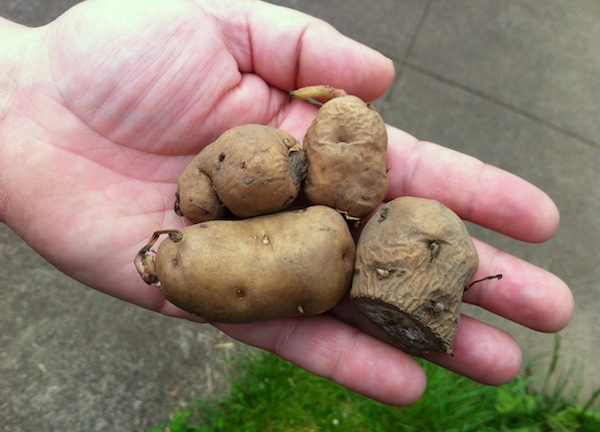
This history also means that he considers any potatoes grown elsewhere as inferior, pooh-poohing them as being "grown in sand" rather than in the rich soil of his native land. Though I think he would cede some props to the Ozette potato, a variety that was brought to the Northwest by Spanish explorers more than two centuries ago.

Originally picked up by the Spaniards in South America, the potatoes came on ships sent to establish beachheads on the west coast of America. One fort was built on the northwestern tip of what is now Washington state, where the Pacific meets mouth of the Straits of Juan de Fuca. Apparently the settlement didn't work out for the Spanish, and they left after only one year.

The native people of the area, members of the Makah tribe, found the potatoes in the overgrown gardens of the settlement and propagated them, naming this new food after one of the five villages in the area of Neah Bay. Because of the relative isolation of the region, these small, flavorful fingerlings maintained their unique heritage and weren't known to the outside world until the 1980s.

The Ozette potato was cataloged and seed was grown outside the region, and in 2005 it was added to the Slow Food Ark of Taste. In 2006 a partnership called a Presidium was formed to promote the potato and encourage farmers and individuals to grow it. Recently the Herbfarm in Washington offered seed to Northwest gardeners, and my neighbor Susana, co-owner of Portland's Culinary Workshop, volunteered to grow them in in the workshop's large vegetable garden.

If you're interested in growing this native potato yourself, check out the links above for information on where to get your own seed. I'll keep you posted as Susana's grow!