Showing posts with label katherine deumling. Show all posts

Monday, November 04, 2019

Katherine Deumling: Love Your Leftovers


"Food is beautiful. Food is nourishing and delicious and, yes, complicated. However, food should be a joy, not elicit fear."

Teaching people to cook delicious food at home has been the life-long mission of Katherine Deumling, and is the driving force behind her business, Cook With What You Have. She has just released the third in her series of e-books, "Love Your Leftovers! Favorite Meals that Save Time, Money & Effort", which expands on her mantra of developing creativity and confidence in the kitchen so that you and your family can enjoy delicious, healthy food on a daily basis.

Author and educator Katherine Deumling.

Katherine spent her early childhood in West Germany, the daughter of a creative, efficient mother with a sprawling vegetable garden whose cooking centered around fresh produce and pantry staples, which became the inspiration for Katherine's own cook-with-you-have ethic. A post-college fellowship gave her the opportunity to travel to Italy and Mexico to study how and why people cook the way they do, then a decade of work with Slow Food—including a stint as Chair of Slow Food USA—expanded her awareness of food systems and regenerative agriculture, and gave her an enduring passion for the combination of pleasure and politics.

Her love of leftovers was born out of both necessity—her husband likes to take his lunch to work and she's the busy mother of a teenage son—as well as frugality. She figures that by using leftovers her family saves more than $1,500 per year by not buying lunches, plus minimizing food waste by using or repurposing perfectly good (and delicious) food. Then there's the time and effort saved by having lunches packed and ready to go the night before.

Cauliflower macaroni and cheese.

"Love Your Leftovers" continues Deumling's quest to give people what she terms "agency" in the kitchen, that is, to feel creative and effective when it comes to making food. The 17 dishes in the book, 13 of which are plant-based, are designed to boost cooks' personal satisfaction and to short-circuit what she calls "the tyranny of the recipe-based structure." If a recipe calls for a half-teaspoon of thyme, she said, some people give up because they don't want to make a trip to the store instead of simply leaving it out or trying another herb.

"Even smart people shut down in the kitchen," she said, because they've never been given permission to be creative and develop their own tastes rather than slavishly following the dictates of a recipe. Or as Deumling said, her aim is to encourage people "to beat the system" by making deliciousness part of their daily lives.

Cauliflower Mac'n'Cheese

Vegetables can make for great comfort food! This makes a lot and is even better the next day, heated up in a skillet with just a splash of olive oil on high heat. It develops a crust and is sublime!

2 Tbsp. olive oil
1 medium cauliflower, stems & florets chopped (about 8 cups)
1 lb. pasta (penne, rigatoni, rotini, corkscrew) 1 1/2-2 c. grated cheese (sharp cheddar, gruyere)
1 Tbsp. Dijon-style mustard
2 Tbsp. olive oil
1⁄2 tsp. chili flakes
1⁄4 tsp. grated nutmeg
Black pepper
1 3/4-2 c. hot pasta/cauliflower cooking water
1⁄2 c. bread crumbs

Preheat oven to 400°.

Bring a large pot of water to boil and add salt. Cook the cauliflower in the boiling water until very tender, about 15 minutes. Scoop the cauliflower out of the water with a slotted spoon and transfer to a food processor or blender. Add the pasta to the boiling water and cook until just al dente. Scoop out 2 cups of hot, starchy cooking water and then drain the pasta and put it in a 9" by 13" baking dish or other similar baking dish.

Carefully process the cauliflower with the 1 3/4 cups of cooking water, olive oil, cheddar, mustard, chili flakes, nutmeg and pepper. (You may have to work in batches.) If the sauce seems too thick, add the remaining liquid or a bit more water—it will thicken when baking. Taste and adjust seasoning. You want it to be quite strongly flavored. Pour the sauce over the pasta, toss, and spread mixture evenly in dish. (You can make the dish to this point, cover, and refrigerate for up to a day.) Sprinkle the top with breadcrumbs or additional grated cheese. Bake until the pasta is bubbling and the crumbs are browned, about 20 minutes if all your components were hot, 30 minutes if not. Pass under broiler for more browning if you’d like.

Serves 6+

Photos by Shawn Linehan from "Love Your Leftovers."

Monday, March 04, 2019

What the Heck is a CSA? Find Out at the Fair!


The CSA Share Fair on Sunday, March 10, is a chance to meet more than 40 local farmers, ranchers and fishers who offer Community Supported Agriculture (CSA) shares to the public. They'll be showcasing various options, including vegetables, fruits, pastured meats, wild fish, eggs, flowers, honey and more. To keep it simple for you, there's a matchmaking service where you can check off what you're interested in and a helpful volunteer will point you toward the best farmer for you! Time and location of this year's fair are at the bottom of this post.

Find the right CSA for your family.

If you're not sure what a CSA is or if there's one that might be right for you, here's a Q & A with CSA maven Katherine Deumling of Cook With What You Have that I posted earlier.

Why join a CSA?

Joining a classic CSA gives you a window onto a farm and what it takes to grow the delicious variety of things that you'll receive in your share each week. The farmer chooses what's best that week that  can relieve you of most of your decision-making, though more CSAs are giving members to order from a list of what's available. I actually love not having to make any decisions about what produce I'm getting because then I can concentrate on being creative with what I receive.

CSA farmers in our region tend to grow a staggering variety of produce and typify the saying, "What grows together, goes together!" Belonging to a CSA has expanded my repertoire and introduced me to vegetables I wouldn't have picked up at the farmers' market, though some people are not so keen on the "no-choice" bit. My online Seasonal Recipe Collection comes in handy, since the recipes are sorted by vegetable and there is a thorough introduction for each vegetable.

Watch local chef demos at the Share Fair.

I also subscribe to a CSA because it helps me budget, and when you calculate out the cost of CSA by the week it is quite reasonable. I pay up front or in a few installments, and then supplement from the farmers' market or the store with fruits or occasional vegetables I'm not getting in my CSA—like asparagus, artichokes and a few other things that aren't typically found in a CSA. If I know I'll be getting my gorgeous box of produce each week, I won't be tempted to buy other things, to make the most what I've already paid for.

What are the different kinds of CSAs?

Some CSAs focus exclusively on produce, some also include fruit like blueberries, strawberries, rhubarb, apples, pears, quince and so forth. Some give you the option to add an extra Salad Share for those who love salad greens; others might give the option to add eggs, honey, flowers or meat. Some CSA farms work together with other area farms to offer such a wide array. And then there are exclusive meat and fish CSAs as well as CSAs that focus on a single crop like apples or flowers.

There are so many local farms offering CSAs. What should I consider before joining a CSA?

Generally, if you want super-delicious produce and can't always make it to a farmers' market, a CSA is for you. If you like to cook or want to cook more and are typically home most nights of the week, a CSA is definitely for you. If, on the other hand, you travel a lot or are out a lot at night, you'll struggle to keep up with the produce.

Many farms, many options to choose from.

Think about the size of your household and your family members' eating habits to decide if a CSA is a good idea or not—do you all like vegetables or are open to trying them? How much do you think you'll eat? You might start with a half share (most farms offer two different-size shares) and see how that works, setting yourself up for success rather than the guilt of wasting some. Also consider if the pick-up site is convenient (some CSAs deliver to your door as well). But make sure you think about the logistics of picking up your share—make a plan with a friend or neighbor, either to share the CSA or both do it so you can alternate doing the pick up. This is great community-building in and of itself, and you can also share ideas of what to do with less familiar produce.

Does a CSA subscription make sense for a single person?

It very much depends on the person—if you are a vegetable lover and like to cook and entertain, by all means. If I were single I would buy a CSA but I do cook and eat more vegetables than almost anyone I know! And again, consider a half-share or splitting it with a neighbor or friend.

I'm afraid I'd be paying for produce I can't use or my family won't eat, and I know nothing about rutabagas or kohlrabi. What should I do?

This is an important factor to consider carefully. As I noted earlier, I have vastly expanded my appreciation of certain vegetables (rutabagas being at the top of that list) by becoming a CSA member and I've enjoyed that.

Some farms offer a single product, like flowers or apples.

There are a handful good cooking techniques and methods—think grated vegetable pancakes, like latkes—that are a critical to successful CSA cooking. In fact I added a grated rutabaga to fried rice the other night and it was delicious! And if you occasionally share an extra kohlrabi with a neighbor (I have definitely done that, too) the benefits of the flavor, nutrition and connection to your place and those growing our food may well trump the "kohlrabi hardship"!

I don't drive. How would I pick up my share?

I pick up my share by bike and it works well. Most CSA shares will fit into two typical panniers. Some CSAs have pick-ups at companies or farmers' markets so you might inquire if your place of work is linked up with a CSA farm or ask them if they might consider it. Colombia Sportswear, Intel, various Providence sites, Good Samaritan Hospital, Ecotrust and probably many others have CSA drops.

Details: CSA Share Fair, Sun., Mar. 10, 10 am-3 pm; free. Event at The Redd, 831 SE Salmon St. If you can't make it to the Share Fair, there's a listing of metro-area CSAs at the Portland Area CSA Coalition, and a listing of Northwest (and national) CSAs at Local Harvest.

Photos by Shawn Linehan.

Thursday, March 10, 2016

CSA Share Fair: Find Your Farmer


The CSA Share Fair on Saturday, March 19, is a chance to meet more than 40 local farmers, ranchers and fishers who offer Community Supported Agriculture (CSA) shares to the public. They'll be showcasing various options, including vegetables, fruits, pastured meats, wild fish, eggs, flowers, honey and more. To keep it simple for you, there's a matchmaking service where you can check off what you're interested in and a helpful volunteer will point you toward the best farmer for you! Time and location of this year's fair are at the bottom of this post.

If you're not sure what a CSA is or if a share might be right for you, here's a Q & A with CSA maven Katherine Deumling of Cook With What You Have that I posted last year.

Why join a CSA?

Joining a classic CSA gives you a window onto a farm and what it takes to grow the delicious variety of things that you'll receive in your share each week. The farmer chooses what's best that week and relieves you of most of your decision-making, though some CSAs give members a bit of choice. I actually love not having to make any decisions about what produce I'm getting because then I can concentrate on being creative with what I receive.

CSA farmers in our region tend to grow a staggering variety of produce and typify the saying, "What grows together, goes together!" Belonging to a CSA has expanded my repertoire and introduced me to vegetables I would unlikely have picked up at the farmers' market, though some people are not so keen on the "no-choice" bit. My online Seasonal Recipe Collection comes in handy, since the recipes are sorted by vegetable and there is a thorough introduction for each vegetable.

I also subscribe to a CSA because it helps me budget, and when you calculate out the cost of CSA by the week it is quite reasonable. I pay up front or in a few installments, and then supplement from the farmers' market or the store with fruits or occasional vegetables I'm not getting in my CSA—like asparagus, artichokes and a few other things that aren't typically found in a CSA. If I know I'll be getting my gorgeous box of produce each week, I won't be tempted to buy other things, to make the most what I've already paid for.

What are the different kinds of CSAs?

Some CSAs focus exclusively on produce, some also include fruit like blueberries, strawberries, rhubarb, apples, pears, quince and so forth. Some give you the option to add an extra Salad Share for those who love salad greens; others might give the option to add eggs, honey, flowers or meat. Some CSA farms work together with other area farms to offer such a wide array. And then there are exclusive meat and fish CSAs as well.

There are so many local farms offering CSAs. What should I consider before joining a CSA?

Generally, if you want super-delicious produce and can't always make it to a farmers' market, a CSA is for you. If you like to cook or want to cook more and are typically home most nights of the week, a CSA is definitely for you. If, on the other hand, you travel a lot or are out a lot at night, you'll struggle to keep up with the produce.

Think about the size of your household and your family members' eating habits to decide if a CSA is a good idea or not—do you all like vegetables or are open to trying them? How much do you think you'll eat? You might start with a half share (most farms offer two different-size shares) and see how that works, setting yourself up for success rather than the guilt of wasting some. Also consider if the pick-up site is convenient (some CSAs deliver to your door as well). But make sure you think about the logistics of picking up your share—make a plan with a friend or neighbor, either to share the CSA or both do it so you can alternate doing the pick up. This is great community-building in and of itself, and you can also share ideas of what to do with less familiar produce.

Does a CSA subscription make sense for a single person?

It very much depends on the person—if you are a vegetable lover and like to cook and entertain, by all means. If I were single I would buy a CSA but I do cook and eat more vegetables than almost anyone I know! And again, consider a half-share or splitting it with a neighbor or friend.

I'm afraid I'd be paying for produce I can't use or my family won't eat, and I know nothing about rutabagas or kohlrabi. What should I do?

This is an important factor to consider carefully. As I noted earlier, I have vastly expanded my appreciation of certain vegetables (rutabagas being at the top of that list) by becoming a CSA member and I've enjoyed that. There are a handful good cooking techniques and methods—think grated vegetable pancakes, like latkes—that are a critical to successful CSA cooking. In fact I added a grated rutabaga to fried rice the other night and it was delicious! And if you occasionally share an extra kohlrabi with a neighbor (I have definitely done that, too) the benefits of the flavor, nutrition and connection to your place and those growing our food may well trump the "kohlrabi hardship"!

I don't drive. How would I pick up my share?

I pick up my share by bike and it works well. Most CSA shares will fit into two typical panniers. Some CSAs have pick-ups at companies or farmers' markets so you might inquire if your place of work is linked up with a CSA farm or ask them if they might consider it. Colombia Sportswear, Intel, various Providence sites, Good Samaritan Hospital, Ecotrust and probably many others have CSA drops.

Details: CSA Share Fair, Sat., Mar. 19, 10 am-2 pm; free. Event at The Redd, 831 SE Salmon St. If you can't make it to the Share Fair, there's a listing of metro-area CSAs at the Portland Area CSA Coalition, and a listing of Northwest (and national) CSAs at Local Harvest.

Wednesday, January 20, 2016

Need Winter Greens? Check Your Sidewalk!


It's the time of year when I'm longing for the appearance of spring greens like fiddleheads, nettles, miner's lettuce and the various sprouts of cruciferous vegetables known as raab or rabe. After all, on my dog walks through the neighborhood I'm seeing the first shoots of daffodils poking up through the dead leaves from last fall, and my daphne is already sporting pink heads of the blossoms that will be perfuming my front walk in short order.

Now my friend Katherine Deumling of Cook With What You Have has just reminded me that a great source of fresh greens is to be found by simply stepping out my front door. Better yet, they're free! Hairy bittercress, aka Cardamine hirsuta, is a member of the mustard family with the same peppery bite as its leafier cousins. The bane of gardeners and farmers alike, it can take over a raised bed in no time when its seed heads explode, giving it the moniker, or rather the much-cursed name, of pop weed.

A quick sweep around the yard revealed tons of the little buggers coming up in all the garden beds, with some more mature clumps like the ones above hanging out on some freshly turned flower beds.  To use in cooking, look for them in places you're sure haven't been sprayed with chemicals, and that are out of the reach of dogs who may have a yen to mark the spot for some reason. Bring them in, rinse them off and chop at will. Katherine recommends using them in deviled eggs, and says they're also terrific added to a salad, a sandwich or a quesadilla for a mustardy zing.

Friday, December 04, 2015

Great Gifting: The Gift of Class(es)


Making lists, checking them twice…and don't get me started on the whole naughty or nice thing. It’s all too much to keep track of!

So I say opt out, walk away, leave it at the door. No one I know needs more stuff, and the idea of the holidays—and, come to think of it, life in general—is to share joy, spread peace and love and generally try to make the planet a better place, right?

Jessica Hansen's couples date night classes at Middleground Farms.

I've sworn off the kinds of gifts that require displaying or dusting, preferring instead to give items that are 1) consumable or 2) useful in some way. That means no tchotchkes or gewgaws allowed. And though I could never convince my mother of this, gift certificates, especially for learning experiences, are the gift that keeps on giving.

Ben Meyers' sausage-making is perfect for a budding charcutiere.

One that's been particularly well-received, and that I've found personally rewarding even if it's given to someone else, is a gift certificate for a cooking class. Learn basic kitchen skills like how to use a knife more effectively. Create an ethnic feast of the classic flavors of Asia, Europe or India. Has someone in your family decided to become a vegan? Or developed an intolerance or (heaven forfend) an allergy? You can find classes for all of these, from your youngest giftee to great-grandma. Contact any of those at the links listed below for gift certificates.

  • Portland's Culinary Workshop (top photo) offers classes for all ages (plus camps for kids) and an astonishing and wide-ranging roster of learning experiences too long to list here, but all are excellent and taught by professional culinary instructors. Seriously, you can't go wrong.
  • Old Salt Marketplace offers butchery, sausage-making and seasonal cooking classes to adults of all skill levels. I've given these classes as gifts and have heard nothing but raves about owner Ben Meyer's ability to make these skills accessible (and fun) for the home cook.
  • The Kitchen at Middleground Farms in Wilsonville has a wide range of cooking classes for individuals and couples (think date night), all taught in a state-of-the-art kitchen by self-described "accidental farmer" and terrific teacher and chef Jessica Hansen. I've experienced her in action and she's awesome.
  • Cook With What You Have offers individualized instruction with chef and local foods maven Katherine Deumling who makes it a joy to cook with fresh and seasonal ingredients. She also has an online recipe collection available for simple, quick and family-oriented meals that would make an awesome (and ongoing) gift.
  • Turnip the Heat Cooking School has kids classes that can't be beat and that are perfect for the aspiring chef in the household. Owner Joanna Sooper also teaches classes for teens and adults, and makes it tasty, too, since most classes include a shared meal. I would have loved taking one of these when I was young!

Others offering cooking classes include Proletariat ButcheryElder Hall, the Portland Meat Collective and, occasionally, Zenger Farm. If you've taken great cooking classes at other places, please feel free to share them in the comments at the link below!

Wednesday, March 04, 2015

Is a CSA Right For You?


This year my family is considering subscribing to a share in a CSA, the acronym for Community Supported Agriculture, which means buying a share in a season's worth of produce from a farm. Though it can get a little confusing, especially here in the Portland area, where there are "CSAs" for everything from produce to meat to fish to cheese to olive oil.

The sheer number of CSAs available is daunting, from the traditional type where you pick up a box (your "share") from a designated drop-off spot, to delivered-to-your-door boxes to ones where you can designate exactly what produce you want. To help wade through the choices, I asked my friend Katherine Deumling of Cook with What You Have, who has worked with area farms on their CSA programs and developed an online Seasonal Recipe Collection for using seasonal produce, to help us out. (Scroll to the bottom of this post for information on the first-ever CSA Share Fair coming up on Mar. 21.)

Why join a CSA?

Joining a classic CSA gives you a window onto a farm and what it takes to grow the delicious variety of things that you'll receive in your share each week. The farmer chooses what's best that week and relieves you of most of your decision-making, though some CSAs give members a bit of choice. I actually love not having to make any decisions about what produce I'm getting because then I can concentrate on being creative with what I receive.

CSA farmers in our region tend to grow a staggering variety of produce and typify the saying, "What grows together, goes together!" Belonging to a CSA has expanded my repertoire and introduced me to vegetables I would unlikely have picked up at the farmers' market, though some people are not so keen on the "no-choice" bit. My online Seasonal Recipe Collection comes in handy, since the recipes are sorted by vegetable and there is a thorough introduction for each vegetable.

I also subscribe to a CSA because it helps me budget, and when you calculate out the cost of CSA by the week it is quite reasonable. I pay up front or in a few installments, and then supplement from the farmers' market or the store with fruits or occasional vegetables I'm not getting in my CSA—like asparagus, artichokes and a few other things that aren't typically found in a CSA. If I know I'll be getting my gorgeous box of produce each week, I won't be tempted to buy other things, to make the most what I've already paid for.

What are the different kinds of CSAs?

Some CSAs focus exclusively on produce, some also include fruit like blueberries, strawberries, rhubarb, apples, pears, quince and so forth. Some give you the option to add an extra Salad Share for those who love salad greens; others might give the option to add eggs, honey, flowers or meat. Some CSA farms work together with other area farms to offer such a wide array. And then there are exclusive meat and fish CSAs as well.

There are so many local farms offering CSAs. What should I consider before joining a CSA?

Generally, if you want super-delicious produce and can't always make it to a farmers' market, a CSA is for you. If you like to cook or want to cook more and are typically home most nights of the week, a CSA is definitely for you. If, on the other hand, you travel a lot or are out a lot at night, you'll struggle to keep up with the produce.

Think about the size of your household and your family members' eating habits to decide if a CSA is a good idea or not—do you all like vegetables or are open to trying them? How much do you think you'll eat? You might start with a half share (most farms offer two different-size shares) and see how that works, setting yourself up for success rather than the guilt of wasting some. Also consider if the pick-up site is convenient (some CSAs deliver to your door as well). But make sure you think about the logistics of picking up your share—make a plan with a friend or neighbor, either to share the CSA or both do it so you can alternate doing the pick up. This is great community-building in and of itself, and you can also share ideas of what to do with less familiar produce.

Does a CSA subscription make sense for a single person?

It very much depends on the person—if you are a vegetable lover and like to cook and entertain, by all means. If I were single I would buy a CSA but I do cook and eat more vegetables than almost anyone I know! And again, consider a half-share or splitting it with a neighbor or friend.

I'm afraid I'd be paying for produce I can't use or my family won't eat, and I know nothing about rutabagas or kohlrabi. What should I do?

This is an important factor to consider carefully. As I noted earlier, I have vastly expanded my appreciation of certain vegetables (rutabagas being at the top of that list) by becoming a CSA member and I've enjoyed that. There are a handful good cooking techniques and methods—think grated vegetable pancakes, like latkes—that are a critical to successful CSA cooking. In fact I added a grated rutabaga to fried rice the other night and it was delicious! And if you occasionally share an extra kohlrabi with a neighbor (I have definitely done that, too) the benefits of the flavor, nutrition and connection to your place and those growing our food may well trump the "kohlrabi hardship"!

I don't drive. How would I pick up my share?

I pick up my share by bike and it works well. Most CSA shares will fit into two typical panniers. Some CSAs have pick-ups at companies or farmers' markets so you might inquire if your place of work is linked up with a CSA farm or ask them if they might consider it. Colombia Sportswear, Intel, various Providence sites, Good Samaritan Hospital, Ecotrust and probably many others have CSA drops.

If you want to find out more about local CSAs and get help finding the perfect CSA for your needs, the CSA Share Fair on March 21st is for you! Thirty local CSA farmers will be there and it features a farmer matchmaking service so you can find the right CSA for you. In addition there's a cookbook swap, chef demos and activities for kids, and it's all free from 10 am-2 pm at the Redd building, 831 SE Salmon St.

If you can't make it to the Share Fair, there's a listing of metro-area CSAs at the Portland Area CSA Coalition, and a listing of Northwest (and national) CSAs at Local Harvest.

Wednesday, December 10, 2014

Great Gifting: Give the Gift of Local


I always seem to draw a blank this time of year. It happens I'm running out of time to ship a package off to the East Coast or find a little something to take as a gift to the host of a gathering. Plus there's my "no tchotchkes, gewgaws or bibelots" rule, i.e. never giving anything that needs to be dusted. (Books—and I mean those physical object with the paper pages—don't come under that rubric.) So I decided to make a list of ideas for my own reference, and I welcome you to borrow any that fit your needs. (Or even add your own in the comments at the end of the post!)

The Store at Cooking Up a Story. My friends Rebecca and Fred Gerendasy have produced videos for many years about local food producers, farmers and the people who make Oregon's agricultural scene so vibrant, and they've just opened a store featuring some of the handmade products they've come across. Check out Nancy Arcement's fabric goats (top photo), perfect for cuddling, Debbie Dean's fanciful country ceramics or the best plum preserves you'll ever have in your life from Anthony and Carol Boutard at Ayers Creek Farm (left).

The Meat Box at Old Salt Marketplace. Ben Meyer buys his grass-fed beef, pork and poultry from small family ranches and farms and is making some of the most delicious housemade charcuterie in town. The meat lover in your life—or the host of the holiday potluck you've been invited to—will be thrilled with either the Salami Pack, a grab bag of sausages, thuringer and braunschweiger with mustard, pickles and cheese, or the Snack Pack, a muncher's dream of Slim Jims, landjaegers, knoblauchwurst, pickles and two kinds of cheddar cheese. Yum!

Seasonal Recipe Collection from Cook With What You Have. Do you have someone on your list who's wanting to start cooking meals that are healthier and more seasonal but doesn't have a clue what to do with a turnip or how to cook meltingly tender beans? A year's subscription to Katherine 's easy-to-make, easy-to-shop-for recipes will guide cooks on a budget through how to make the most of what's in season using pantry staples to eat deliciously.

Olive oil, salt, spices and other goodness from Real Good Food. Jim Dixon is expanding his offerings of the small-batch, artisanal olive oils that he imports directly from small producers in Europe, and his pop-up "warehouse" will be open frequently in the days leading up to Christmas. Think of a gift box of olive oil, sea salt and a couple of packages of fennel pollen and oregano from a tiny island in Italy, or mix and match from his other amazing products.

Gift Certificates from Portland's Culinary Workshop. Give the gift of knowledge to the person on your list who's wanting to expand their culinary horizons. Even newbies can benefit from learning how to hold a knife without slicing off digits, and who wouldn't love to crack the mysteries of pho, Chinese dumplings, the perfect artisan loaf or learn about cuts of meat by watching a master butcher work through a carcass? From personal experience I can tell you that giving this gift will return nothing but raves…and maybe even an invitation to dinner to demonstrate the skills they've learned!

Saturday, June 28, 2014

Farm Bulletin: The Season Begins!


Once again I will ponder the utter idiocy of growing soft, early season fruit in the Willamette Valley as I wind my way up Bald Peak on the way to our first Hillsdale Farmers Market of the summer. Fortunately, we have a competent and kind staff, which removes some of the anxiety that the last few days of rain generated. Still, it is a foolish business.

The always-edifying Ramble.

We have rescheduled our annual Farm Ramble for the 12th of October. If you plan on attending, please note the change in your calendars.

Despite some bumps along the way, we are very happy with outlook for the farm this year. We have about 30% more ground in cultivation, which is a huge jump for us and our staff. We hit our stride and it made sense to keep planting. Our manic seeding spree meant we had to buy 4,000 more seven-foot poles for the beans, as well as more of all the other essential inputs. We start parching the frikeh on Monday, and it should be ready two weeks later. By August, things will be tearing along if the weather cooperates.

Katherine Deumling of Cook With What You Have.

Many of you are familiar with our charming customer Ellis—as farmers with two Allis Chalmers machines, we valiantly resist, mostly, calling him Ellis Charmer. His whole life he has brought his parents to the market, and is fully engaged in the process. The secret to his enthusiasm is, no doubt, his mother's talent for preparing the food they have collected at the market. We have enjoyed the food at Katherine Deumling's table and understand why Ellis approaches market day with such gusto.

For several years, Deumling has used her talent to write custom recipes for farms offering CSA boxes, and now she is ready to extend this service to the general farmers' market community. Deumling's recipes are simple, adaptable and free of the dreadful suggestion that food needs to be medicine, i.e. no post-neo-Adelle-Davis preaching. Just a good mix of influences. For $25 a year, less than most cookbooks, you can receive her Seasonal Recipe Collection and eat like Ellis.

Ayers Creek Amish Butter corn.

A relationship that frays after more than a decade and ends up in a separation exacts its financial toll, the alimony. As you will notice on Sunday, we have gone through that recently. After 14 years of using Oregon Tilth as our certifier, our differences led us to an uncontested separation, the surrender of our certificate, and now we are certified as organic by the Oregon Department of Agriculture. Because of the new certifier, we have all new labels and signs. A snappy yellow banner will greet you all on Sunday, as well as more legible labels on the popcorn, cayenne and cornmeal. We are happy with the change on all accounts.

This year, Joshua McFadden of Ava Gene's and his staff will host an Outstanding in the Field dinner on the 12th of July. The brave lad has to impress a table of 180 guests. The venue is at Ayers Creek and, if you want to see how they fit a table with 180 into our landscape, there may be some tickets still available. Like most of the chefs we work with, Joshua and his staff know the farm on the ground, not just as a delivery service. He has taken the time to understand the process of growing food, not just preparing it. It makes a difference when you are a farmer.

Note: The fact that some of this note is in the first person has nothing to do with the aforementioned separation. Carol's foot is on the mend, but standing on the hard pavement for seven hours is not a good idea at the moment. So she will remain on the farm for the first three markets. Be nice to this poor old man, who picked up a few more grey hairs with this week's rain, as he brings you our hard-earned fruits.

Tuesday, November 05, 2013

A Question of Quince


“They dined on mince, and slices of quince

Which they ate with a runcible spoon;
And hand in hand, on the edge of the sand,

They danced by the light of the moon.”

- Edward Lear, The Owl and the Pussycat

I recently ran across one of my favorite childhood books, a collection of poems called "Edward Lear's Nonsense Book" (left). Now dog-eared and falling apart, when I was a child its odd characters like the Jumblies, the Owl and the Pussycat and the Old Man with a Beard felt like falling with Alice down the rabbit hole. To a kid raised on Barbie dolls and Saturday morning cartoons, it was a curious and unfamiliar universe, one that was at once both delightful and disturbing. Needless to say, I loved it.

Chopped and ready to cook.

Lear's mention of quince, along with runcible spoons and Pobbles (one of whom had no toes), was at least partially responsible for a lifetime of Anglophilia, which I still suffer from. So when my neighbor Karl offered me a box of quince from his tree, I gladly accepted, though I had no idea what to do with them—Lear obviously ignored the fact that they're rock hard and terrifically tannic, obviously not meant for eating out of hand.

Now where's that runcible spoon?

Karl had given me a recipe for his quince liqueur, which takes a month to ferment and which I'll post about later, but it left more than half the box still unused. A suggestion from Katherine Deumling gave me a quick and easy solution, though, and that was to make a quince sauce from them. Like applesauce, it requires little else other than sugar and lemon and heat to make, so in just a couple of hours I'd spared myself the guilt and embarrassment of wasting a lovely pile of fruit.

Now to figure out what a runcible spoon is so I can eat it.

Quince Sauce

4 lbs. quince, the more fragrant the better
Sugar or mild honey, to taste
Juice of 2 lemons

Coarsely chop the quince into large pieces, removing core and any bruises or brown spots. Place in large pot over medium heat and pour in a cup of water and lemon juice. Stir to combine. When water in bottom of pot begins to boil, reduce heat to low simmer and, stirring occasionally to prevent sticking, cook until quince pieces are tender. Add sugar to taste (I like mine slightly tart, but it still takes a fair amount of sugar to get it to that stage). Allow to cool. If you want, you can mash it by hand or run it through a food mill to remove skins and make a smooth sauce. At this point it will keep in the refrigerator for a week or so, or it can be frozen and saved for later use.

Wednesday, April 10, 2013

Livin' in the Blurbs: With Food, Knowledge is Power


What could be more appropriate for one of the hottest and most progressive food regions in the U.S. than a film festival featuring six new films covering topics of sustainability, food supply, nature and the environment? Just such a series, the Portland Ecofilm Festival, is queued up and ready to roll starting tomorrow and continuing through the summer at the Hollywood Theatre, starting with Symphony of the Soil from director Deborah Koons Garcia (Jerry Garcia's widow) in attendance with a Q&A hosted by Naomi Montacre of Naomi's Organic Garden Supply. Other films in the series include The Fruit Hunters, Elemental, More than Honey, Musicwood and Cafeteria Man. What a great idea for summer entertainment!

Details: Portland Ecofilm Festival. Schedule and tickets for individual films or a festival pass to all six available online. Hollywood Theatre, 4122 NE Sandy Blvd. 503-281-4215.

* * *

If you know beans about beans but want to know more, or if you're a bean aficionado and want to hobnob with three of Portland's top bean queens, you absolutely must make plans to attend Beautiful Beans: Grow. Cook. Eat. on Thursday, April 18. Sponsored by the Portland Culinary Alliance, Edible Portland and the Better Bean Company, it features a moderated panel of "Beanthusiasts" (their word, not mine) including Hannah Kullberg of Better Bean Company, the beautiful and talented Carol Boutard of Ayers Creek Farm, pantry maven and teacher Katherine Deumling of Cook with What You Have and Dr. Samantha Brody, founder of Evergreen Natural Health Center, who will address the nutritional aspects of the legume. As if that weren't enough, there will be a tasting of various beans grown at Ayers Creek and a borlotti bean bruschetta from the good folks at Ava Gene's.

Details: Beautiful Beans: Grow. Cook. Eat. Thurs., April 18, 6:30-8:30 pm; $15 (tickets online). Event at Ecotrust, 721 NW 9th Ave., Suite 200.

* * *

There's nothing better than going to the source for the food you put on your table. With more than 60 farmers' markets in the Portland metro area and a market every day of the week during peak season, we have ample opportunities to talk directly with the people who grow our food. One of those, the Beaverton Farmers' Market, sits smack-dab in the middle of one of Oregon's most bounteous agricultural areas and draws heavily from farmers and fields within miles of its suburban location. Unusually, it also features a stunning array of plants for vegetable gardens, yard and home, due to manager and dedicated plantswoman Ginger Rapport, who has made it her mission to gather the best of the best small nurseries to her market. The debut of the market's 25th season is on Saturday, May 11, and it'll be a bang-up celebration with food demos, music and a plethora of special events. Put it on your calendar!

Details: Beaverton Farmers' Market Summer Market. Sat., May 11; 8 am-1:30 pm. On SW Hall Blvd. between 3rd and 5th Sts. in downtown Beaverton. 503-643-5345.

Wednesday, June 06, 2012

Livin' in the Blurbs: Adding to Your Skillez


One of the highlights of my year is the annual spring tour of Ayers Creek Farm in Gaston with Anthony and Carol Boutard. Not only is it one of the few times of the year that they open their amazing organic farm to the public, it's one of the rare moments that you can actually chat with them for longer than it takes to ring up your purchases at their popular stand at the Hillsdale Farmers' Market.

His lofty eminence.

As usual, there will be a short tour of the farm narrated by the always-informative Anthony, to be followed by some snacky bits. Plus I hear they've arranged to have a celebrity greeter, the not-so-secret power behind the throne known as Tito. (If we're very lucky he might demonstrate his vole-fetching skills!)

Details: Ayers Creek Farm Ramble, Sun., June 24, 3-5:30 pm. 15219 SW Spring Hill Rd. near Gaston. This is a real farm, so bring your wellies in case of mud, or at the least wear sturdy shoes for walking.

* * *

Summer is an ideal time to pick up some new skills, whether its at the grill, learning to preserve summer's bounty or picking up pointers on a new cuisine. Whether you're an experienced hand in the kitchen or someone who's more familiar with a take-out menu than a chef's knife, there's a plethora of excellent classes available this summer. Here are some of my faves and a sampling of what they're offering; most are small classes of no more than a dozen students at a time and are very reasonably priced.
  • Sophie Rahman of Masala NW: Learn the basics of Indian cooking, including how to prepare lentils (vegetarian and gluten-free), flatbreads and classic biryani, as well as dishes from Goa, Chowpatty street food and how to grill tandoori-style.
  • Melinda Casady and Susana Holloway of Portland's Culinary Workshop: These gals are making waves on the Portland scene for their fun-yet-informative approach. Both were professional instructors at culinary schools, and bring their extensive knowledge and love of teaching to their classes on a dizzying array of classes on grilling, smoking, preserving, butchery, vegetarian and vegan cooking, knife skills, sushi…you name it, they teach it!
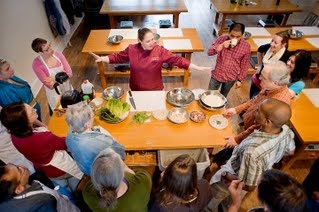
  • Katherine Deumling of Cook With What You Have: Katherine teaches how to cook simple, nutritious family meals, how to stock your pantry to avoid endless trips to the store and how to make the most of seasonal produce. Upcoming classes, which she offers in her home kitchen, include how to use fresh herbs in your dishes and kitchen fundamentals.
* * *

Summer's a time when kids are off from school and parents are desperately looking for quality classes for their young'uns. If you've got a budding Scorsese or Coppola in your house, then the Hollywood Theatre has a camp for you. Project Youth Doc for teens still has a few scholarships available, and if I could still pass for 19 I'd be all over this: Kids will work with industry pros and world-class gear to make a film from start to finish.  Check it out!

Details: Project Youth Doc, a filmmaking class for teens. Two sessions: June 18-July 13 and July 2-27. Scholarships available. Classes at the Hollywood Theatre, 4122 NE Sandy Blvd.  503-493-112.

Tuesday, April 10, 2012

The ABCs of CSAs


The one thing that people tend to forget when they sign up for a weekly share in a season's worth of produce from a Community Supported Agriculture farm?

"You actually have to cook," said Katherine Deumling of Cook With What You Have.

Read my article on choosing a CSA in the Oregonian's FoodDay section titled "Get Recipes Ready When Joining a CSA."
Tuesday, July 05, 2011

Farm Bulletin: Challenging Convention


Contributor Anthony Boutard of Ayers Creek Farm is not afraid to look culinary canvention in the eye and challenge it to a staring contest. This bulletin takes on the notion that shelling fresh fava beans is the only proper way to prepare them. You will find him and his wife Carol at the Hillsdale Farmers' Market every Sunday from 10 am-2 pm.

Everyday Favas

The American food establishment has deemed that favas are edible only when the seeds are peeled. In our experience shelling the beans raw, then blanching and peeling the seeds is tedious and unnecessary, and robs this amazing vetch of much of its flavor, nutritional value and fiber. Worse yet, a simple, hearty staple has become a fussy, special occasion food, and a daunting one at that.

The best way to prepare favas for everyday use is to bring a large pot of water to the boil, add a handful of salt, a quarter cup or so, and then throw the whole pods into the water. Cook them for about 12 minutes, until the pods are limp. Drain and leave to cool for 20 minutes, or until they are comfortable to shell. A gentle squeeze and the seeds will slip out of the pod. Favas cooked in this manner are free of bitterness and strong flavors. The combination of the heavily salted water and cooking the seeds in the pod makes skin of the bean nutty flavored, and the fresh favas become a much more satisfying dish than the naked cotyledons touted in the food magazines.

These fresh favas can be sauteed with some garlic and olive oil. Our friend Katherine Deumling, a happy convert to this method of preparing fresh favas, has a recipe for favas in yogurt, a very traditional way of serving them. For this year's farm field day, we prepared a ful made from a combination of fresh and dried favas, along with some chickpeas. The ful was seasoned with some olive oil, lemon, garlic and cumin.

We must credit Mimi Serafi, the mother of our sister-in-law Shirin, who taught us this simple Persian approach to cooking favas. It works and has improved our life. Can't ask more than that.

Saturday, February 06, 2010

Farm Bulletin: Year of the Rutabaga


In this installment of the Farm Bulletin, contributor Anthony Boutard of Ayers Creek Farm shares a recipe for this ubiquitous winter vegetable. Find them both at the twice-a-month Sunday Hillsdale Farmers' Market.

This has been the year of the rutabaga. The white rutabaga is delicious raw as well as cooked. Our friend Katherine Deumling of Cook With What You Have provided us with the following recipe.

Winter Slaw

This “slaw” was a true “cook with what you have” invention the day of class upon discovering that there was no chard or collard greens at the farmers’ market (for the above-mentioned recipes). There were beautiful cabbages, rutabagas and carrots. Quantities are definitely approximations and please feel free to substitute other veggies or omit certain ones. Turnips instead of rutabagas, etc.

For the slaw:
1/2 small to medium green cabbage (red would be fine too)
2 medium carrots
1/2 very large rutabaga or several small ones
2-3 greens onions (scallions), thinly sliced
Handful of cilantro, roughly chopped

For the dressing:
Juice of 1 lime or lemon
1-2 tsp. Dijon mustard
1-2 Tbsp. mayonnaise
1–2 tsp. Ground cumin
Pinch of chili flakes
Salt
Pepper
3 Tbsp. olive oil

Thinly slice the cabbage, grate the carrots and rutabaga and put in large salad bowl. Add scallions and cilantro. Mix all dressing ingredients well and pour over vegetables. Mix well. Let rest for 20 minutes to 1 hour to soften the vegetables and let flavors meld. Adjust seasoning.