Saturday, July 23, 2011

In Season NW: Mushrooms, Markets, Mergers


Local chefs went wild when Viridian Farms debuted their padron peppers and again when Olympic Provisions brought out their take on Spanish chorizo. And it looks like it's happening again with the pioppino or black poplar mushrooms that Roger Konka and Norma Cravens are cultivating at Springwater Farm. Always quick with a quip, Roger's dubbed it "the poor man's porcini," which trips off the tongue much more easily than its Latin name, Agrocybe aegerita.

Details: Pioppino mushrooms from Springwater Farm. Available at Portland Farmers' Market at PSU, Hillsdale Farmers' Market, Lake Oswego Farmers' Market and Westmoreland Farmers' Market. Links, hours and maps on the Oregon Farmers' Markets page.

* * *

Instant hits are usually reserved for the latest pop culture phenomenon. But PDX-ers, in their lust for ever-more-local food sources, jumped on Chef Noe Garnica's Verde Cocina almost as soon as it debuted at area farmers' markets. Now it looks like the family business is going all bricks and mortar with a retail outlet in Hillsdale at the location recently vacated by Kurt Spak's blink-and-it's-gone Caffe Autogrill. Look for the fresh Mexican fare you've come to love like fajitas, chilaquiles and tacos made with local meats and seasonal vegetables, plus new menu items courtesy of expanded kitchen capabilities. And in the space next door vacated by Spak's Alba Osteria, rumored tenant Ramsay's Dram vanished without a trace to be replaced by Sasquatch Brewing, a new 7-barrel brewpub started by Portland native Tom Sims. Mexican food and beer? Sounds like a pairing made in heaven!

Details: Verde Cocina, 6440 SW Capitol Hwy. 503-750-2722.

* * *

Big news broke this week from Hollywood…no, not Tinseltown, but the Hollywood neighborhood's eponymous farmers' market…that they are taking over the smaller but vital Lloyd Farmers' Market. It began began in 2007 as part of a grant to promote active living and healthy worksites and was managed by Eamon Molloy, market manager at the innovative Hillsdale Farmers' Market. "Hollywood has the experience to further the growth and success of the Lloyd Farmers Market. Adding debit and EBT services [will be] a big plus to this market," said Molloy. Location and hours remain the same, and Lloyd will continue to serve office workers and neighborhood residents as well as giving the Hollywood Farmers' Market a mid-week presence. Hollywood also announced it will officially be going year-round on first and third Saturdays from December through April, fulfilling neighbors' requests and its vendors efforts to develop "cutting edge season extension techniques," according to market manager Sarah Broderick.

Details: Lloyd Farmers' Market. Open Tuesdays, 10 am-2 pm year-round; Thursdays, 10 am-2 pm, June-Sept. In the Oregon Square Courtyard on NE Holladay Street between 7th and 9th Aves.

Wednesday, July 20, 2011

A Vietnamese Bistro to Love


Growing up in small-town Central Oregon had its advantages. Even in elementary school I could ride out alone on my bike to the edge of town, park it and spend hours climbing up and down the canyon walls looking for lizards without causing my mother a second of worry. In the summer I could walk or,  if forced, shepherd my two younger brothers for an afternoon in the cool blueness of the local pool.

Our food choices, however, if it was more than canned or frozen vegetables and meat, were somewhat limited. There was a steakhouse for special occasions, and an A&W drive-in where waitresses would carry out a tray with our order of burgers and root beer (7Up for me) and clip it to the driver's window. The sole ethnic food available was dispensed from a Chinese restaurant called Johnny's that featured chow mein and egg foo young—exotica to me back then.

Over the years we'd taken my folks to a Thai restaurant here and a pho place there, though when I parked outside a Japanese eatery my mother pulled me aside as we were about to walk in and said, "Now, honey, I just want you to know I'm not going to eat any of that raw fish." Though by the time we walked out she'd was smiling broadly about her bento lunch of teriyaki chicken, and I can almost swear she had a tiny bite of my sashimi…but maybe I'm making my own wishful memory.

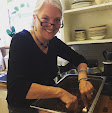
A place we could have taken them with no qualms at all, however, is Bambuza Vietnam Bistro, a three-restaurant chain owned by Daniel Nguyen and his wife, Katherine Lam (above left). She'd grown up cooking for her large family while her parents worked two jobs to support them, so when Daniel and his mother opened the first Bambuza in Seattle, Katherine quickly learned her mother-in-law's recipes. When the couple moved to Portland to be closer to Katherine's family and Daniel's mother retired, they decided to close the Seattle restaurant and open their own in Portland.

The menu is full of the salad rolls, noodle soups, noodle bowls (top) and entrées familiar to fans of Vietnamese cuisine, with a focus on fresh ingredients made on premises. Katherine's soups are made from broths that develop their layers of flavor from hours simmering on the stovetop, though she's quick to point out that she does make substitutions for traditional ingredients like congealed pork blood that some customers might find off-putting.

The other difference is the decor, all dark wood with dramatic lighting from oversized silk lanterns hanging from the ceiling. Like I said, a place my parents would have loved. I just wish that our small town had one like it when I was a kid…between that and the lizards, I might never have left.

Details: Bambuza Vietnam Bistro. Three locations: 19300 NW Cornell Rd., Hillsboro; 3682 SW Bond in Portland's South Waterfront; 7628 SW Nyberg St. in Tigard.

Tuesday, July 19, 2011

Camp Stories: Paradise Creek Campground


Can you really say you're roughing it when you have fourteen dozen raw oysters in a coffin-sized cooler? Not to mention martini glasses, cocktail fixin's for just about any drink in a home bartender's guide, anchovy-stuffed Spanish olives for the aforementioned martinis and enough wine to ride out (or would that be float out?) the apocalypse.

Now, I have to say that Dave and I have wowed camp neighbors over the years with margaritas shaken in a handy plastic tub and some mighty fine camp cookin' like the posole we made last year in Dave's brand new Lodge cast iron pot. But the crew we joined over the Fourth of July took it over the top and then some.

Only 167 to go…

My brother (that's him shucking, lower right) and his bride have always headed for the hills over the holiday to get away from the crazies who seem to think the city's streets are their own private bombing range. This year we decided to invite ourselves along and spare Walker and Rosey the panting, pacing, drooling trauma of staying in town.

The plan was to meet up in the no-fireworks-allowed pristine surroundings of the aptly named Paradise Creek campground just north of Carson, Washington, in the Gifford-Pinchot National Forest near Mt. Adams. A small, shady campground, its 42 primitive sites are dotted along the confluence of the Wind River, Paradise Creek and Juice Creek.

Still shucking.

The creekside campsites are the most private and the largest, each capable of handling anywhere from one to three tents, though an additional fee is required for more than one vehicle per site. The best is site 29, but sites 25 and 27 are lovely, too (27 is next to the toilets, though buffered by trees and the creek). The camp hosts keep the pit toilets clean and well-stocked, and they also have firewood available, though after the first night you'll be going back down the road near the fish hatchery where an enterprising family sells dry, chopped wood for a much better price.

Campfire posole.

As for those oysters, our group consisted of five couples, two singles and a toddler, so appetizers on two evenings were taken up shucking and slurping both raw and grilled bivalves, though the toddler preferred consuming a fair amount of native terroir (that is, dirt) with his meals. Those were divvied up between the comings and goings of the various participants, with everything from beans and franks to steak and corn to, yes, our posole. Breakfast was a rotating affair that always started with coffee, then moved on to campfire hashbrowns and eggs or toasted bagels or scrambled eggs with chorizo sausage, then cold cuts, cheeses and salads for lunch.

Some amount of hiking and stream-walking was required to interrupt all that eating, and there are trails aplenty in the area including one hefty climb up Lava Butte from the campground, which ended with a somewhat disappointing non-view at the top.

The best part, though? As the sun went down on the night of July 4, the only crackling and popping came from the campfire, with no hissing from anything other than water flowing over the stones in the creek.

Read other Camp Stories in the series from Trout Creek Campground, Shadow Bay at Waldo Lake, LaPine State Park, Indian Crossing Campground, Frog Lake Campground, Patrick's Point State Park, Harris Beach State Park and Moss Creek Campground.

Monday, July 18, 2011

More Fun with Favas


Contributor Jim Dixon of RealGoodFood knows a good thing when he reads it, and Anthony Boutard's recent rant about favas goaded him into action. I think he's onto something!

Grilled Fava Beans

I’d read about grilling favas for a few years, but didn’t try it until after reading this screed from Anthony and Carol Boutard of Ayers Creek Farm:

“The American food establishment has deemed that favas are edible only when the seeds are peeled. In our experience shelling the beans raw, then blanching and peeling the seeds is tedious and unnecessary, and robs this amazing vetch of much of its flavor, nutritional value and fiber. Worse yet, a simple, hearty staple has become a fussy, special occasion food, and a daunting one at that.”

I was guilty of promoting the shuck, blanch and peel again approach, and the Boutards’ advice is unfailing, so I decided to follow it. Mostly anyway. They go on to suggest 12 minutes of boiling in heavily salted water. But the Weber was lit, there was a pile of favas and I tossed them on the grill, pods and all.

I turned them enough to get the exteriors pretty charred, then pulled open the blackened pods, swiped the unpeeled beans through extra virgin olive oil and flor de sal and ate. Amazingly good, and there is a lot more flavor.

The process is a bit messy, so I’d suggest doing this when you’re eating outside (like that’ll ever happen). Grill a few pounds for a party, put them on a big platter, and let everybody peel and eat.

Sunday, July 17, 2011

Radish Reconsidered


Dearest radish,

I want to like you. I really do. Your blushing cheeks, your round perfection. Your peppery bite that gives a spicy twist to every encounter.

But there's that harsh edge to you that's always held me back. Though other people can't seem to get enough of you; so I keep thinking it's me, not you. After all, it just wouldn't be spring without seeing you out in the garden, the way you reliably pop out of the soil within a couple of days of poking your seeds in the ground.

Then I heard about a way to mellow out those rough edges, even make you slightly sweet without totally losing your crisp appeal…I think we may have a future together after all. How about it?

x's and o's,

Kathleen

Roasted Radishes with Pasta and Radish Greens Pesto

For the roasted radishes:
2 bunches radishes
Olive oil
Salt
Thyme sprigs

For the pesto pasta:
3 c. radish greens
1 c. Italian parsley
3 cloves garlic
1/4 c. pine nuts
1 tsp. salt
1/2-3/4 c. olive oil
1 c. parmesan, grated
1 lb. dried pasta

Preheat oven to 400°. Separate greens from the radishes. Set the greens aside, wash radishes and dry with a towel. Place in medium bowl and toss with enough olive oil to coat. Place in baking dish and sprinkle with salt and thyme sprigs. Roast in oven for 20-30 min. until skins are crinkled and radishes are tender when pierced with a fork.

While radishes roast, bring a pot of water to boil on the stove. Wash and dry greens. Put greens, parsley, garlic, pine nuts and salt in bowl of processor. Turn on processor and drizzle in olive oil, processing until mixture is smooth and slightly wet. Pour into medium mixing bowl and stir in cheese.

Cook pasta till al dente. Drain and mix in half of pesto or enough to generously coat pasta. Serve with roasted radishes alongside and extra parmesan for sprinkling.

Saturday, July 16, 2011

Farm Bulletin: Anatomy of a Berry


The ripening of the small fruit is gathering steam. The fruits we typically call "berries" are, in the botanist's lexicon, aggregate fruits composed of numerous small, single seeded individual fruits called drupelets. In you look closely, you will notice they are essentially tiny cherry-like fruits borne on a receptacle and fused on their flanks.

In the raspberries, the drupelets fall free of the receptacle, leaving a hollow fruit. In the loganberries and most of members of the group, the receptacle remains attached to the drupelets, and "the berry" detaches at the stem. Each drupelet retains a bit of the stigma that was pollinated to produce it. Damp, cool days during pollination result in fewer bee visits to each flower, and smaller fruit because fewer stigmas are pollinated.

Members of the genus Ribes, the gooseberries and currants, produce true berries. The general definition of a berry is "a pulpy fruit enclosing several seeds." Tomatoes and grapes are also berries in the botanist's world. The Ribes are very good for preserves and jellies. Red currants are often combined with raspberries to make jam because they have a high pectin content. Red and black currants produce good juice. For the best quality and yield, use a steam juicer such as the Mehu Liisa, developed by Finns desperate to preserve the essence of summer. Generally neglected in North America, the berries of Ribes are very nutritious and deserve a more prominent place on the table.

The individual currants (right) are on a raceme called a "strig" in the trade. The strig should be removed before the fruit is used. The stem lends an off-flavor and bitterness if it is cooked with the fruit. The classic kitchen trick is to use a fork to comb the individual berries off the strig. Works, but it gets tedious. A more efficient method is to put the fruit in the freezer, and when the berries are frozen, the stems can be rubbed off without making a mess of the berries. Insulated gloves are useful if you have a lot of currants to clean.

As an aside, the currants of the genus Ribes bear no relationship to the black, wrinkled raisins called currants. Those small, dried grapes originated around the ancient Greek city of Corinth, and the word "currant" as applied to them is merely a British corruption of that ancient city's name. The grape used to produce those raisin is also sold as the "Champagne Grape," though there is absolutely no connection between those grapes and the sparkling wine than lends its name to them.

Great Expectations


Now I know what the Israelites felt like when they ran across that manna. Or being on a walk and running across a windfall of apples in an old orchard.

All I'd done was deliver a couple of dozen eggs and some raspberries to my friend Linda. We were chatting when she suddenly crosssed to her refrigerator and said, "You've got to try this!" and pulled out a big jar that glowed golden in the afternoon light pouring into her kitchen.

She unscrewed the lid and held it up. I inhaled and my head was filled with the sweet bouquet of tropical flowers and citrus. Turned out it was elderflower syrup that she'd made from flowers gathered at Ayers Creek Farm the week before. She poured some of the golden liquid into a small jar and handed it to me.

On the drive home my thoughts turned to (no surprise here) the cocktails we could make with it. A little research indicated it would pair well with a dry London-style gin, and mint seemed like it might counterpoint the syrup's heavy sweetness. Dave thought a technique we'd used with a drink called a Cooperstown might be appropriate, that is, wiping the inside of the glass with a mint leaf to give just a whisper of its flavor.

I think he's onto something here:

Newly Minted

2 oz. gin
1/2 oz. elderflower syrup
Dry vermouth
2 mint leaves

Chill a martini glass.

Pour a splash (approx. 1 tsp. or less) dry vermouth into chilled glass. Place 1 mint leaf in glass and rub mint leaf and vermouth around inside. Discard mint leaf and vermouth.

Fill mixing glass (mixing pitcher) 1/2 full of ice. Add gin and elderflower syrup and stir 30 seconds. Strain into prepared martini glass. Garnish with second mint leaf.

See this recipe for making the elderflower syrup and another cocktail.

Wednesday, July 13, 2011

Luscious Labor of Love


While it's no secret how much I love writing about food, from the farmers who grow it to the cooks who put it front of us at our favorite restaurants to how to make it at home, I'm also crazy about beer, wine and cocktails and our local crew of brewers, winemakers and distillers. Here's a write-up I did for a recent issue of MIX magazine on David Shenaut, plus the recipe that didn't make it into the magazine. The perfect cooler for a summer gathering, it's simple, light and refreshing.

Acclaimed bartender David Shenaut has left the Irving Street Kitchen to work for the McMenamin's Zeus Café in the new Crystal Hotel downtown, where he's planning to shake things up with his signature Souracher cocktail. Named after a brilliant kitchen staffer he worked with at Brad Root’s eponymous restaurant in Camas, Washington, who liked to end his shift with a combination of lime juice, Campari and whiskey, Shenaut was intrigued enough to spend five years perfecting it. He describes it as “incredibly balanced and packed with flavor, with both masculine and feminine qualities.” I call it irresistible.

The Souracher

3/4 oz. Campari
3/4 oz. fresh lime juice
3/4 oz. rye whiskey (100-proof)

3/4 oz. Carpano Antica
1/2 tsp. rich Demerara sugar syrup (2:1; no heat)
Spicy ginger beer
Ice cubes

Tools: shaker, strainer
Glass: Collins
Garnish: long lime peel

Shake first 5 ingredients with ice and strain into a Collins glass filled with an Ice spear or large ice cubes. Top with ginger beer and garnish.

Monday, July 11, 2011

Cow Patty


The patty melt has a long and storied history in American diner culture. Contributor Jim Dixon of RealGoodFood shares some of that legend and gives his version, created in the familiar moment when the buns you thought were in the freezer were nowhere to be found.

As I’m sure you’ve noticed, almost everything I make and write about includes olive oil, salt, and probably one or more of the other things I sell. Sure, I want you to buy them, but I sell those things because I need to have them in my kitchen to make the real good food I like to eat. But I eat other things, too.

Here’s one of them. No olive oil.

Grilled Cheese Burger

Not “grilled cheeseburger.” This is basically a modified patty melt sans onions* that I started making when I wanted a burger and had the beef but no buns. (There's info on the patty melt on the internet, but for those who’ve never had one at the basic American roadside cafe/diner there’s not much info here, and what is needs editing; the whole Northwest variant can’t be that popular since I’ve never seen one.)

Rather than go to the store or dig through the freezer (could be buns down there yet), I made the burgers to fit the bread I had, my usual New Seasons wheat levain, so they were more oval than round. The usual burger making also applies: 20% fat freshly ground chuck (New Seasons make this easy), gently formed and patted to be slightly thicker at the edges. Salt fairly heavily (I used flor de sal). Cook however’s most convenient (cast iron skillet, broiler, or grill…my choice), but only enough to brown the exterior. You want these very rare inside since they’ll cook a bit more during the grilled cheese phase.

Slice your bread, apply your condiments (for me, mustard; ketchup on the side after cooking), add a slice of good sharp cheddar (I’ll use other cheese if I have to, but cheddar is best for burgers), and grill in a cast iron skillet over low heat with another skillet of about the same size balanced on top. Brown well on both sides, which should also result in melted cheese. Eat immediately.

*You could take this closer to a patty melt. Cook some sliced onions in olive oil as long as you can, hopefully until slightly caramelized; add to burger. Rye bread is the usual for a patty melt, but if you go the store for rye you might as well get buns.

Top photo by pointnshoot from Oakland, California, USA.

Saturday, July 09, 2011

Farm Bulletin: Dancing with Mother Nature


Contributor Anthony Boutard of Ayers Creek Farm has been working his land for many years and has experienced most of the seasonal weather patterns endemic to his corner of the Wapato Valley near Gaston. This year's cool, wet spring and early summer has been at turns puzzling and frustrating.

Farming is a waltz with nature, and although we try to work with her, we are reminded, more often than not, that she is a powerful lead. Among the farmers at the market, the discussion is whether this second late year in a row is the beginning of a trend, a cyclical moment or a stochastic event and as significant as drawing two jacks from a deck of cards.

Regardless, the choreography of planting, cultivation and harvest are planned by the farmer to avoid missteps, a collision between unequal partners. This next week will test our mettle and humor as frikeh production (left) must happen at the same time we are planting the winter crops and summer fruit is starting. We are also racing to clean up the berry fields before the grass, fireweed and thistles set seed. The seeds stick to berries and make them more difficult to pick. Somewhere in this mix, the sowing of summer greens will be done. One, two, three, one, two, three…

On Berries

Blessedly, the number of people who tell us the old family secret of spreading berries carefully on a cookie sheet so they don't touch each other, and then putting them in the freezer without jiggling the masterpiece of spacing, are now far and few between.

The best way to freeze our berries is to leave them in the container or flat, and place the whole thing in the freezer without touching the fruit. (The berries we sell are picked especially for you at the Hillsdale market, not hauled from one market to the next, and they are picked over to remove the berries that start to rot. We sell at one market only, so every pint of fruit is less than 24 hours from the field to your good custody.) A day or two after being placed in the freezer, when berries are fully frozen and you feel like a spot of work (but not too much), take out the hallocks and give them a gentle squeeze while pouring the berries into an airtight container. They will be perfectly frozen as individual berries.

During the ripening season for each fruit, berry quality changes. The early fruit have a higher natural pectin level and acidity, making better preserves than later fruit. We make our preserves from the first run, and they do not need added pectin. As the season progresses, the pectins and acidity drops, and for cooking the berries have less oomph. However, for fresh eating, the later berries will be sweeter and just as flavorful in the mouth. In preparing preserves, it helps to macerate the fruit in the sugar overnight and heat it up the next day.

Lady in Waiting


While I'm waiting (and waiting and waiting) for my presumed tomatoes to ripen, I sometimes need to pump a little of that tomatoey goodness into a meal just to whet my appetite for the real flavor that is surely in my future. (It is, right?)

This dish was fortuitous convergence of a sale on cod in a nearby fish case, a half-pint of cherry tomatoes from a neighbor who was leaving on vacation (yes, I am not ashamed to say we accept donations of leftover food), a bulb of fennel and volunteer mustard greens a neighbor was cleaning out of her garden. Sounded like dinner to me!

Cod with Fennel, Cherry Tomatoes and Mustard Greens

2 Tbsp. olive oil plus additional for cooking fish
1/2 onion, cut in half and sliced
2-3 cloves garlic, minced
1 bulb fennel, cut in half and sliced
1/2 pint or more cherry tomatoes, halved
1 bunch mustard greens
Salt and pepper to taste
1 cod fillet, cut in 1 1/2" slices

Heat oil in oven-proof skillet. When it shimmers, add onions and garlic and sauté till translucent.* Add fennel and sauté till tender, then throw in cherry tomatoes and when they start to break down and release their juices, add greens and cook till wilted and tender. Remove tomato mixture to bowl and cover to keep warm.

Heat oven to 350°. Wipe out skillet and heat additional oil till very hot but not smoking. Add slices of fish and brown on one side. Flip over to other side, then add tomato mixture back into pan. Put pan in oven for 10 minutes or until fish is cooked through. To serve, spoon tomato mixture onto individual plates and top with slice of fish and a fennel frond.

* If one were so inclined, three anchovies could be added at this point and allowed to dissolve just before sautéing the fennel. Yum!

Friday, July 08, 2011

Garden 2011: First Cut


Firsts are always worth noting, and this morning was the initial harvest of early arugula and radishes from our raised bed. Yes, there'd been some thinning and a "tasting" of an early radish or two, but today those seeds I sowed had grown to the point I could actually pull some plants out of the ground to have for dinner. Woo hoo!

It was almost exactly one month ago, in a very-late-for-Portland mid-June, I finally planted our garden with tomatoes, collards, lacinato kale, arugula, carrots, radishes, beans, cukes, a couple of squash and a smattering of herbs. Tomatoes are growing (slowly) and starting to flower, I've lost a three or four of the dozen or so lacinato kale plants—still leaving plenty—and the carrots have pretty much stubbornly refused to germinate (I blame bad seeds) and I've resowed them.

The basket of arugula and radishes (top photo) makes me happy just looking at them, and I plan to use the arugula for a salad tonight and maybe try my hand at radish fritters, using the greens to make an aioli.

What, you didn't know radish greens were edible? They're a great braising green in soups and stews or sautéed with bacon and garlic for pasta, and they'd be awesome in my friend Sophie's recipe for Indian Poriyal. The leaves have teeny stiff hairs all over them and are a bit prickly but don't seem to sting like nettles. Plus the hairs are completely unnoticeable once they're cooked.

All in all a very promising (and hopeful) start!

Thursday, July 07, 2011

Hit the Deck


On a hot summer day, when there aren't enough fans in the whole world to cool the air in our house, what I want more than anything is a cool drink brought to me as I sit under the dodger of a sailboat out on the river. Since a sailboat isn't exactly close at hand, I've discovered the next best thing at The Deck, my new favorite getaway.

Picture this: a gorgeous sunny day, a comfy deck with a sweeping view of the Columbia River that allows a cooling breeze anywhere from teasing to capable of whipping up (small) whitecaps on the water. Now imagine a happy hour that runs from 11 am to 6 pm with prices on well drinks (including a very nice margarita) for $3.75 and domestic beer for $2.75.

On top of that throw in snacks including a bulging fish taco overflowing with honey batter-crusted halibut showered with cabbage and fresh tomato (with a side of chips and salsa) for $4.75, or maybe a half nacho or a shrimp cocktail for about the same price. It's a great, casual place to take in the river view with out-of-towners or friends, and there's a big awning over part of it for the sun-wary.

What's wrong with this picture? Only the fact that I'm not there right now. Which I will remedy in the very near future, and so should you.

Details: The Deck, 2915 NE Marine Dr. in McCuddy's Marina at the intersection of NE 33rd Dr. and Marine Dr. 503-283-6444.

Garden State, Big Time


Ever since Kevin Sandri opened his Garden State food cart in Sellwood, I've been a devoted fan of the Italian-American dishes he learned from his mom and brought with him out West. Cranky, sweet, irascible and genuinely funny, this guy puts out some of the best food in PDX, period…yes, even counting sit-down restaurants.

I'm not intimating that GSNW got there first (in…ahem…'07), but it seems that Garden State's gone big-time with a rave from James Cunningham of the Cooking Channel's Eat Street.

No, I'm just happy that Kevin's moved the cart to the Mississippi Marketplace cart pod, which means I can take advantage of his meatball subs, arancine and crazy-delicious burgers any time I feel like it. And maybe get a little spiritual lesson in the bargain…after all, as Monsignor Sandri said on the show, "The higher the burger, the closer to God."

Details: Garden State, 4233 N Mississippi on the corner of N Mississippi and Skidmore. 503-962-9265.

Tuesday, July 05, 2011

Bloody Good Time


From the very first line of her book, "Bloody Marys: Sanguine Solutions for a Slew of Situations," it is evident that Portland native Judy Bennett is a very funny person. A professional physical therapist, she's also an actress, model and owner of a vintage beachwear emporium called Thousand Island Dressing. She says her wild side was nurtured by her Aunt Marie, whom Bennett calls "a hell-raiser and an unabashed professional alimony-collector." With 45 recipes and packed with Bloody Mary trivia and stories, this is a book for drinkers and teetotalers alike.

Find out what makes a good Bloody Mary, how she came up with the titles for her recipes (I particularly liked "The Way to a Man's Heart is Through His Stomach, But That's Not Where I'm Headed") and where she got the great vintage photos that illustrate the book's chapters in my article, 3 Questions: A short chat about what's cooking with Judy Bennett.

Bonus question that didn't make the cut:


Q: How many pairs of shoes do you own?

A: As of this date, I own 92 pairs of shoes. Whew, that feels better. Admitting it really is the first step. I should go to a self-help group or confession or something, but how would I decide what shoes to wear to the meetings?

Farm Bulletin: Challenging Convention


Contributor Anthony Boutard of Ayers Creek Farm is not afraid to look culinary canvention in the eye and challenge it to a staring contest. This bulletin takes on the notion that shelling fresh fava beans is the only proper way to prepare them. You will find him and his wife Carol at the Hillsdale Farmers' Market every Sunday from 10 am-2 pm.

Everyday Favas

The American food establishment has deemed that favas are edible only when the seeds are peeled. In our experience shelling the beans raw, then blanching and peeling the seeds is tedious and unnecessary, and robs this amazing vetch of much of its flavor, nutritional value and fiber. Worse yet, a simple, hearty staple has become a fussy, special occasion food, and a daunting one at that.

The best way to prepare favas for everyday use is to bring a large pot of water to the boil, add a handful of salt, a quarter cup or so, and then throw the whole pods into the water. Cook them for about 12 minutes, until the pods are limp. Drain and leave to cool for 20 minutes, or until they are comfortable to shell. A gentle squeeze and the seeds will slip out of the pod. Favas cooked in this manner are free of bitterness and strong flavors. The combination of the heavily salted water and cooking the seeds in the pod makes skin of the bean nutty flavored, and the fresh favas become a much more satisfying dish than the naked cotyledons touted in the food magazines.

These fresh favas can be sauteed with some garlic and olive oil. Our friend Katherine Deumling, a happy convert to this method of preparing fresh favas, has a recipe for favas in yogurt, a very traditional way of serving them. For this year's farm field day, we prepared a ful made from a combination of fresh and dried favas, along with some chickpeas. The ful was seasoned with some olive oil, lemon, garlic and cumin.

We must credit Mimi Serafi, the mother of our sister-in-law Shirin, who taught us this simple Persian approach to cooking favas. It works and has improved our life. Can't ask more than that.

Wednesday, June 29, 2011

Little Bird Takes Wing


It's no surprise that James Beard award-winning chef Gabriel Rucker of Le Pigeon didn't give his second restaurant a French name after the way that people massacre (another French word, by the way) the name of his first one. Not that they do it intentionally, mind you, but most Americans have no idea how to pronounce anything in French much beyond "Ooh la la."

"Little Bird" en Français.

I mean, croissants have been a popular pastry since the seventies and people still struggle over how to pronounce it. And what is it about French words that throws people off, anyway? I once had an agency account executive on the local Franz Bread account nix the brilliant name "Pain de Franz" for the company's new line of French breads for the reason that "people don't want to have pain in their mouths."

But I digress.

Duck confit.

Admittedly, the words "Petit Oiseau" are inscribed on the door of the new downtown restaurant that serves some of the best French food I've had since my last trip to Le Pichet in Seattle, but it is universally referred to in print and on a small, unlit sign high over the street as Little Bird. Like Le Pichet, it's decked out in very French style, with a little lacy curtain in the front window, a teeny and very quaint bar in the back, dark wood tongue and groove-backed booths and small tables along a banquette on a side wall.

Grilled trout.

Two friends and I took a third friend there to celebrate her birthday. We were seated on the wood-railinged mezzanine up a narrow flight of stairs but, unlike many off-the-main-room areas, the service was as spot-on as if we were sitting in the main dining room and perhaps a little quieter as well. (Imagine the cardio workout the staff gets!)

'09 Boedecker Willamette Valley Barrel Select Pinot Noir. Idéal!

The whole experience feels a bit provincial and that tone spills over onto the menu, with the requisite foie gras torchon (top photo), a specialty of Le Pigeon as well, duck confit, mussels, frites, roast chicken…you get the picture. I'm not going to go into excruciating detail about each dish we ordered (there were many) or the wine list. We did have a totally off-the-hook bottle of '09 Boedecker Willamette Valley Barrel Select Pinot Noir that went with everything…well, after the bottle of Crémant du Bourgogne Brut that we ordered with our starters, that is. It was a birthday celebration, after all, right?

Anyway, everything we ordered was exceptionally well-prepared, nothing seemed amiss and we had a marvelous time, stepping out of our regular lives for a few hours to share a meal and laugh together. And that's worth a lot no matter what language you speak.

Details: Little Bird, 219 SW 6th Ave. 503-688-5952.

Tuesday, June 28, 2011

MIXing It Up, Pt. 2: Best Market Meals


This month's issue of MIX magazine is jam-packed with lists of don't-miss summer pleasures, from the 50 Best Summer Drinks to PDX's best ice cream scoops to sussing out the hot spots of Vancouver and McMinnville.

It's also got a list of the 10 best farmers' market meals, which is helpful if you're like me and the sight of all that great food (not to mention the aromas drifting over the aisles) makes your stomach growl. The best part of these market meals? Despite the fact that they're as good or better than you'll pay for in a sit-down restaurant, they won't make a big dent in your budget.

Outtakes from my contributions to the Big Ten:
  • Ate-Oh-Ate: Ben Dyer's satellite version of his East Burnside restaurant features authentic Hawaiian-style grub like the Loco Moco (top photo), a pile o' pleasure with fried rice, a seared hamburger patty, shiitake mushroom gravy and two eggs over easy. Hollywood Farmers' Market.
  • Bingo Sandwiches: Portlanders won't be surprised that King of Brine David Barber's BLT of the Week isn't your usual bacon sandwich. Look for market-fresh meats, veggies, Picklopolis Pickles and even an egg to make an appearance. Portland Farmers' Market at PSU.
  • Domo Domo: Sidney Ayers (above left) brand new biz plan is to take over the world with a Japanese pancake called okonomiyaki. Plate-sized, its flour and egg batter's secret ingredient is grated nagaimo, a Japanese yam, and comes topped with bacon or veggies for just $6. Interstate Farmers' Market.
  • Feastworks Sausage Sandwich: Ethan Bisagna, formerly head butcher at Clyde Common, and his lady-love, chef Ashley Brown, are deeply committed to each other and the quality of their homemade meats and sausages, which you can buy direct or eat on the spot in their sandwiches, including the Choripan, made with their Chistorra sausage wrapped in crusty French bread drizzled with chimichurri sauce. Sandwiches and meats at the NW Portland Farmers' Market and Woodstock Farmers' Market; meats only at the Beaverton Farmers' Market.
  • Gloria's Secret Tamales: This outpost of Gloria Vargas' teeny Beaverton café offers her lighter-than-air tamales wrapped in the traditional Salvadoran banana leaves rather than corn husks. Filled with hearty chicken or pork, there's also a vegetarian version. All come with a salad of shaved cabbage and fruit and a kickin' salsa. Beaverton Farmers' Market.
  • Thai Mama: Look for market-fresh curries, pad Thai, crab wontons and chicken satay flying out of Lisa Barber's market stand, but it's her legendary homemade egg rolls that make for long lines of salivating customers here. Choose from traditional pork or portabella mushroom and tofu. Montavilla Farmers' Market.
  • Savory et Sweet Crêpes: The French came up with the original "wrap," and you can always find an eclectic yet solid variety on Chris Douglas' menu. Check out the Scary Good, softly scrambled eggs, bacon, blue cheese, avocado, tomatoes and spinach, or the Menagerie Plate, a sampler of delicious bites—usually nuts, cheese, fruit and a slice of bread slathered with hummus finished off with a mini sweet crêpe on the side. Lloyd Farmers' Market, Oregon City Farmers' Market and Hillsdale Farmers' Market.
Get the full text plus additional reviews of Tastebud, Verde Cocina and Enchanted Sun Breakfast Burritos in the current issue. Find the complete schedule of Portland-area farmers' markets with maps and links on the GoodStuffNW Oregon Farmers' Markets page.

Monday, June 27, 2011

Baked Beans and BBQ


One year we made the huge mistake of waiting until July third to get ribs from Gartner's, Portland palace of all things meat, for the following day's barbecue. While there was no danger they'd run out, and they were flying through the tickets from the take-a-number machine, we were still about eighty customers from getting our order. This year we'll make plans to go earlier, and the following baked bean recipe from contributor Jim Dixon of RealGoodFood would be the perfect side.

I got over the flu just in time for my son Tom’s wedding this weekend. Beautiful bride, incredible setting in the Gorge, sunshine, good friends, family old and new and, of course, delicious food. Tom asked me make the same beans I made for his brother’s wedding last summer, so here they are again.

Fagiole Agrodulce Redux

Agrodulce, literally strong-sweet in Italian, comes close to the classic flavor of baked beans, but with a bit more tang. The sour comes from vinegar, and since cooking beans with anything acidic leaves them tough, you need to cook the beans until tender without it.

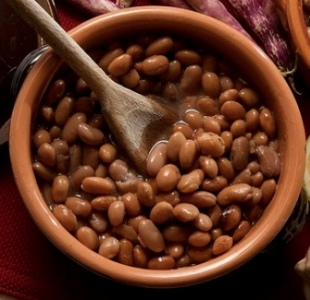
Cook a pound of Washington's Haricot Farms rojo chiquito (small red) beans* with salt, olive oil, and enough water to cover by an inch or more in a covered pot in a 200° oven for at least few hours or until they’re tender (add more water if necessary; if you smell beans, that usually means the need some). You could also soak them and cook on the stovetop, but please do so gently.

For the agrodulce, chop a couple of onions and combine them with about a half cup of honey, a cup of Katz Late Harvest Sauvignon Blanc or Zinfandel vinegar*, a big handful of fresh sage leaves, coarsely chopped, and more olive oil. Simmer on the stovetop for at least an hour, then cook with the beans, uncovered, for another hour or until the sauce reduces a bit and the beans aren’t too runny. Adjust the salt if necessary.

Good hot, I think they’re even better at room temperature, so take them on your next picnic.

* Any small red beans will work, as will any good quality white or red wine vinegar. - KAB

Photo from Haricot Farms.

MIXing It Up: Summer's Best Bevs


The request from the editor at MIX magazine was simple enough: a feature on the best summer drinks in Portland, 100 words or less each. Deadline: two weeks. Put a list together, get it approved and go.

No problem.

Jacob Grier's Cleared for Departure at Metrovino.

It's about then, after I accept an assignment and the editor's counting on me to fill the allotted spaces, that my mind goes blank. Drinks? Summer? Huh?

This train of thought is usually followed by a mild panic. Then I start thinking about who I can call for help digging me out of this self-inflicted predicament. Cocktails…let's see…maybe Jacob Grier and Dave Shenaut would be willing to help out. And Smith Teamaker is doing some interesting things with tea infusions. Beer's not a problem, I know who to call for tips on summer releases. Whew!

Departure Sling at Departure Lounge.

A little less than two weeks later the copy's in to the magazine and I've met yet another round of fascinating Portland folks. Read the results in "50 Best Summer Drinks" featuring my contributions:
  • Fruit Teas at Smith Tea
  • Slora Rustica at Upright Brewing
  • Evelyn's Imperial Sunshine Double IPA at Hopworks
  • Tea Beer at Rogue Brewing
  • Departure Sling at Departure Lounge
  • Jacob Grier's Cleared for Departure at Metrovino (recipe here)
  • Dave Shenaut's Souracher at Zeus Café
Photo of fruit teas by Brian Feulner for the Oregonian; photo of Departure Sling by Motoya Nakamura for the Oregonian.

Friday, June 24, 2011

Unlisted But Not Unloved


I get it, of course. A limited list, a plethora of possible picks. Endless opportunities for debate, nitpicking and what-ifs.

But really, I'm a bit bewildered by the some of the restaurants left off the list of "100 Favorites" in the Oregonian's Diner 2011 section published yesterday. So rather than quibble or fuss, I'm doing an addendum (listed in no particular order) you can carry on your smart phone, with links to the full posts. Feel free to add your own favorites in the comments below!

Toast

Donald Kotler's jewel box on Southeast Steele would win a blue ribbon at the state fair if such a prize existed for a whole café. Housemade everything, from the cured pork belly to the jams to the English muffins, with much of its produce sourced from urban farms within a mile of its location. Renowned for a way with brunch and breakfast, dinner is a too-well-kept secret. Should have been in the "Real Deals," "Breakfasts of Champions" or "Farm to Table" sections. Links here and here.
Details: Toast, 5222 SE 52nd Ave. 503-774-1020.

Spints Alehouse

Just written up last week in a rave where I admit to a schoolgirl crush. With great beers, intriguing spirits and spectacular food, Alyssa Gregg (top photo) has opened the tavern of my dreams. I only wish I'd discovered it earlier. Should have been in the "Pour It On" section. Link to post here.
Details: Spints Alehouse, 401 NE 28th Ave. 503-847-2534.

Lucca

Anyone who lives in the vicinity of Northeast Fremont knows about this quiet resident of the Irvington neighborhood. Solid is the descriptor of choice, whether it's their wood oven-prepared food, cocktail list or pasta choices. Our go-to for those "I don't feel like cooking" nights or "How about pizza?" occasions, they're open for lunch and dinner both. Should have been in the "Everyday Excellence" section. Links here and here.
Details: Lucca, 3449 NE 24th Ave. Phone 503-287-7372.

Yuzu

If only my son had built that transporter (à la Star Trek) that he was obsessed with in his youth, I would spend a lot more time in this hidden gem at the far end of Beaverton-Hillsdale Highway. Looking as if it was a holodeck recreation of a Ginza district yakuza, this place has wowed me every time. Should have been in the "Outer Eats" or "Hideaways" section. Links here and here.
Details: Yuzu, 4130 SW 117th Ave., Beaverton. Phone 503-350-1801.

Thursday, June 23, 2011

Puppy Love


One of the joys of having two dogs, at least for me, is that I have my hands full and don't suffer from puppy lust when I visit my friend Kim from Coedwig Cardigans. The other is that her dogs are so spectacular that she has a waiting list a yard long for her puppies and I couldn't have one if I wanted one.

So lucky me! That's not to say there's no temptation to tuck one of these little guys in my pocket and casually sidle over to the car, especially when he's as cute as Wave, above. So far I've managed to make out of there alone. But believe me, if that changes you'll be the first to know.