Showing posts with label baked beans. Show all posts

Monday, June 25, 2018

Summer BBQ = Baked Beans


Quick: Name the most ubiquitous foods at summer picnics.

Hot dogs. Hamburgers. Potato salad. Baked beans. Extra points if you envision them on a picnic table covered with a red-and-white checkered tablecloth. Maybe some smoke from the barbecue wafting by.

Agrodolce, a combination of sour and sweet.

They're all-American classics for a reason, of course. Generations have grown up putting yellow mustard and ketchup—spelling it catsup, apparently, has gone the way of the dodo—pickles and onions on their burgers. But sometimes it's fun to mess with the classics once in awhile, especially if the tweaks, if not a paradigm-shifting improvement over the original, at least offer a delicious alternative.

My friend Jim Dixon got me started thinking about the Italian idea of "agrodolce," combining sour (agro) and sweet (dolce) flavors using vinegar and sugar (or honey) and often onions or fruit to spark the other flavors in the dish, much as we use salt for the same purpose. As opposed to the baked beans I grew up on, ketchup-y and, to my tastebuds, a bit too sweet, the use of the sweet-and-sour agrodolce took this tried-and-true picnic dish to a whole new level.

And adding a bit of bacon or, in this case, a whole ham hock, well, what dish doesn't smoked pork enhance?

Baked Beans Agrodolce

2 c. dried beans*
Water
2 tsp. salt
1 Tbsp. olive oil
3-4 large bay leaves
Smoked ham hock (or 1/4 lb. thick-sliced bacon, cut in 1/4" strips)
1 large onion, chopped fine
1/2 c. honey
1/2 c. red wine vinegar
1/4 c. sage leaves, chopped fine

Put dried beans in a pot and add water to cover by at least 2”. Cover and soak overnight on the counter.

Preheat oven to 250°.

Drain water from beans and add fresh water to cover. Add ham hock or bacon, bay leaves, salt and olive oil. Cover, place in oven and bake 7 hours until beans are tender (a slow cooker would work well, too). Monitor every couple of hours to make sure the beans are still covered with liquid; if they're a bit dry, add water to cover and continue cooking.

Two hours before the end of the cooking time for the beans, combine the onions, honey, vinegar and sage in a saucepan and simmer for 1 hour. When beans are tender, add onion mixture to them and combine, then bake for an additional hour. Remove the bay leaves. Remove the ham hock and shred it, then stir it back into the beans. Taste for salt and adjust as desired. This is great served right out of the oven but is also spectacular made a day ahead for dinner or a picnic the next day.

* Dutch Bullet beans from Ayers Creek Farm hold their shape nicely after hours of cooking.

Friday, May 27, 2016

Big Holiday Barbecue Begs for Baked Beans


My husband, it can be stated without hesitation, is a guy who knows what he wants. For his birthday, which happens to fall on Memorial Day weekend this year, he was given the choice of what to do over the long weekend to celebrate his special day. No restrictions…anything he wants, I'll do my best to accomodate.

No "trip to Paris" crossed his lips, no "dinner at _________" restaurant. Without hesitation, he answered, "Brisket."

Dave's brisket.

You see, Dave is a guy who loves his smoke. The last brisket he made (left) used a method called the "Texas crutch" where the meat is first smoked for several hours, then wrapped in butcher paper and returned to the smoker. After a few more hours, it goes into a cooler to rest and break down any remaining collagen that has withstood the battering of heat, smoke and time. At the end of which emerged the most succulent, tender and delicious hunk of meat he'd ever made.

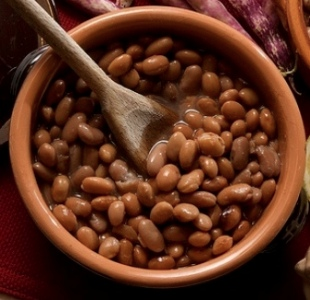
Ayers Creek Farm borlotto beans.

The pressure to come up with appropriate sides then lands on me. My fallback is always my mother's potato salad, a family favorite that pairs perfectly with smoky protein. I was struggling with what else would be appropriate when I remembered a baked bean dish I'd made a couple of years ago that had the slightest bite of vinegar, an Italian-inflected version based on a recipe from contributor Jim Dixon.

So the menu is set, and if you want updates I'll be posting photos of the results to my social media feeds (Twitter, Instagram and Facebook). But if you're simply want to make the baked beans for yourself this weekend, you can find the instructions below.

Baked Beans Italian Style

2 c. dried beans (I'm using borlotti beans from Ayers Creek Farm)
Water
2 tsp. salt
1 Tbsp. olive oil
2 bay leaves
1/4 lb. bacon
1 large onion, chopped fine
1/2 c. honey
1/2 c. red wine vinegar
1/4 c. sage leaves, chopped fine

Put dried beans in a pot and add water to cover by at least 2”. Cover and soak overnight on the counter.

Preheat oven to 250°.

Drain water from beans and add fresh water to cover by 1”. Add bacon, bay leaves, salt and olive oil. Cover, place in oven and bake 5 to 7 hours until beans are tender (a slow cooker would work well, too).

One hour before the end of the cooking time for the beans, combine the onions, honey, vinegar and sage in a small saucepan and simmer for 1 hour. When beans are tender, add onion mixture to them and combine, then bake for an additional hour. Remove the bay leaves. Remove the piece of bacon and slice it into pieces or shred it, then stir it back into the beans. Taste for salt and adjust as desired. This is great served right out of the oven but is also spectacular made a day ahead for dinner or a picnic the next day.

* My last batch had quite a bit of liquid left after cooking, so I simmered it on the stovetop for several hours, uncovered, to evaporate the liquid, stirring it occasionally to keep the beans from sticking. It worked like a charm, and the liquid turned into a luscious, beany sauce.

Wednesday, September 23, 2015

Braising Weather: A Pot of Beans


It's officially fall. The ash trees surrounding our house are turning golden, coloring the light that spills in the kitchen windows. The leaves that have fallen are dry and crispy, crunching under the feet of the neighborhood children walking to school. The urge to kick through the drifts of leaves on the parking strip is almost impossible to resist, and I can hear that most autumnal of sounds as the kids (and sometimes their parents) succumb to their siren song.

Willowood Farm Rockwell beans.

Nighttime temperatures are getting down into the 40s, requiring the addition of thick comforters to the beds, and mornings are brisk, with just enough of a chill to require pulling on a fleece jacket to walk the dogs first thing. The days warm up to the 70s by noon, and a glass of wine on the porch of an evening as the sun sets isn't out of the question just yet, warmth-wise.

This is what my parents used to call nigh-perfect Indian summer weather in the Northwest, though I'm beginning to think of it more and more as the onset of braising weather, time to pull out the Dutch oven for the season of low and slow-cooked meats and vegetables.

The finished beans.

This year's crop of dried beans have begun showing up at the farmers' markets, and I was recently gifted some Rockwell beans from Willowood Farm on Washington's Whidbey Island. This variety was originally grown by an island pioneer, Elisha Rockwell, in the late 1800s, and it was brought back into production recently by farmer Georgie Smith when she took over the land her family had been farming on Ebey's Prairie since the 1890s.

Beans don't need much besides water, onions and garlic to make a mighty tasty main course, served with a hunk of hearty bread and maybe a drizzle of olive oil, but I happened to have a pig trotter (top photo) from the Square Peg Farm pig I'd butchered last winter. Beans and pork are a natural pairing, and the fattier the cut of pig the better. Trotters are almost all fat, and over several hours it gave a porky unctuousness to the pot. A half pound of bacon works well, too, and can be chopped or shredded before or after braising. Even a pound of pork shoulder will do its work on the beans, and can be shredded afterwards to make a beany, porky chili.

Regardless of how you decide to cook them, grab a few different kinds of beans from your local farmers' market and take them for a spin in a pot. I guarantee you'll find one (or more) you'll love, not to mention they'll warm up your family's bellies on these crisp fall nights.

Basic Braised Beans

1 lb. dried beans
3 Tbsp. olive oil
1 onion, chopped roughly
3 cloves garlic, chopped fine
Water
1 Tbsp. salt, plus more to taste

Optional:
3 bay leaves
Pork (pig trotter, 1/2 lb. bacon, 1 lb. pork shoulder)

Depending on the type of bean, you may need to soak them overnight in water (cover by 2"). Check with the farmer or follow directions if they're packaged. Drain prior to cooking.

Preheat oven to 300°.

On top of stove over medium heat, add oil to pot and heat until it shimmers. Add onion and sauté until tender, then add garlic, sautéing briefly until it's fragrant but not browned. Add drained beans and cover with fresh water by 1". Add salt and stir briefly. Add bay leaves and pork if using.

When it comes to a simmer, cover the pot and put it in the oven for at least four hours or until beans are tender and meat (if used) is falling apart. Check occasionally and add water to cover if the beans have absorbed it all (the amount of water needed will vary with the type of beans and if they have been presoaked). If meat has been used, remove it to a cutting board and chop or shred it, then add it back to the beans.

This can also be done on top of the stove. Simply keep the beans on a low simmer, covered, and check occasionally to make sure all the liquid hasn't absorbed.

More bean recipes: Baked Beans Italian Style, Backyard Barbecue Beans, Mexican-Style Black Bean and Greens Soup.

Sunday, June 01, 2014

Gussy Up Baked Beans: Add an Italian Accent


Quick: Name the most ubiquitous foods at summer picnics.

Hot dogs. Hamburgers. Potato salad. Baked beans. Extra points if you envision them on a picnic table covered with a red-and-white checkered tablecloth. Maybe some smoke from the barbecue wafting by.

They're all-American classics for a reason, of course. Generations have grown up putting yellow mustard and ketchup—spelling it catsup, apparently, has gone the way of the dodo—pickles and onions on their burgers. But sometimes it's fun to mess with the classics once in awhile, especially if the tweaks, if not a paradigm-shifting improvement over the original, at least offer a delicious alternative.

I was musing over contributor Jim Dixon's potato salad recipe that called for green garlic and capers, then remembered a post he'd done a few years ago about baked beans. He'd baked them in the oven and then, to finish them off, added a version of an Italian agrodulce or sweet-and-sour preparation that mimicked good old American baked beans.

I'd soaked a pound of dried purgatorio beans from Ayers Creek Farm overnight and was planning to serve them with a roasted chicken for dinner. Baked beans, I thought, would be the perfect accompaniment and give me the chance to try out Jim's method. A little tweaking was done to his original recipe, of course, but my family liked the new twist on this classic, evidenced by the scraped-clean serving dish. I hope you'll like it as much!

Baked Beans Italian Style

2 c. dried beans (I used borlotto, but pretty much any dried bean would do)
Water
2 tsp. salt
1 Tbsp. olive oil
2 bay leaves
1/4 lb. bacon
1 large onion, chopped fine
1/2 c. honey
1/2 c. red wine vinegar
1/4 c. sage leaves, chopped fine

Put dried beans in a pot and add water to cover by at least 2”. Cover and soak overnight on the counter.

Preheat oven to 250°.

Drain water from beans and add fresh water to cover by 1”. Add bacon, bay leaves, salt and olive oil. Cover, place in oven and bake 5 to 7 hours until beans are tender (a slow cooker would work well, too).

One hour before the end of the cooking time for the beans, combine the onions, honey, vinegar and sage in a small saucepan and simmer for 1 hour. When beans are tender, add onion mixture to them and combine, then bake for an additional hour. Remove the bay leaves. Remove the piece of bacon and slice it into pieces or shred it, then stir it back into the beans. Taste for salt and adjust as desired. This is great served right out of the oven but is also spectacular made a day ahead for dinner or a picnic the next day.

Monday, June 27, 2011

Baked Beans and BBQ


One year we made the huge mistake of waiting until July third to get ribs from Gartner's, Portland palace of all things meat, for the following day's barbecue. While there was no danger they'd run out, and they were flying through the tickets from the take-a-number machine, we were still about eighty customers from getting our order. This year we'll make plans to go earlier, and the following baked bean recipe from contributor Jim Dixon of RealGoodFood would be the perfect side.

I got over the flu just in time for my son Tom’s wedding this weekend. Beautiful bride, incredible setting in the Gorge, sunshine, good friends, family old and new and, of course, delicious food. Tom asked me make the same beans I made for his brother’s wedding last summer, so here they are again.

Fagiole Agrodulce Redux

Agrodulce, literally strong-sweet in Italian, comes close to the classic flavor of baked beans, but with a bit more tang. The sour comes from vinegar, and since cooking beans with anything acidic leaves them tough, you need to cook the beans until tender without it.

Cook a pound of Washington's Haricot Farms rojo chiquito (small red) beans* with salt, olive oil, and enough water to cover by an inch or more in a covered pot in a 200° oven for at least few hours or until they’re tender (add more water if necessary; if you smell beans, that usually means the need some). You could also soak them and cook on the stovetop, but please do so gently.

For the agrodulce, chop a couple of onions and combine them with about a half cup of honey, a cup of Katz Late Harvest Sauvignon Blanc or Zinfandel vinegar*, a big handful of fresh sage leaves, coarsely chopped, and more olive oil. Simmer on the stovetop for at least an hour, then cook with the beans, uncovered, for another hour or until the sauce reduces a bit and the beans aren’t too runny. Adjust the salt if necessary.

Good hot, I think they’re even better at room temperature, so take them on your next picnic.

* Any small red beans will work, as will any good quality white or red wine vinegar. - KAB

Photo from Haricot Farms.