Showing posts with label non-GMO. Show all posts

Friday, February 24, 2017

Your Food, Your Legislature: Genetically Engineered Crops; Farm-to-School Funding


Your Food, Your Legislature is a series of reports giving Oregon consumers a heads-up on issues before the current session of the legislature that affect the food we are putting on our tables, as well as providing you with contact information to voice your opinion on those issues. Thanks to Ivan Maluski of Friends of Family Farmers for help on details of the pending legislation. The sponsors of legislation are listed on the information pages of the bills (links above), and links are provided for their offices. You can find your own legislators here if you want to contact them about these or other issues.

We're one month into the six month-long 2017 session of the Oregon Legislature. Today is the deadline for drafts of proposed legislation to be completed, then legislators will have until Tuesday to take them to the House and Senate desks for introduction. The bills of particular concern to Oregon farmers and consumers are outlined below.

Genetically engineered sugar beet.

Additionally, I will be moderating a panel on these issues and others at the Friends of Family Farmers InFarmation gathering on Tuesday, Feb. 28, at 6:30 pm at Holocene, 1001 SE Morrison. Make plans to attend and get more information on these bills and other issues, as well as ask any questions you may have.

Allowing local communities to protect farmers whose crops may be at risk of contamination from genetically engineered (GE) seed or products (HB 2469). This bill will allow counties in Oregon to protect farmers within their boundaries from contamination of their crops by genetically engineered (GE) crops. It effectively repeals a bill dubbed the "Monsanto Protection Act" that was signed into law in 2013 by then-Governor John Kitzhaber that took away the rights of local communities to set local food and agriculture policies. On Feb. 8 a press conference was held in the State Capitol in Salem laying out the case for these two bills and the history behind it (video here; press conference starts at 11:35 mark). Sponsors are currently working to secure committee hearings on this bill.

Strengthening the ability of farmers to hold patent-holders of GE crops financially accountable when unwanted presence of their products is found on farmers’ land (HB 2739). This bill clarifies that the responsibility of contamination of a farmer's crops by another farmer's GE crops lies with the patent-holder, allowing the court to award prevailing plaintiff costs, attorney fees and triple the economic damages. In many cases in the past, the farmer who is the victim of contamination has not only lost his crops, but has been successfully sued by the patent-holder for "stealing" the GE crops. In addition, in some cases organic farmers have lost their organic certification due to this kind of contamination by GE crops, essentially putting them out of business. Oregon farmers deserve to have legal recourse in the event of this kind of contamination.

Portland's Sabin School Garden Program.

Ensuring continued funding for Oregon's Farm-to-School program (HB 2038). This bill appropriates funds to the Department of Education for grant programs allowing school districts to purchase Oregon food products and to pay for costs related to food-based, agriculture-based and garden-based educational activities. Currently, Governor Kate Brown’s proposed two-year budget contains no funding for Farm-to-School. In 2015, the Legislature provided over $5 million in funding for a farm-to-school program. However, this funding expires in July 2017, and because Oregon is facing a severe budget shortfall of roughly $1.8 billion, top Legislative budget writers earlier this year proposed significant cuts to the program.

See the first post in this series for other bills affecting farmers and consumers in Oregon this session. For more information, read the entire series here.

Tuesday, February 02, 2016

Your Food, Your Legislature: New Session, New Issues


Your Food, Your Legislature is a series of reports giving Oregon consumers a heads-up on issues before the current session of the legislature that affect the food we are putting on our tables, as well as providing an opportunity to voice your opinion on those issues. Thanks to Ivan Maluski of Friends of Family Farmers for help on details of the pending legislation.

The 2016 Interim Session of the Oregon Legislature was gaveled into operation yesterday morning, and for the next five weeks the Capitol will be buzzing with legislators, lobbyists and staff rushing to get proposed bills onto the floor for a vote. Originally established to deal with budget details that came up between odd-year legislative sessions, these short, interim (even-year) sessions have taken on the look of the look of a normal, if somewhat rushed, regular session.

So far just one proposed bill deals with a (literal) dinner-table issue. I'll keep you updated as the session continues and as other issues arise.

Allows local restrictions on genetically modified (GMO) crops (House Bill 4122).

In 2014 an ordinance was passed by Jackson County voters that "would ban any person from propagating, cultivating, raising or growing 'genetically-engineered' [GE] plants" in the county. In the run-up to that election, with the assumption that the Jackson County anti-GMO ordinance would pass, a special session of the Oregon legislature passed Senate Bill 863—what many opponents called the Monsanto Protection Act—prohibiting any Oregon county except Jackson County from regulating or banning GMOs. The bill was inserted into a so-called "grand bargain" that mainly dealt with tax rates on higher earners and with public employee pension issues, and was included in the package as a deal to get reluctant Republicans to support tax increases on those higher income earners.

Putting the ridiculous notion that one county is allowed to regulate its crops and all others are prohibited from doing exactly that (shades of "Mom always liked you best"), this effort at repealing parts of SB 863 is based on a lack of action on the part of the Oregon Department of Agriculture (ODA) or the legislature to provide Oregon farmers any protections against contamination by genetically engineered or GMO crops at the state level.

After SB 863 passed the legislature, then-Governor John Kitzhaber formed a "GE Task Force" of farmers, GE industry representatives and others who came together in an effort to work out state-level policies and solutions. Unfortunately the industry representatives and organizations like the Oregon Farm Bureau and Oregonians for Food and Shelter balked at anything that would have regulated GE crops, and when Gov. Kitzhaber resigned, the task force fell apart.

Farmers in Oregon and across the country have faced embargoes and huge losses due to contamination by GE and GMO crops, not to mention lawsuits brought against them by Monsanto, Syngenta, Bayer and other companies when they are found to have "stolen" the GE seeds (kind of like the wolf suing Little Red Riding Hood for assault). So with no protection from cross-contamination by pollen from GE and GMO crops, and with small farmers facing possible bankruptcy or worse, local communities want to decide for themselves how best to protect their farmers growing traditional, non-GE crops.

Some more history on Jackson County's ban.

More information on the issues of GE/GMO contamination from an Oregon farmer's perspective.

Articles on the economic effects of contamination:

Tuesday, July 21, 2015

Your Food, Your Legislature: Wins, Losses and Draws


Key pieces of legislation that would have affected the food we put in our shopping baskets and serve to our families were in play in the session of the state legislature that just concluded. Up for debate were issues on genetically engineered (GE) crops, antibiotics in animal feed, urban agriculture and a loan program to help beginning farmers, among many others.

Unprecedented efforts by concerned citizens—including readers of Good Stuff NW—and small farm organizations helped to offset some of the lobbying and money thrown around by out-of-state agribusiness interests, resulting in big wins for family farmers and consumers, but there were also some disappointing losses. Here's the wrap-up.

Wins

Loans for beginning farmers (aka Aggie Bonds): With the average age of an Oregon farmer nearing 60, HB 3239 will make a big difference in bringing younger farmers online quickly. It expands the types of loans issued by NW Farm Credit Services, as well as seller-financed loans. Through HB 5005, the Legislature authorized up to $10 million in state bonding authority to support dozens of lower-interest rate beginning farmer loans over the next two years.

Agritourism: The ability of Oregon farmers to educate more people about farming and farm practices and earn income from those visits without fearing liability claims was given a big boost by SB 341. As long as risks are clearly posted, it provides protection for farms engaged in agritourism including U-pick, corn-mazes, hay rides, farm stays and more.

Farm-to-school programs: Oregon's children will be eating healthier meals at school thanks to HB 2721*. Funding for the popular program will increase from $1.2 million to $4.5 million over the next two years and was expanded to cover school meal programs statewide.

OSU Extension: This critical agricultural service will get $14 million in new funding with HB 5024, reversing a decade of staff and budget cuts. It allows the University to hire new positions to support farmers statewide, including beginning farmer support, pollinator health, sustainable grazing management, fermentation sciences and more.

Losses

Genetically engineered (GE) crops: Significant legislation to give the Oregon Department of Agriculture (ODA) the authority to keep genetically engineered crops away from non-genetically engineered crops was dropped after Gov. Kitzhaber, who had favored this effort, resigned, and when out-of-state industrial interests worked to quash efforts to revive it.

Farm antibiotics reform: A major battle was waged over SB 920, which would have limited the use of "medically important" antibiotics—i.e. those used on humans—on otherwise healthy animals by Oregon's livestock industry. An outpouring of support from consumers (and readers of Good Stuff NW), as well as support by the medical community and many of the Oregon's livestock producers was strongly opposed by the state’s biggest corporate factory farms and out-of-state agricultural pharmaceutical companies.

Draws

Urban agriculture: While this bill didn’t pass, there was a strong show of support in the legislature for HB 2723, which would have encouraged the establishment of urban agriculture incentive zones, where lower property tax rates could be offered for small-scale urban farms. This suggests future legislation may be in the mix.

Regulation of canola: Canola is a major concern for the specialty seed industry, organic producers and fresh market vegetable growers due to issues of crop contamination. HB 3382 is a setback to those concerns because it allows 500 acres of canola to be grown per year between 2016 and 2019, a period previously subject to a "no-canola" moratorium. However, the bill also requires more comprehensive research on the harmful impacts of canola and for the ODA to present recommendations on rules needed to protect the specialty seed industry from canola in the future.

* * *

Read the rest of the posts in the Your Food, Your Legislature series.

Thanks to Ivan Maluski and Friends of Family Farmers for help with understanding and reporting on these important issues. I couldn't have waded through the reams of legislative data without their input.

* In the closing hours of the session, HB 2721 was folded into appropriation measures SB 5507 and 5501.


Tuesday, May 12, 2015

Your Food, Your Legislature: The Fight Takes Shape


The following is an edited version of an original report that was published on the Friends of Family Farmers' Muckboots in the Capitol blog. The numbered title of each bill (in bold) is linked to an overview on the state website. It is critical that you let your legislators know what you think about the issues that concern you. Find links at the bottom of this post to do that.

In the Good Corner

House Bill (HB) 3239: Also known as the "Aggie Bonds" bill, this is legislation that would expand loans to beginning farmers. It passed 58-1 on the House floor in mid-April, passed the Senate Business committee and is on the Senate floor awaiting action. Update: This bill passed the Senate on May 13, 2015, on a bipartisan vote of 30-0.

Senate Bill (SB) 341: This bill would protect agritourism providers from legal liability when they invite members of the public onto their property for both commercial and non-commercial activities, but will also require clear warning signs and outline other basic safety steps agritourism providers must take. It passed the entire Senate in a resounding bipartisan 29-0 vote.

SB 920: This bills seeks to limit the use of "medically important" antibiotics—i.e. those used on humans—on otherwise healthy animals by Oregon's livestock industry. (See my post, The Personal Gets Political.) It is now in the Senate Rules Committee, but is being strongly opposed by the state’s biggest corporate factory farms and out-of-state agricultural pharmaceutical companies. This is despite growing evidence of widespread problems and regulatory failures related to recurring outbreaks of antibiotic resistant disease as happened at Foster Farms, featured in an article by Lynne Terry titled A Game of Chicken: USDA Repeatedly Blinked When Facing Salmonella Outbreaks Involving Foster Farms.

HB 2723: This bill encourages the development of urban agriculture by giving tax incentives to property owners who allow small-scale urban agriculture on their property for five-year increments. It passed the full House on a 50-10 vote, and is now headed to the Senate where it will likely be amended to limit eligible farm size so that the new tax incentive primarily encourages smaller scale agricultural operations.

HB 2721: If passed into law, this bill would provide $5 million in funding for farm-to-school programs—a major increase from the $1.2 million currently—making funding available to every school district in Oregon to purchase local farm goods and locally processed foods for inclusion in school meal programs. It is currently awaiting action in the Ways and Means Committee.

SB 657: This bill would provide $16 million for OSU Extension and Ag Research Programs for small and beginning farmers support, pollinator health, food safety, water quality protection and help with research needs on crop rotation, reducing pesticide use, fermentation sciences and sustainable management techniques. It is currently awaiting action in the Ways and Means Committee.

SB 204: Originally a much broader bill to promote conservation activities on working farms and forests, it has been scaled back to create a task force to look at issues around working lands conservation and to establish a Clean Water Fund to support greater protection for riparian areas on farms, including through long-term easements. It is also in the Ways and Means Committee.

In the Bad Corner

HB 2674, HB 2675, SB 207: These bills, introduced by Gov. Kitzhaber, would have enacted some common-sense regulation to better protect Oregon’s vast non-genetically engineered agricultural industries from poorly regulated genetically engineered (GE) crops. They were essentially abandoned when Kitzhaber resigned, and there are currently no bills alive in Salem to strengthen state oversight over GE crops in Oregon.

HB 3382: Introduced on behalf of a handful of canola growers unhappy with a 2013 bill. Despite being only halfway through the bill's three-year research program and having no research results available, HB 3382 authorizes 500 acres of commercial canola production per year from 2016-2019. Worse, the bill says there will be no cap on canola acreage beginning in 2019 and contains no restrictions on genetically engineered canola, effectively putting the Willamette Valley’s specialty seed, fresh market vegetable and organic industries at great risk. (See my series on canola in the Willamette Valley.)

HB 2666: If passed, this legislation would place mining for aggregate (gravel) on farmland above agricultural uses on farmland, putting high value Oregon farmland at risk of being lost forever to mining activities. It is currently in the House Rules Committee and, because of idiosyncratic rules, is not subject to normal legislative deadlines, and may be the subject of behind-the-scenes negotiating and arm-twisting from mining interests.

It is critical that you speak up about the issues that concern you, so please consider contacting your legislators. Find your legislators and let them know what you think. And stay tuned for further updates as the 2015 session progresses!

Read the other posts in this series, Opening Salvos, The Good, The Bad and The UglyThe Personal Gets Political and Hanging in the Balance.

Wednesday, March 18, 2015

Your Food, Your Legislature: The Good, the Bad and the Ugly


The following is an edited version of an original report that was published on the Friends of Family Farmers' Muckboots in the Capitol blog. The numbered title of each bill (in bold) is linked to an overview on the state website.

The Good

House Bill (HB) 3239: The "Aggie Bonds" bill was introduced with bipartisan co-sponsorship on February 27. It builds on 2013’s Beginning and Expanding Farmer Lending Program (aka Aggie Bonds) by expanding the definition of "lender" to include both NW Farm Credit Services and what are called seller-carried financing contracts, when a landowner agrees to carry the loan for the beginning farmer. This bill will help provide lower interest loans for qualifying beginning farmers.

HB 2446: The raw milk advertising bill would repeal the Oregon Department of Agriculture’s (ODA’s) ban on advertising legally available raw milk. Oregon allows small batch raw milk production if it is sold directly to consumers on-farm, but prohibits advertising of this legally available farm product, which severely limits farmers' ability to reach consumers.

The ODA had been directing some farmers to remove information about raw milk from their website, threatening them with penalties. Cast Iron Farm in McMinnville sued the ODA with help from the Institute for Justice, arguing that the advertising ban was an unconstitutional restriction on the First Amendment right of free speech. ODA settled the suit and agreed to not enforce the ban and introduced HB 2446 to repeal it.

The Good and Bad

Senate Bill (SB) 341: Similar to laws on the books in over 20 other states, this bill would protect agritourism providers—farmers and ranchers—from lawsuits and legal liability when customers come onto their property and are injured through no fault of the owners. This is based on the customer's presumed acceptance of the "inherent risks" of being on a farm or ranch.

The bill requires posting of clear signs, inspection of equipment and other steps to ensure baseline safety standards are being met. The goal is to help support agritourism activities in Oregon, which can be an important "value-added" source of income for farms, and it includes actives like U-Pick, harvest-your-own, pumpkin patches and educational activities.

On the "bad" side, this bill was firmly opposed by the powerful Oregon Trail Lawyers Association during the committee hearing. That means there will be a lot of extra work to do to ensure it gets a full public hearing rather than the lower-level "informational hearing" it received, and a committee vote.

HB 2674 and HB 2675: These two bills would give the ODA authority to set up "control areas" and other designations to keep genetically engineered (GE) crops from contaminating non-GE crops. The bills would also require that ODA gather information on the use of genetic engineering in agriculture in Oregon to fill in substantial data gaps that make responsible management difficult.

The bill got a generally cool reception from the House Rural Communities, Land Use and Water Committee, including from legislators who voted for a bill in 2013 that put ‘exclusive regulatory power’ over GE crops in the hands of the state, while preventing local communities from enacting their own GE regulations. The committee chair announced he would form a ‘work group’ to see if any ideas from the legislation can garner enough support to move forward and pass the committee.

The Ugly

SB 25: This bill would exempt a number of counties in Oregon from the statewide land use planning system, including requirements for citizen involvement and protecting farmland from development. This could lead to a loss of valuable farmland and make it harder for farmers to compete for land against developers and other interests when land prices are driven up. The bill received a hearing in the Senate Environment and Natural Resources Committee on February 23.

HB 2449: This bill would extend the sunset on bioenergy tax credits and amend a number of the credits. The Oregon Department of Energy has proposed a significant reduction in the amount of tax credit that would be available to animal manure digesters. These tax credits have primarily benefited large factory farms, providing an unnecessary and costly taxpayer subsidy for these operations in the name of "green energy."

Unfortunately, this proposed change has not gone unnoticed by the the large-scale dairy operations that benefit most from the current tax credit. Several amendments to keep the tax credit high for manure digesters have been proposed and, if adopted, may not only support existing factory-scale farms that have significant manure management and air pollution problems, but would amount to a taxpayer handout for new large-scale factory farms that may want to set up shop in Oregon as long as they install a manure digester.

On March 5, the House Energy and Environment Committee heard testimony on this bill, which Friends of Family Farmers, among others, supports as written without the amendments.

Click here for more information on the bills that are coming up before the Legislature this session. Find your legislators and let them know what you think. And stay tuned for further updates as the 2015 session progresses!

Read the other posts in this series, Opening Salvos, The Personal Gets Political and The Fight Takes Shape and Hanging in the Balance.

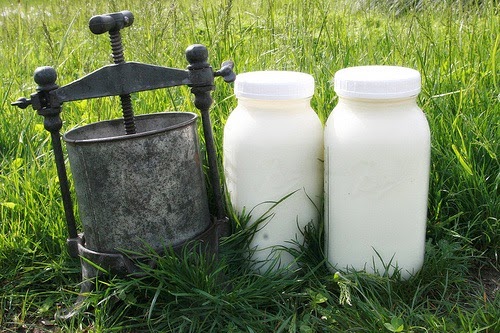
Photos: Evan and Rachel of Boondockers Farm; raw milk from Cast Iron Farm; manure digester from Farm Energy Images.

Wednesday, January 21, 2015

Your Food, Your Legislature: Opening Salvos


This blog is about my ongoing journey to discover the connections between what's going on in the field and what I put on my table. It took me awhile to realize part of that road makes a detour through the halls of the Capitol building in Salem. In other words, the decisions that our elected officials make about agriculture in Oregon directly affect what I'm going to feed my family, whether I buy it at the farmers' market or the grocery store.

With the opening of the 2015 regular session of the state legislature, I thought it might be helpful to sit down with Ivan Maluski, the Director of Friends of Family Farmers, an organization working to promote and protect socially responsible agriculture in Oregon, and get the bullet points on what's he's paying attention to this session.

Senate Bill 207: Authorizes the Oregon Department of Agriculture to establish control areas to allow for the regulation of genetically engineered crops to prevent conflicts with growers of non-GMO crops.

The ability of communities to make decisions about their local food systems as well as assuring farmers that the integrity of their crops is protected is at the center of this bill. The federal system for regulating genetically modified organisms (GMOs) is an "outdated patchwork" according to Maluski, who said that protecting non-GMO crops is a hot topic nationally. He added that no other state has taken a leadership position on this issue, and doing so would put Oregon at the forefront of the debate.

The bill basically gives the ODA the authority to establish legally binding isolation distances between GMO and non-GMO crops, necessary because pollen and seed from GMO crops can potentially contaminate fields of non-GMO crops. It's clear that Oregon industries like organic farms, organic seed producers and conventional vegetable growers can be potentially devastated by contamination from GMO crops.

For instance, last November the Salem Statesman Journal reported that Monsanto Co. reached a $2.4 million settlement with Pacific Northwest wheat farmers who sued after unapproved genetically modified wheat was discovered growing in Eastern Oregon. According to the article, the discovery of the wheat had prompted Japan and South Korea to temporarily suspend some wheat orders, a disastrous situation in any industry.

* * *

House Bill 2598: Prohibits the use of medically important antibiotics on healthy food-producing animals for non-therapeutic purposes such as growth promotion and disease prevention. Requires documentation of reporting of antibiotic use in large concentrated animal feeding operations in Oregon.

Simply put, this bill says that large factory farms will only be able to use antibiotics on sick animals. Currently, concentrated animal feeding operations (CAFOs) routinely use antibiotics on healthy animals to promote faster growth and for disease prevention (rather than treatment when an animal is actually sick). OSPIRG is currently taking the lead in this effort, positioning it as an important public health issue, since overuse of antibiotics in food-producing animals—meat animals in particular—is causing existing antibiotics used to combat human illness to lose their effectiveness. A prominent example of this was the outbreak of antibiotic-resistant salmonella traced to Foster Farms chicken that sickened hundreds across the country in 2014.

* * *

Senate Bill 204: Establishes a new Working Forests and Farms Advisory Program to provide low interest loans, loan guarantees and grants to help maintain or restore conservation benefits on working forests and farms.

In essence this bill would provide loans, loan guarantees and grants to keep existing farmland in production and encourage farmers to pass their land on to a new generation of farmers rather than convert farmland to non-farm uses. Considering the average age of a farmer in Oregon is 58, it's critical for the continuation of our local food supply to keep farmland in production and provide avenues for new farmers to get onto the land.

* * *

Other issues that may come up this session are:
  • Establishing pilot projects to give Supplemental Nutrition Assistance Program (SNAP, formerly known as food stamps) recipients regular access and incentives to purchase fresh fruits and vegetables.
  • Creating incentive areas and reducing roadblocks to the development of urban agriculture enterprise zones on underutilized city lots.
  • Promoting agritourism through liability protections for farmers who want to offer public access to their property.
  • Allowing farms to advertise raw milk sold on their farms. Currently farms are not even allowed to put that information on their websites.

Click here for more information on the bills that are coming up before the Legislature this session. Find your legislators and let them know what you think. And stay tuned for further updates as the 2015 session progresses!

Read the other posts in this series, The Good, The Bad and the UglyThe Personal Gets Political , The Fight Takes Shape and Hanging in the Balance.

Photos of Oregon Capitol building and CAFO from Wikipedia.

Tuesday, October 28, 2014

Oregon's GMO Labeling Battle: One Week to Go


First of all: please vote.

Second? Vote, dammit!

Okay, now that we have that out of the way: My family voted last week, as we usually do, sitting around the dining room table after dinner with the voter's pamphlet and our ballots, pointing at the ridiculous pictures ("Look, a pirate's running for Representative. Awesome!"), decoding the screamy endorsements then dropping our ballots off at the local public library. So now I'm going to jump into the fray and tell you why I voted for Measure 92 to require labeling of products containing genetically modified ingredients.

Luckily we only watch television shows online, so aren't subjected to the overwhelming barrage of ads talking about how the earth is going to spin backwards on its axis and life as we know it will end if the measure does or does not pass. (Though the barrage of ads for pharmaceuticals, cars and cleaning products have nearly the same deadening effect.) And since I'm not going to out my family members here, I'll just talk about my own reasons.

My first reason is, of course, a selfish one. I want to know what goes into the food I buy and feed my own family. For me, labeling will help me make decisions about which products I want to buy and which I'd rather not purchase. Labels like "certified organic" and certification from the Non-GMO Project help me to know what I'm thinking about buying, but getting those certifications is voluntary and costs a lot of money. Companies that don't want to disclose that information simply don't have to, hiding behind other labels like "natural" or "sustainable."

Now, my own feelings about what I feed my family shouldn't be the standard for the rest of the world (though everyone would be so much better off if they'd just listen to me), but, as is pointed out in a Washington Post article titled "The GMO Debate: 5 Things to Stop Arguing About," there's my concern that the use of genetically modified crops in agriculture has caused an increase of tsunami-like proportions in the use of pesticides, and that "we need to start building more transparency into our agricultural system so consumers can vote with their wallets for the kind of system they want to see." Amen.

Further, an article by Tom Philpott in Mother Jones magazine said that in a just-released paper published in the peer-reviewed Environmental Sciences Europe, by Chuck Benbrook, research professor at Washington State University's Center for Sustaining Agriculture and Natural Resources, "GMO technology 'drove up herbicide use by 527 million pounds, or about 11 percent, between 1996 (when [Monsanto’s] Roundup Ready crops first hit farm fields) and 2011.'" The article continues: “But then weeds started to develop resistance to Roundup, pushing farmers to apply higher per-acre rates. In 2002, farmers using Roundup Ready soybeans jacked up their Roundup application rates by 21 percent, triggering a 19 million pound overall increase in Roundup use."

And “by 2011, farms using Roundup Ready seeds were using 24 percent more herbicide than non-GMO farms planting the same crops," Benbrook is quoted as saying. By that time, "'in all three crops [corn, soy, and cotton], resistant weeds had fully kicked in,' Benbrook said, and farmers were responding both by ramping up use of Roundup and resorting to older, more toxic herbicides like 2,4-D."

All those pesticides don't just disappear in a puff of non-toxic smoke. They're seeping into the soil and the groundwater, washing into our rivers and streams, being blown by the wind and carried by birds, insects and passing traffic and ending up in the oceans. Not to mention that genetically modified crops can cross-pollinate with organic crops of the same species, potentially costing organic farmers their certification, as well as a loss of income from that contaminated crop.

If I can help to stem this tide of pesticides and other damages by filling my grocery bag with products that don't contain genetically modified organisms, then I'd like to do that. But first those products would have to be labeled, wouldn't they?

More reading:

"More Money, Fewer Facts: Final Week of Oregon's GMO Labeling Race" by Hannah Wallace truth-checks some claims being bandied about in commercials and materials.

Top photo from Oregon Right to Know.

Friday, January 10, 2014

Not So Cheery Os


Last week, General Mills announced that it had stopped sourcing bioengineered corn starch and beet sugar for its original Cheerios. Many consumer advocates lauded the decision, some going so far as to hail it as the beginning of the end of genetically modified organisms (GMOs) altogether. Others, including Matt Dillon, former Executive Director and cofounder of Organic Seed Alliance, said all the celebrating might be premature. The following is an edited version of his post on Facebook.

I'm seeing all this celebration about Cheerios’ decision to source non-GMO corn starch and sourcing cane instead of beet sugar. For instance, people and organizations admired as leaders in the food and farming movement are saying that we should encourage people to buy Cheerios to show General Mills that we appreciate their change in ingredients.

Let’s hold on a second and do a reality check.

Our alternative food and farming movement was founded on the premise that the industrial/conventional/chemical/commodity food machine was unhealthy for people and for the planet. Non-GMO food (that isn’t also organic) is the same old conventional/chemical/exploitative food, both socially and ecologically.

So are these people celebrating Cheerios now saying that the horrendous food and horrendous practices—that for 40-plus years the alternative movement has tried to change—are now acceptable?

A decade ago we were focused on eliminating toxic pesticides from farming. Today we are fine with it, as long as it isn't GMO production. This is two steps backward—into insanity.

Yes, it can be spun as, "Well, General Mills is taking a step in the right direction."

No, they are not. They are eliminating two minor ingredients in one of their many brands. What would be worthy of celebrating is General Mills saying, "We will not buy crops grown with atrazine, 2 4d or methyl iodide. We will not sow corn seed coated in neocotonoids that impact bees. We will not use organophosphate and carbamate insecticides that are deadly to wildlife."

But labeling one brand of cereal as "non-GMO" doesn’t address this. In fact, non-GMO (no matter if it has a label or not) uses all of these harmful practices.

Want to really do something as a consumer? Don't buy products that are trying to give themselves a green halo for sticking a non-GMO label on their package if they aren't at least in transition to organic. Stop letting conventional companies steal "sustainable" dollars from organic farmers who do the real work of sustainability, and reject these straw man labels.

Top photo by Becky Hansmeyer from Flickr.

Monday, March 09, 2009

Getting Schooled


"Cucurbits were bottle-necked a long time ago."*
- John Navazio, senior plant breeder, Organic Seed Alliance

There were moments during last week's Organicology conference, as when I heard the comment above, that I felt like I was seriously in over my head. And not just because there were seminars titled "Fertilizers and Amendments for Organic Farming: Making Sustainable Choices" and "Sustainable Business Performance Measurement Tools and Reporting."

Fortunately for me, there were other topics available, too, on organic seed production (with seed guy and rabble-rouser Frank Morton, left) and the farmer-chef connection (with the irrepressible A. Boutard).

But it was definitely targeted to those seriously committed to organic and sustainable practices, with the initial keynote from Claire Hope Cummings, author of Uncertain Peril: Genetic Engineering and the Future of Seeds.

The second was from writer and journalist Paul Roberts (right), whose book The End of Food says that, because living systems can't be industrialized or commodified, our current food system is doomed to fail. And I loved it when he tweaked this very committed crowd when he stated that there has to be room to acknowledge those who may not be completely organic in their practices but are moving away from conventional methods, like the farmer who has reduced his use of pesticides and fertilizers by 70%. You could have heard a pin drop!

The final word was left to Vandana Shiva (top and left), a leader in the struggle for global justice and author of Earth Democracy: Justice, Sustainability, and Peace, as she laid out the case against the corporatization and privatization of our genetic heritage as it is expressed through seeds and culture. She believes that the ability of farmers to save their own seed is absolutely necessary for local, sustainable economies to be nurtured. And you should have seen some of the grown men crowding around after her talk and getting their "fan boy" pictures taken with her!

After three days, all I can say is that there are some truly exciting people on both sides of the plow, the pen and the plate, and I hope to be letting you know more about them in the near future. In the meantime, I'll pass on a few of my favorite bits from my notes:
  • At breakfast the first day, I knew it was a different sort of gathering when I saw hot maple amaranth and a tofu scramble on the steam table.
  • Spinach plants mature and can bolt quickly because of daylight, not heat (though heat can facilitate the process)
  • Flowering plants arrived much later than other types (like ferns) but evolved much more quickly because of their ability to produce seeds
  • The number of silks on an ear of corn is equal to the number of kernels on that ear, and the silk is the stamen of the plant, (i.e. a hollow tube that carries pollen)
  • Seed companies grow little or none of their own seed, though they may do trialing (or testing) of the seeds they sell
  • All canola labeled "non-GMO" is contaminated with genetically modified organisms
  • According to Ken Roseboro of the Non-GMO Project in Eugene, "92% of soybeans, 73% of corn and 87% of cotton is GMO"
  • The key to sustainability is developing relationships. With food, that means seed growers building connections with farmers, who connect with food producers and consumers who then connect to their larger communities and the world.
Too pie-in-the-sky? If you believe these folks, not if we take it one decision at a time, one day at a time.

* "
Cucurbitaceae is a plant family commonly known as melons, gourds or cucurbits and includes crops like cucumbers, squashes (including pumpkins), luffas, melons and watermelons. The family is predominantly distributed around the tropics, where those with edible fruits were amongst the earliest cultivated plants in both the Old and New Worlds." - Wikipedia