Showing posts with label ODA. Show all posts

Tuesday, June 04, 2019

Your Food, Your Legislature: Take Action to Protect Oregon from Invasive Canola


Canola has a long and sordid history in Oregon going back to 1990, when it was designated as a controlled crop with strict regulations on where it could be grown in the Willamette Valley, because of its habit of cross-pollinating with other crops. And ever since, producers have come back again and again to try to expand the restrictions on its production.

On July 1, current rules that cap annual canola production at 500 acres in the Willamette Valley expire, and—suprise, surprise—once again canola producers are attempting to roll back that restriction. The Oregon Legislature is considering SB 885, a bill that would maintain the current 500 acre per year cap indefinitely.
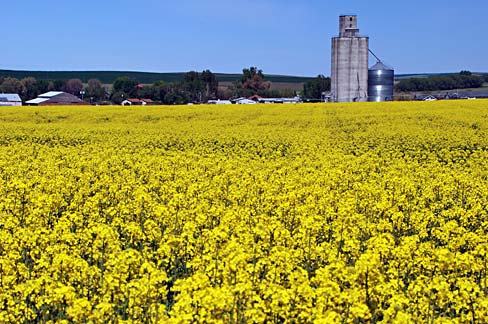
Canola field in Boardman, Oregon.

Meanwhile, according to Ivan Maluski, Policy director of Friends of Family Farmers, the ODA has announced a newly proposed rule to replace current expiring canola restrictions. "This draft proposal simply falls short of what is necessary to protect the unique attributes of the Willamette Valley’s specialty seed industry," Maluski writes. "ODA’s proposal includes no acreage cap, doesn’t explicitly prohibit canola production in a proposed Isolation Area, doesn’t prohibit herbicide tolerant or genetically engineered canola varieties, and leaves large parts of the Willamette Valley unprotected."

What can you do about it? You can e-mail your legislators and tell them to maintain the current restrictions as outlined in SB 885 (sample letter at bottom). You can also submit e-mail comments on the ODA canola rule by Friday, June 21 at 5 pm (sample text at bottom; written comments can be sent to Sunny Summers, Oregon Department of Agriculture, 635 Capitol St. NE, Salem, OR 97301).

Canola blossom.

Why should you bother? Here's what I wrote in 2012:

"The Willamette River, from its headwaters in the Calapooya Mountains outside of Eugene to its confluence with the Columbia north of Portland, forms the base of a long narrow valley that not only contains 70% of the state's population, it's also Oregon's most fertile agricultural area. Averaging only 25 miles wide, the valley's rich volcanic and glacial soil was deposited here by ancient Ice Age flooding and can be half a mile deep in some areas.

"Orchards, vineyards and farmland vie with urban areas for space in its narrow confines, and some crops have been tightly controlled to prevent problems with cross-pollination from the distribution of pollen by the wind, water and dust churned up by traffic along its length. Canola, also known as rapeseed, has been one of those controlled crops and has been regulated in Oregon since 1990.

"Because it is a member of the Brassica family (Brassica napus, B. rapa and B. juncea), it can cross-pollinate with with similar brassicas like cabbage, broccoli, cauliflower, kale and turnips, endangering these valley crops and the farmers who depend on them for their livelihoods. With the bulk of the domestic canola crop also contaminated with GMOs (approx. 93%), this presents a particular threat to organic farmers and seed producers, since current USDA Organic guidelines do not allow for genetically engineered material."

Canola cross-pollinates with other brassicas.

The Oregon Dept. of Agriculture (ODA) issued a temporary ruling in 2012 to allow planting of the crop in certain formerly protected areas, prompting Friends of Family Farmers (FoFF), the Center for Food Safety (CFS) and three Willamette Valley specialty seed producers to file suit to stop the ruling from taking effect. As a result, the Oregon Court of Appeals overturned the ODA's action, whereupon the ODA filed for a permanent ruling to allow growing of canola, prompting the legislature to pass a ban on the production of canola in most of the valley through 2018. Unfortunately, in 2015 a handful of canola growers unhappy with the previous bill pushed through HB 3382, which authorized 500 acres of commercial canola production per year from 2016 through July of 2019.

What all this means that if you care about being able to buy locally grown, organic, non-GMO produce at the farmers' market or greengrocer's, it would behoove you to write your legislators and submit a comment to the ODA. I've made it simple to do by supplying suggested text (below) that you can copy and paste into your e-mails or letters. (Thanks to FoFF for supplying bullet points).

* * *

(Find your legislator here.)

Dear [legislator],

I am writing to urge you to support SB 885. We must maintain current restrictions on Willamette Valley canola production that expire July 1 in order to protect the region’s important specialty seed industry and the hundreds of farmers, gardeners, and food producers who depend on it.

Thank you,

[your name and address]

* * *

(Here's the ODA's e-mail address.)

Dear Director Taylor:

I am writing because the Oregon Department of Agriculture’s draft proposal to address the risks from canola production falls far short of what is necessary to protect the unique attributes of Oregon’s world-renowned specialty seed industry.

I oppose the draft rule because it includes no acreage cap, doesn’t prohibit canola inside the proposed Isolation Area, doesn’t prohibit herbicide tolerant or genetically engineered canola varieties, and leaves many Willamette Valley farmers unprotected from the risks associated with canola.

The final rule should include: an acreage cap not to exceed 500 acres per year inside the Willamette Valley Protected District; a clear prohibition on canola production inside the proposed Isolation Area; a larger Isolation Area where no production of canola would be allowed; clear protections for seed farmers outside the proposed Isolation Area; and a clear prohibition on growing herbicide tolerant or genetically engineered varieties of canola.

Thank you,

[your name and address]

Saturday, April 13, 2019

Make a Difference in Our Food System: Join a Commodity Commission!


Love West Coast albacore? Passionate about beer? Want to do something to change Oregon's food system for the better? If you care about where your food comes from and how it's produced, please consider joining one of Oregon's commodity crop commissions. Most include a member of the public, so check out this list of the positions available and make a difference in our food system!

Oregon albacore.

The Oregon Department of Agriculture (ODA) is recruiting for 63 commodity commissions, with a deadline to apply on May 10, 2019. Oregon’s 23 grower-funded commodity commissions support promotion, research and education to improve market conditions for their commodity. A key point: they also give industry members direct access to key Oregon agricultural opinion leaders and decision makers.

Oregon strawberries.

Each commission has a board that includes producer and handler positions. Producers grow or harvest the commodity; handlers are the first to purchase the commodity from the producer and often are processors, distributors, or marketers. And most commissions also include a member of the public. (The dairy commission has a public member position available…just sayin'.)

Time commitment varies depending on the commission, but can be from four to 10 times a year, and phone participation is a possibility. Meetings generally last two hours, but can sometimes be as long as two days, with some expenses reimbursed. For more information, e-mail Kris Anderson. You can make a difference!

Click to see the list and apply.

Thursday, February 28, 2019

Lost Valley Farm Sold to Washington Buyer


Well, it's happened. Lost Valley Farm, the infamous factory farm dairy that in its first two years racked up more than 200 violations related to overflowing manure pits, leaking tanks of dead animals, over-application of manure that threatened area groundwater and drinking wells, and even failure to provide restroom facilities for employees, has been sold.

Cow stands in liquid manure at Lost Valley.

Who would be crazy enough to buy a facility that will require millions of dollars to clean up and more millions to install a new irrigation system? Apparently Cody Easterman of Easterday Farms of Pasco, Washington, a large potato and onion grower, who paid $66.9 million through a company called Canyon Farm LLC. (Easterman was contacted by phone but did not respond by the time of posting.)

With some 47 million gallons of liquid manure still remaining onsite—which one source estimated would fill 71 Olympic swimming pools—what is the draw that would make it attractive to a buyer like Easterman?

For one thing, the water rights.

"The irrigation rights for growing crops on the several thousand acres of land are in place, and very valuable," said Ivan Maluski, policy director for Friends of Family Farmers, an organization that had been involved in fighting against Lost Valley Farm since it was first proposed due to a lack of regulation and oversight on the part of the state. Though he added, "The water is for sustaining livestock and dairying year-round is still contested and not secure."

The site was originally the Boardman Tree Farm.

In an e-mail responding to questions I posed to the Oregon Department of Agriculture (ODA) about the sale, spokesperson Andrea Cantu-Schomus said that the ODA and the Oregon Department of Environmental Quality (DEQ) have signed what's called an "Order and Mutual Agreement" (OMA) with the federally appointed trustee for Lost Valley Farms, Randy Sugarman, that "ensures the wind-down and cleanup process for the facility."

"The priority of ODA, and our partner agencies DEQ and the Oregon Department of Justice (DOJ), was that the OMA fulfill three principles: accountability, no gaps in responsibility and effort, and achieving the state’s desired outcomes," Cantu-Schomus wrote in an e-mail. "We believe the signed OMA achieves those principles."

Aside from the cleanup of the manure and dead animals remaining on the property, the OMA also requires that the remaining cows—still numbering as many as 8,000, according to some reports—be removed from the facility. (An auction of the cows is part of a separate agreement with the trustee.) The agreement requires that Easterman must apply for a new CAFO (Confined Animal Feeding Operation) permit if he wants to reopen the dairy or, if he does not, that the dairy must be decommissioned "to the satisfaction of the ODA."

Emissions into air and water are problems for communities near industrial dairies.

A complicating factor for Easterman, if he decides to reopen the dairy or lease the facility to another operator, are SB 103 and SB 104, two bills before the legislature that seek a moratorium on approval of new dairy operations in the state and require establishment of regulations governing factory farm dairies that are already located, or that may want to locate, in Oregon.

Both bills apply to mega-dairies, that is, facilities with more than 700 cows that are confined without seasonal access to pasture, or a total of 2,500 cows—Lost Valley was originally permitted for 30,000 cows. The legislation would regulate these dairies as the industrial factories they are rather than treating them as traditional agricultural farms, and would require limits on toxic emissions to air and water, including groundwater. These bills would also require studies on the impacts to Oregon's small and mid-size dairies and on animal welfare and would close existing loopholes that allow excessive use of scarce groundwater, as well as establishing a course of action if a facility fails to meet state standards, as happened with Lost Valley Farm. (Follow the progress of the legislation in Your Food, Your Legislature postings here.)

The sale of Lost Valley makes the passage of these bills even more critical, according to Amy van Saun, a staff attorney for the Center for Food Safety.

"I think ODA realizes that Lost Valley was a giant problem, but the fixes they have suggested to the legislature at this point aren’t enough, in our minds, to fix the problem," van Saun wrote in an e-mail. "But [the ODA] realizes they need more oversight and are seeking it from legislature. The moratorium is all the more important now that once Lost Valley gets cleaned up, these owners may well want to restart dairy operations, and that could be within the year."

* * *

Read my series of posts outlining the long history of problems at Lost Valley Farm since it opened two years ago, including cows standing in manure from overflowing lagoons and a leak in a tank containing dead cows, plus massive groundwater pollution, lawsuits from the state of Oregon and the farm's creditors, and former owner Greg te Velde's own arrest for soliciting a prostitute and possession of methamphetamine in Benton County, Washington.

My article Big Milk, Big Issues for Local Communities reports on the issues mega-dairies pose to Oregon's air, water, environment and communities. You can also find out Why I'm Quitting Tillamook Cheese and read other coverage about factory farms in Oregon.

Wednesday, September 19, 2018

Court Orders Feds to Take Over Lost Valley Farm, Appoint Trustee


“[Owner Greg] Te Velde is unwilling, or unable, to comply with his duties as a fiduciary,” wrote Judge Fredrick Clement of the U.S. Bankruptcy Court of the Eastern District of California in his decision to allow a federal takeover of Lost Valley Farm in Boardman, Oregon.

“Since filing (bankruptcy), [te Velde] has continued his long-standing habits of methamphetamine usage and gambling," Judge Clement continued. "Drug usage has occurred once or twice per week, and he has gambled estate monies of $2,000 to $7,000 monthly. Te Velde borrowed $205,000 without court authorization, and in a one-month period took personal draws of $28,000 more than authorized.”

With that damning decision by Clement, te Velde failed in his efforts to maintain control of Lost Valley Farm in Boardman as well as the two mega-dairies he owns in California. Clement then ordered the appointment of a trustee to manage the three factory farm dairies.

According to an article in the Salem Statesman-Journal, "it's uncertain whether replacing te Velde with a trustee will hasten or slow environmental improvements at the dairy" since "creditors have said they are reluctant to approve any spending on environmental compliance until a consultant completes a report outlining the cost of all needed improvements."

Until that report is done, and even in its current questionable state, the dairy will continue to operate, selling the milk from its approximately 7,000 cows under the contract it has with the Tillamook Creamery Association's processing plant in Boardman. That is despite Tillamook's claims in bankruptcy hearings in June that the milk from Lost Valley violated the company's testing standards for safe levels of bacteria on at least 60 occasions.

"The Lost Valley mega-dairy has been a disaster from the beginning, and hopefully this decision will lead to it finally being closed down," said Friends of Family Farmers Policy Director Ivan Maluski in the Salem paper's article. "The Oregon Departments of Environmental Quality and Agriculture could have prevented this fiasco and should have denied this operation a permit at the outset. This situation makes it clear that Oregon needs stronger laws to prevent this kind of thing from happening in the future."

* * *

Read my series of posts outlining the long history of problems at Lost Valley Farm since it opened just a year ago, including cows standing in manure from overflowing lagoons and a leak in a tank containing dead cows, plus massive groundwater pollution, lawsuits from the state of Oregon and the farm's creditors, and te Velde's own arrest for soliciting a prostitute and possession of methamphetamine in Benton County, Washington.

My article Big Milk, Big Issues for Local Communities reports on the issues mega-dairies pose to Oregon's air, water, environment and communities. You can also find out Why I'm Quitting Tillamook Cheese and read other coverage about factory farms in Oregon.

Monday, August 06, 2018

Lost Valley Farm Still Operating While Court Cases Pending


The headline that ran in the Oregonian is a good introduction to the latest news on the situation at Lost Valley Farm: "U.S. Department of Justice wants to take over mega-dairy over gambling, meth, money management."

Apparently the feds are taking a narrow view of Lost Valley owner Greg te Velde's withdrawals of more money from dairy accounts than is allowed by the bankruptcy court, as well as his use of some of the money for weekly gambling junkets, according the article. It goes on to say that the Justice Department is seeking to have a trustee take over the bankruptcy proceedings to prevent te Velde from siphoning funds for his own pursuits whenever he feels like it.

"According to court documents, te Velde said he spends $2,000 and $7,000 a month gambling at the Tachi Palace Casino and Hotel in Lemoore, California," the article states. "The 60-year-old dairyman also said he continues to smoke methamphetamine, a habit he said he picked up in college, including in the two days before his July 13 bankruptcy interview with creditors."

Milk cows at Lost Valley standing in overflowing manure from leaking lagoons.

In early July the Oregon Department of Agriculture (ODA), which had issued an operating permit for Lost Valley Farm just over a year ago despite te Velde beginning construction without proper permitting and never completing construction of the required manure lagoons to protect the area's groundwater, has asked a judge to impose criminal contempt of court charges against te Velde and issue remedial sanctions that would effectively shut down the dairy within 60 days, according to an article in the Salem Statesman-Journal.

I spoke with Wym Mathews, Program Manager for the ODA's Confined Animal Feeding Operations, who said that the contempt hearing was held on July 27th and will be continued on August 24th, at which time the ODA is hoping for a decision from the judge in the case on te Velde's violation of the stipulated judgement to clean up the facility. The ODA had issued a revocation of the dairy's waste management permit in late June due to contamination it said had been seeping into the soil in an area where groundwater is endangered and legally protected, among many other problems cited at the dairy.

Aerial photo shows half-mile long barns at Lost Valley.

Though the stipulated judgement initially indicated that ODA inspectors would be monitoring Lost Valley on a weekly basis to monitor operations and make sure the requirements of the judgement were followed, Matthews said that inspectors are only able to be on premises on a semi-weekly basis. He said that once the court charges te Velde with contempt, that starts a 60-day clock for te Velde to either clean up or shut down the dairy. He added that a complete shutdown would still require te Velde to remove the accumulated waste from the property and clean out all the facilities.

At last count on July 25th, Matthews estimates that just under 7,000 cows were still being milked at the facility, and that Tillamook Creamery's processing plant in Boardman is still buying the milk from the dairy. That is despite Tillamook's claims in bankruptcy hearings in June that the milk from Lost Valley violated their testing standards for safe levels of bacteria on at least 60 occasions.

Milk cows laying in manure from leaking lagoons at Lost Valley.

So it looks like Lost Valley will continue operating until at least late October, assuming the 60-day clock to clean up or shut down the mega-dairy starts ticking on August 24th. Which means it will continue spewing toxic pollutants into our state's air and water and placing the health of the people in nearby communities at risk. Let's hope Oregon's legislators and the ODA learn a lesson and pass sensible permitting rules in the next session of the legislature so that this sort of disastrous situation can't happen again.

I contacted the Tillamook County Creamery Association to confirm that they are still buying milk from Lost Valley, but they had not returned my call by the time of posting.

* * *

Read the series of posts outlining the long history of problems at Lost Valley Farm since it opened just a year ago, including cows standing in manure from overflowing lagoons and a leak in a tank containing dead cows, as well as groundwater pollution, lawsuits from the state of Oregon and creditors, and te Velde's own arrest for soliciting a prostitute and possession of methamphetamine in Benton County, Washington.

My article Big Milk, Big Issues for Local Communities reports on the issues mega-dairies pose to Oregon's air, water, environment and communities. You can also find out Why I'm Quitting Tillamook Cheese and read other coverage about factory farms in Oregon.

Sunday, August 13, 2017

Food News: Big Dairies Threaten Family Farms


This month Friends of Family Farmers launched a new blog it's calling Corporate Ag Watch to highlight the difference and expose the influence that corporate agribusiness interests have in our state. It aims to connect the dots between lobbying, campaign finance activity and policy outcomes that don’t often get covered in the press.

Oregon agriculture is predominantly made up of small and mid-sized family farms. According to the most recent USDA Census of Agriculture, of the approximately 35,500 farms in Oregon, 84% are individually or family owned. In terms of size, 81% of Oregon farms are under 180 acres, with over 61% under 50 acres. Additionally, 87% of Oregon farms have under $100,000 in sales per year. While some family farms may be larger in size or may be incorporated, smaller and mid-sized farms are the backbone of Oregon’s agricultural economy, our local and regional food systems, and many rural communities.

However, corporate agriculture is generally dominated by out-of-state companies whose primary concern seems to only be about profits, not the well-being of small and mid-sized farms. Despite Oregon’s small family farm reputation, large agribusiness companies spend a lot of money on lobbying and political activities here in order to make sure their interests are taken care of by the state’s policymakers.

Unlimited Corporate Campaign Contributions in Oregon

Did you know that Oregon is one of only six states with no limits on corporate money in politics? This means that corporations can give unlimited money directly to the political action committees (PACs) that fund candidates and elected officials as they run for office. Twenty two states ban corporate campaign money completely, but Oregon is not one of them.

At the risk of stating the obvious, this means that individual corporations with deep pockets can have a tremendous amount of influence over the political process in Oregon.

Cow standing in waste at Threemile Canyon.

For example, let’s take a look at Threemile Canyon Farms LLC (top photo and right), one of Oregon’s largest corporate farming operations and likely the nation’s largest dairy concentrated animal feeding operation (CAFO) with roughly 70,000 cows near Boardman, Oregon. With all those cows in confinement, Threemile Canyon Farms may be the state’s largest individual source of agricultural air pollution, including haze causing ammonia and methane, a potent climate change-inducing gas. Already a huge operation, Threemile Canyon Farms is actually owned by an even bigger company out of North Dakota called R.D. Offutt, which also happens to be the nation’s largest potato producer and a key supplier of McDonald’s french fries.

The face of Oregon’s dairy industry has changed dramatically since Threemile Canyon Farms arrived here in 2001, with many small and mid-sized farms going out of business. According to USDA data, in a five year period shortly after Threemile arrived in Oregon, the state lost nearly half its dairy farms, mostly small and mid-sized operations struggling to compete in a market increasingly dominated by larger and larger confinement dairies. Data from the Oregon Department of Agriculture shows a loss of over 140 permitted dairies in Oregon over the past decade—a nearly 40% decline—even as cow numbers have increased at large operations like Threemile.

Waste runoff at Threemile Canyon.

Perhaps not surprisingly, Threemile Canyon Farms has been a staunch opponent of new rules to require large factory dairy farms like theirs to control harmful air emissions, and it has also been a shameless advocate for a lucrative tax credit that it is the primary beneficiary of. We wrote about both these issues in a recent recap of the 2017 Oregon Legislative Session.

To represent its interests, Threemile Canyon Farms employs multiple lobbyists, one of the few individual farms in the state that has a lobbyist at all. According to filings with the Oregon Government Ethics Commission, Threemile has spent nearly $200,000 on lobbying to influence the outcome of legislation in Salem since 2015. But Threemile also makes significant campaign contributions to Political Action Committees used to help elect and re-elect candidates for public office.

Marty Myers, General Manager of Threemile Canyon Farms.

According to filings with the Oregon Secretary of State, Threemile has given nearly 30 political candidates and elected office-holders of both parties more than $36,000 dollars combined for election campaigns since early 2016. Most of these contributions have been in $500 or $1000 increments and were primarily given to legislative leadership and legislators who chair key committees that help decide the fate of bills that could impact Threemile’s business interests. But the largest recipient of Threemile’s campaign contributions since early 2016 has been Governor Kate Brown, who has received $9,000 from the company so far.

In 2015, Governor Brown appointed Threemile Canyon Farms’ General Manager to the Oregon Board of Agriculture, a board that advises the Oregon Department of Agriculture on policy, regulatory and budget matters. In 2016, it successfully lobbied to extend a lucrative tax credit for animal manure digesters they benefit from that was set to expire at the end of 2017. With Threemile as the largest recipient of this tax credit, the Legislature’s decision to extend it will direct millions in public funds to their operation in coming years. In the 2017 Oregon Legislative Session, Threemile was also able to block a bill that would have enacted consensus recommendations for the creation of an air emissions program that would address air pollution from the state’s largest dairies.

Read about Threemile Canyon Farms and its connection to Tillamook Cheese.

Monday, April 10, 2017

Update on Tillamook's Mega-Dairy Suppliers


Due to new developments in the Tillamook cheese story I posted about previously, I decided an update was needed.

If I needed more assurance that my decision to stop buying Tillamook cheese was the right one, this past week the Oregon Department of Agriculture and the state Department of Environmental Quality both gave the go-ahead to Lost Valley Farm, a 30,000-cow mega-dairy, to begin operations in the Boardman area.

Tillamook's Boardman processing plant.

A California-owned facility, Lost Valley joins North Dakota-based Threemile Canyon Farm, with its 70,000 cows, in supplying milk for Tillamook cheese. According to a story in the Salem Statesman-Journal, "both dairies hold contracts with Boardman’s Columbia River Processing, which produces cheese for the Tillamook County Creamery Association, maker of Oregon’s famous Tillamook Cheese."

Lost Valley also had to gain the official approval of Morrow County's commissioners, although according to a story in the Oregonian, "the county [had] no legal way to stop what would be the state's second-largest dairy, and its three commissioners are deeply worried that it will sap already-limited groundwater from local farmers, and exacerbate water and air quality problems."

The site of Lost Valley Farm in Boardman.

Since the county had no choice but to approve the facility despite its deep misgivings, the article then asks, "that raises a crucial question for a coalition composed of local and federal government agencies, small farm advocates and environmental organizations: Are Oregon's rules for mega-dairies and livestock feedlots too loose?"

Ivan Maluski, Policy Director of Friends of Family Farmers, thinks so. "We've been warning for some time that Oregon's rules are too weak, and we're in danger of being a big factory farm state," he was quoted as saying.

Animal sewage draining from barns at Threemile Canyon.

In a recent op-ed in the Oregonian titled "The Toxic Truth Behind Oregon's Factory Farm Stench," Dr. Nathan Donley, a senior scientist in the Portland office of the Center for Biological Diversity, said, “The new Lost Valley [Farm] operation will generate as much waste as a small city that will be stored largely in open-air lagoons, then disposed of on fields.

“Without adequate oversight, there can be no question that every time the state approves a new factory farm it will be opening the door to dangerous health risks—not only for workers but for all those families unfortunate enough to have no choice but to breathe the air around those facilities.”

As I noted in my previous post, Tillamook's slogan is "Dairy Done Right." I disagree. There is a bill, SB 197, before this session of the Oregon Legislature that will set common-sense regulations for air emissions from these facilities—there are no regulations currently on the books for the ammonia and other gasses they emit—so please consider e-mailing your legislator with your concerns and ask them to support this bill.*

* Suggested text for a message to your senator: "I am a constituent and I am contacting you to ask that you support SB 197's passage out of the Senate Environment and Natural Resources committee and into the legislature for a vote. Oregon’s air quality should not be compromised by out-of-state mega-dairies flocking here to take advantage of our lax regulatory system. Thank you. (Signed, your name and address)"


* * *

UPDATE: Though SB197 did not pass this legislative session, the work to establish regulations around toxic emissions continues. I've posted this column about the effects of corporate agriculture in Oregon from Friends of Family Farmers.

* * *

UPDATE: Lost Valley Farm, mentioned above and one of the Boardman-area factory farms supplying milk to Tillamook, has been the subject of intense scrutiny due to owner Greg te Velde defaulting on loans, getting arrested in a prostitution sting operation and for possession of meth, as well as a history of failure to maintain the standards set out in the facility's state permit. Read that story here.

Monday, July 18, 2016

"Crop-Up" Dinners: Farm to Table Dinners for $20!


A seven-course, farm-to-table dinner for $20? I know, I couldn't believe it, either. Especially having recently attended, courtesy of very generous friends, a similar dinner costing more than ten times that amount. Which, while outrageous for most of us, isn't considered out of the ball park for one of these affairs.

Since my curiosity had been piqued, I had to call and ask Jason Ball, Research Chef at the Food Innovation Center at Oregon State University (OSU)—which is coordinating the series sponsored by the Oregon Department of Agriculture and OSU—what the deal was and how it could possibly be so cheap. He said the idea was to have a series of pop-up dinners across the state that showcased Oregon's specialty crops and the small entrepreneurs who use specialty crops in their products.

That led to writing a grant proposal to the US Department of Agriculture's Specialty Crop Block Grant Program for a two-year dinner series designed to increase awareness of Oregon's fruits, vegetables, tree nuts, dried fruits and nursery crops. And that's where that low, low price comes in: the cost of each event is subsidized by that grant, making the events accessible to more people who might otherwise not be able to afford a couple of hundred bucks per ticket to get to know their farmers.

A bonus is that each dinner will not only feature a chef-prepared, several-course dinner—there's a cash bar for local beer and wine—but the event also includes a farmers' market-style "showcase" reception where ticket-holders can buy some of the crops that will be appearing on the menu. And on top of that, each attendee will be provided with five coupons for $1 off the price of purchases at the event's farmers' market.

Is this sounding like the event of the summer? It sure is to me! So as not to keep you in suspense, here's a list of the events with a link to get tickets. Have fun!

Aurora Crop-Up Dinner, Sat., July 21, 5:30 pm
Chefs: Ryan & Crystal Abitz, Urban Gourmet
Farms: Big B Farms, Oregon Dulse, HBF International (formerly Hurst's Berry Farm).
Entrepenuers: Froozer, Gelato Maestro
No-host Beer: Oregon City Brewing
No-host Wine: St. Josef’s Winery
Music: James Clem

Astoria Crop-Up Dinner, Thurs., Aug. 4, 5:30 pm
OSU Seafood Lab, 2001 Marine Dr., Astoria

Hermiston Crop-Up Dinner, Thurs., Aug. 18, 5:30 pm
Hermiston Agricultural Research Station, 2121 S 1st St., Hermiston

Medford Crop-Up Dinner, Tues., Sept. 13, 5:30 pm
Southern Oregon Research and Extension Center, 569 Hanley Rd., Central Point

Information is available on the Aurora dinner, with more details to come on subsequent events. You can also sign up for notifications when next year's series is scheduled.

Photos courtesy the Food Innovation Center.

Tuesday, February 02, 2016

Your Food, Your Legislature: New Session, New Issues


Your Food, Your Legislature is a series of reports giving Oregon consumers a heads-up on issues before the current session of the legislature that affect the food we are putting on our tables, as well as providing an opportunity to voice your opinion on those issues. Thanks to Ivan Maluski of Friends of Family Farmers for help on details of the pending legislation.

The 2016 Interim Session of the Oregon Legislature was gaveled into operation yesterday morning, and for the next five weeks the Capitol will be buzzing with legislators, lobbyists and staff rushing to get proposed bills onto the floor for a vote. Originally established to deal with budget details that came up between odd-year legislative sessions, these short, interim (even-year) sessions have taken on the look of the look of a normal, if somewhat rushed, regular session.

So far just one proposed bill deals with a (literal) dinner-table issue. I'll keep you updated as the session continues and as other issues arise.

Allows local restrictions on genetically modified (GMO) crops (House Bill 4122).

In 2014 an ordinance was passed by Jackson County voters that "would ban any person from propagating, cultivating, raising or growing 'genetically-engineered' [GE] plants" in the county. In the run-up to that election, with the assumption that the Jackson County anti-GMO ordinance would pass, a special session of the Oregon legislature passed Senate Bill 863—what many opponents called the Monsanto Protection Act—prohibiting any Oregon county except Jackson County from regulating or banning GMOs. The bill was inserted into a so-called "grand bargain" that mainly dealt with tax rates on higher earners and with public employee pension issues, and was included in the package as a deal to get reluctant Republicans to support tax increases on those higher income earners.

Putting the ridiculous notion that one county is allowed to regulate its crops and all others are prohibited from doing exactly that (shades of "Mom always liked you best"), this effort at repealing parts of SB 863 is based on a lack of action on the part of the Oregon Department of Agriculture (ODA) or the legislature to provide Oregon farmers any protections against contamination by genetically engineered or GMO crops at the state level.

After SB 863 passed the legislature, then-Governor John Kitzhaber formed a "GE Task Force" of farmers, GE industry representatives and others who came together in an effort to work out state-level policies and solutions. Unfortunately the industry representatives and organizations like the Oregon Farm Bureau and Oregonians for Food and Shelter balked at anything that would have regulated GE crops, and when Gov. Kitzhaber resigned, the task force fell apart.

Farmers in Oregon and across the country have faced embargoes and huge losses due to contamination by GE and GMO crops, not to mention lawsuits brought against them by Monsanto, Syngenta, Bayer and other companies when they are found to have "stolen" the GE seeds (kind of like the wolf suing Little Red Riding Hood for assault). So with no protection from cross-contamination by pollen from GE and GMO crops, and with small farmers facing possible bankruptcy or worse, local communities want to decide for themselves how best to protect their farmers growing traditional, non-GE crops.

Some more history on Jackson County's ban.

More information on the issues of GE/GMO contamination from an Oregon farmer's perspective.

Articles on the economic effects of contamination:

Tuesday, July 21, 2015

Your Food, Your Legislature: Wins, Losses and Draws


Key pieces of legislation that would have affected the food we put in our shopping baskets and serve to our families were in play in the session of the state legislature that just concluded. Up for debate were issues on genetically engineered (GE) crops, antibiotics in animal feed, urban agriculture and a loan program to help beginning farmers, among many others.

Unprecedented efforts by concerned citizens—including readers of Good Stuff NW—and small farm organizations helped to offset some of the lobbying and money thrown around by out-of-state agribusiness interests, resulting in big wins for family farmers and consumers, but there were also some disappointing losses. Here's the wrap-up.

Wins

Loans for beginning farmers (aka Aggie Bonds): With the average age of an Oregon farmer nearing 60, HB 3239 will make a big difference in bringing younger farmers online quickly. It expands the types of loans issued by NW Farm Credit Services, as well as seller-financed loans. Through HB 5005, the Legislature authorized up to $10 million in state bonding authority to support dozens of lower-interest rate beginning farmer loans over the next two years.

Agritourism: The ability of Oregon farmers to educate more people about farming and farm practices and earn income from those visits without fearing liability claims was given a big boost by SB 341. As long as risks are clearly posted, it provides protection for farms engaged in agritourism including U-pick, corn-mazes, hay rides, farm stays and more.

Farm-to-school programs: Oregon's children will be eating healthier meals at school thanks to HB 2721*. Funding for the popular program will increase from $1.2 million to $4.5 million over the next two years and was expanded to cover school meal programs statewide.

OSU Extension: This critical agricultural service will get $14 million in new funding with HB 5024, reversing a decade of staff and budget cuts. It allows the University to hire new positions to support farmers statewide, including beginning farmer support, pollinator health, sustainable grazing management, fermentation sciences and more.

Losses

Genetically engineered (GE) crops: Significant legislation to give the Oregon Department of Agriculture (ODA) the authority to keep genetically engineered crops away from non-genetically engineered crops was dropped after Gov. Kitzhaber, who had favored this effort, resigned, and when out-of-state industrial interests worked to quash efforts to revive it.

Farm antibiotics reform: A major battle was waged over SB 920, which would have limited the use of "medically important" antibiotics—i.e. those used on humans—on otherwise healthy animals by Oregon's livestock industry. An outpouring of support from consumers (and readers of Good Stuff NW), as well as support by the medical community and many of the Oregon's livestock producers was strongly opposed by the state’s biggest corporate factory farms and out-of-state agricultural pharmaceutical companies.

Draws

Urban agriculture: While this bill didn’t pass, there was a strong show of support in the legislature for HB 2723, which would have encouraged the establishment of urban agriculture incentive zones, where lower property tax rates could be offered for small-scale urban farms. This suggests future legislation may be in the mix.

Regulation of canola: Canola is a major concern for the specialty seed industry, organic producers and fresh market vegetable growers due to issues of crop contamination. HB 3382 is a setback to those concerns because it allows 500 acres of canola to be grown per year between 2016 and 2019, a period previously subject to a "no-canola" moratorium. However, the bill also requires more comprehensive research on the harmful impacts of canola and for the ODA to present recommendations on rules needed to protect the specialty seed industry from canola in the future.

* * *

Read the rest of the posts in the Your Food, Your Legislature series.

Thanks to Ivan Maluski and Friends of Family Farmers for help with understanding and reporting on these important issues. I couldn't have waded through the reams of legislative data without their input.

* In the closing hours of the session, HB 2721 was folded into appropriation measures SB 5507 and 5501.


Wednesday, March 18, 2015

Your Food, Your Legislature: The Good, the Bad and the Ugly


The following is an edited version of an original report that was published on the Friends of Family Farmers' Muckboots in the Capitol blog. The numbered title of each bill (in bold) is linked to an overview on the state website.

The Good

House Bill (HB) 3239: The "Aggie Bonds" bill was introduced with bipartisan co-sponsorship on February 27. It builds on 2013’s Beginning and Expanding Farmer Lending Program (aka Aggie Bonds) by expanding the definition of "lender" to include both NW Farm Credit Services and what are called seller-carried financing contracts, when a landowner agrees to carry the loan for the beginning farmer. This bill will help provide lower interest loans for qualifying beginning farmers.

HB 2446: The raw milk advertising bill would repeal the Oregon Department of Agriculture’s (ODA’s) ban on advertising legally available raw milk. Oregon allows small batch raw milk production if it is sold directly to consumers on-farm, but prohibits advertising of this legally available farm product, which severely limits farmers' ability to reach consumers.

The ODA had been directing some farmers to remove information about raw milk from their website, threatening them with penalties. Cast Iron Farm in McMinnville sued the ODA with help from the Institute for Justice, arguing that the advertising ban was an unconstitutional restriction on the First Amendment right of free speech. ODA settled the suit and agreed to not enforce the ban and introduced HB 2446 to repeal it.

The Good and Bad

Senate Bill (SB) 341: Similar to laws on the books in over 20 other states, this bill would protect agritourism providers—farmers and ranchers—from lawsuits and legal liability when customers come onto their property and are injured through no fault of the owners. This is based on the customer's presumed acceptance of the "inherent risks" of being on a farm or ranch.

The bill requires posting of clear signs, inspection of equipment and other steps to ensure baseline safety standards are being met. The goal is to help support agritourism activities in Oregon, which can be an important "value-added" source of income for farms, and it includes actives like U-Pick, harvest-your-own, pumpkin patches and educational activities.

On the "bad" side, this bill was firmly opposed by the powerful Oregon Trail Lawyers Association during the committee hearing. That means there will be a lot of extra work to do to ensure it gets a full public hearing rather than the lower-level "informational hearing" it received, and a committee vote.

HB 2674 and HB 2675: These two bills would give the ODA authority to set up "control areas" and other designations to keep genetically engineered (GE) crops from contaminating non-GE crops. The bills would also require that ODA gather information on the use of genetic engineering in agriculture in Oregon to fill in substantial data gaps that make responsible management difficult.

The bill got a generally cool reception from the House Rural Communities, Land Use and Water Committee, including from legislators who voted for a bill in 2013 that put ‘exclusive regulatory power’ over GE crops in the hands of the state, while preventing local communities from enacting their own GE regulations. The committee chair announced he would form a ‘work group’ to see if any ideas from the legislation can garner enough support to move forward and pass the committee.

The Ugly

SB 25: This bill would exempt a number of counties in Oregon from the statewide land use planning system, including requirements for citizen involvement and protecting farmland from development. This could lead to a loss of valuable farmland and make it harder for farmers to compete for land against developers and other interests when land prices are driven up. The bill received a hearing in the Senate Environment and Natural Resources Committee on February 23.

HB 2449: This bill would extend the sunset on bioenergy tax credits and amend a number of the credits. The Oregon Department of Energy has proposed a significant reduction in the amount of tax credit that would be available to animal manure digesters. These tax credits have primarily benefited large factory farms, providing an unnecessary and costly taxpayer subsidy for these operations in the name of "green energy."

Unfortunately, this proposed change has not gone unnoticed by the the large-scale dairy operations that benefit most from the current tax credit. Several amendments to keep the tax credit high for manure digesters have been proposed and, if adopted, may not only support existing factory-scale farms that have significant manure management and air pollution problems, but would amount to a taxpayer handout for new large-scale factory farms that may want to set up shop in Oregon as long as they install a manure digester.

On March 5, the House Energy and Environment Committee heard testimony on this bill, which Friends of Family Farmers, among others, supports as written without the amendments.

Click here for more information on the bills that are coming up before the Legislature this session. Find your legislators and let them know what you think. And stay tuned for further updates as the 2015 session progresses!

Read the other posts in this series, Opening Salvos, The Personal Gets Political and The Fight Takes Shape and Hanging in the Balance.

Photos: Evan and Rachel of Boondockers Farm; raw milk from Cast Iron Farm; manure digester from Farm Energy Images.

Wednesday, January 21, 2015

Your Food, Your Legislature: Opening Salvos


This blog is about my ongoing journey to discover the connections between what's going on in the field and what I put on my table. It took me awhile to realize part of that road makes a detour through the halls of the Capitol building in Salem. In other words, the decisions that our elected officials make about agriculture in Oregon directly affect what I'm going to feed my family, whether I buy it at the farmers' market or the grocery store.

With the opening of the 2015 regular session of the state legislature, I thought it might be helpful to sit down with Ivan Maluski, the Director of Friends of Family Farmers, an organization working to promote and protect socially responsible agriculture in Oregon, and get the bullet points on what's he's paying attention to this session.

Senate Bill 207: Authorizes the Oregon Department of Agriculture to establish control areas to allow for the regulation of genetically engineered crops to prevent conflicts with growers of non-GMO crops.

The ability of communities to make decisions about their local food systems as well as assuring farmers that the integrity of their crops is protected is at the center of this bill. The federal system for regulating genetically modified organisms (GMOs) is an "outdated patchwork" according to Maluski, who said that protecting non-GMO crops is a hot topic nationally. He added that no other state has taken a leadership position on this issue, and doing so would put Oregon at the forefront of the debate.

The bill basically gives the ODA the authority to establish legally binding isolation distances between GMO and non-GMO crops, necessary because pollen and seed from GMO crops can potentially contaminate fields of non-GMO crops. It's clear that Oregon industries like organic farms, organic seed producers and conventional vegetable growers can be potentially devastated by contamination from GMO crops.

For instance, last November the Salem Statesman Journal reported that Monsanto Co. reached a $2.4 million settlement with Pacific Northwest wheat farmers who sued after unapproved genetically modified wheat was discovered growing in Eastern Oregon. According to the article, the discovery of the wheat had prompted Japan and South Korea to temporarily suspend some wheat orders, a disastrous situation in any industry.

* * *

House Bill 2598: Prohibits the use of medically important antibiotics on healthy food-producing animals for non-therapeutic purposes such as growth promotion and disease prevention. Requires documentation of reporting of antibiotic use in large concentrated animal feeding operations in Oregon.

Simply put, this bill says that large factory farms will only be able to use antibiotics on sick animals. Currently, concentrated animal feeding operations (CAFOs) routinely use antibiotics on healthy animals to promote faster growth and for disease prevention (rather than treatment when an animal is actually sick). OSPIRG is currently taking the lead in this effort, positioning it as an important public health issue, since overuse of antibiotics in food-producing animals—meat animals in particular—is causing existing antibiotics used to combat human illness to lose their effectiveness. A prominent example of this was the outbreak of antibiotic-resistant salmonella traced to Foster Farms chicken that sickened hundreds across the country in 2014.

* * *

Senate Bill 204: Establishes a new Working Forests and Farms Advisory Program to provide low interest loans, loan guarantees and grants to help maintain or restore conservation benefits on working forests and farms.

In essence this bill would provide loans, loan guarantees and grants to keep existing farmland in production and encourage farmers to pass their land on to a new generation of farmers rather than convert farmland to non-farm uses. Considering the average age of a farmer in Oregon is 58, it's critical for the continuation of our local food supply to keep farmland in production and provide avenues for new farmers to get onto the land.

* * *

Other issues that may come up this session are:
  • Establishing pilot projects to give Supplemental Nutrition Assistance Program (SNAP, formerly known as food stamps) recipients regular access and incentives to purchase fresh fruits and vegetables.
  • Creating incentive areas and reducing roadblocks to the development of urban agriculture enterprise zones on underutilized city lots.
  • Promoting agritourism through liability protections for farmers who want to offer public access to their property.
  • Allowing farms to advertise raw milk sold on their farms. Currently farms are not even allowed to put that information on their websites.

Click here for more information on the bills that are coming up before the Legislature this session. Find your legislators and let them know what you think. And stay tuned for further updates as the 2015 session progresses!

Read the other posts in this series, The Good, The Bad and the UglyThe Personal Gets Political , The Fight Takes Shape and Hanging in the Balance.

Photos of Oregon Capitol building and CAFO from Wikipedia.