Showing posts with label Aggie Bonds. Show all posts
Wednesday, June 17, 2015
Your Food, Your Legislature: Hanging in the Balance
The Golden Boy atop the Capitol dome in Salem is feeling the heat building up under his feet. With only a couple of weeks left in the 2015 Oregon legislative session, the action is getting intense, with last-minute lobbying and buttonholing the order of the day. Several bills that will affect the food you put on your tables need action, so take a look at the short list below and let your legislators know what you think about these issues.
The numbered title of each bill (in bold) is linked to an overview on the state website.
The Battles We've Won
House Bill (HB) 3239: "Aggie bonds," legislation that will expand loans to beginning farmers, was signed into law by Governor Kate Brown in late May. Look for it to spur new farmers to enter the market. With the average age of an Oregon farmer at nearly 60 years old, this is a very welcome, and much needed, development.
Senate Bill (SB) 341: This bill protects agritourism providers, such as farmers who have farm stay programs, host farm tours (left) or have on-farm stores, from legal liability when they invite members of the public onto their property. It passed the House last week and will be signed into law any day.
SB 320: When a bill has 27 sponsors out of 30 members, you know it has a good chance of passing. This bill, allowing home cooks to produce limited amounts of baked goods and confectionary items for sale to the public without being regulated by State Department of Agriculture (ODA), was signed into law by the governor in mid-June.
These Bills Still Need Your Help
SB 920: This bill to limit the use of human antibiotics on otherwise healthy animals—a practice that factory farms (right) use to promote faster growth and keep animals alive in unsanitary, stressful and crowded conditions—is stuck in the Senate Rules Committee. This is a critical issue for public health, since abuse of these drugs by the livestock industry has created antibiotic-resistant strains of diseases that no longer respond to treatment with most antibiotics (see my post The Personal Gets Political). Click here to send an e-mail to your legislator.
HB 3554: This bill would help protect farmers whose crops are at risk of contamination from genetically modified (GM or GMO) crops by allowing the Oregon Department of Agriculture (ODA) to establish "control areas" to prevent cross-pollination from genetically engineered (GE) crops. This bill is currently stuck in the House Rules Committee because of lobbying by large out-of-state corporations and needs your support to make it into law before time runs out. Let your legislator know the integrity of our food system is important to you by clicking here.
HB 2723: Would provide a tax incentive for property owners to allow small scale urban agriculture for a period of five years on unused plots of land. It got a cool reception in the Senate Finance and Revenue Committee last week and may die if it isn't voted on soon. Let your legislators know that you think this incentive is a good way to incorporate more small-scale agriculture into our food system.
Read the other posts in this series, Opening Salvos, The Good, The Bad and The Ugly, The Personal Gets Political and The Fight Takes Shape.
Thanks to Ivan Maluski at Friends of Family Farmers for his help with the information on these bills.
Tuesday, May 12, 2015
Your Food, Your Legislature: The Fight Takes Shape
The following is an edited version of an original report that was published on the Friends of Family Farmers' Muckboots in the Capitol blog. The numbered title of each bill (in bold) is linked to an overview on the state website. It is critical that you let your legislators know what you think about the issues that concern you. Find links at the bottom of this post to do that.
In the Good Corner
House Bill (HB) 3239: Also known as the "Aggie Bonds" bill, this is legislation that would expand loans to beginning farmers. It passed 58-1 on the House floor in mid-April, passed the Senate Business committee and is on the Senate floor awaiting action. Update: This bill passed the Senate on May 13, 2015, on a bipartisan vote of 30-0.
Senate Bill (SB) 341: This bill would protect agritourism providers from legal liability when they invite members of the public onto their property for both commercial and non-commercial activities, but will also require clear warning signs and outline other basic safety steps agritourism providers must take. It passed the entire Senate in a resounding bipartisan 29-0 vote.
SB 920: This bills seeks to limit the use of "medically important" antibiotics—i.e. those used on humans—on otherwise healthy animals by Oregon's livestock industry. (See my post, The Personal Gets Political.) It is now in the Senate Rules Committee, but is being strongly opposed by the state’s biggest corporate factory farms and out-of-state agricultural pharmaceutical companies. This is despite growing evidence of widespread problems and regulatory failures related to recurring outbreaks of antibiotic resistant disease as happened at Foster Farms, featured in an article by Lynne Terry titled A Game of Chicken: USDA Repeatedly Blinked When Facing Salmonella Outbreaks Involving Foster Farms.
HB 2723: This bill encourages the development of urban agriculture by giving tax incentives to property owners who allow small-scale urban agriculture on their property for five-year increments. It passed the full House on a 50-10 vote, and is now headed to the Senate where it will likely be amended to limit eligible farm size so that the new tax incentive primarily encourages smaller scale agricultural operations.
HB 2721: If passed into law, this bill would provide $5 million in funding for farm-to-school programs—a major increase from the $1.2 million currently—making funding available to every school district in Oregon to purchase local farm goods and locally processed foods for inclusion in school meal programs. It is currently awaiting action in the Ways and Means Committee.
SB 657: This bill would provide $16 million for OSU Extension and Ag Research Programs for small and beginning farmers support, pollinator health, food safety, water quality protection and help with research needs on crop rotation, reducing pesticide use, fermentation sciences and sustainable management techniques. It is currently awaiting action in the Ways and Means Committee.
SB 204: Originally a much broader bill to promote conservation activities on working farms and forests, it has been scaled back to create a task force to look at issues around working lands conservation and to establish a Clean Water Fund to support greater protection for riparian areas on farms, including through long-term easements. It is also in the Ways and Means Committee.
In the Bad Corner
HB 2674, HB 2675, SB 207: These bills, introduced by Gov. Kitzhaber, would have enacted some common-sense regulation to better protect Oregon’s vast non-genetically engineered agricultural industries from poorly regulated genetically engineered (GE) crops. They were essentially abandoned when Kitzhaber resigned, and there are currently no bills alive in Salem to strengthen state oversight over GE crops in Oregon.
HB 3382: Introduced on behalf of a handful of canola growers unhappy with a 2013 bill. Despite being only halfway through the bill's three-year research program and having no research results available, HB 3382 authorizes 500 acres of commercial canola production per year from 2016-2019. Worse, the bill says there will be no cap on canola acreage beginning in 2019 and contains no restrictions on genetically engineered canola, effectively putting the Willamette Valley’s specialty seed, fresh market vegetable and organic industries at great risk. (See my series on canola in the Willamette Valley.)
HB 2666: If passed, this legislation would place mining for aggregate (gravel) on farmland above agricultural uses on farmland, putting high value Oregon farmland at risk of being lost forever to mining activities. It is currently in the House Rules Committee and, because of idiosyncratic rules, is not subject to normal legislative deadlines, and may be the subject of behind-the-scenes negotiating and arm-twisting from mining interests.
It is critical that you speak up about the issues that concern you, so please consider contacting your legislators. Find your legislators and let them know what you think. And stay tuned for further updates as the 2015 session progresses!
Read the other posts in this series, Opening Salvos, The Good, The Bad and The Ugly, The Personal Gets Political and Hanging in the Balance.
Wednesday, March 18, 2015
Your Food, Your Legislature: The Good, the Bad and the Ugly
The following is an edited version of an original report that was published on the Friends of Family Farmers' Muckboots in the Capitol blog. The numbered title of each bill (in bold) is linked to an overview on the state website.
The Good
House Bill (HB) 3239: The "Aggie Bonds" bill was introduced with bipartisan co-sponsorship on February 27. It builds on 2013’s Beginning and Expanding Farmer Lending Program (aka Aggie Bonds) by expanding the definition of "lender" to include both NW Farm Credit Services and what are called seller-carried financing contracts, when a landowner agrees to carry the loan for the beginning farmer. This bill will help provide lower interest loans for qualifying beginning farmers.
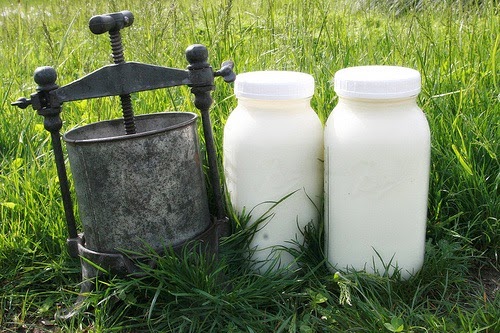
HB 2446: The raw milk advertising bill would repeal the Oregon Department of Agriculture’s (ODA’s) ban on advertising legally available raw milk. Oregon allows small batch raw milk production if it is sold directly to consumers on-farm, but prohibits advertising of this legally available farm product, which severely limits farmers' ability to reach consumers.
The ODA had been directing some farmers to remove information about raw milk from their website, threatening them with penalties. Cast Iron Farm in McMinnville sued the ODA with help from the Institute for Justice, arguing that the advertising ban was an unconstitutional restriction on the First Amendment right of free speech. ODA settled the suit and agreed to not enforce the ban and introduced HB 2446 to repeal it.
The Good and Bad
Senate Bill (SB) 341: Similar to laws on the books in over 20 other states, this bill would protect agritourism providers—farmers and ranchers—from lawsuits and legal liability when customers come onto their property and are injured through no fault of the owners. This is based on the customer's presumed acceptance of the "inherent risks" of being on a farm or ranch.
The bill requires posting of clear signs, inspection of equipment and other steps to ensure baseline safety standards are being met. The goal is to help support agritourism activities in Oregon, which can be an important "value-added" source of income for farms, and it includes actives like U-Pick, harvest-your-own, pumpkin patches and educational activities.
On the "bad" side, this bill was firmly opposed by the powerful Oregon Trail Lawyers Association during the committee hearing. That means there will be a lot of extra work to do to ensure it gets a full public hearing rather than the lower-level "informational hearing" it received, and a committee vote.
HB 2674 and HB 2675: These two bills would give the ODA authority to set up "control areas" and other designations to keep genetically engineered (GE) crops from contaminating non-GE crops. The bills would also require that ODA gather information on the use of genetic engineering in agriculture in Oregon to fill in substantial data gaps that make responsible management difficult.
The bill got a generally cool reception from the House Rural Communities, Land Use and Water Committee, including from legislators who voted for a bill in 2013 that put ‘exclusive regulatory power’ over GE crops in the hands of the state, while preventing local communities from enacting their own GE regulations. The committee chair announced he would form a ‘work group’ to see if any ideas from the legislation can garner enough support to move forward and pass the committee.
The Ugly
SB 25: This bill would exempt a number of counties in Oregon from the statewide land use planning system, including requirements for citizen involvement and protecting farmland from development. This could lead to a loss of valuable farmland and make it harder for farmers to compete for land against developers and other interests when land prices are driven up. The bill received a hearing in the Senate Environment and Natural Resources Committee on February 23.
HB 2449: This bill would extend the sunset on bioenergy tax credits and amend a number of the credits. The Oregon Department of Energy has proposed a significant reduction in the amount of tax credit that would be available to animal manure digesters. These tax credits have primarily benefited large factory farms, providing an unnecessary and costly taxpayer subsidy for these operations in the name of "green energy."
Unfortunately, this proposed change has not gone unnoticed by the the large-scale dairy operations that benefit most from the current tax credit. Several amendments to keep the tax credit high for manure digesters have been proposed and, if adopted, may not only support existing factory-scale farms that have significant manure management and air pollution problems, but would amount to a taxpayer handout for new large-scale factory farms that may want to set up shop in Oregon as long as they install a manure digester.
On March 5, the House Energy and Environment Committee heard testimony on this bill, which Friends of Family Farmers, among others, supports as written without the amendments.
Click here for more information on the bills that are coming up before the Legislature this session. Find your legislators and let them know what you think. And stay tuned for further updates as the 2015 session progresses!
Read the other posts in this series, Opening Salvos, The Personal Gets Political and The Fight Takes Shape and Hanging in the Balance.
Photos: Evan and Rachel of Boondockers Farm; raw milk from Cast Iron Farm; manure digester from Farm Energy Images.
Subscribe to:
Posts (Atom)