Showing posts with label lamb. Show all posts

Monday, April 16, 2018

Spring Lamb Means Get Out the Braising Pot!


We had a writer friend from San Francisco visiting for the weekend, and while we'd made plans to go out for dinner Saturday night—note of thanks to Nancy and Randy at Bar Avignon for a fabulous evening—his flight wasn't getting in until late Friday evening, so I volunteered (make that begged) to make dinner that night. Fortunately for us he's an ominivore, so my suggestion of braised lamb shanks was more than acceptable.

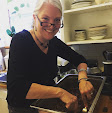
Jeff makes a new friend in Oregon.

The original version of this braised dish was created for a big ol' lamb shoulder by my friend Michel, but there was no reason it couldn't be adapted for lamb shanks, too. It's been known among our circle for being the lamb recipe that converts lamb-haters to lamb-lovers—you know who you are, so don't make me name names—and I've heard reliable reports that it's successfully converted others to the ranks of the lamb-loving, as well.

The lamb itself makes a difference, of course, the fresher and more local the better, and there are several farms in the area that raised sheep on pasture, which are your best bets for good meat of any kind. (See the Oregon Pasture Network Product Guide to find a farmer near you.) But it's my belief that the unusual combination of spices like cardamom and cumin and poblano and red peppers takes it to another level entirely. The lamb can definitely stand up to the strong flavors they impart, and the aroma while its cooking is intoxicating, whetting everyone's appetites in advance of the meal.

Fall-off-the-bone tender, I've served it with polenta made from the coarsely ground Amish Butter corn from Ayers Creek Farm, but this time I decided to try pairing it with the farm's parched green wheat (formerly known as frikeh) simmered until it was tender then sautéed with onions, garlic and carrots. Turned out to be a great idea, since the smoky flavor of the grain complemented the lamb and spices perfectly.

Leftovers are rare, but if that should occur I can highly recommend shredding any remaining meat, adding a cup or two of roasted tomatoes and serving over pasta as a lamb ragu. And a reminder: I always love to hear back from you if you make this dish, especially if you have tweaks to make it better, so please leave feedback in the comments below. Enjoy!

Braised Lamb Shanks with Cardamom and Peppers

This lamb recipe is terrific braised and served the same day, but for a real treat make it a day ahead and put it in the refrigerator overnight. Holding it for a day gives the flavors a chance to meld deliciously, and it's easy to remove the bones and solidified fat before reheating.

4-lbs. lamb shanks (or shoulder roast)
3 Tbsp. olive oil
2 c. chopped onion
1 red bell pepper, coarsely chopped
2 pasilla, ancho or poblano pepper, coarsely chopped
4 cloves garlic, crushed
2 tsp. cardamom pods, crushed, using only the small seeds inside
2 tsp. cumin seeds
1/4 c. dried currants, coarsely chopped
1 c. chicken stock
2 c. roasted tomatoes (approx. one 15-oz. can)
Zest of 1 lemon

Preheat oven to 325 degrees.

Salt and pepper shanks and set aside.

Heat oil in large braising pot or Dutch overn. Add garlic and onion and sauté until tender. Add peppers and sauté until softened. Add cumin and cardamom seeds to the vegetables and sauté briefly. Add canned tomatoes, stock and currants and stir to combine. Place the shanks in a single layer in the pot, if possible, so they are mostly covered. Cover braising pot and place in middle of preheated oven. Braise for at least 3 hours.

Remove lamb from pot and separate the meat from the bones (bones can be discarded or, preferably, composted). Cover and hold in deep, pre-warmed serving platter or bowl. Skim fat from liquid in pan and bring to boil to reduce slightly. Season to taste with additional salt, if needed, and pour over lamb. Sprinkle with lemon zest and serve.

Find more of Michel's outstanding recipes, including her crab cakes, cherry corn salsa and Napa cabbage slaw.

Saturday, March 04, 2017

Cooking Myself Out of a Corner with Julie Sahni


I often get myself into situations where I need to cook myself out of a corner. For instance, this past week I wanted to make some hummus from a recipe my mother collected when she was in Liberia, on the West Coast of Africa (read the post and it'll all become clear). Grabbing a pound of dried chickpeas from Ayers Creek Farm that had been lounging in the cupboard, waiting for just such an occasion, I threw them in a pot of water to soak overnight.

The next day I poured off the soaking water, covered them afresh and set them on the stove to simmer for 90 minutes or so. When they were just toothy to the bite, I rinsed them again and measured out the two cups I needed for the hummus. Which left about four cups of cooked chickpeas staring at me from the strainer.

Chickpeas are the cornerstone of many dishes in India, and I'd been perusing my copy of Julie Sahni's Classic Indian Cooking since making a fantastic chicken tikka masala a few days ago. Using the last of my stash of ground meat from the whole lamb I bought from Jo-Le Farms—such deliciousness—and what I could dig out of the vegetable bin in the fridge, I was able to pull together a crazy good dinner in a little over an hour.

Oh, and when Dave walked in the door from work that evening? His expression and the phrase "Wow! What smells so good?" was all I needed to know that I had a hit on my hands.

Ground Lamb in Cashew Nut Sauce with Chickpeas
Adapted from Julie Sahni's Classic Indian Cooking

4 Tbsp. vegetable oil
2 c. onions, chopped fine
2 tsp. garlic, minced
1 Tbsp. ginger root, peeled and grated
1 tsp. ground cumin
2 tsp. ground coriander
1 tsp. turmeric
1/2 tsp. red pepper flakes
2 bay leaves
2 lbs. ground lamb
1 1/2 tsp. salt
2 1/2 c. roasted tomatoes or canned, crushed tomatoes
3 Tbsp. cashew nut butter or 4 Tbsp. ground roasted cashews
2 c. cooked chickpeas with 1/2 c. liquid (or water)
2 tsp. garam masala
Cilantro, chopped fine, for garnish

Heat the oil over medium-high heat in a Dutch oven or deep skillet. When it shimmers, add onions. Cook, stirring constantly, until they turn a caramel brown (about 20-25 min.). Add garlic and ginger and sauté for 2 min. Add cumin, coriander, turmeric, red pepper and bay leaves. Stir briefly, then add ground lamb and brown it, breaking it up with a spoon. When the meat has lost its pink color, add salt, tomatoes, nut butter and chickpeas with 1/2 c. liquid. Add another 1/2 c. of hot water and bring the mixture to a boil. Reduce heat and simmer, covered, for about 45 minutes until the sauce has thickened. Stir occasionally to keep it from sticking. Turn off the heat and stir in the garam masala. Add salt to taste, if needed. Garnish with chopped cilantro, if desired.

Saturday, September 17, 2016

Lamb Raised Right: Braised Lamb with Fava Beans


When I first started this writing gig I had no idea of the opportunities I'd get to meet amazing, caring, thoughtful people who've dedicated their lives to providing their families and communities with food that is, as Slow Food likes to put it, "good, clean and fair." In terms of meat animals like cattle, sheep, pigs and chickens, it means that they've been raised humanely, on pasture, where they can live with other animals, feeling the soil under their feet and the sun on their backs. These farmers feed their animals none of the genetically modified corn and soy that most conventionally raised animals are raised on.

Really, it's exactly the picture of the farm that we all carry around with us from the stories read to us as children.

Les and her dogs at Jo-Le Farms.

Why am I so convinced that pasture-raised meat is better? Well, everyone's heard the phrase "you are what you eat" when it comes to junk food versus healthy foods. But I heard a phrase a few years ago that goes "you are what you eat eats," and it kind of blew my mind. In other words, if the animals we eat have a diet of the food that they are intended to consume—found in healthy pastures—rather than commodity grains laced with antibiotics and chemicals, then it follows that they'll be healthier animals and the meat and milk they provide will be healthier for us to eat.

Ben Meyer butchering lamb.

Not to mention that raising animals on pasture is better for the environment and actually sequesters carbon in the soil rather than contributing to climate change or groundwater pollution from waste products. (Read Nicolette Hahn Niman's Defending Beef: The Case for Sustainable Meat Production for more on the subject.)

And when it comes time to die, the larger animals are either killed in their pastures instantly with a swift shot behind the ear, or trucked a short distance to a humane processing facility where they aren't waiting in fear, listening to the panicked sounds of other animals.

It had been awhile since I'd bought a lamb (really a nearly-year-old sheep) because I hadn't found a farmer nearby who had pasture-raised sheep available. But when I visited my friends Kendra and Ivan at Shimanek Bridge Farm, who raise cattle, pigs, chickens and turkeys on pasture, they introduced me to their neighbors, Les Carter and her husband Jon of Jo-Le Farms, who raise—get this—pastured sheep!

Meat from one lamb.

Les mentioned that they'd be slaughtering a few of their sheep in the near future, and I nearly jumped into her arms. She promised to call when it was time, and a couple of weeks later she contacted me to let me know when they'd be available. I then called my friend Ben Meyer of Old Salt Marketplace to see if he'd help me butcher it, a process I prefer because I get to decide whether I get chops versus racks and bone-in or boneless roasts.

Animals like goats and lambs are generally small enough to carry in the back of my Mini Clubman, Chili, so I pulled up in front of Ben's place and he graciously carried it inside for me. An hour or so later I walked out with a cooler-full of cut and wrapped chops, ribs, shanks and roasts, and I saved out a big bone-in shoulder roast for our first lamb dinner in some time.

Braised lamb with favas.

Braised lamb is the easily one of my favorite ways to cook and eat a lamb roast, though I've had several grilled boneless leg roasts that run a close second. Braising is also one of the easiest methods for cooking lamb, since all you have to do is add some vegetables and liquid to the lamb in a pot and cover it for two or three hours in the oven. The lamb slowly melts into fall-off-the-bone tender chunks, the liquid and meat juices meld into gravy and the vegetables and any herbs give it a marvelous depth. I added a pound of fava beans from Ayers Creek Farm, a cup or so of tomatoes I'd just roasted, and that night we sat down to our first lamb dinner in quite some time.

And now there are so many more lamby meals to look forward to this winter, thanks to the hard work of Les and Jon. I can't wait!

Braised Lamb with Fava Beans

1 lb. fava beans, soaked overnight
4-5 lb. bone-in lamb shoulder
3 Tbsp. olive oil
1 yellow onion, roughly chopped
3 large carrots, quartered and cut crosswise in 1/2" pieces
3 large cloves garlic, smashed
3 large bay leaves
5 sprigs of fresh thyme or oregano
6 c. chicken or lamb stock
1 Tbsp. salt plus more to taste

Preheat oven to 375°.

Heat olive oil in large Dutch oven over medium-high heat until it shimmers. Add onion and sauté, stirring occasionally, until it is tender. Add carrots and garlic and sauté until tender. Add lamb, bay leaves, herbs, salt, fava beans and stock. Cover and place in oven. Check every half hour or so to make sure there is still liquid; if it has all been absorbed, add water or stock. Braise for 2-3 hours until meat is ready to fall off the bone.

Remove meat, bay leaves and any stems from herb sprigs. Cut or pull the meat off the bones and chop into serving-sized pieces. Place in serving bowl and ladle beans, vegetables and gravy over it. Serve with hunks of artisan bread for sopping up the juices.

Check here for more recipes for lamb, then read farmer Les's recipes.

Saturday, March 22, 2014

The Norman Chronicles: Neck and Neck


They're unofficially called "butcher's cuts," those not-so-frequently-seen-in-meat-cases pieces of lamb, beef or pork. Because they aren't big, gorgeous hunks of flesh, they were harder to sell and ended up going home with the butchers to feed their families, knowing as they did that these "off cuts" were often more flavorful than their more well-known compadres. Flank steak and hanger steak used to belong to that category until the beef association started promoting them, and now they'll often cost as much as steaks.

A cut that hasn't yet been popularized and, with any luck, will remain in the cheap-but-delicious category is lamb neck. This two-or-so-pound piece of meat is perfect for braising low and slow until the flesh is melting off the bone, and has enough heft flavor-wise to stand up to the richly flavorful Provençal-style sauce below. You can get one by ordering it from your favorite butcher or market that carries lamb, though it might mean the butcher's family will have to figure out something else for dinner.

Braised Lamb Neck Provençal

2 Tbsp. olive oil
1 lamb neck, about 2 lbs.
1 onion, chopped
3 cloves garlic, smashed
3 c. roasted tomatoes, chopped
1 c. dry white wine, such as sauvignon blanc
Zest of 1 lemon
1/8 tsp. saffron
1 tsp. salt
2 bay leaves
1/2 c. pitted oil-cured black olives or green olives, sliced*
2 lemons, cut in wedges

Preheat oven to 325°.

Heat oil in Dutch oven over medium-high heat. Brown neck on all sides. While lamb browns, put saffron and salt in mortar and pestle and grind until saffron is broken down. Remove browned neck to platter. Add onion and garlic to pan and sauté till translucent, scraping up browned bits of lamb. Add tomatoes, wine, lemon zest, saffron-salt mixture and bay leaves to pan and stir, then return lamb neck to pan. Cover pan with parchment paper and lid and braise in the oven for 2 1/2 hrs., turning the neck every 45 min. or so.

Add chopped olives and lemons to pan and continue cooking another 45 min. until meat is falling off the bone. Serve over polenta.

* I used Spanish anchovy-stuffed olives, which added that touch of umami from the anchovies. Yum!

Read the other posts in The Norman Chronicles: Getting to Shepherd's Pie, Braising Saddles and Shanks and Hearts.

Monday, November 25, 2013

The Norman Chronicles: Shanks and Hearts


Here it is, almost Thanksgiving, and when everyone else in the United States is thinking about turkey and dressing and sweet potatoes, I'm salivating at the thought of rich, dark lamb shanks braised to falling-apart lusciousness. That's not to say come Thursday evening we won't be having turkey and fixin's—Dave would pitch a fit if he couldn't put a big bird on the Weber and stand over it with a pint of A-Bomb in his hand—but there are still dinners to make the rest of the week and leftover turkey only goes so far, right?

The reason for my shanky dreams? It's what I did with a couple of Norman's shanks at a dinner for company a month or so ago, one that I want to reprise in the very near future. Though the store definitely won't have the huge 2-plus-pound shanks that Norman so generously provided, I can just double up on smaller shanks and come out with a dinner for six and still have enough leftovers to combine with tomatoes and pasta for dinner a second night.

Braised Lamb Shanks with Artichokes and Olives

3 Tbsp. olive oil
4 lbs. lamb shanks
2 c. onions, chopped in 1/4" dice
2 Tbsp. garlic, chopped fine
2 Italian or red bell peppers, roasted and cut in slivers
1 c. oil-cured or kalamata olives, pitted
16 oz. (2 pkgs.) frozen baby artichoke hearts (or fresh in season, trimmed)
1 1/2 c. roasted or canned tomatoes
2 Tbsp. fresh rosemary leaves, minced
1 c. white wine, such as a sauvignon blanc
1 c. chicken stock
Salt to taste

Preheat oven to 375°.

Trim excess fat from lamb shanks, then generously salt and pepper them. Heat oil in large Dutch oven over medium-high heat. When the oil shimmers, add lamb shanks and brown (in batches if necessary), then remove to a platter. Reduce heat to medium and add onions and garlic to the pot, adding more oil if necessary and scraping up any browned bits of lamb stuck to the bottom of the pot. Sauté till onions are translucent. Add roasted peppers, olives, artichoke hearts, tomatoes and rosemary and bring to a low simmer. Add lamb shanks back to the pot, burying them in the vegetables, and pour the wine and stock over the top.

Put the pot into the oven and roast for 2-3 hours until the lamb is ready to fall off the bone. Remove from the oven and allow to cool until you can remove the meat from the bones. Add salt to taste as needed.

At this point you can serve the braised lamb or, better yet, cool it completely and put in the fridge overnight to allow the flavors to meld. Reheat in a 300° oven and serve with Ayers Creek Farm Amish Butter polenta (or your favorite brand from the store).

Any leftovers can be used for a second dinner when combined with roasted tomatoes and served over pasta.

Read the other posts in The Norman Chronicles: Getting to Shepherd's Pie, Braising Saddles and Neck and Neck.

Wednesday, October 23, 2013

The Norman Chronicles: Braising Saddles


Butchering your own meat can be intimidating, especially if, like me, you're not all that familiar with the traditional cuts and where they come from. The fun part is looking at it from the perspective of how you want to cook it, then making your decisions based on whether you like roasts or chops, or bone-in or boned-and-tied chunks for grilling or braising.

The saddle, for instance (left, held by Melinda at Portland's Culinary Workshop). As its name implies, it's the section of the back where you'd think a saddle would go, and it kind of looks like one. Containing the loins and the lower end of the ribs, you can cut chops and loin roasts from it, but I decided to cut it straight down the backbone and have a large, bony chunk of roast to braise.

Some folks might recoil in horror over braising this piece of meat rather than boning out the roasts and loins, but lamb loins are fairly small strips of meat, and I was already cutting chops from the upper end of the ribs.

See what I mean about getting to make decisions based on how you plan to cook it? Plus how cool does that backbone look sitting in the pot?

Michel's Braised Lamb

This lamb recipe is terrific braised and served the same day, but for a real treat make it a day ahead and put it in the refrigerator overnight. Holding it for a day gives the flavors a chance to meld deliciously, and it's easy to remove the solidified fat and the bones before reheating. Served with polenta (I used Ayers Creek Farm Amish Butter polenta), this is so good it's made converts of friends who say they don't like lamb.

1 4-lb. lamb roast (shoulder, saddle, etc.)
1 med. onion, coarsely chopped
1 med. red bell pepper, coarsely chopped
1 pasilla, ancho or poblano pepper, coarsely chopped
4 cloves garlic, sliced
2 tsp. cardamom pods, crushed, using just seeds inside
2 tsp. cumin seeds
1/2 c. prunes, coarsely chopped
1 c. chicken stock
15 oz. can diced tomatoes (approx. 2 cups)
Zest of 1 lemon

Preheat oven to 325 degrees.

In medium hot braising pot, brown shoulder in olive ol; salt and pepper each side. After first side of lamb is browned, add cumin and cardamom seeds to the oil around the lamb and briefly stir to toast. Add garlic and onion, stir until golden. Add peppers and stir until softened. Add canned tomatoes, stock and prunes and stir. Cover braising pot and place in middle of preheated oven. Simmer in oven at least 3 hours.

Remove lamb from pot. Cover and hold on heated platter. Skim fat from liquid in pan and bring to boil to reduce. Season to taste and pour over lamb.

Read the other posts in The Norman Chronicles: Getting to Shepherd's Pie, Shanks and Hearts and Neck and Neck.

Sunday, October 13, 2013

The Norman Chronicles: Getting to Shepherd's Pie


When a friend offered me one of her sheep that was going to be slaughtered this fall, I couldn't have said yes fast enough. After all, it had been born in April in the pasture she rented from a neighbor and had been raised almost exclusively on pasture grass and hay, supplemented with a little grain.

Norman as a baby.

I'd first met the lamb, named Norman, when he was born into the small herd my friend had. His mother was a big ewe and there was every indication little Norman would be large, too, since he grew much faster than the other lambs born at the same time. Very tame and with melting brown eyes, he always stood to be scratched behind the ears while the other sheep crowded in to get the hay my friend, Kim, and I would throw out.

Kim had hoped to find a reasonably priced mobile slaughter unit to do the job, since Norman was more family pet than livestock and her husband, though he's a hunter who had done a lot of field dressing of deer and elk, was particularly fond of him and didn't want to have to do the kill. Unfortunately no one could come out to do it in a reasonable amount of time, and it was left to her husband to manage the task himself.

Norman grazing in his pasture with his pals in the group on the right.

I offered to help, since at six months old Norman was fully grown, weighing in at around 200 pounds, a lot for one person to manage in a steep, uneven pasture. When we went out to the pasture, a pile of grain was poured on the ground and Norman eagerly started munching away at our feet. A shot to the back of the head dropped him instantly—he literally didn't know what hit him—and the last few beats of his heart pumped the blood out of his body through a slit made in the artery in his neck.

Lest I sound like a cold-hearted so-and-so, for me the moment of the kill is always fraught. I always hope the end is quick, painless and without struggle, which, in the three kills I've attended, has been the case. All of the animals were killed in the pasture they were born and raised in, with (or by) people they trusted, not trucked hundreds of miles to a processing plant to die with strangers in a strange place. Which, from my perspective, makes their pasture a much more humane place to end their lives, both for the lack of stress to the animals and, because hormones are released into the muscles when animals experience stress,  how it affects the final quality of the meat.

Dry-aging in Kitchen Cru's walk-in.

Norman was gutted and loaded into a wagon, then hauled to a pine tree in an upper pasture near the house. We hung the now-100-or-so-pound carcass from a device called a gambrel, a ratcheted device that was slung over a branch, that could hoist the animal to make skinning easier. As Kim's husband worked, I held it steady and smelled the lamb-y aroma coming from the still-warm meat.

Melinda ready to rock.

Clad in a game bag, a giant stretchy sock to protect the carcass, then wrapped in a plastic sheet and bungied in the back of our truck, I drove down the freeway feeling a little conspicuous, but no one honked or pointed or, worse, called the cops. Norman was destined to hang for five days in the walk-in at Michael Madigan's Kitchen Cru, the only place, for various reasons from USDA regulations to the start of deer season, that I could find for a pasture-slaughtered lamb his size.

Grinding trim pieces for ground lamb.

Dry aging, or hanging, in a cool (below 40°) environment helps the natural enzymes in the meat start to break it down without spoiling it. As the cell structure breaks down, it causes the meat to become more tender and the flavor to become richer and more intense, according the John Neumeister of Cattail Creek Lamb, who was kind enough to advise a newbie on the particulars of dry aging.

Layering on the mashed potatoes for a classic shepherd's pie.

Now weighing about 75 to 80 pounds—dry-aging causes a carcass to lose moisture, approximately 15 to 20% of its weight—Norman traveled to Portland's Culinary Workshop where co-owner Melinda Casady and her array of butchering skills and tools made quick work of breaking down the carcass into its component parts. I chose to leave most in large, braisable chunks with a few roasts and chops, leaving the legs on the bone for special occasions, and hoping Dave can cure and smoke the breasts for bacon.

Packed in a cooler and transported to the freezer in our garage, Norman will be the subject of many toasts at many meals this winter. Thank you, Norman.

Shepherd's Pie with Ground Lamb

For the potatoes:
2 lbs. whole potatoes
4 Tbsp. butter or margarine
1/4 c. milk
 Salt to taste

For the filling:
2 lbs. ground lamb
1 onion, chopped into dice
3 cloves garlic, minced
3 medium carrots, diced
1 c. chicken broth
1 c. frozen peas
1 tsp. dried thyme or tarragon
Salt to taste

Preheat oven to 400°.

Peel the potatoes if you prefer, then chop into 1/2" dice. (I used Yukon golds so didn't bother peeling them.) Put in medium-sized pot, cover with water and bring to boil over high heat. When water boils, reduce to low and simmer until potatoes are tender, about 20 mins.

While potatoes cook, heat large sauté pan over medium heat, add ground lamb and brown. When browned, drain off all but 2 Tbsp. of fat. Add onion, garlic and carrots to lamb and sauté till tender. Add chicken broth, peas and herbs and bring to a simmer, cooking for a couple of minutes. Season to taste with salt, then remove from heat while you mash the potatoes.

When potatoes are tender, drain them and add butter or margarine and milk. Mash with potato masher until smooth and thoroughly combined. Salt to taste.

Put lamb mixture in 9 by 12-inch baking dish and smooth the surface. Drop mashed potatoes onto the top of the lamb in dollops, spreading the potatoes out with the back of a spoon or spatula to completely seal in the lamb. Place baking dish in oven and bake for 25 minutes until potatoes begin to brown. If desired, you can then briefly place the baking dish under the broiler to crisp the top further, but it's not necessary.

Read the other posts in The Norman Chronicles: Braising Saddles, Shanks and Hearts and Neck and Neck.

Read about a lamb butchering class I took from Melinda in Class Cut-Up. Thanks also to Hank Shaw of Hunter Angler Gardener Cook and Ron Muise of Fearann Kisha for their help and advice.

Sunday, February 19, 2012

Them Bones, Them Bones, Them…Lamb Bones?


There's something so basic about picking up a bone and giving it a good gnawing. Even in our proper middle-class household growing up, it was de rigeur, expected, even, that you'd pick up the bone from your steak or chicken or pork and chew off all the meaty bits. And if one of my brothers didn't do what I considered a good enough job, I was allowed to pick up their "unfinished" bone and chew on it until it was sufficiently denuded.

Marrow was a different matter, though. Perhaps I didn't inherit enough of my grandmother's Alsatian DNA, but it took till I was well into adulthood to appreciate its salty, warm smoothness spread on a thin slice of lightly toasted baguette.

The last time I bought half a lamb, instead of getting the normal leg steaks, which just haven't thrilled me in the past, I had the butcher give me 2-inch-thick slices that I could use instead of veal in ossobuco. (You can order them the same way from your favorite meat department.) An Italian braised meat dish from Milan, it was traditionally made with cinnamon and bay leaf and garnished with a gremolata of lemon, garlic, anchovies and parsley. More modern versions of ossobuco include tomatoes, carrots and celery.

After braising for around three hours in the oven, the sauce had reduced and the meat was almost falling off the bone. I served it with polenta, but in Italy it's often served with a saffron risotto (called risotto Milanese). Either way would be equally fabulous, but don't forget to spoon the marrow from your bone and either stir it into your polenta or have it with a crusty piece of bread.

And if someone at the table leaves their marrow untouched? You have my permission to grab the bone off their plate for yourself. After all, waste not, want not!

Lamb Osso Buco

3 Tbsp. olive oil
3 lbs. lamb leg steaks, cut 2" thick
1 onion, chopped fine
4 large cloves garlic, chopped fine
3 carrots, chopped in 1/4" dice
3 ribs celery, chopped in 1/4" dice
2 c. dry red wine
1 c. chicken stock
2 Tbsp. tomato paste
4 sprigs fresh rosemary
4 sprigs fresh thyme
Salt and pepper

Preheat oven to 325°.

Generously sprinkle the lamb steaks with salt and pepper on all sides. Place large Dutch oven over medium heat and add oil. When it shimmers, add lamb pieces to the pot and sear on all sides until well-browned. If the pan isn't large enough to do them all at once without crowding, sear in batches. When sufficiently browned, remove to plate. Reduce heat to medium and add onion and garlic to oil remaining in pot. Sauté till translucent, then add carrots and celery and sauté till tender. Add wine and stock, stirring in the tomato paste. Add lamb back into pot and bury herb sprigs between the steaks. Cover and place in oven for 2-3 hours, turning the steaks about halfway through, until the meat is ready to fall off the bone and the stock has reduced. If the pot gets too dry, add water or more chicken stock to moisten. Serve over saffron risotto or polenta. Garnish with gremolata if desired (one version here).

Tuesday, March 29, 2011

Class Cut-Up


When my neighbor Susana first announced that she and a friend were going to start a cooking school, I was understandably excited. After all, both women are professional chefs with years of experience teaching at two of Portland's best culinary schools. Knowing them, I expected they'd offer a bit more than the run-of-the-mill, watch-and-nosh classes you find locally, maybe even allowing folks to (gasp) actually get their hands dirty.

I should have known better.

In their first month of operation the newly launched Portland's Culinary Workshop offered classes on sushi, Brazilian cuisine, knife skills, Asian dumplings, how to break down a chicken, making meals with raw foods, making baby food, pastas and sauces, as well as butchering pig and lamb. And that's just for starters. These gals are bent on having fun with class titles like "Mind Your Meat Mistress," "Gettin' Saucy in the Kitchen" and "Sexy Couples Class." With side trips that include watching your instructor debone a chicken. Blindfolded. How cool is that?

Melinda Casady (top photo), the mistress in the title of the meat class and no slouch with a meat saw, led a recent class on breaking down a whole lamb into its component parts. I was a little disappointed it came without the head on (upper left), but when Melinda had us grab knives and hack saws and have a go at the carcass (taking turns, of course), I was all in (right).

In approximately 90 minutes we had dismembered…I mean butchered…the entire lamb (left), learning how to debone the leg roasts, whack some fine shanks, pare out the ribs into lovely lamby lollipops and save all the meaty scraps for ground lamb and stew.

Not bad for a couple of hours on a Saturday, especially considering we got to divvy up the meat we'd just butchered and bring it home for some mighty fine eating (and bragging).

Details: Portland's Culinary Workshop, 807 N Russell St. 503-512-0447.

Saturday, November 27, 2010

Warming Up in Winter


My first exposure to braising was my mother's version of pot roast, a large top round steak simmered in crushed tomatoes in her favorite kitchen appliance, an electric frying pan. As a working mom trying to feed three hungry kids, she never really had enough time to simmer it until it was fall-apart tender, so what was put on the table was a fairly chewy hunk of well-done beef. Any complaints about the texture were turned aside by my father whose standard line was, "It's good for your jaw muscles."

The breakthrough braising experience for me was a college friend's recipe calling for a packet of Lipton's onion soup and a half bottle of wine. Roasted for a couple of hours in a 400-degree oven, it still wasn't fall-apart tender but was a step up from the version I was raised on.

From there it wasn't a tough climb to conquer Julia Child's recipe for chicken braised in white wine, which, before I learned her version, may or may not have been made with cream of mushroom soup (I'm not admitting to anything here). But I've got to 'fess up that one of my very favorite braised dishes came from my friend Michel, who created a real winter warmer, a lamb shoulder simmered in tomatoes, stock, prunes, peppers and spices that has been the star attraction of many successful dinner parties.

I ran the recipe three years ago, but decided it merited reposting since we had it again the other night and it totally sang. Easy to put together, it would be an ideal candidate for a slow cooker, and walking in the door after a long day in the cube might cause a buckling of the knees, if not a full swoon, from the aroma that fills the house. It's fantastic served with polenta or couscous, but is equally dreamy with mashed potatoes.

Michel's Braised Lamb Shoulder

1 lamb shoulder roast
1 med. onion, coarsely chopped
1 med. red bell pepper, coarsely chopped
1 pasilla, ancho or poblano pepper, coarsely chopped
4 cloves garlic, sliced
2 tsp. whole cardamom seeds
2 tsp. cumin seeds
1/2 c. prunes
1 c. chicken stock
15 oz. can diced tomatoes (approx. 2 cups)
Zest of 1 lemon

Preheat oven to 325 degrees.

In medium hot braising pot, brown shoulder in olive ol; salt and pepper each side. After first side of lamb is browned, add cumin and cardamom seeds to the oil around the lamb and stir to toast. Add garlic and onion, stir until golden. Add peppers and stir until softened. Add canned tomatoes, stock and prunes and stir. Cover braising pot and place in middle of preheated oven. Simmer in oven at least 3 hours.

Remove lamb from pot. Cover and hold on heated platter. Skim fat from liquid in pan and bring to boil to reduce. Season to taste and pour over lamb.

Wednesday, July 28, 2010

The "L" Word: Leftovers…Again?


Once again I pulled out the "L" word for dinner. As in "leftovers." And why, you might well ask, does a dinner made from leftovers deserve a post rather than some fabulous new food item used in some unusual way that I ran across on an arcane food blog?

Because leftovers are, I suspect, highly under-discussed as a means of feeding ourselves. I mean, how creative can anyone be if they have to put dinner on the table seven nights a week? The expense alone would kill a regular budget, not to mention a normal spirit. Plus, I don't know about you, but there are always bits of this and pieces of that floating around in plastic tubs in our fridge.

Like the other night. Dave had come home from work, I had nothing in mind for dinner and I couldn't really justify spending the bucks to go out since we'd already done that a few nights before. In other words, it was a pretty typical evening.

So, like on other evenings, I strapped on my pith helmet and opened the door of the fridge. Hmmm. A stack of heirloom tomatoes slices left from a platter I'd served guests. A large russet potato that had not been used in a potato salad. Some luscious grilled leg of lamb that wasn't enough for dinner by itself.

A picture was forming in my mind, but I couldn't quite bring it into focus. I opened the veg bin and pawed through its contents. Then I remembered two bags of fenugreek greens I'd bought from Ayers Creek the week before that may, just may, still be usable. (Does any of this sound familiar?)

An onion, some chopped garlic and a tablespoon of curry brought it all together into what I have to say was a pretty fine dinner. Considering I had no idea where I was going when I started.

Saturday, November 01, 2008

Lambie Lusciousness


For those of you who might be curious about the result of the black cardamom quest, I have but one word: "Yum."

Or maybe the words of those at the table would give a little more of the gist, such as "Freaking awesome!"

Served with a side of Roy's Calais Flint polenta, made from organic corn grown and ground at Ayers Creek Farm, I would say it approached heavenly. Though the rich, earthy flavor kept it firmly in the terrestrial realm.

Black Pepper Braised Lamb Shanks
Adapted from a recipe by Chef Floyd Cardoz for Epicurious
For Rub
6 whole black cardamom pods
1 Tbsp. coriander seeds
1 Tbsp. whole black peppercorns
2 tsp. cumin seeds
1 tsp. whole allspice
2 whole dried Thai chiles [I used dried red chiles...pepper flakes would be fine, too]
2 Tbsp. kosher salt
8 bone-in lamb shanks [I used six]

For Lamb
About 1/4 cup corn oil
4 med. onions, coarsely chopped
4 whole cloves
4 Turkish bay leaves
1/2 c. dry white wine
9 c. lamb stock or water [I used homemade chicken stock]
3 Tbsp. tamarind paste
2 whole sprigs fresh rosemary
2 whole sprigs fresh thyme
4 Tbsp. (packed) light brown sugar
1 med. celery root (celeriac), peeled and cut into 1/2-inch pieces
2 Tbsp. fresh ginger, finely chopped
5 cloves garlic, finely chopped (about 2 Tbsp.)
1 Tbsp. kosher salt

In a heavy, dry skillet over moderate heat, toast cardamom, coriander, peppercorns, cumin, allspice, and chiles, stirring often, until fragrant, about 1 to 2 minutes. Remove from pan and let cool. Using spice or coffee grinder, grind spices and chiles to semi-fine powder. In small bowl, stir together spice powder and salt.

Pat lamb shanks dry. Measure 1 teaspoon spice mixture into separate small bowl and set aside. Rub remaining mixture over shanks and refrigerate at least 6 hours and up to 24 hours.

Preheat oven to 350°F. In 8-quart heavy pot over moderately high heat, heat 1 tablespoon oil until hot but not smoking. Working in batches, sear shanks, turning occasionally, until brown on all sides, about 5 minutes per batch. Transfer as browned to large roasting pan.

Do not clean fat from pot. Lower heat to moderate and add onions, cloves and bay leaves. Sauté until onions are soft, about 8 minutes. Stir in reserved teaspoon spice mixture and sauté until fragrant, about 30 seconds. Whisk in wine, lamb stock, tamarind paste, rosemary, thyme, brown sugar, celery root, ginger, garlic, and salt, then raise heat and bring to boil. Pour mixture over shanks, cover tightly with foil, and braise in middle of oven until meat is very tender, about 2 1/2 to 3 hours.

The original recipe says to remove the shanks to a platter, pour the braising liquid through a strainer and reduce the liquid by half. This is then used as a sauce to pour over the shanks. I just couldn't see throwing out all the lovely braised vegetables that were so full of flavor, so I just transferred the meat, vegetables and liquid into a serving bowl and ladled it over the polenta.

Sunday, October 05, 2008

Love Those Lamburgers


The first time I had a burger made with lamb, prepared by my brother, a 'cue-meister of the first degree, it was like I'd been living in a forest and had never noticed the trees. If I was Homer Simpson, I would have slapped my forehead and said, "D'oh!" A light went on, I woke as if from a dream...use whatever hokey phrase you want, but I couldn't believe I'd never had one before.

Step 1: Form 1/4 of burger mix into two patties and top one with cheese.

What really got me was how simple they were to make. All it takes is ground lamb, some chopped garlic and herbs and, to take it to the level of celestial, all that's required is a slice of cheese inserted in the center. Throw them on the grill and you've got one of the most flavorful, delicious sandwiches the world has ever seen.

Step 2: Slap "blank" patty on top and seal edges, then get 'em on the grill!

Oh, and it also helps to have small ciabatta rolls (way better than hamburger buns) crisped on the grill, fresh-from-the-garden tomatoes and our favorite Kosher dills from Bubbies. It's dinner in your hand!

GoodStuffNW Lamburgers

Makes 4 burgers

2 lbs. ground lamb
1/2 c. pitted, chopped, oil-cured black olives
2 tsp. oregano
1 Tbsp. olive oil
1/4 c. bread crumbs or crushed water crackers
4 slices cheese (feta or cheddar work fabulously)
4 ciabatta rolls, halved lengthwise
Fixin's

Mix lamb, olives, oregano, olive oil and bread crumbs in mixing bowl till well-combined (mixing with your hands works best). Separate into fourths, then take each portion and form into two thin patties. Lay cheese slice in middle of one patty, slap the other patty on top and seal the edges. Repeat for other three patties.

Grill over hot coals, turning once, for four minutes on each side. Brown rolls on grill, insert burgers and apply whatever fixin's you prefer.

Wednesday, September 19, 2007

Fall Has Fell: Braised Lamb

My writer friend Michel and I used to walk together before she got a real job. One day I went over to pick her up for our regular constitutional and, on opening her front door, was bowled over by the amazingly sensuous aroma coming from her kitchen. Now, this woman was a professional cook in a previous life and has major chops with a Viking. (Amazingly, her husband doesn't seem to mind!)

I begged her to give me the recipe, and the other night I made it using a lamb shoulder from our lamb share. Again, the aroma was a knockout and it killed with its huge flavor and richness, especially because it was made with homegrown tomatoes and peppers. All that's required to make it a dinner party staple is a simple green salad and a side of polenta. I guarantee your friends and family will be fighting over who gets the last bits.

Michel's Braised Lamb Shoulder

1 lamb shoulder roast
1 med. onion, coarsely chopped
1 med. red bell pepper, coarsely chopped
1 pasilla, ancho or poblano pepper, coarsely chopped
4 cloves garlic, sliced
2 tsp. whole cardamom seeds
2 tsp. cumin seeds
1/2 c. prunes
1 c. chicken stock
15 oz. can diced tomatoes
Zest of 1 lemon

Preheat oven to 325 degrees.

In medium hot braising pot, brown shoulder in olive ol; salt and pepper each side. After first side of lamb is browned, add cumin and cardamom seeds to the oil around the lamb and stir to toast. Add garlic and onion, stir until golden. Add peppers and stir until softened. Add canned tomatoes, stock and prunes and stir. Cover braising pot and place in middle of preheated oven. Simmer in oven at least 3 hours.

Remove lamb from pot. Cover and hold on heated platter. Skim fat from liquid in pan and bring to boil to reduce. Season to taste and pour over lamb.

Monday, July 30, 2007

Big Hunks of Animal Flesh

WARNING TO NON-MEAT-EATERS OF ALL STRIPES!
This is going to be a graphic description of the preparation, cooking and consumption of a major body part of a young animal, so avert your eyes.

That said, getta load of this! It's about five pounds of bone-in lamb leg marinated and grilled to medium-rare perfection by my in-house smoke-meister and member of the Grand Order of Charcoal, Dave. This hunk of meaty goodness started out as a rock-hard frozen lump, part of a lamb share program I belong to with three other families. Every six weeks or so we split a quarter of a lamb, which means our freezer fills up with enough for a year's worth of steaks, chops, roasts, shanks and ground bits, all just waiting for the right bolt of inspiration (or desperation) to strike.

Last night we'd invited my brother and his ladylove, along with friends J&K, to come over for an evening in the backyard under the stars. After two days in the fridge thawing and about four hours before dinner, I took the leg out and adapted a simple olive oil, thyme and garlic marinade that Bobby Flay recommended for chops. Dumping all the ingredients and the leg into a giant zip-lock freezer bag, I set it on the counter to commingle, turning it once or twice.

When the fire was ready, I handed it over to Dave, who first seared it over a bed of hot coals then split the coals on either side of the grill and set the leg in the center of the grill for about two hours of indirect cooking. Every twenty minutes or so, he'd add four or five new coals to each side and refill his beer glass (a vital step in any grilling process). As Mr. Leg cooked away, we served our guests mojitos from a pitcher we'd prepared just before they arrived. To make the evening even more special, and to give us something to toast, it was announced that my little bro and Miss w had become engaged on their backpacking trip the night before. Mazeltov!

Then, just as the lambie was pulled off the grill and the gentlemen present gathered over it to discuss the best approach to carving, I whipped out the salad and frikeh (a scorched, green wheat) risotto and we all sat down and toasted the happy couple once again. Topping it all off was a cobbler made with rare and luscious Chester blackberries from Ayers Creek, consumed around a fire in the fire pit with much sighing and, eventually, yawning. It was the perfect end to an evening of celebration with fabulous food, wine and much laughter.

Details: Download recipes for the mojitos, the lamb and the cobbler.