Showing posts with label braised lamb. Show all posts
Monday, April 16, 2018
Spring Lamb Means Get Out the Braising Pot!
We had a writer friend from San Francisco visiting for the weekend, and while we'd made plans to go out for dinner Saturday night—note of thanks to Nancy and Randy at Bar Avignon for a fabulous evening—his flight wasn't getting in until late Friday evening, so I volunteered (make that begged) to make dinner that night. Fortunately for us he's an ominivore, so my suggestion of braised lamb shanks was more than acceptable.
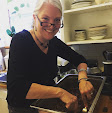
Jeff makes a new friend in Oregon.
The original version of this braised dish was created for a big ol' lamb shoulder by my friend Michel, but there was no reason it couldn't be adapted for lamb shanks, too. It's been known among our circle for being the lamb recipe that converts lamb-haters to lamb-lovers—you know who you are, so don't make me name names—and I've heard reliable reports that it's successfully converted others to the ranks of the lamb-loving, as well.
The lamb itself makes a difference, of course, the fresher and more local the better, and there are several farms in the area that raised sheep on pasture, which are your best bets for good meat of any kind. (See the Oregon Pasture Network Product Guide to find a farmer near you.) But it's my belief that the unusual combination of spices like cardamom and cumin and poblano and red peppers takes it to another level entirely. The lamb can definitely stand up to the strong flavors they impart, and the aroma while its cooking is intoxicating, whetting everyone's appetites in advance of the meal.
Fall-off-the-bone tender, I've served it with polenta made from the coarsely ground Amish Butter corn from Ayers Creek Farm, but this time I decided to try pairing it with the farm's parched green wheat (formerly known as frikeh) simmered until it was tender then sautéed with onions, garlic and carrots. Turned out to be a great idea, since the smoky flavor of the grain complemented the lamb and spices perfectly.
Leftovers are rare, but if that should occur I can highly recommend shredding any remaining meat, adding a cup or two of roasted tomatoes and serving over pasta as a lamb ragu. And a reminder: I always love to hear back from you if you make this dish, especially if you have tweaks to make it better, so please leave feedback in the comments below. Enjoy!
Braised Lamb Shanks with Cardamom and Peppers
This lamb recipe is terrific braised and served the same day, but for a real treat make it a day ahead and put it in the refrigerator overnight. Holding it for a day gives the flavors a chance to meld deliciously, and it's easy to remove the bones and solidified fat before reheating.
4-lbs. lamb shanks (or shoulder roast)
3 Tbsp. olive oil
2 c. chopped onion
1 red bell pepper, coarsely chopped
2 pasilla, ancho or poblano pepper, coarsely chopped
4 cloves garlic, crushed
2 tsp. cardamom pods, crushed, using only the small seeds inside
2 tsp. cumin seeds
1/4 c. dried currants, coarsely chopped
1 c. chicken stock
2 c. roasted tomatoes (approx. one 15-oz. can)
Zest of 1 lemon
Preheat oven to 325 degrees.
Salt and pepper shanks and set aside.
Heat oil in large braising pot or Dutch overn. Add garlic and onion and sauté until tender. Add peppers and sauté until softened. Add cumin and cardamom seeds to the vegetables and sauté briefly. Add canned tomatoes, stock and currants and stir to combine. Place the shanks in a single layer in the pot, if possible, so they are mostly covered. Cover braising pot and place in middle of preheated oven. Braise for at least 3 hours.
Remove lamb from pot and separate the meat from the bones (bones can be discarded or, preferably, composted). Cover and hold in deep, pre-warmed serving platter or bowl. Skim fat from liquid in pan and bring to boil to reduce slightly. Season to taste with additional salt, if needed, and pour over lamb. Sprinkle with lemon zest and serve.
Find more of Michel's outstanding recipes, including her crab cakes, cherry corn salsa and Napa cabbage slaw.
Labels:
braised lamb,
braising,
lamb,
lamb shank,
Michel,
Oregon Pasture Network Guide,
recipe
Saturday, September 17, 2016
Lamb Raised Right: Braised Lamb with Fava Beans
When I first started this writing gig I had no idea of the opportunities I'd get to meet amazing, caring, thoughtful people who've dedicated their lives to providing their families and communities with food that is, as Slow Food likes to put it, "good, clean and fair." In terms of meat animals like cattle, sheep, pigs and chickens, it means that they've been raised humanely, on pasture, where they can live with other animals, feeling the soil under their feet and the sun on their backs. These farmers feed their animals none of the genetically modified corn and soy that most conventionally raised animals are raised on.
Really, it's exactly the picture of the farm that we all carry around with us from the stories read to us as children.
Les and her dogs at Jo-Le Farms.
Why am I so convinced that pasture-raised meat is better? Well, everyone's heard the phrase "you are what you eat" when it comes to junk food versus healthy foods. But I heard a phrase a few years ago that goes "you are what you eat eats," and it kind of blew my mind. In other words, if the animals we eat have a diet of the food that they are intended to consume—found in healthy pastures—rather than commodity grains laced with antibiotics and chemicals, then it follows that they'll be healthier animals and the meat and milk they provide will be healthier for us to eat.
Ben Meyer butchering lamb.
Not to mention that raising animals on pasture is better for the environment and actually sequesters carbon in the soil rather than contributing to climate change or groundwater pollution from waste products. (Read Nicolette Hahn Niman's Defending Beef: The Case for Sustainable Meat Production for more on the subject.)
And when it comes time to die, the larger animals are either killed in their pastures instantly with a swift shot behind the ear, or trucked a short distance to a humane processing facility where they aren't waiting in fear, listening to the panicked sounds of other animals.
It had been awhile since I'd bought a lamb (really a nearly-year-old sheep) because I hadn't found a farmer nearby who had pasture-raised sheep available. But when I visited my friends Kendra and Ivan at Shimanek Bridge Farm, who raise cattle, pigs, chickens and turkeys on pasture, they introduced me to their neighbors, Les Carter and her husband Jon of Jo-Le Farms, who raise—get this—pastured sheep!
Meat from one lamb.
Les mentioned that they'd be slaughtering a few of their sheep in the near future, and I nearly jumped into her arms. She promised to call when it was time, and a couple of weeks later she contacted me to let me know when they'd be available. I then called my friend Ben Meyer of Old Salt Marketplace to see if he'd help me butcher it, a process I prefer because I get to decide whether I get chops versus racks and bone-in or boneless roasts.
Animals like goats and lambs are generally small enough to carry in the back of my Mini Clubman, Chili, so I pulled up in front of Ben's place and he graciously carried it inside for me. An hour or so later I walked out with a cooler-full of cut and wrapped chops, ribs, shanks and roasts, and I saved out a big bone-in shoulder roast for our first lamb dinner in some time.
Braised lamb with favas.
Braised lamb is the easily one of my favorite ways to cook and eat a lamb roast, though I've had several grilled boneless leg roasts that run a close second. Braising is also one of the easiest methods for cooking lamb, since all you have to do is add some vegetables and liquid to the lamb in a pot and cover it for two or three hours in the oven. The lamb slowly melts into fall-off-the-bone tender chunks, the liquid and meat juices meld into gravy and the vegetables and any herbs give it a marvelous depth. I added a pound of fava beans from Ayers Creek Farm, a cup or so of tomatoes I'd just roasted, and that night we sat down to our first lamb dinner in quite some time.
And now there are so many more lamby meals to look forward to this winter, thanks to the hard work of Les and Jon. I can't wait!
Braised Lamb with Fava Beans
1 lb. fava beans, soaked overnight
4-5 lb. bone-in lamb shoulder
3 Tbsp. olive oil
1 yellow onion, roughly chopped
3 large carrots, quartered and cut crosswise in 1/2" pieces
3 large cloves garlic, smashed
3 large bay leaves
5 sprigs of fresh thyme or oregano
6 c. chicken or lamb stock
1 Tbsp. salt plus more to taste
Preheat oven to 375°.
Heat olive oil in large Dutch oven over medium-high heat until it shimmers. Add onion and sauté, stirring occasionally, until it is tender. Add carrots and garlic and sauté until tender. Add lamb, bay leaves, herbs, salt, fava beans and stock. Cover and place in oven. Check every half hour or so to make sure there is still liquid; if it has all been absorbed, add water or stock. Braise for 2-3 hours until meat is ready to fall off the bone.
Remove meat, bay leaves and any stems from herb sprigs. Cut or pull the meat off the bones and chop into serving-sized pieces. Place in serving bowl and ladle beans, vegetables and gravy over it. Serve with hunks of artisan bread for sopping up the juices.
Check here for more recipes for lamb, then read farmer Les's recipes.
Saturday, March 22, 2014
The Norman Chronicles: Neck and Neck
They're unofficially called "butcher's cuts," those not-so-frequently-seen-in-meat-cases pieces of lamb, beef or pork. Because they aren't big, gorgeous hunks of flesh, they were harder to sell and ended up going home with the butchers to feed their families, knowing as they did that these "off cuts" were often more flavorful than their more well-known compadres. Flank steak and hanger steak used to belong to that category until the beef association started promoting them, and now they'll often cost as much as steaks.
A cut that hasn't yet been popularized and, with any luck, will remain in the cheap-but-delicious category is lamb neck. This two-or-so-pound piece of meat is perfect for braising low and slow until the flesh is melting off the bone, and has enough heft flavor-wise to stand up to the richly flavorful Provençal-style sauce below. You can get one by ordering it from your favorite butcher or market that carries lamb, though it might mean the butcher's family will have to figure out something else for dinner.
Braised Lamb Neck Provençal
2 Tbsp. olive oil
1 lamb neck, about 2 lbs.
1 onion, chopped
3 cloves garlic, smashed
3 c. roasted tomatoes, chopped
1 c. dry white wine, such as sauvignon blanc
Zest of 1 lemon
1/8 tsp. saffron
1 tsp. salt
2 bay leaves
1/2 c. pitted oil-cured black olives or green olives, sliced*
2 lemons, cut in wedges
Preheat oven to 325°.
Heat oil in Dutch oven over medium-high heat. Brown neck on all sides. While lamb browns, put saffron and salt in mortar and pestle and grind until saffron is broken down. Remove browned neck to platter. Add onion and garlic to pan and sauté till translucent, scraping up browned bits of lamb. Add tomatoes, wine, lemon zest, saffron-salt mixture and bay leaves to pan and stir, then return lamb neck to pan. Cover pan with parchment paper and lid and braise in the oven for 2 1/2 hrs., turning the neck every 45 min. or so.
Add chopped olives and lemons to pan and continue cooking another 45 min. until meat is falling off the bone. Serve over polenta.
* I used Spanish anchovy-stuffed olives, which added that touch of umami from the anchovies. Yum!
Read the other posts in The Norman Chronicles: Getting to Shepherd's Pie, Braising Saddles and Shanks and Hearts.
Labels:
braised lamb,
budget cuts,
lamb,
lamb neck,
Norman Chronicles,
recipe
Monday, November 25, 2013
The Norman Chronicles: Shanks and Hearts
Here it is, almost Thanksgiving, and when everyone else in the United States is thinking about turkey and dressing and sweet potatoes, I'm salivating at the thought of rich, dark lamb shanks braised to falling-apart lusciousness. That's not to say come Thursday evening we won't be having turkey and fixin's—Dave would pitch a fit if he couldn't put a big bird on the Weber and stand over it with a pint of A-Bomb in his hand—but there are still dinners to make the rest of the week and leftover turkey only goes so far, right?
The reason for my shanky dreams? It's what I did with a couple of Norman's shanks at a dinner for company a month or so ago, one that I want to reprise in the very near future. Though the store definitely won't have the huge 2-plus-pound shanks that Norman so generously provided, I can just double up on smaller shanks and come out with a dinner for six and still have enough leftovers to combine with tomatoes and pasta for dinner a second night.
Braised Lamb Shanks with Artichokes and Olives
3 Tbsp. olive oil
4 lbs. lamb shanks
2 c. onions, chopped in 1/4" dice
2 Tbsp. garlic, chopped fine
2 Italian or red bell peppers, roasted and cut in slivers
1 c. oil-cured or kalamata olives, pitted
16 oz. (2 pkgs.) frozen baby artichoke hearts (or fresh in season, trimmed)
1 1/2 c. roasted or canned tomatoes
2 Tbsp. fresh rosemary leaves, minced
1 c. white wine, such as a sauvignon blanc
1 c. chicken stock
Salt to taste
Preheat oven to 375°.
Trim excess fat from lamb shanks, then generously salt and pepper them. Heat oil in large Dutch oven over medium-high heat. When the oil shimmers, add lamb shanks and brown (in batches if necessary), then remove to a platter. Reduce heat to medium and add onions and garlic to the pot, adding more oil if necessary and scraping up any browned bits of lamb stuck to the bottom of the pot. Sauté till onions are translucent. Add roasted peppers, olives, artichoke hearts, tomatoes and rosemary and bring to a low simmer. Add lamb shanks back to the pot, burying them in the vegetables, and pour the wine and stock over the top.
Put the pot into the oven and roast for 2-3 hours until the lamb is ready to fall off the bone. Remove from the oven and allow to cool until you can remove the meat from the bones. Add salt to taste as needed.
At this point you can serve the braised lamb or, better yet, cool it completely and put in the fridge overnight to allow the flavors to meld. Reheat in a 300° oven and serve with Ayers Creek Farm Amish Butter polenta (or your favorite brand from the store).
Any leftovers can be used for a second dinner when combined with roasted tomatoes and served over pasta.
Read the other posts in The Norman Chronicles: Getting to Shepherd's Pie, Braising Saddles and Neck and Neck.
Labels:
braised lamb,
lamb,
lamb shank,
Norman Chronicles,
recipe
Saturday, November 01, 2008
Lambie Lusciousness

For those of you who might be curious about the result of the black cardamom quest, I have but one word: "Yum."
Or maybe the words of those at the table would give a little more of the gist, such as "Freaking awesome!"
Served with a side of Roy's Calais Flint polenta, made from organic corn grown and ground at Ayers Creek Farm, I would say it approached heavenly. Though the rich, earthy flavor kept it firmly in the terrestrial realm.
Black Pepper Braised Lamb Shanks
Adapted from a recipe by Chef Floyd Cardoz for Epicurious
For Rub
6 whole black cardamom pods
1 Tbsp. coriander seeds
1 Tbsp. whole black peppercorns
2 tsp. cumin seeds
1 tsp. whole allspice
2 whole dried Thai chiles [I used dried red chiles...pepper flakes would be fine, too]
2 Tbsp. kosher salt
8 bone-in lamb shanks [I used six]
For Lamb
About 1/4 cup corn oil
4 med. onions, coarsely chopped
4 whole cloves
4 Turkish bay leaves
1/2 c. dry white wine
9 c. lamb stock or water [I used homemade chicken stock]
3 Tbsp. tamarind paste
2 whole sprigs fresh rosemary
2 whole sprigs fresh thyme
4 Tbsp. (packed) light brown sugar
1 med. celery root (celeriac), peeled and cut into 1/2-inch pieces
2 Tbsp. fresh ginger, finely chopped
5 cloves garlic, finely chopped (about 2 Tbsp.)
1 Tbsp. kosher salt
In a heavy, dry skillet over moderate heat, toast cardamom, coriander, peppercorns, cumin, allspice, and chiles, stirring often, until fragrant, about 1 to 2 minutes. Remove from pan and let cool. Using spice or coffee grinder, grind spices and chiles to semi-fine powder. In small bowl, stir together spice powder and salt.
Pat lamb shanks dry. Measure 1 teaspoon spice mixture into separate small bowl and set aside. Rub remaining mixture over shanks and refrigerate at least 6 hours and up to 24 hours.
Preheat oven to 350°F. In 8-quart heavy pot over moderately high heat, heat 1 tablespoon oil until hot but not smoking. Working in batches, sear shanks, turning occasionally, until brown on all sides, about 5 minutes per batch. Transfer as browned to large roasting pan.
Do not clean fat from pot. Lower heat to moderate and add onions, cloves and bay leaves. Sauté until onions are soft, about 8 minutes. Stir in reserved teaspoon spice mixture and sauté until fragrant, about 30 seconds. Whisk in wine, lamb stock, tamarind paste, rosemary, thyme, brown sugar, celery root, ginger, garlic, and salt, then raise heat and bring to boil. Pour mixture over shanks, cover tightly with foil, and braise in middle of oven until meat is very tender, about 2 1/2 to 3 hours.
The original recipe says to remove the shanks to a platter, pour the braising liquid through a strainer and reduce the liquid by half. This is then used as a sauce to pour over the shanks. I just couldn't see throwing out all the lovely braised vegetables that were so full of flavor, so I just transferred the meat, vegetables and liquid into a serving bowl and ladled it over the polenta.
Labels:
braised lamb,
lamb,
lamb shank,
recipe
Subscribe to:
Posts (Atom)


