Friday, September 12, 2014

Roasting Green Chiles for Chile Verde


Making fresh chile verde is a seasonal pleasure, and very simple once you get over the (perceived) hassle of roasting the chiles, especially if you follow contributor Jim Dixon's instructions below. If you get ambitious and decide to roast a bunch of chiles, just bag up the extras and throw 'em in the freezer for posole or enchiladas this winter!

Oregon Green Chile Sauce


Green chile invites controversy, even in its home state of New Mexico (or Colorado, but that's another can of worms). The simplest recipes combine the green chiles (usually roasted, but not always) with onion, cumin and oregano, and use a simple flour roux as a thickener. Some add tomatoes, tomatillos, potatoes or even canned enchilada sauce. Meat usually means pork, but some swear by chicken. And then there's the allegiance to Hatch chiles.


Pick a pepper. Roast it.

I won't claim my version is anything close to what you'll eat in New Mexico, but it tastes good. There are a lot of chiles grown here in Oregon, and you'll find them now at the farmers market and the better supermarket produce sections. You can usually find poblanos and anaheims if the seasonal New Mexican varieties aren't around. Anaheims are usually mild, but poblanos can vary, so try to taste them first.


Start by roasting the chiles. It takes extra time, but getting most of the waxy skin off really improves the final results. Thin-skinned green chiles are best roasted quickly, and a gas burner works well (I've also used a blow torch, and my very first published story about cooking was about roasting peppers with my old cross country ski waxing torch). If you don't have a gas stove, put them under the broiler, but either way, keep turning them until the chiles are blistered all over, then put them in a covered bowl or plastic bag to steam for a few minutes. Use your fingers to remove as much as of the skin as you can, but it's okay to leave some attached. You can do it under running water, although some claim this removes some of the flavor, too.


Roast several at a time.

Remove the stem and seed core (a few seeds won't hurt) and chop coarsely. Chop an onion and start cooking it in extra virgin olive oil. Add a half dozen chopped tomatillos (optional, but I like the bright acidity they add), then the chopped chiles. If you want a pork or chicken version, add a pound or so of either, cut into bite-sized pieces (shoulder for pork, thigh meat for chicken are my choices). Add some salt, a teaspoon or more of ground cumin and about the same amount of oregano. Keep it at a lively simmer for about 30 minutes or until the meat is done and the tomatillos have broken down.


Sprinkle in a few tablespoons of good cornmeal, preferably Ayers Creek, but that requires a stash in the freezer or a trip to the Hillsdale Farmers Market on a Sunday; for more info, e-mail Anthony Boutard to subscribe to the Ayers Creek newsletter. [You can also read his newsletters here at Good Stuff NW under Farm Bulletin. - KB] Reduce the heat to a gentle simmer and cook, stirring frequently, for another 15 minutes or until the sauce has thickened. Eat with a spoon, over scrambled eggs or on a cheeseburger.

Thursday, September 11, 2014

Celebrate Tomato Season Like An Italian with Panzanella


When tomato season rolls around, the first thing I want is a tomato sandwich. Yes, you heard me right, a tomato sandwich. Just thick slices of the nearest perfectly ripe heirloom tomato on some of Dave's homemade bread slathered with mayonnaise. No lettuce or other frippery. I swiftly move on to a BLT with some of Dave's home-smoked bacon, then (in no particular order) tomato salad, maybe a salsa or two or a tomato tart, but tomato season isn't completo without having that heavenly tomato-bread salad the Italians call panzanella.

Heaven on whole wheat bread.

Because of the aforementioned homemade bread, we have lots of loaf ends that get chopped up, dried and frozen, making the ideal medium to soak up the juices from the ripest, sweetest tomatoes. This is the perfect use for those tomatoes that are starting to get a little overripe and squishy, so slice up a mix of those and some ripe-but-firm ones. And while it's perfectly fine to just use good old red tomatoes, I like to include as many colors as I can for the most stunning result.

It's best to make this a bit ahead of time so the bread has the optimum opportunity to soak up those tomatoey juices, and don't forget to stir it occasionally to rotate the less-soaked pieces into the juice that gathers at the bottom of the bowl. A roasted chicken is my choice to go with this salad if you feel the need for a meat course, but shave some parmesan on top or serve alongside any grilled vegetables for a vegetarian feast fit for a king, or even company!

Panzanella

For the dressing:
1/4 c. red wine vinegar
2/3 c. olive oil
2 cloves garlic, minced fine
1 tsp. salt

For the salad:
4 c. bread, 2 or 3 days old, cut into 1/2” cubes
4-6 c. tomatoes, chopped in 1/2” cubes
1/2 c. basil, sliced into chiffonade
1/2 red onion, finely chopped
1 cucumber, peeled and seeded, cut into 1/2” cubes
1/2 c. kalamata olives, pitted and chopped
Salt to taste

In medium mixing bowl whisk dressing ingredients together. Set aside.

In large salad bowl, combine bread, tomatoes and basil. Allow to stand for 20 min. for bread to absorb juices and dressing. Add remaining ingredients and combine thoroughly. Allow to stand 20-30 minutes before serving, mixing occasionally.

And check out these other versions of panzanella. So infinitely flexible and delicious!

Wednesday, September 10, 2014

Garden Hose, an Urban Farm Stand, Opens in NE


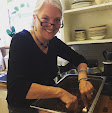
She may not have walls yet, but Nikki Harding (above), does have a toehold in the up-and-coming urban ag scene that is currently taking root in Northeast Portland's Cully neighborhood. The definition of vivacious, she's working to establish a small scale urban farm supply stand providing locally sourced chicken feed, bedding straw and seasonal plant starts and seeds as well as seasonal vegetables from nearby urban farms like The Side Yard Farm and Simpson Street Farm. I'm particularly enamored of the tangerine-yolked eggs she pulls out of the cooler that are on par in flavor, color and richness with the best pastured eggs I've found in town.

Small businesses like Nikki's, which include other farm supply stores as well as urban farms growing straw, vegetables and even grains on plots as small as 50-by-100-feet, a plethora of farmers' markets (more than 60 in the metro area at the height of the season) and retail stores built around local suppliers, are contributing to the city's booming agriculture scene. Farm supply outlets like hers are supported by residents who are turning their yards, front and back, into productive gardens, as well as raising chickens, goats and the occasional pig. And, of course, all of it adds to the vitality of our local economy, not just as an incubator for small businesses, but in keeping local dollars circulating here and contributing making ours a more vibrant community.

On a stretch of NE Simpson just west of Fernhill Park, her farm stand hours are from 10 am till 6 pm on Tuesdays and Fridays. The plan is to build a structure, hopefully before the rains come, on a corner of the large plot that's planned as an extension of The Side Yard Farm. Until then, look for her smiling face under the shed roof, surrounded by the bounty of her neighborhood.

Details: The Garden Hose, NE 48th and Simpson. Open Tuesdays and Fridays, 10 am-6 pm.

Monday, September 08, 2014

Not-Quite-End-of-Summer Tomato Tart


After roasting more than 142 pounds of tomatoes over three days last week, then freezing the resulting 36 quarts, a friend jokingly suggested that I might not be in the mood to help her harvest the bounty of Sungold cherry tomatoes in her garden. "Au contraire, mon cher!" was my snappy comeback.

It's that time of year when I want to exhaust my appetite for fresh sliced tomatoes, the better to remember their warm sweetness picked off the vine when I'm mired in the depths of the rain and cold this winter. Sliced thick or thin, eaten au naturel or drizzled with olive oil and a shower of salt, in a caprese or panzanella, sandwiched between slices of Dave's homemade whole wheat bread and a slather of mayonnaise (with or without his home-smoked bacon and a fresh-from-the-garden lettuce leaf) or chopped in chunks and barely warmed before tossing with pasta, you will find tomato juice dribbling down my chin until the last possible moment.

This tomato tart is a particularly fabulous way to enjoy the season, especially with the palette of colorful tomatoes available right now. Enjoy!

Tomato, Bacon and Greens Tart

For the crust:
1 1/4 c. flour
1/2 tsp. salt
1/2 c. cold butter or margarine, cut into pieces
2-3 Tbsp. ice water

For the filling:
4 slices thick-cut bacon, cut crosswise in 1/4" slices
1/2 medium onion, chopped
3 cloves garlic, minced
4-6 leaves beet greens, chard or kale, sliced into chiffonade
3-4 medium tomatoes, sliced in 1/8" thick slices (cherry tomatoes can be halved)

Preheat oven to 375°.

Put flour and salt in the bowls of a food processor and pulse to combine. Add pieces of butter or margarine and pulse until the texture of cornmeal. With processor running, drizzle in water until it comes together in the bowl. (I usually use 2 1/2 Tbsp. and it comes together well without being too wet.) Remove from bowl, adding in any stray bits, wrap in plastic and refrigerate at least 1/2 hour.

Roll out dough on floured surface to make 12" round. Transfer to 9" diameter tart pan with removable bottom. Trim edges, leaving 3/4" overhang. Fold overhang in to form double-thick sides. Press tart edges to raise dough 1/8" above pan. Chill in refrigerator for 30 min.

Heat non-stick skillet over medium heat and add bacon. When bacon has rendered, add chopped onion and garlic and sauté till golden, stirring frequently to avoid browning. Add kale chiffonade and sauté till wilted. Remove from heat and set aside.

Line inside of crust with foil and bake until golden, about 20 min. Remove from oven and cool slightly. Scatter kale mixture over the bottom of the crust in a thin layer. Top with single layer of tomatoes, arranged randomly. Place in oven and bake for 40 min. or until crust is browned and tomatoes are cooked through. Let cool slightly and remove outer ring from tart pan. Slide tart off bottom onto serving platter, using a spatula if necessary to loosen it. Can be served warm or at room temperature.

Saturday, September 06, 2014

Farm Bulletin: The Tomatillo, Examined


Walking by a display of vegetables in the farmers' market, most of us glance at the bin, the price and our shopping lists, perhaps sneaking in a squeeze or poke, and move on. Contributor Anthony Boutard of Ayers Creek Farm begs us to pause and appreciate the unique story that each one has to tell.

"Ecce Edwardus Ursus scalis nunc tump-tump-tump occipite gradus pulsante post Christophorum Robinum descendens."

And so begins the story of Winnie-the-Pooh in the tongue of Virgil and Ovid, as translated by Alexander Lenard (E.P. Dutton 1960) in his Winnie Ille Pu. As hard as it is to imagine anything but a living, vital language telling the tale of a stuffed bear, the faithful were challenged when Vatican II recommended delivering the Mass in the vernacular instead of Latin just five years after its publication. With Latin on the verge of dying, solace was found in the fact that new plant species were still described in Latin. That final bastion of life for the ancient language is now under siege, with some taxonomists proposing the use of English for botanical descriptions. 

Tomatillo flower.

The language of the Mass must deal with love and hate, suffering and bliss, betrayal and redemption. Consequently its Latin is heavily salted with words derived from Greek, a language that handles those subjects well. Latin is the language of laws and strategy. In that respect, it is a fine language for the sciences. Botanical Latin is descriptive and of the present tense. Little need to worry about verbs anyway as the specimen is dry and taped to a herbarium sheet. Nonetheless, the naming of organisms can get a bit litigious. In a form of scientific primogeniture, the person who first publishes an account correctly describing and naming a plant prevails, no matter how wonderful, familiar, pertinent or worthy subsequent names are. So there is a breed of scientists who make it their life's work to shake up the existing order. 

Jean-Baptiste Pierre Antoine de Monet, Chevalier de Lamarck.

Such is the case of the tomatillo. The great French scientist, Jean-Baptiste Pierre Antoine de Monet, Chevalier de Lamarck published a description of the plant, naming it Physalis pennsylvanica. His Portuguese contemporary, Félix de Avelar Brotero, gave it the name Physalis ixocarpa at approximately the same time. Both names have been used over time, but Brotero was a nose too late in the opinion of the modern publications department. So this lovely fruit, essential to Central American cooking and largely ignored in the Northeastern United States, is named after a state where it has no substantive connection. With such a fancy name, you would think the Chevalier would have been a bit more creative. An essential part of Mexican cooking is stuck with the name of the cheesesteak's home. 

The developing fruit.

Brotero's epithet, ixocarpa, on the other hand, is an intriguing fusion of Greek and Latin. Most cookbook authors and gardeners dully repeat that it means "sticky fruit" without further inquiry. In Latin, carpa means fruit, that's true. The ixo is a bit more of a puzzle. In neither Latin nor Greek does it correspond to the word "sticky." In fact, the letter x is not a Roman letter per se; it is a number. In our alphabet, it can represent one of two Greek letters, xi or chi. Brotero's x works both ways. 

Using the Greek character xi, it is the prefix to a complex of words referring to birdlime. This sticky substance was rendered from the bark of holly or the berries of mistletoe and smeared on the branch of trees where birds roosted. They were then captured by the likes of Mozart's bird catcher, Papageno, and sold for food or ornament. The name comes obliquely to sticky, but arrives well.

The desiccated husk forms a basket to hold the seeds.

If we treat it as the character chi instead, the word is a prefix to a complex of words referring to fish, notably dried fish skin, or a basket for carrying fish or trapping fish. The husk is certainly reminiscent of dried fish skin, and when the soft tissue of the husk and fruit rot away, leaving just the vascular tissue, it forms a basket containing the seeds that look just like so many fish in a carrying basket or fish trap. The wind blows these little baskets around the farm and, as they roll about, the seeds drop out bit by bit.

The husk develops from the base of the sepals. When the flower is pollinated, the yellow petals fall off and a special growth tissue, or meristem, at the base of the sepals starts to grow. It keeps pace with the developing fruit inside until just before ripening. The ripe fruit tears through the husk, at which point it is ripe. Zenón refers to it as taking its shirt off, and that is when they are best harvested. If they fall to the ground, they are deemed ripe as well. As he puts it, the fruit is essentially sharp-flavored, but it should have a distinct sweetness alongside the acidity. 

The dried husks distribute seeds.

Having tried the Brand X tomatillos and being fundamentally New Englanders, we were leery of the fruit initially. With staff's expert guidance, we now feel comfortable with tomatillos. For sauces, we use tomatillos both raw and cooked. They are a basic ingredient in a pozole verde, and we roast them with other vegetables. Staff have a strong preference for the purple types which are more flavorful. That's helped assuage our leeriness as well. They also taught us to keep the fruits in a dry place, where they will last in good shape until March. In fact, purple fruits that last until March are the two primary selection criteria for seed production. 

Both born in 1744, Lamarck and Brotero contributed a great deal to science. Lamarck is worth a special note because he was one of the earliest scientists to question the immutability of species, and suggest that organisms could change over time, a process later called evolution. His proposed mechanism was mocked and ultimately dismissed in favor of Darwin's theory of natural selection. As we understand the evolutionary process better, Lamarck's ideas have gained greater respect. Nonetheless, he will still have the albatross of naming a great Mexican fruit after the American cheesesteak capitol hanging around his neck.

Photos by Anthony Boutard.

The Happy Hungarian Plum Cake


Are Hungarians always happy? They would be if they're having this lovely plum cake, especially with a cup of their national drink, which is, according to ItsHungarian, "a strong mocha with a high level of caffeine, a kind of Italian espresso, which is called kávé, presszókávé, or fekete (strong black coffee)."

The reason for making this cake, other than it's cake, is that our friends J&K were having a movie night featuring The Grand Budapest Hotel, Wes Anderson's kitschy but charming ode to the stories of Austrian novelist Stefan Zweig. Movie night is always accompanied by a dinner that is more-or-less themed to go with the movie. This one was to be a potluck featuring a Hungarian chicken paprikash as the main course, and since dessert is one of the toughest dishes to make Dave-safe, I volunteered to bring that.

With plums at their peak this time of year, a cake, tart or crostata of some sort seemed in order. Thumbing through cookbooks and websites turned up a slew of traditional Hungarian plum cakes (who knew?) that could be adapted to be lactose-free yet still satisfying for those of us fortunate enough to be lactose tolerant.

I was making a trip to the Hillsdale Farmers' Market anyway, and I knew that Anthony and Carol would have a good selection of plums from their organic orchard at Ayers Creek Farm. Sampling what they hand brought that week, I fell in love with the perfumey, sweet flavor of the delicately blushing mirabelles and bought a couple of dozen. Needless to say, the cake was beautiful and a hit with the movie-viewing crew.

Happy Hungarian Plum Cake

Butter or margarine for greasing the pan
1 Tbsp. flour, also for the pan
2 c. flour
2 tsp. baking powder
1 tsp. sea salt
1 3/4 c. sugar, plus addt'l. 2 Tbsp.
4 eggs
1 3/4 c. milk or lactose-free milk
2/3 c. vegetable oil (like grape seed, etc.)
2 tsp. vanilla extract
2 dozen ripe plums, halved and pitted
1/2 tsp. ground cinnamon

Pre-heat oven to 375°.

Grease a 13-inch by 18-inch baking pan* with the butter or margarine, then add the 1 Tbsp. of flour and shake the pan so it coats the bottom and sides

In a medium mixing bowl, combine the flour, baking powder and salt in a bowl. In a large mixing bowl, whisk 1 3/4 c. sugar and the eggs together until smooth. Stir in milk, oil and vanilla. Add flour mixture and stir to combine until it becomes a smooth batter. Pour the batter into the prepared baking pan. Arrange the plum halves, cut sides down, evenly over batter. Combine remaining 2 Tbsp. sugar with the cinnamon in a bowl and sprinkle over the top of the batter. Bake until a toothpick inserted into the middle of the cake comes out clean, 50 min.-1 hr.

* This recipe can be halved and baked in a 9-inch by 12-inch baking pan.

Thursday, September 04, 2014

Consumer Reports' Warnings on Tuna Get It Wrong


You may have seen articles in the press recently citing a study from Consumer Reports that analyzed recommendations from the FDA calling for Americans to increase fish consumption in their diets. Among other things, Consumer Reports got a little screamy over the issue of mercury levels in tuna, stating, "Consumer Reports disagrees with the recommendations from the FDA and EPA on how much tuna women and children may eat. (We don’t think pregnant women should eat any.)" [Emphasis theirs - KAB]

Fishing boat in Ilwaco, WA.

As I've stated here many times, lumping all tuna into one full-of-mercury category is wrong from both a health and a factual standpoint. And yes, I know, parsing complicated issues when speaking to the public is difficult, but facts are facts, and fear-mongering headlines negatively impact thousands of fishing families in Oregon and Washington and hundreds of coastal communities that depend on the fishing industry for their survival.

Unloading albacore in Warrenton.

The Western Fishboat Owners Association, which represents about 400 of these fishing families, responded to the barrage of bad press this way:

"The U.S. albacore troll/pole fleet is a small boat fleet of hook and line vessels generally 35-75 ft. in length, that are family-owned and operated and fish for albacore tuna from July through October off the west coast, mainly Oregon and Washington. The fishery is certified by Marine Stewardship Council (MSC) as sustainable and well managed and also appears on the "Green" list from the Monterey Bay Aquarium Seafood Watch. Our fleet lands on average 30,000,000 pounds each year with about half exported to Europe and Asia. The fleet catches 2 to 4-year-old albacore (10-25 pounds) with an average of about 13 pounds year after year. Extensive mercury testing has been [done] over the last 10 years through Oregon State University as well as by buyers and exporters. All recent mercury testing has shown very small levels of Hg [mercury] in the fish well below FDA standards of 1.0 ppm and well below Canadian guidelines of .5 ppm (The Canadian government has recently removed their 'no eat' recommendation from their local troll albacore caught off the U.S. and Canada.)"

Fresh-packed West Coast albacore tuna.

What should you do when you go to the store to shop for tuna? First, look for the blue MSC label or, better yet, read the fine print on the label. The only ingredient should be albacore tuna—though some also add salt—because it's fresh-packed, so the fish cooks in its own juices (left) eliminating the need for added oil or water. If it has oil or water, it's almost guaranteed to come from large fishing vessels that ply the deep southern Pacific ocean. These gigantic vessels catch older, much larger albacore that have lived for years in the mercury-polluted ocean waters (a whole outrage on its own).

Good local brands to look for are Sweet Creek processed by Paul and Judy Fuller in Elmira, Oregon; Sacred Sea from the Goché family in Coquille; and Skipanon from the Kujala family of Warrenton.

Top photo from Wild Pacific Albacore. Read my article on the Oregon albacore fishery, which goes into more detail about how albacore is caught and processed.

Saturday, August 30, 2014

Farm Bulletin: Of Goddesses and Barley


Crops on a farm can be bountiful or spare year to year, depending on the vagaries of temperature, soil, moisture and the fluctuation of animal and bird populations that may do them harm. This year was a good year for barley, and here contributor Anthony Boutard of Ayers Creek Farm expounds upon this grain.

Barley, Hordeum vulgare, is the small grain with the greatest diversity. There is a wide range of kernel colors, including white, tan, brown, blue, purple and black. There are varieties with two and six rows of kernels, and some indecisive sorts with four rows. There are varieties that have an indigestible hull adhered to the kernel and those that thresh free of the hull, termed naked or hulless.

Italian "Milan" barley.

The types that retain their hulls are typically used for brewing and animal feed, though they can be pearled, which removes the hull and parts of the aleurone and the germ as well. The presence of the hull reduces bloat in draft animals and is essential to the malting process where it prevents the germinating grains from overheating. The hulless trait is controlled by a single gene and means humans can eat the whole grain. The hulless varieties are more nutritious because the whole grain is edible and retained.

Ceres holds barley and poppies.

In the sometimes silly race to promote "ancient grains," barley is considered too prosaic to earn a mention. However, even 2,000 or so years ago, Pliny described it in the superlative as antiquissimum frumentum, or the oldest of the cereals. That's old, folks. And, no, we are not going to claim that any of our seeds were pulled from a tomb or old pot buried somewhere. Crop seeds are a living legacy of civilization, and are generally viable for no more than a decade at best. Barley was sometimes assigned the status as a sacred grain and it is the grain Demeter holds along with a poppy capsule in the classic renditions of the goddess.

Hulless barley.

We started working with hulless barleys over 10 years ago and have offered it off and on through the decade. There is a cluster of naked barley devotees out there, people such as Will Bonsall of Industry, Maine, and Anpetu Oihankesni of Hotchkiss, Colorado, who provided much of our collection. They have varieties from around the globe, and we combed their collections for varieties with notable flavor. Keeping all the varieties separate became too much work for a farm at our scale. So last year we took all of our varieties, mixed them up and planted them together in a single plot. A sacrilege of sorts, but otherwise hulless barley culture at Ayers Creek was doomed as an erratic and meagre offering.

This week we will bring in the mix, a classic American melting pot of barley instead of humans. You will see the blue kernels from the Arabian variety, the large brown seeds of 'Dolma' that was collected in Kinnaur, India by Oihankesni, the white kernels of two Italian varieties from Bonsall, the tiny, rice-like kernels from the Korean 'Kamet-mugi' and the Japanese 'Sangatsuga'. The black kernels are from a variety of uncertain origin called 'Jet' that we acquired from Bountiful Gardens.

We soak the barley overnight, refresh the water, bring it to a full boil and simmer it until until tender, about 40 minutes or so. Use barley as you would rice. Make pilafs, add it to soups, make grain and vegetable salads. It is flavorful, nutritious and pretty. That is the fine package that attracted us to the grain in the first place. And perhaps we can be forgiven for the sin of mixing the various types because it is an attractive collection.

Towering Temple of Tomatoes


I can hear my mother's words echoing in my head: "This is because your eyes were bigger than your stomach."

It all started innocently enough, when Dave and I drove out to Ayers Creek Farm to pick some of the Astiana tomatoes that, for the last few years, we've roasted and frozen to use throughout the winter in soups, sauces and, yes, even cocktails. The first year we bought a total of 50 pounds of the blood-red, heart-shaped tomatoes that Anthony and Carol brought from Italy as seed and adapted to the climate of the Wapato Valley. (Read the very entertaining story of their discovery of these tomatoes.) The next year it was 80 pounds, then 120 pounds, and this year I figured we needed 150 pounds to take us all the way to the next season.

Roughly chopped, ready for roasting.

Named Astiana after the town in the Piedmont region of Italy where they originated, these large tomatoes are almost all flesh with very few seeds, ideal for making sauce and paste. My plan was to get a jump start on the processing by bringing home 50 pounds or so, then getting two more batches of 50 pounds each as the season, about a month long, progressed. I say "was" because when we got to the field and started picking, using the four yellow crates that Carol insisted we would need—you can tell I'm trying to shuffle off blame here, right?—well, that's when my clever plan went a bit sideways. By which I mean completely off the rails.

After roasting, ready to bag and freeze.

Hauling the crates back to the processing shed, we knew we had more than 50 pounds-worth staring back at us, but when it was all weighed and bagged, that's when I heard my mother's voice. It turns out there were 142 pounds of my favorite fruit sitting on the table in that shed, 142 pounds that were subsequently driven home and the same 142 pounds carried into the house.

Roasting on the grill.

To say I saw my life, or at least the next few days of my life, flash before my eyes might be a wee bit of an overstatement, but there was definitely an "Oh my god what have I gotten myself into" feeling at surveying the bags and bags (and bags…) of ripening tomatoes at my feet. Fortunately they were at varying stages, from squishy, do-something-with-them-right-now-or-say-sayonara ripeness to barely pink-almost-green ones that, with luck, would take three or four days to get fully ripe.

Sorting through them and labeling bags "soon" for those needing attention in the next day or two and "hold" for those that could wait a couple of days, we dove in and grilled two batches of the softest ones that evening, which went immediately into the freezer. We hope to have the rest done by Sunday, divided more or less evenly between grilled and oven-roasted. Wish us luck!

Monday, August 25, 2014

Potato Salad and the Other "F" Word


I've heard it mentioned more than once now, the four letter word starting with F that gets bandied about this time of year. You know the one: fall, aka autumn, the precursor to winter.

I mean, we're still looking at temperatures in the 90s this week, for Pete's sake. Yes, I know, school's starting soon, August is giving way to September, blah, blah, blah. But we live in the Northwest, where the rains can hold off until October or November in a good year. And with Indian summer there's the possibility of camping, picnics and outdoor gatherings for another several weeks.

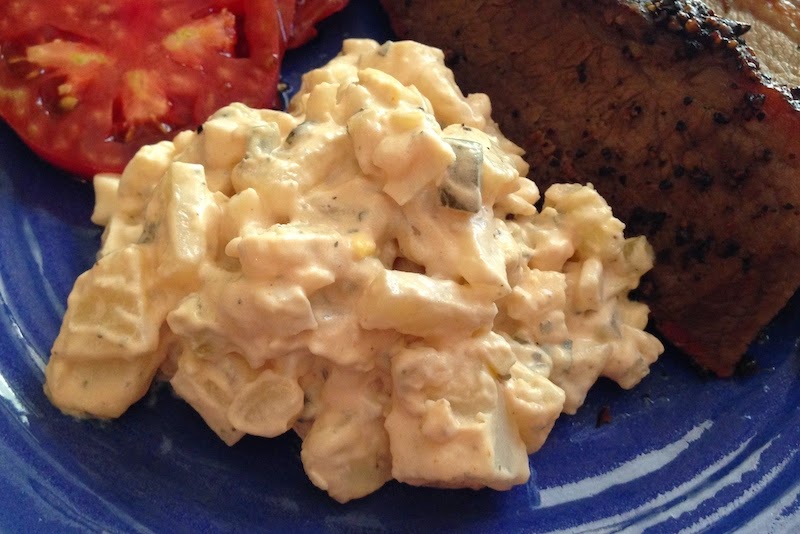
So I'm putting my hands over my ears, living in denial and ignoring pooh-poohers who want to harsh my summer mellow. I'll be wearing my Keens and capris, eating as many tomatoes as I can stuff into my face, enjoying whatever Dave pours out of his cocktail shaker or pulls out of the smoker (like the 11-hour brisket, above), plus making my mom's classic potato salad that makes any time of year feel like the height of summer. So there!

Mom's Potato Salad

Dressing:
2 c. mayonnaise
1/2 c. ketchup
2 tsp. worchestershire
2 tsp. basil
1/8 tsp. garlic powder
1/2 tsp. celery salt
1/2 tsp. thyme
1/3 c. pickle juice
1 tsp. salt
1/4 tsp. pepper

Salad:
8 med. russet potatoes
1 yellow onion
10 eggs
6 med. dill pickles

Put unpeeled potatoes in a large saucepan or Dutch oven and cover with water. Place on stove and bring to a boil. Cook until potatoes are tender but not mushy. Drain and cool (can be made ahead).

While potatoes cook, make dressing. Put all ingredients in a bowl and stir to combine.

Peel potatoes (optional), then slice cooled potatoes into 1" square and 1/8" wide pieces (or bite-sized). Chop onion and pickles fine. Chop eggs. Put them all in a large bowl, pour dressing over top and fold it in until thoroughly combined (don't stir or the potatoes will break up too much). Place bowl in refrigerator and let sit for a couple of hours so flavors have a chance to mingle.

Serves 10-12. This recipe makes a huge batch, so feel free to halve it, though it tastes even better the next day and will last for a week in the fridge.

Saturday, August 23, 2014

Farm Bulletin: Sotweed, Spuds and Tomatoes


Relationships in the plant family, as in any family, can be a puzzlement at first. Given a little family background, however, many of the quirks and habits—big noses and colloquialisms in humans, scents and growth habits in plants—become clearer. And who doesn't need some downtime every now and then?

Harvesting tomatoes leaves your hands and arms covered with plant resin that has a fragrance instantly recognizable to anyone who grew up around a pipe smoker, that of fine burley tobacco. Tomatoes and tobacco, also called sotweed, are both in the nightshade family, along with potatoes, tomatillos and peppers.

The Sot-Weed Factor, John Barth's novel set largely on the Eastern Shore of Maryland, refers to a traveling agent, a factor, who purchased tobacco from farmers. Like Barth, my wife Carol's father, Peter Black, had a deep affection for the Eastern Shore, both for its history, landscape and nature, as well as its natural affinity for scoundrels. His country hams, smoked and dried for seven years or more, sliced as thin as paper and served on beaten biscuits, are missed as the holidays roll around, along with Thelma Johnson's persimmon pudding and, earlier in the year, the soft shell crabs. The blue crab is of its own kind and should never be compared to its sweeter West Coast cousin.

Just part of my yearly quota of astiana tomatoes from Ayers Creek.

One evening, as we enjoyed the cool breeze that came down Plain Dealing Creek and through the well-placed house surrounded by old pecan trees, we talked about another of Barth's novels when Peter digressed, explaining to us the second meaning of the "sotweed factor." Tobacco is an extractive plant, feeding heavily on the land and required a seven-year rotation between crops. Thus a tobacco grower seeking to harvest an acre of tobacco a year needed seven acres total, a factor of seven. With care, other cash crops could be grown in the rotation, but building the soil for the next crop of tobacco was paramount. The farmer could grow on a shorter rotation, but the leaf lost its aromatic quality and flavor and was considered worthless. The human factor would decline to purchase it.

A gorgeous, if unusual, specimen.

Closely related to tobacco, potatoes and tomatoes share this trait. One year, we foolishly followed a crop of tomatoes with potatoes and they were the worse spuds we ever pulled out of the ground, absolutely flavorless and unfit for our discerning customers. Diagnosing the failure, we recalled Peter's discussion about the sotweed factor, and now we make sure we keep seven years between crops in the nightshade family. Other crop plants show a similar propensity, though not as aggressive. Processors require three years between crops of sweet corn for the same reason; a shorter interval results in less flavorful corn.

As a general matter, it is a good idea to separate similar crops by several years. We also heed the Biblical instruction to leave the land fallow every seven years, though we are not strictly observant when it come to the exact frequency. The fact is, land needs an occasional rest. Until the middle of the 20th century, a fallow year was included as a matter of course in crop plans. Not only does the soil rest, allowing it to refresh its mineral availability, the fallow year also creates a break in pest and disease cycles. We had an email exchange with youngish organic farmer who was growing several crops of greens each year with good success for about five years, and suddenly she started having disease problems. We recommended a fallow year. Conventional growers can address those disease and insect problems with chemicals, but the flavor and quality of the fruits and vegetables still declines with intense crop cycles.

The other day, with our spuds not yet ready to harvest, we cooked up some fine looking Brand X certified organic potatoes and they were as bland as bland could be, reminding us of the nasty crop we erased with a plow many years ago. Organic growers cannot produce a good crop, even if they avoid disease and pest problems, if they insist on throttling down on the rotation and never leaving the land to rest. True, variety selection and the cultivator's competence are important as well, but they are for naught if the need for rotation is ignored. And on the seventh year, the land shall rest.

* * *

For those following the saga of the 1941 Allis Chalmers All Crop 60, Anthony has this update.

This past Thursday, All Crop #67208 had her first outing in decades (the "before" photo at left…new photo to come). With the large wooden straw rack swaying side-to-side, her gait has a touch of the rumba in it. She filled bags of hulless barley effortlessly, and we should have some cleaned and at the market within a week or so. The challenge of having her ready for Will and Jon's visit was met, and Will can tell you all about this amalgam of canvas, wood and steel at the market next week.

Friday, August 22, 2014

The Bounty of Harvest Season!


Say you belong to a CSA but you're leaving on vacation before you can pick up your share for that week. What do you do? Well, in the case of our neighbors Brian and Ed, you ask the first neighbors you run into if they'd like to pick up your share that week.

Luckily for us, we happened to be the ones they tripped over first, so we got to pick up their haul (photo above) from Dancing Roots Farm, which was dropped off at another subscriber's house a few blocks away. As you can see, it's about 10 or 12 pounds of the gorgeousness that is the height of the summer harvest season, including zukes, beets, beans, broccoli, tomatoes, onions, cilantro, jalapeños and garlic. Wow!

Thursday, August 21, 2014

Salad Smackdown: Nectarines Make Kale and Lentil Salad Sing


Lentils. Weren't they that popular hippie food from the 60s and 70s that were almost as ubiquitous as brown rice, and just as often overcooked? Cheap and quick, all it took was a pot of water, an onion—adding a carrot was getting pretty exotic—and 20 minutes to turn them into soup for a crowd. A pinch of curry powder in a pot of the cooked beans gave an air of the Indian subcontinent to a meal.

Now, of course, we are awash in choices of lentils in the bulk section of our supermarkets: brown, green, red, yellow, French, Spanish, Italian. The other day I was browsing for ideas in the aisles of my local market and saw some good old brown lentils, but these were organic and grown in Oregon. Awesome!

It was another very warm day here in the Willamette Valley—it seems like we've an extraordinary number of those this summer—and a salad seemed preferable to heating up the already overly warm house by turning on the oven. Twenty minutes on top of the stove seemed do-able, though, so I put the lentils on to cook and rummaged in the vegetable bin for ingredients.

This dish was so successful, by the way, that it's now going in the permanent rotation. Plus it keeps really well in the fridge, like a good slaw improving by spending a few hours (or overnight) allowing the flavors to meld.

Kale, Lentil and Nectarine Salad

3 c. lacinato kale, sliced into chiffonade
2 c. cooked lentils
1/4 red onion, chopped fine
1/2 cucumber, seeded, quartered lengthwise and thinly sliced crosswise
1 red bell pepper, roasted and thinly sliced into 1"long pieces
2 nectarines, chopped into 1/2” pieces
Juice of 1 lemon
1/4 c. olive oil
Salt to taste

Combine ingredients in large salad bowl. Toss. Adjust seasonings.

Wednesday, August 20, 2014

Fat City: Food Lovers Guide New Edition


Meandering through narrow cobblestone streets past shop windows piled with local pastries, sitting in cafés watching the locals exchange the latest gossip or exclaim over a new baby, even stopping in at a neighborhood deli to pick up fixings for a picnic lunch, it's fun to imagine what it would be like to live in the places that I visit. But when I get back home and walk into a New Seasons store or pick up fresh produce at the (year-round) farmers' market just blocks from home or meet a friend for a pint at any of hundreds of local brewpubs, other locales pale in comparison.

What I loved about Liz Crain's first guide to Portland's food scene when it came out in 2010 was the diversity of the places, products and people she included. There were some of the usual suspects, the popular places and people who get featured in every travel article and guide book to the city. But it was the under-the-radar, less-traveled neighborhood stores and less well-known folks that made it such a breakthrough piece of writing at the time.

On the first of September the second edition of this slim but comprehensive volume, the Food Lover's Guide to Portland, will be available, and it's packed with the same top-to-bottom listings as the first volume, but updated and expanded to include the explosion of new tastes and fresh faces on the city's food scene. From obscure corner shops like Tonalli's Doughnuts and Cream to tiny Cherry Sprout Produce to old line big hitters like Pastaworks and Stumptown Roasters, Liz has compiled a compendium of the best of the best.

Whether you're a local or tourist, or someone who just wants to read about what a vibrant local food scene can look like, you'll find it fascinating. I sure have.

Top photo: Elias Cairo of Olympic Provisions. Lower right: breads at little t American Baker.

Thursday, August 14, 2014

Corn Salsa


Fresh corn pretty much nails it on all of my sensual fronts. Taste? Sweet and light. Texture? First the pop of the kernel, then the creaminess inside. Smell? Earthy and ethereal all at the same time. Sight? That beautiful yellow, the shine on the kernels, the juice oozing out. The sound might be a stretch, but I guess you could listen to the scrunching as you bite into the cob, or the popping of the kernels when you chomp down.

And don't forget to use those stripped cobs, yes, even the whole ones that have been served to your family, to make a corn stock to make soups and risottos. Throwing them into the compost without first boiling off the juices is now, for me, akin to throwing out a fish carcass without roasting it for the meat left on the bones. And while it's terrific fresh, I've always got a few bags of frozen kernels stashed away in the freezer from this most fleeting of summer pleasures.

The following recipe for corn salsa is almost a salad by itself, but is also great with tacos and Mexican-inflected dishes. I think it would be fabulous with grilled fish, too.

Corn Salsa

2 ears of corn, kernels removed
1/4 red onion, chopped fine
1/2 red bell pepper, chopped fine
1 small avocado, ripe but still firm, diced
1 serrano chile, seeded and membranes removed, minced
2 Tbsp. cilantro, chopped fine
Juice of 1/2 lime
2 Tbsp. olive oil
Salt to taste

Place ingredients in medium mixing bowl and gently combine.

Wednesday, August 13, 2014

Quick Hits: Ps and Qs Market


Once upon a time your neighborhood market was a little mom-and-pop place where neighbors could pick up a quart of milk or a loaf of bread and their kids could stop in with a dime and buy candy. The owners would often live above the store and their kids went to school with your kids. Those small businesses eventually disappeared with the advent of so-called convenience markets like 7 Eleven and Plaid Pantry that were packed with snack foods, sodas and cigarettes and weren't the sort of places you wanted your children hanging out in.

Now small markets are popping up in neighborhoods again, stocked with dry goods, milk, cheese and bread, some even featuring a café with a deli and homemade soups and sandwiches. Ps and Qs Market, in the DIY spirit that is taking root and growing a new business district in Northeast Portland's Woodlawn neighborhood, is a shout-out to those little stores of yesteryear.

The mom and pop in this case are Emily Anderson and Paul Davis, a young couple who enlisted friends and family to transform an abandoned storefront church into a neighborhood market, a piece they felt was missing from the puzzle of the developing area. (Their endearingly sincere Kickstarter video tells you just how committed these folks are.)

Open from lunch through dinner, with the requisite weekend brunch hours, these two are no babes in the woods. Anderson came from managing Bryan Steelman's ¿Por Que No? and Davis cooked for years at various small restaurants around town, Bröder and Podnah's among them.

With light pouring into the space from the big windows on its face, the front is the coffee shop and deli where residents can grab a cup of joe and share the latest gossip over a pastry or sandwich. The bulk goods, produce and large refrigerated cases of milk, cheese and other fresh items line the side and rear walls, with the bustling open kitchen and service counter taking up the center of the room.

Our lunch there was on a quiet day, with neighbors stopping to chat and pat the heads of children and dogs, an unshackled bicycle leaning casually against the building. We shared soup (a Latin-inflected tomato-and-bean with corn dumplings) and a couple of sandwiches (pulled pork for Dave, rosy house-roasted beef for me). We sat outside in the shade of the awning, feeling like this little bootstrap of a market is just the kind of place that makes our city a good place to live. Which includes the local kids who stop in for red vines for a dime.

Details: Ps and Qs Market, 1301 NE Dekum St. 503-894-8979.

Monday, August 11, 2014

In Season & Delicious: Albacore, Sweet Onion & Potato Salad


Contributor Jim Dixon of Real Good Food shares his recipe for a main dish potato salad. I can say it's definitely going to be making an appearance on our dinner table soon!

Oregon albacore tuna is in the markets right now, and so are Walla Walla Sweets. And they taste great together in this potato salad. Have your fish monger cut the skin from an albacore filet (annoyingly called a "loin") and slice the fish into steaks about an inch and a half thick. Warm about a quarter cup of extra virgin olive oil in a skillet over low heat and gently poach the fish, turning frequently, for about 10 minutes. When the tuna turns white, turn off the heat, cover the pan and let it sit for about 20 minutes.


Steam or boil 2 or 3 yellow potatoes; when easily pierced with a knife, let cool and peel. Cut in to bite-sized pieces, place in a large bowl, and toss with about 2 tablespoons of Katz Viognier Honey vinegar. Thinly slice a Walla Walla sweet onion and add it along with the poached tuna and the olive oil used for poaching. Pick the leaves from 6 or 7 parsley sprigs and chop. If you have any in your garden, chop about the about the same amount of lemon verbena leaves; if you can't find verbena, use fresh mint.


Soak a couple of tablespoons of Pantellerian capers* in cold water for 10 minutes, then drain and chop. Add the capers and herbs, along with a good pinch or two of dried Pantellerian oregano*, to the tuna, onion, and potatoes. Drizzle with a little more extra virgin if you feel like it, sprinkle on some flor de sal, grind in a little black pepper, and eat.

* These products from an island off the coast of Sicily can be substituted with regular capers and oregano. For the real deal, though, go to the Real Good Food website for purchasing details.

Sunday, August 10, 2014

Farm Bulletin: For the Love of Allis Chalmers


Contributor Anthony Boutard, farmer, author and sought-after pundit on ag panels, is a die-hard romantic when it comes to farm equipment. He dotes on his pumps, breathes life back into abandoned forklifts and babies his prized Italian thresher through frikeh season. His latest project is a collection of metal parts (above) that he hopes to reanimate into a working harvester. (The rainbow bodes well, don't you think?)

We have been caught in the riptide of the season where the harvest of the Chesters continues apace and we are sowing our winter crops. Hence less prolix than usual. The seedling chicories, including our first re-selection of the late Treviso type, are emerging. Barely visible, they show up as a thin green line when viewed down the row rather than as individuals. To make up for last year's disaster, we have doubled the planting, such is the thing of a farmer.

Into this mix, we are restoring a 1941 Allis Chalmers All Crop 60. We dragged it home ten years ago and we have tackled the project bit by bit, with progress measured in its disassembly. Our son-in-law and his kid are visiting in late August, and the goal is to have it up and running by then. Otherwise we won't have chickpeas and barley this year. Every restorer's nightmare, nurtured by the hapless coyote in Roadrunner cartoons, is that a single bolt is forgotten and, upon starting, the machine collapses into a pile of rubble. If it is oddly missing during the Ramble*, that is what happened.

* This year's Ayers Creek Farm Ramble is scheduled for Oct. 12. Details to come.

Friday, August 08, 2014

Happy Daze at the Farmers' Market


Just to remind you, as if you didn't know already, that we are in the height of farmers' market season in Oregon. With more than 60 markets operating every day of the week around the metro area, and many, many more around the state, it's time to get out and taste the goodness that our farmers are growing for us.

The bounty above was from one of Portland's newest markets, the small-but-mighty Cully Farmers' Market on NE 42nd Avenue next to Old Salt Marketplace. Amaro Brothers Produce is a new vendor at this market, and along with potatoes, eggs, tomatoes and corn, they bring terrific Latin specialties like peppers, squash blossoms and herbs.

Because of our richly diverse market scene, small farmers like the Amaro family are able to sustain themselves by selling directly to customers and not be beholden to distributors. So get thee to a market today, and don't forget to thank these folks for their hard work.

Find a market near you on this list of Oregon's farmers' markets, including links, maps, addresses and hours of operation.

Wednesday, August 06, 2014

Quick Hits: Dime Store


Really great Chinese food. A brewpub with a menu that ventures beyond pizza, burgers and fried food. An East Coast-style diner. All in short supply in food-mad PDX. But the diner, that fixture of Americana with stools lining a counter and booths predominating over tables, may have just reappeared on a moribund corner of downtown.

Formerly Leo's Non-Smoking Coffee Shop and before that a series of greasier-than-greasy spoon luncheonettes parked behind the Central Library on SW 11th and Taylor, it was bought and reimagined as a "finer diner" by Dayna McErlean, she of the revitalized corner of NE 30th and Killingsworth's Nonna, DOC and Yakuza.

Hiring the whiz-bang wunderkind Claire Miller, known from her magical touch in the kitchen at Ben Meyer's Grain & Gristle, to run the kitchen at Dime Store was a stroke of genius. Claire, if she'd been born a few decades earlier, would perfectly fit the bill as the sassy proprietor of a classic 50s diner, cigarette dangling from her lip, slinging hash and bon mots at her regulars while feeding them food their mothers would approve of.

Though smoking has gone out of fashion (thank heavens), Claire's menu couldn't be more of a throwback to the days where everything in your favorite diner was handmade from quality ingredients. Breakfast is chock-full of items like granola, flapjacks, home fries and biscuits. Lunch features a meat loaf sandwich to die for, a burger of house-ground beef and a selection of desserts that look like they came from your grandmother's kitchen.

Portland hasn't seen a place like this since the days of yore when the late, lamented Shakers Café took the nascent and as-yet-unbranded Pearl by storm. Let's hope that Dime Store gets the same attention, because this classic is worth keeping.

Details: Dime Store, 837 SW 11th. 503-228-1866.

Tuesday, August 05, 2014

Chilling Out with Refreshing Chilled Soup


The last thing I wanted to do was turn on the stove when the temperature hit 90 degrees for the fourth day in a row. The house was already uncomfortably warm, and even with the AC unit in the upstairs window cranking on high and fans buzzing all over the house, the effort to create something like a wind chill effect felt more like a sirocco on the Sahara.

I could tell that crankiness was right around the corner, so taking inspiration from Mark Bittman's article on gazpacho in the NYT, I decided to turn that sweaty frown upside down with a chilled vegetable soup. Eschewing the idea of steaming or sautéing anything beforehand, I decided to try my luck with raw ingredients. A minimum of chopping, a bit of time in the blender and dinner was ready.

Very refreshing served with sliced heirloom tomatoes and a dry white wine, I was almost able to imagine myself dining poolside in the tropics.

Chilled Cucumber, Avocado and Fennel Soup

2 cucumbers, seeded
1 avocado, peeled and seed removed
1 fennel bulb, cored and quartered
1/4-1/2 onion, roughly chopped
1 clove garlic, roughly chopped
Juice of 1/2 lemon
1 c. water
1/2 c. sour cream or tofu sour cream
1, 1" slice day-old artisan bread, crusts removed and cut in 1/2” cubes
Salt to taste

Place half of the cucumbers, avocado, fennel bulb, onion, garlic, lemon water and sour cream in a blender. Blend until mixture is thoroughly puréed. Add half of bread cubes and continue to blend until it is a smooth mixture. Add salt to taste. Pour into large mixing bowl. (At this point you can taste and adjust amount of onion, etc., for the other half of the soup.) Repeat with second half of ingredients. Stir to combine. Can be refrigerated (or not) before serving.

A Weekend on the Zigzag


Once we arrived I didn't want to leave. Go to the store to pick up an item in the nearby town of Zigzag? No, thanks. We could make do with what we'd brought.  Even leaving camp to go on a hike seemed like a bother. I'd rather just sit in a chair on the porch and read a book while listening to the river clattering by, its white noise blocking any intrusions from the outside world.

The rustic cabin, owned by friends who generously shared it with us, had been built as workers' housing in the 1930s by Civilian Conservation Corps crews working on projects around the newly designated Mt. Hood National Forest, including helping to build Timberline Lodge. Built from fir that was no doubt milled from trees harvested nearby, and with door trim, bannisters and railings handmade from small trees, the cabin's main feature is a large stone fireplace, around which the downstairs living room and kitchen and the two small upstairs lofts were arranged.

A family had owned it for the past 30 years before our friends bought it—in fact, you purchase just the structure, while the land it sits on is owned by the United States and is managed by the Forest Service—and it was sold complete with furniture, curtains, silverware, everything. Including a display of plates on the header over the sink.

There is an annual tour of historic cabins designed in the early 1900s by the idiosynchratic Henry Steiner and his sons coming up on Aug. 9th that would be well worth the $20 ticket price. And if you're interested, you can read more about what's involved in owning a leased land Forest Service cabin.