Saturday, November 10, 2012

Farm Bulletin: Our Bean Primer


Corn, beans, sweet potatoes…it's hard to say which crop sets contributor Anthony Boutard's heart aflutter more. Here he offers a basic guide to the beans he and Carol grow at Ayers Creek Farm and how to cook them to best enjoy their flavor.

Dried legumes have a relatively short life. Typically, after two years, chickpeas and garden beans become stale and eventually they may not even soften up no matter how much they are cooked. They are in their prime for six months after harvest, and good for a year.

Anthony and the Roto-Fingers Pea-Bean Sheller.

The bean is a seed and the two halves within the seed coat are storage leaves bridged by a stalk supporting the root and a shoot which will grow into the plant. The cotyledons store a mixture of carbohydrates (long chains of sugar molecules) and proteins (long chains of amino acids) that were originally formed in special seed tissue called the endosperm. In grains, the endosperm is retained, but in legumes and many other plants, it is entirely absorbed into the cotyledons. This repackaging of these long molecules apparently makes them vulnerable to tangling, sort of like the way that elastic bands, string and paper clips left in a drawer will eventually form a knotted mass. As the carbohydrates and proteins get tangled up they become harder and then impossible to separate into digestible units by heat or enzymatic action. This repackaging problem is probably why beans have a shorter shelf life than grains.

Soaking the beans.

We always soak our legumes overnight or a bit longer. As the seed draws in water, enzymes are released which start to chop apart its proteins and carbohydrates into smaller units. In our experience, allowing the seed's natural enzymes to start the process yields a sweeter and smoother cooked bean. The next day, we drain off the soaking water. Seeds must germinate in a relatively hostile environment. To fend off hungry invertebrates, fungi and bacteria, they release nasty compounds that make life unpleasant for these creatures and us. There is a myth that the soaking water contains valuable nutrients; taste it and decide for yourselves. We dump the water, rinse the beans and start cooking them in fresh water.

Harvesting the beans.

Beans cook best in a nearly neutral pH, which makes water the best cooking medium. In some areas, it is customary to add a pinch of "soda" to raise the pH of  the water. Acidic ingredients such as tomatoes should be added after the beans are cooked. Some people believe salt impedes the cooking of beans. Whether or not this is true, we always salt our beans after cooking. Judy Rodgers' advice in The Zuni Cafe Cookbook is to salt the cooking liquid to taste after the beans are done and let them rest. This works well for us.

Finally, the cooking liquid of all of our beans is really delicious and, if the recipe calls for draining the cooked beans, retain the liquid for some other recipe or enjoy it as you would a cup of stock.

The Bean Roster

We sell both pole and bush beans. The pole beans (Borlotto, Tarbais, Black Basque) cost more to grow because they must be trellised, so we package them in 3/4 pound packages. Bush types come in 1-pound packages. Over the last decade, we brought more than 50 types to the market. We have settled on this group of ten which provides a manageable level of diversity and includes our favorites.

Borlotto bean stew.

Borlotto Lamon: This is a classic Italian pole bean from the Veneto. Traditionally used for la jota. The flavor is nutty with a very fine, silky texture, our choice for a desert island bean. Several years ago, a virus brought in by some seeds purchased for a different variety destroyed our crop. We bought new seed but it had declined in quality; the beans were highly variable, with about 90% off-type, and ripened over a five week period. As there is no substitute for the variety, we have spent the last three years reselecting the crop in order to improve its quality. We have invested well over $2,000 in the effort, and we are very pleased with the result.

Ayers Creek tarbais beans.

Tarbais: A flat, white pole bean traditionally used for cassoulet. Also great with kale and cabbage dishes.

Black Basque: A black pole bean from northern Spain. It is a slightly sweet bean with a delicate flavor. Unlike other black beans, it is best prepared with a light hand on the seasonings, and served simply in its own broth with some good bread.

Zolfino: A white bush bean with a yellowish cast. Like the previous bean, go easy on the seasoning, just a sprig of sage or rosemary is enough. We add a splash of vinegar and olive oil before serving.

Purgatorio: A small white bean traditionally served with fish. We have it courtesy of our sister-in-law, Shirin. Many years ago, we had dinner at Al Covo, a restaurant that specializes in fish, and the person serving us noted that she was from Texas and wanted to know where we lived and what we did. We introduced ourselves as bean farmers from Oregon. A few minutes later her husband, Cesare Benelli, came out and told us how much he loved beans. The chef then turn serious and told us that we should grow the bean from Gradoli, as it is the best bean for serving with fish. He checked in the kitchen, but had run out of the beans. A few months later, Shirin sent us a box with several types of beans, including 'purgatorio', the bean of Gradoli. This week, we enjoyed them as a soup in their own broth with some Oregon bay shrimp sauteed with a bit of cumin and lots of freshly ground cayenne.

Black Turtle: The standard black bean for Cuban and Mexican dishes. Holds it own in the company of strong seasonings and whatever else you fling at it.

Gorgeous Dutch Bullets. 

Dutch Bullet: A golden round bean with a red eye. Good for soup, perhaps with some escarole added. The late Dutch plant breeder, Kees Sahin, recommended  that we grow these beans as they are a favorite in Holland. Our friend, Alice Doyle of Log House Plants, brought Kees to the farm and we spent a whole evening tasting and talking about beans and other vegetables. By coincidence, our neighbors grew several acres 'Bull's Blood' beet for seed this year which is one of Kees's varieties.

Vermont Cranberry: A red kidney bean with dark streaks. Use as you would other red kidney beans. The common name is a misnomer as cranberry beans are round and red like the fruit. This type of bean used to be called a horticultural bean, and is very similar to the old 'Boston Favorite' bean, and it will be perfect for baked beans.

Soldier: A white kidney bean from Northern New England. Similar to the other white kidney beans, the cannellino and lingot. Good for soups and other dishes that call for navy beans or white kidney beans.

Flageolet: A small, greenish bean traditionally served with lamb. It is also good in a gratin. It is named after a small wind instrument related to the recorder, a reference to its long, delicate pod.

Thursday, November 08, 2012

Food Farmer Earth: Meditation on Winter Fields


GoodStuffNW contributor Anthony Boutard's lyrical, thoughtful writing is based on years of observation, noting and photographing the effects of weather and season on his land.

His meticulous eye for detail is reflected on the pages of his just-released book, Beautiful Corn, and is shown in this video, the second part of my interview with Anthony for Food Farmer Earth.

Watch part one, A Farmer's Sensibility.

Get this week's recipe for easy street-style enchiladas with adobo sauce. Get regular updates on this series about our local food scene by subscribing.

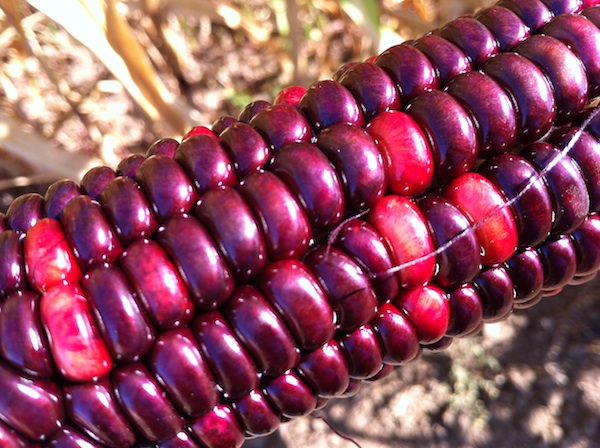
Photo by Anthony Boutard.

Brown and Stirred: Rum Club's Gift for Your Holiday Bar


Michael Shea, co-owner of Portland bar industry hangout Rum Club, admitted that when he was coming up with a holiday cocktail menu he kept tending toward brown and stirred.

Michael Shea of Rum Club.

"I just couldn't get away from it," he said, so as with any creative endeavor, instead of fighting instinct he decided to throw it a curveball.

That's how the Walk the Line came to contain not the usual autumnal go-to of bourbon or rye, but a combination of tequila and mezcal. A lightly spicy, warming drink going down, the tequila lifts your mood at the same time that it smooths the edges of a winter day.

Work with that, instinct, you wiley dog!

Rum Club's Walk the Line

1 pt. reposado tequila
1 pt. cinzano sweet vermouth
1/2 pt. cognac
1 bsp. (barspoon) mezcal
2 dashes Angosturra bitters
2 dashes Peychaud bitters

Fill mixing glass half full of ice. Add ingredients and stir briefly to chill (30 seconds or so). Strain into short cocktail glass over large ice cube. Add twist of orange.

Makes one cocktail.

Food Farmer Earth: A Farmer's Sensibility


In my interview for FoodFarmerEarth with Gaston farmer—and GoodStuffNW contributor—Anthony Boutard, he allows as how farming, for him, isn't just crop yields and calculations. There's also a place for whimsy, experimentation and even an aesthetic sensibility.

The son of a renowned Massachusetts botanist, Anthony Boutard was raised with the rich aromas of the earth and an appreciation for the changes in the natural world that come with the turning of the seasons. Educated as a forester, he came out West to work with a new organization, 1000 Friends of Oregon, dedicated to preserving a balance between urban and rural life.

After a few years of living and working in Portland, he and his wife, Carol, decided to move out of the city and engage their growing commitment to local, organic food. Looking for a farm that was close enough to the city to make deliveries, in 1998 they found a 140-acre working farm on the banks of little Ayers Creek in Gaston, Oregon.

“If you’ve got one and a half million people who are potential customers, it makes it a little more workable than if you were 350 miles away,” he said of their choice, adding that it wasn’t all cold calculation. “It just had a good feel to it.”

Read the rest of Anthony's story.

Watch part two of this interview, Meditation on Winter Fields. This week's recipe is for easy street-style enchiladas with adobo sauce. Get regular updates on this series about our local food scene by subscribing.

Saturday, November 03, 2012

Kick Out the Chicken for this Quick Fish Dish


One of the reasons I don't often cook with fish is simply because the fresh stuff was hard to come by in the small Central Oregon town I grew up in. Even after my parents moved the family to Portland there wasn't much available in the supermarkets around our suburban housing development, the streets strangely named after American Indian tribes. (Pawnee Path? Shawnee Trail? Sioux Court? Really?)

My mother was much more comfortable cooking red meat, due to her upbringing in an Eastern Oregon cattle ranching family. Any time we did have fish, it tended to be less than absolutely fresh, requiring lots of what was called "doctoring" to cut through the fishiness. So, needless to say, there's a lot I have to learn about cooking these members of the gill-bearing aquatic family.

Gazing distractedly at the fish and seafood case in the store the other day, I noticed a fish with the strange name of "swai," fillets of which were going for less than $4 a pound, a pretty unbelievable price for fresh fish. Pulling out my phone and launching the handy Seafood Watch app, I found out that swai (above left) is a farmed river catfish from Asia—usually Vietnam—with a mild flavor and meaty texture. Rated a "good" choice if it comes from a foreign source, it rates a "best choice" if raised domestically.

At that price I couldn't walk away, but what to do with it when I got home? Then I remembered a fish dish my friend Dana had made for dinner the last time we were at her house. She'd come across a chicken piccata recipe that sounded great, but she had rockfish fillets on the menu. Ignoring tradition like any good creative cook, she not only decided to try a completely new dish on guests, she subbed in the fish for the chicken. Excellent!

It seemed like my foreign fish purchase might work as well as rockfish, so I followed her lead. Start to finish, it's ready in about half an hour…and I think you'll agree it's a winner.
White Fish Piccata

2 Tbsp. olive oil
1 Tbsp. butter or margarine
1 Tbsp. garlic, chopped fine
1/2 c. chicken stock
1/2 c. lemon juice
2 Tbsp. capers
1 Tbsp. cornstarch
1 Tbsp. parsley, chopped fine, for garnish (optional)
1-1 1/2 lbs. fish fillets

Preheat oven to 350°.

In a medium saucepan, heat oil and butter over medium heat. Add garlic and very briefly sauté until it's just warmed. Add lemon juice and chicken stock and heat until it barely comes to a boil. Reduce heat to low, add capers and stir. Add small amount of water to cornstarch to make a thin paste. Add cornstarch to sauce and allow to thicken slightly.

Place fish fillets in a 9" by 12" baking pan. Pour sauce over the top and put in oven for 20-25 minutes until fish is cooked through.

Friday, November 02, 2012

Drink for a Good Cause


My friend Katie Burnett just alerted me to a cause I can really get behind:

There are several bars in town rallying together to raise money to help their friends back east whose bars were heavily damaged in the wake of Hurricane Sandy. It was just a few days ago that they were all together in Portland for Portland Cocktail Week, so the bartenders in Portland and Seattle are working tirelessly to raise funds for the United States Bartenders' Guild New York Chapter, which is heading up the charge in that city.

The bars below are donating all the funds from one or more cocktails to the USBGNY this weekend to help the relief efforts:

Portland:
Teardrop Lounge
Park Kitchen
Rum Club
Kask
Central

Seattle:
Rob Roy
Vessel
Liberty Bar

If you can't make it in for a drink, please consider making a donation directly to the USBGNY. Please send checks payable to USBGNY to this address:

Hal Wolin
USBGNY
80 2nd Street
Brooklyn NY 11231

Wednesday, October 31, 2012

Quick Hits: Munchin' and Lunchin'


Three recent lunch stops were très tasty, not very expensive and speedy without being rushed. Check 'em out:

I'd been curious about Las Primas, the colorfully decorated little spot on North Williams Avenue advertising itself as a "Peruvian Kitchen." Not being familiar with the street food of that country, an adventurous friend and I decided to meet there for lunch.

Order at the counter and grab a seat.

The menu features a wide selection of snacks, salads, soups, sandwiches and sweets, with a fun yet thoughtful children's menu that my kid would have loved…simple sausages, fries, a cheese sandwich, mild roasted chicken and fish. Then there's a fairly extensive cocktail list divided between those made with pisco, a Peruvian white brandy, and rum, with a house sangria and a nice beer list.

Lots of choices…pick your fave!

Though we were tempted to indulge in what is rumored to be one of the best Pisco Sours in town, my friend and I both had work rather than naps on our afternoon schedules, so we demurred and opted for the housemade juice drinks and sandwiches instead. The sandwich menu runs heavy on meat with a couple of token offerings for the vegetarian and vegan-inclined, but there are several snacks and salads that would make a decent meal for those who prefer not to indulge in animal flesh.

My Buttifara, a ciabatta-like roll stuffed with pepper-rubbed sliced pork, mild chili pepper mayo, lettuce and a salsa criolla of lime-marinated red onions and cilantro, was super fresh, with plenty of moist pork and a hint of heat from the spread. They have several condiment sauces to choose from, as well, so you can pep the sammy up or down depending on your desires.

A great casual spot for lunch, it would also be fun for an early dinner with one of the aforementioned cocktails.

Details: Las Primas Peruvian Kitchen, 3971 N Williams Ave. 503-206-5790.

* * *


Ever since my brother moved his wine shop, Vino, from its original location in Sellwood, I'd lost a reason to drive across town to Sellwood. Which is kind of ridiculous, considering the neighborhood is home to one of my favorite lunch spots, Jade Teahouse and Patisserie. Fortunately, a friend was in the mood for something warm, noodle-y and delicious, the weather having turned cold and dark in recent days.

Lucy (left) and April Eklund.

And when you need warmth with a side of neighborhood cheer, the place has few equals. Lucy Eklund, along with her husband and daughter, have built a little landmark for great food and pastries at very reasonable prices. What used to be a "secret menu" of specials has grown to be a list of its own along with the extensive regular offerings like Asian appetizers, sandwiches and noodle dishes.

I love choices!

My khao soi, a brothy, tomato-based soup with wide housemade noodles, wilted baby spinach and crumbled pork, was as good as I remembered, and my friend's crab and pork soup, which was new to the specials list, had a wonderful rich broth and lots of meaty bits buried in Lucy's version of udon noodles. Combined with a pot of tea personally brewed by teamaster (and local blogger/photographer) Josh Chang, this lunch was like being wrapped in a warm comforter—or one of Lucy's signature hugs.

Details: Jade Teahouse and Patisserie, 7912 SE 13th Ave. 503-477-8985.

* * *


About lunchtime I not only start getting peckish, the morning's toast and coffee having worn off by then, but the lack of activity from sitting in front of the computer has a chill settling on my shoulders. So all it took was a quick call and I soon found myself grabbing my coat and heading out the door.

A recent side of pickled Asian pears…awesome!

I've been a fan of Boke Bowl since Patrick Fleming, Brannon Riceci and Tim Parsons started one of the first pop-up restaurant sensations to hit Portland. (The striking flavor and texture of Patrick's handmade ramen noodles prompted me to write an article about the art of making them.) Within a year they had gone from roving restaurateurs to brick-and-mortar barons, hosting legions of fans in the middle of one of the hottest new food locales in town.

A recent visit brought back the excitement of those pop-up days—if anything, the soup and sides are better and more consistent than back when they were essentially camping out in strange kitchens. The decor is bright and happy without being precious, and the crew in the open kitchen is dedicated to giving each customer a superior bowl and personal service.

It's great to see good folks succeed!

Details: Boke Bowl, 1028 SE Water Ave. 503-719-5698.

Happy Halloween…Zombies!


No one I know loves zombies more than my friend Karl Kesel, Portland comic artist, writer, inker, you-name-it-he-does-it-especially-if-it-involves-zombies. He even participated in the infamous Zombie Run, though he didn't emerge from the carnage unscathed, if you know what I mean.

Today he's released his latest effort, a serial zombie adventure at Thrillbent called City of the Dead, made in collaboration with Ron Randall and with colors by Jeremy Colwell and Grace Allison.

Tune in!

Sunday, October 28, 2012

The Year in Review


I know, I know…2012 isn't even over yet. Some of us haven't even figured out our Halloween costumes yet, much less sussed out the intricacies of the who's-going-where and whose-family-is-going-to-feel-dissed issues surrounding the holidays or the budgetary boondoggle that's looming, and by that I mean Christmas. So what in heaven's name could this be about?

Last year's Crab Cleaning 101.

Well, like the gift and fashion industries, freelance writers are in the out-of-sync position of having to think months in advance about stories. For us, Christmas is already over—editors want pitches about summer. You know, beach parties, outdoor barbecues, that kind of thing. So we huddle over our computers on cold and rain-soaked days trying to imagine what cocktails might be sipped under that beach umbrella or how we're going to sell a story that requires staging an outdoor dinner party in January.

A visit to Bollywood Theater.

My problem right now isn't quite that extreme, but the January 1, 2013, issue of the Oregonian's FoodDay is going to contain their annual roundup of Things We Love from 2012. My deadline is the end of October (yes, two days from now), which will totally leave out all the crazy stuff that's going to be happening in November and December here at GSNW. I'm talking holiday farmers' markets, lots of braising, a pig slaughter, sausage making, gift giving…sheesh!

The controversy over canola.

So if you have any suggestions for items to include on the list or nominations for your favorite post of the last year, do let me know by leaving a comment below. I'd love to hear what you think!

Top photo: spot prawn paella from late 2011.

Thursday, October 25, 2012

Food Farmer Earth: A Basque Pepper Primer


In this interview for Food Farmer Earth, I get the deets on the dizzying array of Basque peppers that Manuel Recio grows at Viridian Farms in Grand Island. He and his wife, Leslie Lukas-Recio, sell many of these mostly sweet members of the capsicum family at their stall at the Portland Farmers' Market at PSU, but you can also find them on the menus of A-list restaurants around the country.

Watch the first part of this interview, A Passion for Peppers. This week's recipe is for easy homemade tamales. You can get regular updates on this series about our local food scene by subscribing.

Wednesday, October 24, 2012

Food Farmer Earth: A Passion for Peppers


There are many farmers in the Northwest who are, intentionally or not, building an incredible new agricultural system here, one that is starting to garner rave notices from around the country for its quality and innovation. One farm in particular that has bowled me over for just those reasons has been Viridian Farms in tiny Grand Island. Here is my interview with co-owner Manuel Recio for Food Farmer Earth.

When Manuel Recio and his wife, Leslie Lukas-Recio, had the sudden opportunity to buy her family’s farm on Grand Island in Oregon, they saw it as an opportunity to work for themselves as well as a way to include their love of food and the culture of Spain.

Fortunately for them, no one else in the area was growing the special peppers, beans and other vegetables used in Spanish cuisine, so they tore out farm’s old berry bushes and called their new venture Viridian Farms. Planting the seeds they’d brought back from Spain, that first harvest they started selling their produce at the farmers’ market.

Their market goods got the attention of the city’s chefs, who haunted the market’s stalls for new and different ingredients to feature on their menus. Word eventually leaked out about some of the extraordinary produce grown on the farm like ficoide glaciale (glacier lettuce) and oyster lettuce—it actually tastes like oysters—and they now count nationally known chefs from California to New York among their customers.

Read the rest of the story here. Get regular updates on this series about our local food scene by subscribing. This week's recipe is for easy homemade tamales.

Monday, October 22, 2012

Women Welders of WWII


It started as just another errand in a busy day. The small tank that carbonates the beer in Dave's kegerator was running low, so I headed over to our handy dandy gas supplier in northwest Portland.

As I was waiting, I glanced over at a nearby column where I noticed a framed black-and-white photo of a group of women in welding garb. There was a little typed tag glued to the mat that read "Swan Island 1942." Intrigued, I pulled out my phone and took a shot. I asked the guy at the counter if he knew anything about it and he shook his head.

A little research revealed that, as WWII took more and more men away to war, there was huge recruitment effort to get women onto the factory floors and into manufacturing plants to keep the guns, bullets and ships flowing to the war effort. One source, the Oregon History Project of the Oregon Historical Society, says that "at their peak, the two Portland shipyards—Oregon Shipbuilding and Swan Island—employed 16,000 women, and the two child-care centers cared for approximately 700 children."

The wage scale for these women welders was the same as that for men and, as indicated above, with the influx of women into the workforce, industries quickly responded to their workers' need for childcare by establishing round-the-clock onsite centers. Our very own Multnomah County even had a handbook (right) for working women and a child care counseling service that, like the onsite centers themselves, was staffed by child care professionals.

As you might expect, at the end of the war most of the women went back to their previous roles as wives and mothers. Some who wanted to stay were able to keep their jobs, but many were essentially forced out when the men returned. But this 70-year-old photograph certainly raises intriguing questions when compared to today, when pay equity is a problem—women are paid 75 cents on the dollar that men make in comparable jobs—and daycare is something that a working woman has to solve on her own with little or no help from her employer.

Just goes to show you never know what you'll run across on your next errand.

Change of Season at Mealtime


I always look to contributor Jim Dixon of Real Good Food for the heads-up on seasonal eating. Here he's switching up tomatoes for eggplant, peppers for squash.

I’m cooking fewer of the really delicious peppers, tomatoes and the special things available only during their too-short season and eating more of the “hearty” vegetable staples. Cabbage, collards, cavalo nero (lacinato or Tuscan kale), eggplant (fleeting locally, but always grown somewhere; the long distance stuff just tastes better than winter tomatoes), winter squash, potatoes, green bell peppers. More rice and beans, but I eat that all the time so maybe it just seems like it.

Speaking of rice and beans, a New Orleans style bowl of them would go real well this squash. Bottle of Crystal hot sauce, too.

Cajun Butternut Squash

Chop an onion and start cooking it in extra virgin olive oil. Add a couple of stalks of diced celery and a diced green pepper. If you like a little heat, add a diced jalapeno, too. Toss in a little salt and cook for abut 10 minutes.

While that’s cooking, peel, seed and cube a butternut squash. You want pieces about a half inch, but don’t worry about perfection. I split the squash lengthwise, scoop put the seeds, then lay it cut side down and slice; I find it easier to cut the peel off the slices, but you can use a swivel peeler to take it off before you cit it up. Cut the slices into roughly half-inch chunks.

Add the squash to pan and sprinkle with a generous dose of your favorite Cajun spice blend (we like Slap Ya’ Mama and Tony Cachere’s).Or make one with roughly equal parts of black pepper and paprika, about half as much thyme, and red pepper to your heat tolerance. Cook this for about 5 minutes over medium heat, then pour in some Katz Gravenstein apple cider vinegar (maybe 2 tablespoons). Cover, reduce the heat, and cook for another 10-15 minutes or until the squash is tender.

Top photo by George Chernilevsky for Wikimedia Commons.

Thursday, October 18, 2012

Food Farmer Earth: Co-packing Helps Farms Succeed


In this interview for Food Farmer Earth, I ask Paul Fuller of Sweet Creek Foods to explain what co-packing is and what it means for our local farmers.

When was the last time you saw a misshapen tomato or a scarred piece of fruit in the produce section at your local store? Even at the farmers' markets, most of the fruit is a pretty uniform size and shape, clean and unscarred. I know from personal experience that all of it doesn't come off the vine or the tree or out of the ground that way. 

So what happens to all the farm produce that doesn't fit store specifications, but is still perfectly ripe and totally delicious? All too often it was left to rot in the field, representing a loss to the farmer of the time, energy and resources it took to grow it.

That's why the Paul and his wife Judy decided to offer a service to local farms called co-packing. The farmer provides the fruit or produce when it's at the peak of its flavor and Sweet Creek provides them with a fully-licensed processing facility so the jam, salsa or pickles can be sold at stores or at the farmers' market. They even provide farmers with help developing a marketing plan to sell the products.

It's a win for the processor, who has an additional revenue stream and helps its farmers succeed and survive. It's a win for farmers who don't lose income from crops going to waste, as well as having value-added products they can sell when their fresh produce is out of season. And I'd argue it's a win for our tables as well.

Watch the first part of the interview, Packing Pickles. Get regular updates on this series about our local food scene by subscribing. This week's recipe: easy bread and butter pickles!

Wednesday, October 17, 2012

Food Farmer Earth: Packing Pickles


A behind-the-scenes look at an important part of a vital regional food system. My interview for Food Farmer Earth with Paul Fuller of Sweet Creek Foods.

Paul Fuller and his wife Judy have been building their food processing business—they refer to it as a “glassery” rather than a cannery—for 12 years. They started Sweet Creek Foods by processing pickles, then moved on to jams, tomatoes, salsa and tuna. But what they were really building, according to Paul, was an essential piece of a regional food system.

Fuller noticed that a huge amount of perfectly good, fresh produce from local farms was being tossed out because it had a small blemish or was not the right size. Knowing that wasted produce meant lost income for farmers, he sensed an opportunity to help the farmers as well as build a viable business for his family. With that goal in mind, he and Judy started producing fresh pack pickles, something they’d enjoyed doing for themselves for years.

It took a few batches to perfect their technique so that the pickles had the right amount of crispness, but they now produce 100% certified organic bread and butter pickles, garlic dills and chili dills. Using cider vinegar rather than the standard distilled vinegar, they fresh pack their pickles by brining them in cool salt water for 24 to 48 hours. The brined cucumbers are hand-packed in jars, pickling spices are added and then a hot vinegar brine is poured over them. This pickles them in the jar rather than using a fermentation process to do the pickling, which Fuller feels gives them a fresher flavor.

Read the rest of the story here. Watch part two of the interview, Co-Packing Helps Farms Succeed. Get regular updates on this series about our local food scene by subscribing. This week's recipe: easy bread and butter pickles!

Tuesday, October 16, 2012

Putting Food By: Tomato Paste


I was totally bummed when my friend Hank Shaw, author of DIY (and by that I mean forage, kill, scavenge-it-yourself) guide Hunt, Gather, Cook, mentioned that every year he makes tomato paste in his driveway. You see, he lives in Sacramento where it gets around a million degrees in the summer. He can put a tray of puréed tomatoes on the hood of his truck and in a couple of days it has evaporated into paste.

Try that here and you'd have a tray-full of moldy moosh.

The raw goods, straight out of the field.

Somehow it had never occurred to me to try another method, that is until I was out at Ayers Creek Farm and Anthony Boutard was putting a bowl of puréed Astianas into their wood-fired oven. Call it a lightbulb moment, OMG, St. Paul-flattened-in-the-road, whatever. Here I've been making gallons of roasted tomatoes to pull out this winter and have never once considered sticking some in the oven for a few hours to make paste.

Knock me over with a feather. Or, as Anthony's wife Carol says, "Shoot me in the foot."

Roasting.

Fortunately I'd just gleaned a box of tomatoes from their field, and I couldn't get home fast enough to roast 'em up (400° oven for 45 min.-1 hr.), purée them with an immersion blender—I'll use a food mill next time to make a completely smooth texture—and stick them in a 200° oven.

About halfway there.

With my 2 3/4 qt. Le Creuset preheated in the oven as it came up to temp and then filled to the rim, it took about 24 hours for it to reduce by half (top photo). It needed stirring every few hours, and I probably could have reduced it further, but the paste was rich and smooth and would suffice for my purposes. I ladled it in 8 to 10-ounce quantities into zip-lock freezer bags, packed them two-to-a-bag in quart bags and stuck them in the freezer. Done.

And I'm sure my embarrassment about not thinking of this before will abate the first time I thaw it out, spread it on bruschetta and top it with chevre or tapenade, don't you think?

Quick Hits: Showing Off PDX


I love taking visitors to see the sights as much as anyone. A drive to Timberline or the coast. If it's clear, going up to Washington Park for that fabulous view of the mountain looming over downtown. If it's not, a tour of the Pittock Mansion or a walk through the Japanese or Chinese gardens. Regardless, thanks to national media like the New York Times (and my own proclivities), food is always on the agenda.

When people ask me what the best restaurant in town is, Evoe is my hands-down favorite. Despite its nonstandard hours (Wed.-Sun., noon-7 pm) and absence of even nominal restaurant equipment—just a slide-in electric stove/oven and plug-in pancake griddle that would have been at home in the kitchen of my childhood—chef Kevin Gibson (top, holding some red mole from Mexico) makes magic. Give the guy a mandoline and a pot and he's golden. It doesn't hurt that he's got years-long relationships with top local farmers who bring him the best of the best of our local produce. Or that he's a master charcutiere of the highest order (I'm still working on him to let me take a picture of his walk-in).

Suffice it to say that his deviled eggs—such a simple, yet, in his hands, sublime mouthful—were divine. The tomato salad with chevre and a sprinkling of olive oil, the duck salad (kill me now), the chistorra (Basque sausage) sandwich, even the pickle plate (left, with "mouse melons" and aji dulce peppers), all over the top. If you have friends who love food, you can do no better than to go here. If not, you can sit at the counter and make new ones.

Details: Evoe, 3731 SE Hawthorne Blvd. 503-232-1010.

* * *

After our late-ish lunch at Evoe, it might have been easy to simply have wine and snacks for dinner. Except for the fact that we were meeting a half-dozen or so friends at the back table at Bar Avignon, another of my under-the-radar (at least as far as national press) PDX hits. When Randy and Nancy opened their first restaurant after years serving at the likes of Wildwood and Café Azul, it was going to be "just a bar" for neighbors to stop in, have a beverage and a snack and move on. An idea that lasted about three minutes.

Now, with chef Eric Joppie behind the counter of the tiny open kitchen, this place is on a roll. From appetizers like the freshest of NW oysters (so clean!) and to-die-for lamb rolls to a drop-dead delicious pork chop, locally sourced wild mushroom risotto, crazy-tender bavette steak and so much more, there is virtually nothing on the menu that isn't a great choice. Combine that with a deeply deep, moderately priced wine list and beer selection (courtesy Monsieur Goodman) and awesome cocktails (merci, Ms. Hunt), and our evening was long and luscious. And that back table? Private but alive with the bubble of conversation from diners in the restaurant, it was the perfect spot to spend an intimate evening with friends old and new.

Details: Bar Avignon, 2138 SE Division St. 503-517-0808.

* * *

Portland is, to put it mildly, a breakfast town, and the bigger the better, it seems. So much so that a new restaurant can't be open more than a few months without adding brunch on the weekends. Me, I'm more of a coffee-and-pastry-in-the-morning gal, even better if it's at home in my jammies with coffee and a slice of Dave's toast topped with Ayers Creek jam. But I digress.

Our out-of-town friends wanted to have brunch and, it being a novelty in our little world, we were happy to oblige. We could have gone to Mother's downtown, the Waffle Window (inside…it was threatening rain), the Tin Shed on Alberta or a huge fave, Toast on SE Steele, but we chose Ned Ludd on MLK since it was close to home and we hadn't tried their brunch yet. And yes, put this on the list of undiscovered gems.

Jason French's wood oven does all the cooking and baking here. Period. He butchers his own meat and the restaurant makes most of its own charcuterie and cured products, sourced as close to PDX as possible. And the food is amazing. Homey yet elegant, to me it's quintessential Portland. Vegetable hash with smoked trout and a poached duck egg. Pork confit with creamed kale on a rosemary biscuit topped with a gently fried egg. Whole trout. French toast. It's all great.

I have to say our friends got a real taste of Portland, and by that I mean food grown here, prepared by people who are passionate about showcasing the flavors of this place. I think they were pleased. And full.

Details: Ned Ludd, 3925 NE Martin Luther King Jr. Blvd. 503-288-6900.

Thursday, October 11, 2012

The "L" Word: Salmon Risotto


Faster than a speeding bullet…no, I'm not talking about caped superheroes leaping tall buildings, I'm talking about how fast word spreads that a store has salmon on sale. In this case it was steelhead, technically a really big trout, but toe-may-toe, toe-mah-toe.

A friend mentioned that a nearby market had steelhead for $3.99 a pound, and faster than that proverbial bullet I was out the door and headed to the market. On the way I phoned Dave (using my ear buds and speaker…I'm not lawless, just in a hurry) to alert him that he'd be firing up the grill that evening, which always elicits a "Boy howdy!" response.

Long story short, I bought the biggest fish in the case, had the butcher fillet it and put the bones, head and tail in a separate bag. (Even at that price I figure since I'm paying for the whole fish—and the bag of bits on this puppy weighed almost two pounds—I'm going to get my money's worth out of it.)

Normally I'd take the carcass and drop it in a pot of water to make stock (right) for chowder, paella, risotto, etc., but my pal Hank Shaw had just that day posted that he roasts the carcass, then pulls the meat off the bones (above left). This gives him about a pound of fish flesh to use for whatever he wants, often a lovely fish salad.

Following his directions, I did exactly that and ended up with a nice pile of cooked salmon in addition to my two fillets. I gave one fillet to a friend who's been supplying me with scads of goodness from her garden, we had the other fillet for dinner and then a couple of nights later I used the roasted bits and some of the leftover (that's the "L" word around here) fillet to make the risotto below. I'd say that's a pretty good score for little bit of gossip!

Leftover Salmon Risotto

2 Tbsp. butter or margarine
3 Tbsp. olive oil
1/2 onion, chopped fine
3 cloves garlic, chopped fine
1 Jimmy Nardello pepper or red bell pepper (about 1/2 c.), chopped fine
2 c. arborio rice
1 c. dry white or rosé wine
4 c. stock (I used a light fish stock from a previous carcass)
1 c. frozen corn
1 lb. (or a little more) cooked salmon, flaked
2 egg yolks, stirred to break them up
1/2 c. parmesan or romano cheese, grated, plus more for the table
Salt and pepper, to taste

Melt the butter and margarine in a medium saucepan over medium heat. Add the onion, garlic and red pepper and sauté till tender. Add the rice and sauté for 30 seconds until hot, then reduce the heat to low and add the wine. Stir until the wine is absorbed. Add the stock a ladle-full at a time, stirring occasionally to keep it from sticking. When the rice is about half done, add the frozen corn and stir to combine. Near the end of cooking, when the rice is still a bit soupy and al dente, add the salmon so it can warm up. When the rice is done, stir in the egg yolks and the half cup of cheese. Add salt and pepper to taste and serve with extra cheese for sprinkling.

As always, this can be made in a microwave oven, too. And you can add kale or chard or parsley at will…it's a very flexible dish.

Photo of roasted salmon carcass by Holly Heyser.