Showing posts with label beaverton farmers' market. Show all posts

Thursday, October 31, 2019

Farmers' Markets: Cultivating Community


I've been covering farmers' markets in the Northwest for more than a decade, starting with my weekly Market Watch column in the Oregonian's FoodDay to regular posts right here on Good Stuff NW about what's coming in from our region's fields and forests. One thing that's always impressed me about our market scene is the sense of community that exists not just between farmers and their customers in the market, but among the farmers and vendors themselves. This month's Beaverton Farmers Market newsletter brought that to mind again, and I thought I'd share with you market manager Ginger Rapport's reflections on that topic.

Our mission at Beaverton Farmers Market has always been to cultivate community. Yes, we believe that bringing fresh local foods to the Beaverton community is a large part of our mission, but without building strong relationships with community members, vendors and farmers we cannot succeed in delivering the other. We believe that’s what keeps you coming back to the market even more than the growing number of fresh food choices you can choose from (we’re very fortunate to live in an area that has many). We foster community.

Building relationships with customers and each other.

This past weekend proved that we have been successful in our efforts, as the community came together to help one another out. Long before shoppers hit the market our crew and vendors are busy setting up in the early hours of the day. While the market may open at 9 a.m. in the fall, our staff and vendors are already on site at about 6 a.m. preparing for the day. Last Saturday began when one of our vendors had the misfortune of having her car break down in the market. After vendors and market staff moved her car out of the way in the market, Ron Lilienthal of More-Bees, sprang into action to troubleshoot his neighbor’s car. He didn’t want her to be stranded once the market was over. Being the handy guy that he is, he borrowed some tools from the market, ran out for a part and was able to make repairs so that she could leave the market at the end of the day.

Building relationships cultivates community.

Early in the day on our staff had received word from both Denison Farms and Gathering Together Farm that they were stuck in standstill traffic on Interstate 5 North with all lanes blocked. Sadly, there was a multiple car accident with injuries and a fatality. We were saddened by the news, but grateful that our vendors were safe, just delayed. Both vendors were able to make it to the market some time after opening. Once the farms arrived, the Beaverton Farmers Market really rose to the occasion—vendors, market staff, and even customers chipped in first to unload Denison Farms’ truck. After Denison Farms was set up, Tom Denison came over to help pitch in at Gathering Together to get their booth set up as well. Customers, employees, market staff and other vendors were stocking produce in baskets and unloading boxes and pallets. We appreciated the patience of our customers and the camaraderie of our community as we worked through the rocky start.

We like to think of our market as a microcosm of a small town—some days are rougher than others, but we’re all working together to make this market the best it can be: a place to gather with neighbors, new and old alike, providing fresh local food and relationships.

Thursday, August 08, 2019

Salad Smackdown: Nectarine and Cherry Salad


Ginger Rapport's newsletters for the Beaverton Farmers Market are worth getting for the information and recipes she shares (click here to subscribe). Her deep knowledge of produce shines through, helped by her passion for cooking and education. Here she talks about the luscious Northwest peaches and nectarines tumbling into midsummer markets.

What is the difference between a peach and a nectarine? They are genetically almost the same with the exception of one gene, the one that determines if it will have a fuzzy or smooth skin. A nectarine is basically a bald peach. They may be used interchangeably in recipes but as far as fresh eating goes, people can have strong opinions about which is best. Many people prefer nectarines because they don’t like the fuzz on a peach. It is more of a textural thing than it is about taste. However, nectarines tend to be firmer, sweeter and more aromatic than their fuzzy cousins.

To peel or not to peel?

Both peaches and nectarines come in “freestone” varieties, which means that the fruit separates easily from the pit and “clingstone” varieties where the flesh clings tightly to the pit. Freestones are better for freezing while clingstones are better for canning.

If you are making a recipe that calls for removing the skin of a peach or nectarine, we recommend the following method:

With a paring knife, make a small "X" in the skin on the bottom of the fruit. Then drop it into a large pot of boiling water for 10-20 seconds. You may do multiple fruits at a time as long as you are able to get them all out of the boiling water within a few seconds of one another. You want to loosen the skin, not cook the fruit.

Roasted nectarines, anyone?

Immediately place fruit in a bowl of ice water to stop the cooking. Starting at the X on the bottom, lift the skin away from the fruit. It should peel easily if your fruit is ripe. If your fruit is under-ripe, peeling will be more difficult and may require a paring knife. (This is also how you peel tomatoes.)

Peach and nectarine season has a very small window where it overlaps with cherry season. One of our favorite—and totally easy—recipes that features both is this nectarine and cherry salad with roasted hazelnuts featuring Baird Family Orchards nectarines, Kiyokawa Family Orchards Bing cherries, and Ken and June's dry roasted hazelnuts.

Nectarine and Cherry Salad with Roasted Hazelnuts

1 1/2 lbs. nectarines (yellow or white) sliced
1 1/2 c. Bing cherries, pitted and halved
1/2 c. roasted hazelnuts, roughly chopped

Combine all ingredients (reserving some chopped nuts) in a bowl and toss. Garnish with remaining hazelnuts.

Click here to get more fabulous peach (or nectarine) recipes for desserts, jams, salads and even cocktails! The Beaverton Farmers Market is an advertiser and supporter of Good Stuff NW.

Friday, April 05, 2019

Tomatoes? Hold Your Horses!


Blossoms are showering our sidewalks with pink snow, tulips and daffodils are out in full force, so it must be time to plant our vegetable gardens, right?

Patience is a virtue when it comes to tomatoes.

Not so fast, according to Ginger Rapport of the Beaverton Farmers' Market, a seasoned plant maven. "Now is the time of year to get your peas, kales, rhubarb, broccoli, beets, carrots and some lettuces in the ground," she said. "It is not the time for planting tomatoes and basil unless you plan on keeping them protected from the cool temperatures and rain."

Another voice of reason comes from Chris Hertel of Sun Gold Farm in Forest Grove. "Don’t be fooled and have patience," he cautions. "We can’t mess with Mother Nature! We can only work with her. Too much rain and cold weather will either harm your tomato plant or make it weak."

Radishes and greens? Have at it!

Those garden center tomatoes that are waving their leafy appendages at you, begging you to bring them home and plant them in some nice, richly composted soil? They're grown in heated greenhouses, said Hertel. "The plants are not conditioned to anything that Mother Nature is giving us now. If we wait and have patience, the nights will get warmer and days will be drier. That usually happens around Mother’s Day weekend."

So go ahead and get your spring yayas exorcised and plant rows of those hardy spring greens and root veggies, and wait until the soil temperature gets up to at least 55 degrees—60 is even better—to plant those tomato starts. Your summer will be that much sweeter with a little added patience along with that compost.

Friday, March 01, 2019

In Season: Galangal, Lemongrass and Turmeric


In the most recent Beaverton Farmers Market newsletter, market manager Ginger Rapport offered a primer on using galangal, lemongrass and turmeric. Normally thought of as exotic ingredients, they've been adapted to grow in Oregon's maritime climate and are now being grown by several local farms. Find them at your neighborhood farmers' market, as well as at Rubinette Produce or other stores that carry produce from local farms.

Galangal

This flavorful tuber (top photo) is the spicy cousin of ginger and is prized in Thai cuisine for the citrus-like flavor it imparts to soups and its burst of herbal heat in curry pastes. Usually found in Asian grocery stores, you can also find organic galangal at Denison Farms’ booth this Saturday alongside fresh lemongrass and turmeric.

Galangal’s knobby tubers are prepared much like ginger. To be recipe-ready, they are usually peeled and then minced, sliced or grated. It is possible to substitute ginger for galangal when it is unavailable, but we recommend you make the effort to use this zingy aromatic when it is in season. According to Cook’s Illustrated magazine, galangal’s distinctive piney flavor is best used in savory dishes as opposed to sweet dishes where ginger is a better option.

Since fresh galangal is not available all year round, we recommend putting a stash of peeled fresh tubers in your freezer for use when it is out of season. While you are thinking in advance, we recommend freezing lemongrass as well. Together, they provide the exciting flavors required for a variety of delicious dishes including soups, curries and sauces. To freeze lemongrass, trim stalks to the bottom six inches, then transfer to zip-lock bags and freeze.

Galangal is a critical ingredient in the popular hot and sour Thai soup known as Tom Yum or Tim Yam (above right). And, while it's possible to substitute ginger for the galangal, why bother when you are lucky enough to access the real thing? The combination of spicy aromatics, flavorful broth and tasty add-ins make this the perfect dish for our chilly winter days.

Lemongrass

Lemongrass is a stalky plant that gives dishes a zesty lemon flavor and aroma. Look for stalks that are fragrant, tightly formed, and a lemony-green color on the lower stalk. To prepare lemongrass, remove tough outer leaves to expose the pale yellow interior that is softer and easier to slice. Use a sharp serrated blade to slice off the lower bulb, about two inches from the end of the stalk. Discard bulb. Stop slicing when you have cut two-thirds of the way up the stalk, or when it is no longer yellow and fleshy. Because lemongrass is so tough, the slices will need a to processed in the food processor on high, or pounded in a mortar and pestle for a minute or two.

Fresh Turmeric

Livelier than its dried form, fresh turmeric has bright orange flesh and is earthy, peppery and slightly bitter. Like ginger and galangal, it is usually peeled before using. Store fresh turmeric in the refrigerator in a plastic bag, or airtight container, or freeze it for several months. In recipes, one inch of fresh turmeric is equivalent to one tablespoon freshly grated turmeric, or 1 teaspoon of ground turmeric.

Saturday, August 22, 2015

Nopales, a Mexican Staple, Arrives in Oregon Markets


The other day I was at the farmers' market and was delighted to see a vendor displaying a basket of cactus paddles, called "nopales." Terrific in salsas and stews, they also go well with eggs and in salads. The following essay by Jodi Monroy, Director of Mixta Words and staffer at the Beaverton Farmers Market, is reprinted from the most recent market newsletter.

Nopales

Nopales (cactus paddles) are a staple food in parts of arid Mexico but not so much here in the Pacific Northwest, so we were amazed to find some at Denison Farms last week!  We love it when our farmers are innovative and push the agricultural limits. It makes the culinary possibilities so exciting.  And the very best part: Denison Farms sells them already de-spined! Trust me, that is a really good thing.

Nopales are traditionally used in Ensalada de Nopales (Cactus Salad) and then eaten as a side dish or pico de gallo-style. Ensalada de Nopales makes a unique topping for tacos or mixed with eggs for breakfast. Nopales' flavor has been described as almost like a green bean. Don’t be put off by the slippery texture or “baba” en español (like Okra)—it will dissipate as the nopales cook.

Classic recipes for Ensalada de Nopales almost always include lots of garlic and cilantro, like this one adapted from La Cocina De Leslie.

Ensalada de Nopales

1 lb. of nopales (cactus paddles), washed and sliced or chopped in 1/4" dice
1 bunch cilantro in two parts, half on the stem and half de-stemmed and chopped fine
3 cloves garlic
2 roma tomatoes, chopped
1/2 med. onion, chopped
1-2 Tbsp. vegetable oil
Juice of 1 lime
Salt

There are two ways to cook cactus paddles for Ensalada de Nopales. The traditional way of cooking nopales is to boil the cactus in water to cover in a medium saucepan with cilantro sprigs, garlic and a couple of pinches of salt for about 30 minutes. When done, fish out the cilantro sprigs and garlic and discard. Using a strainer, let the nopales sit until all of the liquid drains away.

The second method is one which reduces the amount of “baba” (gooey liquid) that the nopales release. Put the sliced or chopped cactus paddles in a non-stick skillet with the cilantro sprigs, garlic and a couple pinches of salt, without any water at all. Cover and cook over low heat. Within minutes the nopales will start to release their own liquid, which is plenty to completely cook the nopales. Continue to simmer over low heat, stirring occasionally, until all of the liquid has been absorbed and the nopales are completely cooked with very little to no “baba” (gooey liquid). Discard the cilantro sprigs and garlic.

And now for the ensalada: gently mix together the cactus, chopped onion, tomato and the chopped portion of the cilantro. Toss with vegetable oil and lime juice and season lightly with salt. ¡Provecho!

Top photo by Diógenes el Pacífico/Flickr.

Friday, June 05, 2015

Anatomy of an Artichoke


In the most recent newsletter from the Beaverton Farmers' Market, market manager and gardener extraordinaire Ginger Rapport shared a comprehensive and useful guide to the history and culinary uses of that spiky-on-the-outside, tender-in-the-middle seasonal treat, the artichoke. They are well-adapted to our moderate climate in the Northwest, and they can be found in abundance at farmers' markets in the area.

We have often wondered what made someone look at an artichoke plant and decide to try to eat it. After all, they are fairly intimidating with their spiky leaves and scratchy choke. It must have been someone who was very hungry! Unlike a carrot, which is a fairly straight forward vegetable, an artichoke has secrets that you need to know in order to enjoy them.

History: Artichokes are members of the thistle group of the sunflower family. The edible portion is actually the plant’s flower bud. Artichokes date back to the time of the Greek philosopher and naturalist, Theophrastus (371-287 B.C.) who wrote of them being grown in Italy and Sicily. Ancient Greeks and Romans considered them a delicacy and an aphrodisiac. They also believed that artichokes were effective in securing the birth of boys. Cultivation of artichokes spread across the Mediterranean and French immigrants brought them to the United States in the 1800s. It was in the late 1800s that Spaniards brought them to California which today grows nearly 100% of all artichokes grown commercially in the U.S. Fortunately for us, Denoble Farms in Tillamook grows them and brings them to the Beaverton Farmers Market.


Basic Artichoke Preparation: Have a cut lemon handy because you will need to rub it on any recently exposed surface of the artichoke to keep it from darkening.

Start by pulling off any petals at the base of the artichoke which are small or discolored. Cut the stem close to the base. Cut off the top of the artichoke about a quarter of the way down. If the petals on the artichoke have thorns, use scissors to cut off the tips. Some people do this anyway because they like the look of it but it is not necessary. (Don’t forget to use your lemon on these raw areas.)

Squeeze the remainder of your lemon into a large pot of boiling salted water. Add the prepared chokes and cover with a white dish towel to help keep them submerged. Depending upon the size of the artichoke, it will take anywhere from 30 – 45 minutes to cook. To test for doneness, pierce the stem end with a fork. When properly cooked, you should get a little resistance against the fork. If it pierces too easily you have probably cooked them a bit too long.  Remove from water and drain upside down in a colander. At this point they can be eaten immediately or refrigerated for later use.

Eating An Artichoke: Peel off a petal and notice the soft part at the base. This is the only part of the petal you will be eating until you get closer to the center where the petals become more tender. If you want to dip the bottom of the petal into a sauce or dressing, now is the time. Pull the petal through your teeth removing only the soft, pulpy part at the bottom. Work your way around the artichoke until all of the petals are removed. As you work your way towards the center, the texture of the petals change. You may or may not enjoy eating them at this point in which case you can just pull them off and discard them.

You will be left with the artichoke bottom, topped with the inedible choke. Using a tablespoon, scrape the fuzzy choke off of the bottom. It is very obvious where the choke stops and the bottom begins. It is the bottom of the artichoke that you want to eat. Typically it is served with melted butter, or some kind of dip or dressing. It can be eaten hot or cold, or cut up and added to other dishes such as salads, pastas and eggs. Artichokes have a bad reputation for being fattening because they are usually served with a mayonnaise based sauce or butter. A large artichoke is only about 25 calories so it is only as fattening as what you are serving with it!

Selecting an artichoke: Globe artichokes should be heavy for their size and have a tight leaf formation. Avoid artichokes which are wilting, drying or have mold. Both raw and cooked artichokes can be stored in your refrigerator for up to a week.

Photos from the Beaverton Farmers' Market.

Monday, April 20, 2015

Gardener's Notebook: What to Plant Now


The Beaverton Farmers Market, a longtime advertiser and supporter of good things in the Northwest, has built a selection of top-quality nursery stock from some of the best vendors in the area. That's because market manager Ginger Rapport is an ardent gardener herself, with a strong commitment to helping people get in touch with their food by growing it themselves. Here's her advice on what to plant now.

What do you think is the first “app” that a farmer puts on his smart phone?

If you said a weather app, you would be right! Chris Hertel of Sun Gold Farm says that he checks his weather app every day. If you are a gardener, he recommends that you do the same, especially this time of the year when high and low temperatures can be all over the place. This weekend’s warm weather will have most of us chomping at the bit to start planting our vegetable and herb gardens. Chris says that the most important plants to get in the ground right now are peas and brassicas—cabbage, cauliflower, broccoli, etc. They like the cool weather, as do lettuce, spinach, chard and other greens.

If you want to get a jump on summer, Sun Gold’s booth will have plenty of tomato, pepper, eggplant, cucumber and squash starts on hand. These heat-loving plants may need a little bit of protection if the night time temperatures dip too low. This is where your weather app comes in handy! If it looks like we are going to get near freezing, Chris suggests that you protect your hot weather veggie starts with something as simple as a paper bag placed over them. Even a crude greenhouse made of sticks and plastic will work. Of course, you will want to uncover your plants during the day.

You can also start perennial herb gardens now. A perennial plant is one whose life cycle lasts for more than two years, so think of herbs like mint, chives, bay, oregano, sage and rosemary. This does not include basil or cilantro; hold off on those tender herbs until nighttime temperatures warm up.

And believe it or not, now is the time for planting strawberries! Hood Strawberries are a market favorite. They are a super sweet berry with the entire crop coming over a short period of time. Sun Gold will also have an everbearing variety called Tri-Star that will keep you in fruit for a longer period of time.

Lastly, it is not too late to plant blueberry bushes. Both Sun Gold Farm and Northern Pacific Farm will have a wide variety of blueberry bushes in their stalls this Saturday. Ask for advice on selecting the variety best suited for your tastes.

* * *

The Beaverton Farmers Market is kicking off their summer season a full week ahead of schedule, so make plans to get your summer going on May 2nd from 8 am to 1:30 pm.

If you happen to have a furry friend with you, the market offers Sit-n-Stay, a drop-in dogsitting service adjacent to the market run by Home Plate Youth Services. Open from 7:30 am until 2 pm, it'll cost just $5 for the first 30 minutes, then $2.50 for each additional 15 minutes after that. Additional donations to HomePlate's program serving young people with precarious housing are welcome.

Monday, November 17, 2014

Got Cranberries? Get Organic!


A couple of years ago, Ginger Rapport, market manager of the Beaverton Farmers Market, decided it would be fun to demonstrats how customers could make a whole holiday meal from products sold by the market's vendors. To go alongside the sweet potatoes, vegetable sides and turkey, she featured a cranberry jelly made from the whole, fresh organic berries grown by Scott Ridle and his family at Eagle Organic Cranberries in Bandon.

That sauce was so popular that Erin, Scott's niece and the one who runs the farmers market portion of the business, has handed out the recipe to eager customers ever since. Some have admitted to her that they will make the sauce, then pour it into cans ahead of the arrival of their relatives who might otherwise look askance at anything that doesn't have the rings from the can imprinted on it.

The Ridles (pron. RYE-duhl) have owned the property since the 1930s, when Scott's great-grandfather, a doctor, was given the land by a grateful patient as payment for his services. And there it sat for sixty years, passing down through the Ridle family until Scott, who'd been considering becoming a doctor, thought better of that plan and decided to move out to the property. Clearing land and building a barn and a house from lumber he milled from the trees on the site gave him time to consider what to do with it.

With cranberries a big agricultural crop in the area and with access to fresh water for irrigating bogs from a natural spring on the property, Scott decided to try his hand at growing cranberries. Since there were very few local organic cranberries available in the 90s, he decided to go for organic certification, a process that was made easier by the fact that the land had never been farmed before and the soil hadn't been compromised by chemical inputs.

That organic certification, of course, meant he couldn't use the sprays commonly applied in conventional operations to kill weeds and pests, so the family weeds the five acres of bogs by hand and uses water from the spring to occasionally flood the bogs for irrigation and pest control. They dry-harvest their berries, which Erin said gives the berries a firmer body, rather than flooding the bogs and skimming the berries as they float to the surface. They also never package their cranberries in plastic, preferring instead to sell them in paper bags that wick moisture away from the berries, helping to maintain their signature firm texture.

Because the farm is so small and organic is in such high demand, there is almost never a remainder crop left after the holidays. So if you want some of the Ridle's cranberries, your best bet is to get them in the days leading up to the Thanksgiving holiday. Erin said that in a typical year, all of the berries are sold then, with rarely enough to go through Christmas. And here's that jelly recipe, whether you plan to put it in cans and fool your guests—or not.

Details: Eagle Organic Cranberries available at the Beaverton Farmers Market, the Hillsdale Farmers' Market and the Portland Farmers Market at PSU and at these stores.

Spiced Cranberry Jelly
Courtesy of The Joy of Cooking

Combine in large saucepan:

4 c. or 1 lb. cranberries
2 c. boiling water
2 oranges, zested
¾ t. cinnamon
¼ t. clove
¼ t. salt

Bring to a boil, cover with lid. Boil 3 or 4 minutes or until skins burst. Put them through a food mill.

Stir into puree:

2 c. sugar

Return pan to heat. Boil about 5 minutes, until thick, skim, pour into bowl or a mold sprayed with pan spray.

Wednesday, July 09, 2014

Hot Nights Call For Easy Chorizo Tacos


With long-term forecasts calling for temperatures in the 80s and 90s and with no rain for the next several weeks—climate change deniers notwithstanding—it's time to get some cool and groovy plans laid for dinner.

Lookin' toasty.

If only that would include eating out every night, right?

But since that's a situation that will have to wait until we chance upon that winning lottery ticket at our local stop-and-shop, I guess it's going to be me battling it out in front of the stove every night with my very own version of Top Chef.

"What's she going to tantalize us with tonight, folks?"

The spread.

Well, the other evening I happened to have some ground pork in the fridge, thinking it was time to make a meatloaf, but it was just too dang hot to crank up the oven. That's when the idea of tacos blipped across my brain's radar. Cool. Easy. Simple. Just involves a bit of chopping and mixing and they're done.

The pork would make a nice chorizo, I thought, and wondered how hard it would be to replicate the incredibly good Tolucan red chorizo made by Salud and Angela Gonzales of Don Felipe (available at the Beaverton Farmers' Market). A quick internet search yielded some basic guidelines, and with a bit of improvising I was able to fry up a pretty good facsimile. Now I have to go get some of theirs and try them side by side!

Tolucan-style Chorizo

4 dried red chiles (I used three New Mexico chiles and one ancho chile)
2 c. boiling water
1/4 c. rice vinegar
1 lb. ground pork
2 tsp. dried oregano
1 tsp. salt
1/4 tsp. dried thyme
1/8 tsp. ground allspice
1/8 tsp. ground cloves
1 Tbsp. tequila
3 large cloves garlic, minced

Remove stems and seeds from chiles and tear into 1” pieces. Place in medium bowl (I used my 1 qt. Pyrex measuring cup). Pour boiling water over the top, making sure that the water covers the chiles. Let stand 30 mins. Drain, reserving the chile soaking liquid for another use (chili, chile sauce, etc.). Put chiles, vinegar, oregano, salt, thyme, allspice, cloves and tequila in blender and purée.

In large bowl, thoroughly combine pork, chile mixture and garlic. Place in large skillet over medium heat and fry until the pork is cooked through, stirring to break it up and crumble it, approximately 15-20 min.

Friday, April 04, 2014

In Season NW: Broccolini, Raab, Rabe, Rapini


This week's newsletter from the Beaverton Farmers Market had some valuable information for market shoppers who might be asking, "What are those bundles of greens and why are they all called something different?" Market manager Ginger Rapport gave me permission to reprint the answer here in case you were wondering, too.

Do you get confused when you hear the words “rabe,””raab,” “rapini” or “broccolini” used in recipes? Let us help you sort this out because you will find some of these green vegetables in the market this weekend.

First, a little taxonomy: Cruciferous vegetables are vegetables of the family Brassicacae, known as Brassicas or Crucifers. They include: cauliflower, broccoli, mustard greens, arugula, bok choy, kales and cabbages to name a few. Now, a little clarification.

  • Broccolini is not baby broccoli. It is a cross between regular broccoli and Chinese broccoli with long stems, larger florets, and less leaves. It is less bitter than some of its relatives which is why it is often thought of as baby broccoli.
  • Rapini and broccoli rabe are close cousins and are often used interchangeably. They are in the same subspecies as the turnip, hence they have the characteristically slightly bitter taste of this group. They do not form the large heads that we see in broccoli.
  • The flower buds of brassicas from the turnip family are often referred to as rabe, or raab, derived from raps, which means turnip in Italian. This time of the year, you will find the rabes of many types of brassicas in the market—kale, mustard greens, Brussels sprouts, turnips, bok choy and Chinese cabbage.

While each of these are from a common family there are slight differences in taste between them. With each, you are meant to eat the stems, buds and leaves, making them very easy to prep for cooking. Don’t be alarmed if the buds have begun to show their yellow flowers. Some feel that the flowers are a sweeter version of the parent plant.

All of the aforementioned brassicas are excellent roasted, sautéed or lightly steamed. We don’t recommend boiling because it is easy to overcook the leaves in boiling water. The usual additions of garlic and a pinch of red pepper flakes makes for an easy and delicious preparation. Finish your dish with salt and pepper to taste and a squeeze of fresh lemon juice.

We also suggest that you try tossing your raabs with a Balsamic vinegar reduction. The reduction’s sweet finish balances the bitter quality of the greens. We like to keep a balsamic reduction in the refrigerator to have on hand as needed. It is delicious drizzled on salads, fresh vegetables, fish and meats.

Basic Balsamic Vinegar Reduction

2 c. balsamic vinegar*

Boil in a small saucepan until reduced by half (one cup). You can continue to boil for a thicker glaze type consistency. You may add a clove of garlic, minced, or fresh herbs such as thyme. Be sure to strain those out before storing.

* Bottles of balsamic vinegar on store shelves labeled "Balsamic Vinegar of Modena" are a commercial grade product made of wine vinegar with the addition of coloring, caramel and sometimes thickeners like guar gum or cornflour. Authentic balsamic vinegar, labeled "Aceto Balsamico Tradizionale di Modena," is produced from the juice of just-harvested white grapes (typically, Trebbiano grapes) boiled down to approximately 30% of the original volume to create a concentrate or must, which is then fermented in a slow aging process which concentrates the flavors.

Wednesday, January 22, 2014

Livin' in the Blurbs: Eatin' and Meetin'


If you haven't been to one of Chef Kathryn Yeoman's Farmer's Feast pop-up dinners, then you've just plain been missing out. I mean, if a famous food writer from GQ magazine called her food "a glorification of farm, field, woods and wild" and dubbed it the "most delightful meal" he had in the city, then you should seriously get your mouth over there. This Saturday, Jan. 25, she and Roger Konka, the farmer in the event's title, are hosting an Oregon Truffle Dinner consisting of seven courses of local, foraged and farm-grown deliciousness featuring that rarest of fungi, the truffle. And not just any truffles, but gosh-darn Oregon truffles of the black and white varieties, some of the most fragrant, earthy, divine truffles to be found on the planet. For just $65 for the meal, with wine available by the bottle or glass, it promises to be an evening to remember.

ps: If this supper is sold out, there's a Valentine's Day dinner for $50 per person at the same place on Feb. 14…just sayin'.

Details: Oregon Truffle Dinner from the Farmer's Feast. Sat., Jan. 25, 7 pm; $65, reservations required. E-mail with your name, phone number and the number in your party, or phone 503-734-4329. Event at Tabor Bread, 5051 SE Hawthorne Blvd.

* * *

The Beaverton Farmers Market, a long-time supporter of Good Stuff NW, is debuting its winter market season on the first of February. In addition to the plethora of winter vegetables, there'll be plenty of fresh greens courtesy of the latest in hoop-house technology. Plus lots of warm and cozy prepared food and drinks from regular vendors like Bruce, whose legendary coffee drinks will be found at Pony Espresso, and Big O's delicious pizza will fill you up and warm you while your pie bakes in their wood-fired mobile oven. This truly community-based farmers' market is always a fun and flavorful stop, and makes a nice outing on a Saturday.

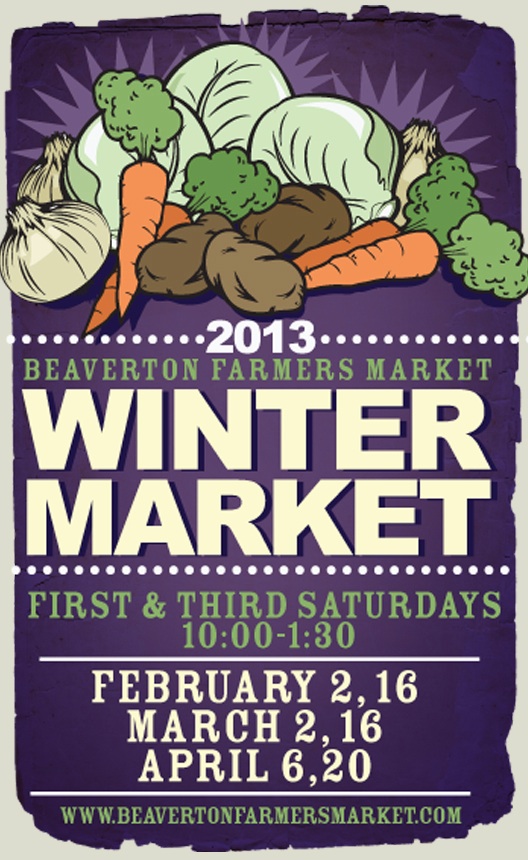
Details: Beaverton Farmers Market Winter Market. First and third Saturdays of Feb., Mar. and April from 10 am-1:30 pm. On SW Hall Blvd between 3rd and 5th Sts. 503-643-5345.

* * *

The future of food will be discussed at the second annual FoodWorx conference on Feb. 4th. Aimed primarily at starting conversations about how we consume our food—whether at home, in restaurants or even how much is wasted in the process—it's centered around 20-minute TED-style presentations. Focused on the four topic areas of society, health, environment and economics and addressed by food scene movers and shakers, both local and national, it's sure to be a thought-provoking day.

Details: FoodWorx Conference. Tues., Feb. 4, 8:30 am-4:30 pm; ticket prices start at $99 ($79 for students) and are available online. Event at Gerding Theatre at the Armory, 128 NW 11th Ave. 503-213-3700.

Wednesday, April 10, 2013

Livin' in the Blurbs: With Food, Knowledge is Power


What could be more appropriate for one of the hottest and most progressive food regions in the U.S. than a film festival featuring six new films covering topics of sustainability, food supply, nature and the environment? Just such a series, the Portland Ecofilm Festival, is queued up and ready to roll starting tomorrow and continuing through the summer at the Hollywood Theatre, starting with Symphony of the Soil from director Deborah Koons Garcia (Jerry Garcia's widow) in attendance with a Q&A hosted by Naomi Montacre of Naomi's Organic Garden Supply. Other films in the series include The Fruit Hunters, Elemental, More than Honey, Musicwood and Cafeteria Man. What a great idea for summer entertainment!

Details: Portland Ecofilm Festival. Schedule and tickets for individual films or a festival pass to all six available online. Hollywood Theatre, 4122 NE Sandy Blvd. 503-281-4215.

* * *

If you know beans about beans but want to know more, or if you're a bean aficionado and want to hobnob with three of Portland's top bean queens, you absolutely must make plans to attend Beautiful Beans: Grow. Cook. Eat. on Thursday, April 18. Sponsored by the Portland Culinary Alliance, Edible Portland and the Better Bean Company, it features a moderated panel of "Beanthusiasts" (their word, not mine) including Hannah Kullberg of Better Bean Company, the beautiful and talented Carol Boutard of Ayers Creek Farm, pantry maven and teacher Katherine Deumling of Cook with What You Have and Dr. Samantha Brody, founder of Evergreen Natural Health Center, who will address the nutritional aspects of the legume. As if that weren't enough, there will be a tasting of various beans grown at Ayers Creek and a borlotti bean bruschetta from the good folks at Ava Gene's.

Details: Beautiful Beans: Grow. Cook. Eat. Thurs., April 18, 6:30-8:30 pm; $15 (tickets online). Event at Ecotrust, 721 NW 9th Ave., Suite 200.

* * *

There's nothing better than going to the source for the food you put on your table. With more than 60 farmers' markets in the Portland metro area and a market every day of the week during peak season, we have ample opportunities to talk directly with the people who grow our food. One of those, the Beaverton Farmers' Market, sits smack-dab in the middle of one of Oregon's most bounteous agricultural areas and draws heavily from farmers and fields within miles of its suburban location. Unusually, it also features a stunning array of plants for vegetable gardens, yard and home, due to manager and dedicated plantswoman Ginger Rapport, who has made it her mission to gather the best of the best small nurseries to her market. The debut of the market's 25th season is on Saturday, May 11, and it'll be a bang-up celebration with food demos, music and a plethora of special events. Put it on your calendar!

Details: Beaverton Farmers' Market Summer Market. Sat., May 11; 8 am-1:30 pm. On SW Hall Blvd. between 3rd and 5th Sts. in downtown Beaverton. 503-643-5345.

Wednesday, January 23, 2013

More Winter Markets! More Winter Markets!


And then there were eight. Winter farmers' markets, that is.

(A cheer erupts from the grandstands! YAY!)

As announced last fall, Beaverton Farmers' Market is opening for its very first winter season ever on Saturday, February 2, just in time for stocking up on healthy Super Bowl snacks. From then through April, on the first and third Saturdays of the month, it will feature a plethora of vendors bringing truckloads of winter greens, root vegetables, pasture-raised meat, warm wintertime soups and baked goods.

"We'll open the market at 10 am rather than the usual 8 am opening time," said market manager Ginger Rapport. "So sleep in, have an extra cup of coffee, linger over the newspaper, then come see us."

Vendors announced so far include market favorites Pepperheads, Lonely Lane Farms, Souper Naturals, Fressen Bakery and Feastworks. A new addition, Local Locovore, will feature organic baby food, and there will also be an Oregon Distillers booth where local spirits-makers will rotate their products throughout the season, with Big Bottom Whiskey and Eastside Distilling offered during the winter season.

I hope to see you there on opening day!

Details: Beaverton Farmers' Market, on SW Hall Blvd between 3rd and 5th Sts. adjacent to Beaverton City Park and the Beaverton Public Library. 503-643-5345.

Tuesday, November 20, 2012

Get Fresh All Winter


Thanksgiving heralds the last gasp of fall and the onset of winter, with its focus on squash, fowl and root vegetables. It also marks the beginning of the winter farmers' market season, and this year the census of markets open year round has increased to eight…count 'em…eight! All full of vendors willing to brave the elements with a plethora of fresh, lively produce harvested from their fields (whether under cover or not). For times, dates and maps please consult the Oregon Farmers' Market page right here on GoodStuffNW. The full list is:

Thursday, May 31, 2012

Glorious Gloria's!


Lots of people know Gloria Vargas (below left) from her long-running gig at the Beaverton Farmers' Market, dishing out signature Salvadoran-style tamales with their sensuous banana leaf wrappers and lighter-than-air cornmeal filling wrapped around fall-apart tender chicken, pork or vegetables. But even area locals haven't picked up on the fact that just blocks away lies Gloria's home base, from whence flows her market goodness.

From the outside a cheery storefront with café tables and flowers on the sidewalk, step inside Gloria's Secret Café and you're instantly transported to sunnier climes with intriguing aromas of chiles and spices wafting through the air. Salvadoran cuisine, while not spicy hot, still has the signature complex mix of herbs and spices found in most Latin cuisines. Sauces often contain dozens of ingredients, and can take a couple of days to simmer to perfection.

My luck was on overdrive when I stopped in for lunch the other day, since Gloria was featuring Salvadoran chile rellenos (top photo) as the daily special. Made with green bell peppers rather than the more typical Anaheim or poblanos, she somehow roasted them so that instead of having an acidic bite they had a sweeter, fuller character.

Stuffed with long-braised, fork-tender pork and covered with an intriguing chunky tomato-based sauce, every forkful caused my eyes to roll back in my head. The brightly colored plate also held Gloria's outstandingly flavorful black beans, a beautiful serving of saffron-colored rice and a small vinaigrette-infused salad of seasonal greens. If this dish is on the menu when you go, order it immediately before someone else takes the last one…it goes quickly and when it's gone, it's gone.

My friend's pupusas (right), essentially a layer of meat sealed and pressed between two masa pancakes, were the best I've had of this quintessential Salvadoran dish, with their fresh corn flavor, rich filling and the lightness that comes from skilled, caring hands (any hint of oiliness or overcooking can make these heavy and tough). These were accompanied by the same terrific beans, rice and salad that I had, along with the traditional sides of quick-pickled cabbage and a tangy salsa.

If there's any better, fresher Latin food in town, especially at such reasonable prices, I have yet to find it. And with authentic Salvadoran cuisine in short supply in Portland, it's definitely worth a quick trip out to the burbs for lunch. I'm intrigued by Gloria's dinner offerings, which are only available by calling ahead and making a reservation…I'll be sure and report back when I do!

Details: Gloria's Secret Café, 12500 SW Broadway St., Beaverton. 503-268-2124.

Friday, April 06, 2012

Farmers' Market Frenzy!


Cherry blossoms. Daffodils. Tulips. It can only mean one thing, right?

Yes…it's farmers' market season! The Portland Farmers' Market at PSU has already opened its regular season after being mobbed by eager shoppers in its first attempt at a year-round schedule. The city's six other year-round markets are gearing up to start their regular weekly schedules and will be popping up here and there over the next few weeks.
Here are a few bits and pieces of market news that have come in over the transom:
  • Beaverton Farmers' Market opens Sat., May 12, and is celebrating its 25th anniversary this season with more than 200 vendors, including 18 that are new to the market this year. Check the website for anniversary events. Saturdays, 8:30 am-1:30 pm. On SW Hall Blvd. between Third and Fifth Sts., Beaverton. 503-643-5345.
  • Hillsboro Farmers' Market opens Sat., April 28, and is celebrating its 30th anniversary this season. Saturdays, 8 am-1:30 pm. In historic downtown Hillsboro on Main St. and 2nd Ave., one block NW of the 3rd Ave. MAX station. 503-844-6685.
  • Kenton Farmers' Market, a brand new market in the Portland Farmers' Market fold, opens Fri., June 1. Fridays, 3 pm-7 pm. On N McClellan St. at Denver Ave. near the Kenton/N Denver Ave. MAX Station.
  • Gladstone Farmers' Market opens Sat., June 2, with new hours from 10 am to 4 pm. 580 Portland Ave., Gladstone. 503-756-6477.
Sadly, I also received news that the Interstate Farmers' Market decided to cease operations at the end of its 2011 season. It will be missed!

And don't forget to check out the GoodStuffNW Oregon Farmers' Market Schedule for a comprehensive listing of farmers' markets with dates, hours, maps and links to your favorite market. And please let me know if I've missed any!

Thursday, September 01, 2011

Why I Buy Oregon Albacore


I can't think of a better illustration of why to buy Oregon albacore than this video of a small cannery I visited on a recent trip to Astoria, Oregon.

Mark Kujala, Skipanon co-owner and the mayor of Warrenton.

The Skipanon Brand cannery, now run by the second generation of the Kujala family of Warrenton, fishes for tuna off the coast of Oregon using the hook-and-line method that eliminates by-catch, the unintended harvesting of other species. Then they bring the fish into their small cannery built by Norman Kujala on the banks of the Skipanon River in 1978.

Anna, originally from Kentucky, worked at Bumble Bee until it moved out of Warrenton.

The loins are filleted and cleaned by a small crew of local women who've been working for the family for decades. The fresh loins are then sliced, hand-packed into cans with two salt pellets and sent through the ancient canning machine. The wire cage holding the cans is lifted into a large pressure cooker that cooks the fish, which means the fish cooks in its own juice without needing oil or water to keep it moist. Then the rich broth can be added to pump up the flavor of whatever dish the fish is used in.

Is it any wonder I love this product? I'm so glad to have found out about it!

Details: Skipanon Brand albacore can be found at the Saturday Beaverton Farmers' Market, ordered online at their website or found at many stores around the state. Most markets have other brands of Oregon albacore available. They're well worth looking for or asking about.

Monday, May 02, 2011

In Season NW: Join the Parade!


I was trying to think of a good metaphor for the farmers' markets opening this week, and the first thing that came to my mind was popcorn. You heat the oil, pour in the kernels and at first there's nothing…then a few seconds later you hear a pop. A second later there are a couple more pops, then suddenly a chorus.

But however you choose to think of it, we're fast approaching the rolling waves of the harvest that summer represents, first with strawberries and early vegetables, then the fat cane and bush berries and fruits, peppers and tomatoes (left). I get excited just thinking about it, so before I go completely off into fantasy land, here's a roundup of markets opening in the next few days:
  • Shemanski Park, Wed., May 4, 10 am-2 pm. The mid-week version of the big Kahuna that is the PSU market, it draws a big crowd of downtown office workers for lunch and a chance to restock the pantry before the weekend. In the South Park Blocks at Shemanski Park between SW Salmon and Main.
  • Buckman Market, Thurs., May 5, 3-7 pm. A small, well-curated market, its Thursday afternoon slot has been a big hit with the residents of this inner eastside neighborhood. At SE 20th and Salmon between SE Belmont and Hawthorne in the parking lot of Hinson Baptist Church.
  • Beaverton Farmers' Market, Sat., May 7, 8 am-1:30 pm. The area's signature farmers' market representing the bounty of Washington County and beyond, it is a destination for tourists and residents alike. On SW Hall Blvd between 3rd and 5th Streets in Beaverton.
  • Hollywood Farmers' Market, Sat., May 7, 8 am-1 pm. A lively market in one of NE Portland's hot neighborhoods, it draws from people all over the city's east side. On NE Hancock between 44th & 45th Avenues.
  • Oregon City Saturday Farmers' Market,  Sat., May 7, 9 am-2 pm. This suburban market has grown from a scattering of tents to a vibrant survey of the bounty of farms south of the city. 2051 Kaen Road, off Beavercreek Road.
  • Moreland Farmers' Market, Wed., May 11, 3:30-7:30 pm. You'll find neighbors gathering to shop and visit at this mid-week market…it's also a perfect place to sit and nosh and soak up the mellow neighborhood vibe. At SE Bybee Blvd. and 14th St. with free parking across the street at SE 14th and Glenwood.
  • Oregon City Downtown Market, Wed., June 1, 3-7 pm. The mid-week version of the Saturday market, it is located in the same spot that a "producers market" operated in 1924. 8th and Main Streets in downtown Oregon City.
  • Montavilla Farmers' Market, Sun., June 5, 10 am-2 pm. Montavilla feels less like an urban market than one you'd find in a small town, with friendly neighbors laughing and local businesses joining in the fun with events and promotions. Between SE 76th and 78th Streets on Stark Street.
Look for a complete schedule of Portland and Willamette Valley farmers' markets on the Oregon Farmers' Market page.