Showing posts with label pollinators. Show all posts

Saturday, July 27, 2019

Bumbles in My Back Yard!


Earlier this summer I was having a bit of a crisis. You see, for the last couple of summers we've had a very active bumblebee nest in our back yard. It's hidden behind a bed of hostas and a bleeding heart growing around the foundation of our garage, the entrance hidden under a scattering of oak leaves (see above).

Orange sacs on the bumblebee's back legs hold the pollen it has collected.

I was alerted to its presence when I was innocently watering the garden and suddenly heard a vibrant buzzing coming from a corner of the garden bed. Several fairly large bumblebees were circling around the area, looking for the intruder—me—who had apparently come a little too close to the nest.

Now, some people might freak out at the thought of a bees' nest in their back yard and call an exterminator. But knowing as I did that, in general, bumblebees are peaceful insects and will only sting when they feel cornered or when their hive is disturbed, I simply stepped back several feet and waited for them to realize I wasn't a threat. It also gave me a chance to see where they were returning to.

Of course my first act was not to look up the Wikipedia article on bumblebees. It was to call our long-suffering neighbor, who works for the Xerces Society and who puts up with my endless bee questions, along with the occasional accusation along the lines of "one of your friends just stung me!" He informed me that congratulations were in order because there was indeed a bumblebee nest under our garage and they seemed perfectly happy.

I felt like a new parent.

Busy as a bee collecting more pollen.

Which is why, when earlier this summer I observed no activity from the nest and very few bumblebees on the flowering shrubs and bushes on the block, I got a little panicky. When I consulted my neighbor (like I said, he puts up with a lot), he said it was possible that they had abandoned the nest, but with the unusually cool spring and early summer, they might just be late in appearing.

So I waited. And waited.

It was just about exactly when our neighbors' prodigious stand of lavender bushes burst into bloom that, joy of joys, I saw the bumbles return, buzzing happily from wand to wand, taking their gathered treasure back to the nest behind the garage. I was ecstatic. And yes, I texted our neighbor with the good news.

Saturday, April 21, 2018

Earth Day, 2018: Celebrate with the Bees!


What better way to celebrate Earth Day than with a tale of the simple joy brought to people by bees? The following essay  by Mace Vaughan, who co-directs the Xerces Society's Pollinator Conservation Program, was published here in 2015, and is just as relevant today as it was then.

In the summer of 2009, my family and I moved into a house across from the Sabin Elementary School in northeast Portland, Oregon. Our daughter started kindergarten at the school that fall. Sporadically, as other school parents learned of my work in pollinator conservation, they would ask me if I’d ever seen the “tickle bees.” I would respond with a polite “no,” unsure what they meant. Still, as the question continued to come up through the December holidays and into the late, wet winter, my curiosity grew. Everyone seemed to know about the tickle bees.

And then St. Patrick’s Day arrived. The sun shone and it was warm for a March afternoon. I sat in our dining room, working from home and enjoying the sounds of kids playing in the schoolyard across the street from our house. Every so often I would sneak a peek across the street to see if our daughter was running around, and that was when I spotted a boy, all alone, kneeling on the ground as he tried to catch something. He grabbed and lunged, attempting to seize it from the air. In that moment, it all came clear to me.

I waited until the kids had cleared out of the field, closed my computer, and walked across the street. And there, to my amazement, were the tickle bees of Sabin Elementary. Not tens, not hundreds, but thousands of gentle, ground-nesting bees were emerging all across the two-acre field. I was standing in a giant aggregation of mining bees, which turned out to be at least two species of the genus Andrena—christened the “tickle bees” by the students of Sabin.

For the next two months I watched as more and more bees emerged from the ground. Scattered across baseball diamonds, the bare dirt under park benches, and all across the soccer pitch were mounds of soil the bees had excavated from underground. They seemed to deepen their tunnels mostly at night; walking across the grounds in the morning you would see freshly dug dirt hiding the holes underneath. By the afternoon, the dirt was pushed aside as the females emerged to fly to the flowering maple trees, dandelions, and cherry and plum trees around the neighborhood. On an especially warm day, you couldn’t run across the field without bumping into these amazing insects.

As someone who has worked hard to convince people worldwide that insects are not a bunch of biting, stinging, crop-killing animals, but rather the drivers of healthy ecosystems, I was touched by the reception these bees received. For the two months the bees were active, parents and students regularly approached me with questions. I helped dozens of people discover what, for them, was a whole new world of ephemeral bees, with their golden stores of food and developing brood buried below soccer and kickball games.

Tickle bees are not unusual or uncommon. Every spring we receive calls at the office starting in early March from people wondering about the bees that are showing up in their lawns, whether they are safe, or just wanting to know what they are. Across the rest of the country, as spring comes on after this harsh winter, look for holes in the ground and bees flying. If you want to find your own tickle bees, go out on a warm spring day and watch sunny, south-facing slopes around your neighborhood. You might find your own aggregation of mining bees.

As for Sabin, five years later the tickle bees are going strong. As kids get older, they may lose interest. But each spring, a new group of kindergartners gets to meet the tickle bees and share something unique that their older classmates have cherished for years.

Watch an interview with Mace talking about the tickle bees of Sabin School.

Friday, February 05, 2016

Food News: Campbell's Labels GMOs, USDA Drops Grass-Fed Standards, EPA Indicts Neonicotinoids


In what might be considered a tipping point in the battle over labeling genetically modified organisms (GMOs) in food products, Reuters reported that the Campbell's Soup Company "will label all its U.S. products for the presence of ingredients derived from genetically modified organisms." The company went a step further, announcing that it will break ranks with its peers and withdraw from any efforts to prevent such labeling.

In a press release on the company's website, Campbell's states that "it is necessary for the federal government to provide a national standard for labeling requirements to better inform consumers about this issue. The company will advocate for federal legislation that would require all foods and beverages regulated by the Food and Drug Administration (FDA) and the U.S. Department of Agriculture (USDA) to be clearly and simply labeled for GMOs. Campbell is also supportive of a national standard for non-GMO claims made on food packaging."

While a timeline to begin labeling its products has not been announced, it has prepared labels that will be used to comply with Vermont's recent passage of a GMO labeling law that will take effect in July 2016. The company said that if a national standard for labeling is not enacted quickly, "it was prepared to label all its U.S. products for the presence of ingredients that were derived from GMOs and would seek guidance from the FDA and approval by the USDA."

* * *


If you find yourself standing in front of your market's butcher case trying to decide between a grass fed steak and one from a cow that was raised conventionally, your decision has just become much more fraught.

The National Sustainable Agriculture Coalition reported that a battle between two federal agencies has led to the revocation of the standard for labeling grass fed meat. The USDA's Agricultural Marketing Service (AMS) "rescinded the labeling standard for grass fed meat, which was developed over the course of four years and finalized in 2006 with the support of national farm and consumer organizations."

This is a result of an internal turf battle that erupted between the AMS and the USDA's Food Safety Inspection Service (FSIS) over an internal legal decision that the AMS did not have the legal authority to establish the standard in the first place, instead declaring that the authority to make the decision rested solely with the FSIS.

This leaves farmers and meat producers to either revert to a previous, less rigorous grass fed meat standard or to develop one on their own, which could lead to a mish-mash of competing standards and claims, leaving the consumer to have to figure out which producer is telling the real story.

"Meat labeling just became even more confusing for farmers and consumers," Ferd Hoefner, policy director for the NSAC, is quoted as saying. "USDA is revoking a label standard that had widespread farm and consumer support. Actions such as this take us into a Wild West situation, where anything goes and both farmers and consumers lose."

* * *


The Xerces Society reports that an Environmental Protection Agency (EPA) report has found that one widely used neonicotinoid insecticide, imidacloprid, is a threat to pollinators. A preliminary risk assessment states that this neonicotinoid "potentially poses risk to hives when the pesticide comes in contact with certain crops that attract pollinators" even when used in legal applications.

Neonicotinoid insecticides affect the central nervous systems of insects, causing paralysis and death, and have been linked to colony collapse disorder in bees. The insecticides were at the center of the deaths of 50,000 bees in Oregon when blooming linden trees were sprayed with the insecticide, and have been implicated in subsequent large bee kills.

Addressing the effect of neonicotinoids on bees, Lori Ann Bund of the Center for Biological Diversity said in an article in the Oregonian that "bees who are exposed to even tiny levels experience hits to their neurological function. They can't find they way back to the hive, they have less foraging success, they can't communicate effectively, and they can't fight off wasps. Those are the impacts that are really significant on the population scale."

The Xerces Society, while noting some significant problems with parts of the EPA assessment, said that "the EPA’s preliminary assessment recognizes significant risks from the legal use of imidacloprid. If these risks are to be reversed, the EPA must suspend the use of imidacloprid until we know if and how it can be used without threatening bees and other pollinators."

Campbell's photos from Reuters and Campbell's Soup Co. Photo of cattle from USDA.

Tuesday, June 16, 2015

Why Celebrate Pollinators?


Oranges. Vegetables. Flowers. Nuts. None of these everyday items we take for granted would exist without the pollinators that make it possible for these plants to reproduce.

A bumblebee collecting pollen.

To put it in perspective, it's been estimated that pollinators are responsible for one out of three bites of food we humans eat. This week, June 15 through 21, is National Pollinator Week, a few days to appreciate these creatures and the huge part they play not only in our survival, but that of the planet. Responsible for the reproduction of 85% of the flowering plants around the world, they're critical for pollinating the plants that become food or habitat for other species. In addition, they themselves are a source of food for many birds and other wildlife.

Just who are these guys that we barely notice? Pollinators include bees, butterflies, moths, hummingbirds, some bats, some beetles, flies and wasps. Here are some simple steps that you can take to show your appreciation:
  • Plant native milkweed to help create monarch butterfly habitat.
  • Buy organic products whenever possible and talk with farmers at the farmers' market about what they do to create pesticide-free, flower-rich habitat on their farms.
  • When buying nursery plants for your garden, look for labels that say they haven't been treated with bee-killing pesticides like neonicotinoids.
For more information on pollinators, check out the Xerces Society, an organization dedicated to researching and the protecting pollinators and other invertebrates. Read more about the dangers of neonicotinoid pesticides.

Saturday, May 23, 2015

A Pollinator Garden: A Mother & Son Perspective


In honor of Mother's Day, which was marked earlier this month, the Xerces Society published this perspective on pollinator gardening. Alice Vaughan wrote a lovely narrative of her bee garden on Cape Cod in Massachusetts. Alice's son, Mace, who co-directs the Xerces pollinator program and is a contributor to Good Stuff NW, added his memories of sharing in the garden.

Alice's View of Her Garden

I have always enjoyed gardening. I love being among the plants and the bees that come to visit them. A few years ago I saw that Xerces was offering plants for sale that attracted bees. I was very excited. We had a bit of land along our driveway on which orange daylilies and ivy fought for dominance; a rather boring area, I had always thought. So, as soon as I heard of the Xerces offer, I knew I had to clear that area and plant a bee garden.

In the years since, the garden has thrived. I have expanded it with the help of our son, Mace, adding not only more plants that attract bees, but some of my personal favorites, as well. (Who says all of the plants in a bee garden have to attract bees?)

This garden is a joy to me. I stand in it in the spring and summer, close my eyes, and the world around me hums and vibrates with the bees, large and small. They are amazing to watch going about their work every day, or curled up to rest occasionally. Each time I drive in, I pause and roll down the window just to say hello and listen in appreciation of their lives in our world.

Mace's View of the Garden

The bee garden my mom describes is a place—almost a sanctuary—that connects us across a continent. Spring, summer and fall, I love hearing stories about new bees or new plants in the garden—on the last call, I learned that the milkweed was already 4 inches high! My dad makes sure to send photos, always with the date and time attached. And, when I visit, I enjoy adding plants or pulling weeds under the direction of my mom, or just watching the bees and sharing their hidden stories with my family.

This garden connects us. This is not unusual: gardens bring together families, neighbors, communities, nature. The garden is a way to share work and place, whether it is families working in the backyard to raise a small crop, community gardens that bring a neighborhood together, or a wildlife habitat that attracts bees, butterflies, and birds closer to home.

We are a private family, and I worried that this peek at a gift that I share with my family would somehow violate a trust. As I've put these words down, however, I think that this glimpse into our lives is okay. I'm struck by how lucky I am to share this experience with my mom, and I hope it helps inspire you to create a garden for pollinators and share it with the people you love.

Photos by Mace Vaughan.

Friday, July 12, 2013

The Buzz: Banning the Bee-Killers


Fifty thousand bees killed in a Wilsonville parking lot. Millions of bees killed in a single event in Canada. All laid to the use pesticides containing a group of chemicals called neonicotinoids, which are used in many commercial sprays and can even be purchased in most hardware stores and nurseries under various trade names.

Today Oregon Congressman Earl Blumenauer joined Xerces Society executive director Scott Hoffman Black in introducing the Save American Pollinators Act. The legislation suspends the registration of any neonicotinoid for use in seed treatment, soil application or foliar treatment on bee-attractive plants until the Environmental Protection Agency reviews these chemicals and makes a new determination about their proper application and safe use.

The fact that neonicotinoids are known to kill pollinators like bees and other beneficial insects is not news. The European Union banned neonicotinoids earlier this year, noting the chemicals, which attack the insects' nervous systems, could be directly related to falling bee numbers. Neonicotinoids were originally thought to be a "silver bullet" pesticide because they are absorbed into the plant tissues, meaning they aren't washed off by rain and they remain in the tissue for a significant period after application.

Unfortunately for the insects that depend on the plants for their survival, the chemicals are also found in the flower nectar and pollen when the plant blooms. The University of Minnesota’s Dr. Marla Spivak, a leading global authority on bee health, said that in addition, neonicotinoids "are long-lasting in soil and they readily move into water. If the Oregon event is an indication of what is happening more widely, we will begin to see catastrophic threats to food security and the pollination of wild plants."

The announcement of the Save the Pollinators Act was announced in Portland, Oregon, at Garden Fever, a local nursery that has pulled all products containing neonicotinoids from their shelves.

* * *

Meet Representative Earl Blumenauer and express your support for the Save the Pollinators Act at the Sabin Neighborhood Bee-Friendly Garden Tour, an event to celebrate bee-friendly gardening with a tour of neighborhood backyards and gardens. It's also a great way to learn more about how to make your yard and garden more friendly to pollinators!

Details: Sabin Neighborhood Bee-Friendly Garden Tour. Sun., July 14, 11 am-3 pm. Rep. Blumenauer will kick off the tour at 11:15 am at the garden of Diane Benson, 3926 NE 11th Ave. Call 503-232-6639, ext. 102, for information about the event.

More information on the killing of 50,000 bees in Wilsonville.

Top photo from the Xerces Society. Bumble bee photo by Motoya Nakamura for The Oregonian.

Friday, June 21, 2013

The Buzz: Dead and Dying Bees Still Being Found


In a press release, Rich Hatfield, a biologist with the Xerces Society, estimated that over 50,000 bumble bees were killed in the Wilsonville tragedy, a number that represents more than 300 wild colonies.

“Each of those colonies could have produced multiple new queens that would have gone on to establish new colonies next year," he said. "This makes the event particularly catastrophic.”

Volunteers making nets to wrap trees.

An earlier report stated that the Oregon Department of Agriculture (ODA) confirmed that the bee deaths were caused by the bees coming into contact with dinotefuran, the active ingredient in the pesticide Safari, made by the Valent Corporation. A neonicotinoid, it contains a powerful neurotoxin that, according to the instructions, should never be applied to a blooming tree full of pollinators as it was in the case of the linden trees in Wilsonville.

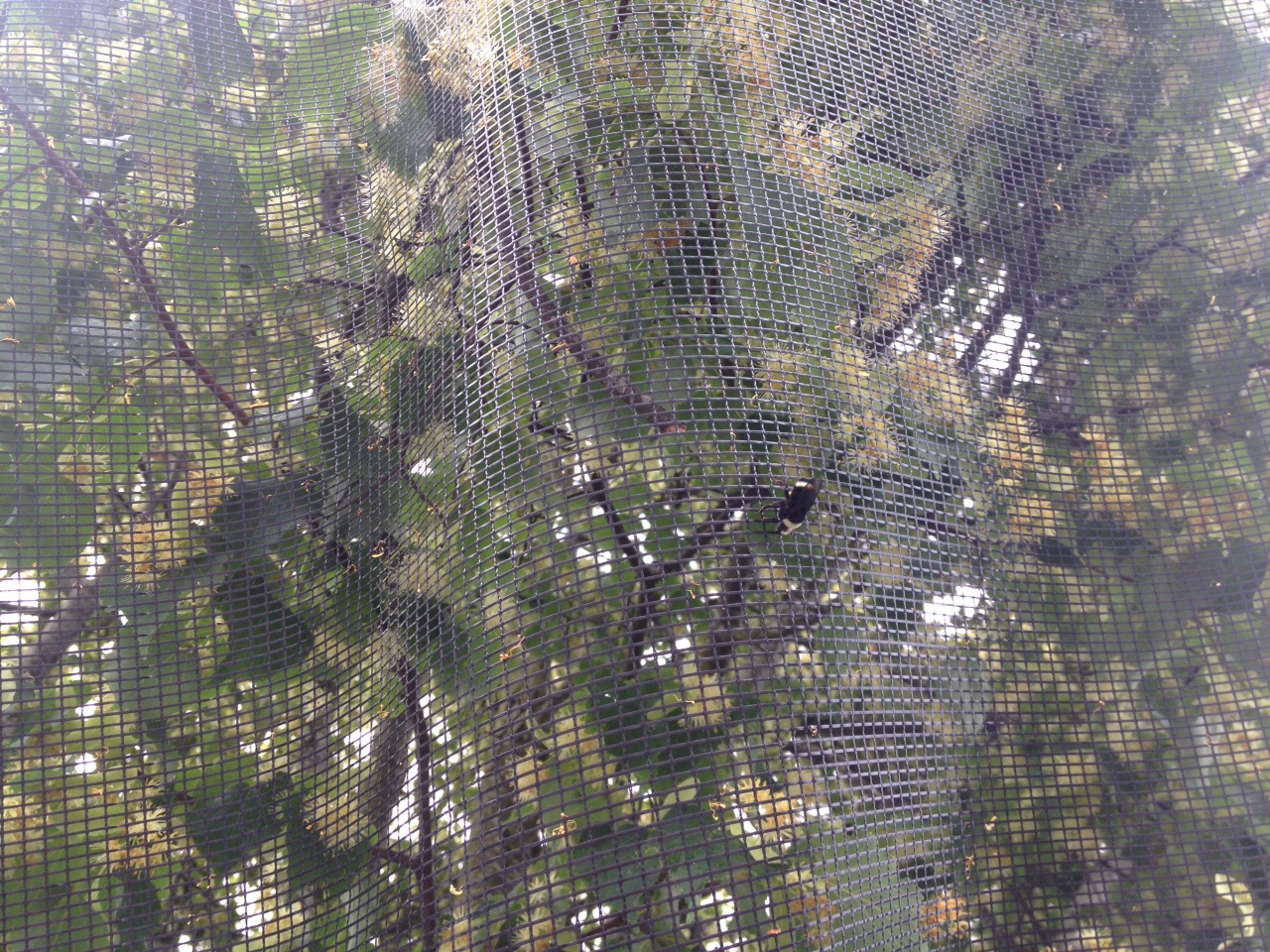
The city of Wilsonville, along with staff from the Xerces Society and the ODA, have been working feverishly to cover the trees with nets to keep the bees from coming into contact with the poison. Workers estimate that all 50 trees should be covered by the end of the day on Friday.


Update: 7 am, 6/24/13 Mace Vaughan, Pollinator Program Dir. for the Xerces Society, posted on the Xerces Facebook page: ""By 5 pm on Friday (June 21), the City of Wilsonville, with help from boom trucks and crews from at least four nearby cities, the Oregon Dept. of Agriculture and Xerces Society had covered all 55 poisoned trees in netting. Amazing!! We cannot thank the City of Wilsonville enough for their rapid response!"

Read the first report in this series: "City Steps in to Save Bees"

Video and photos courtesy Mace Vaughan, Pollinator Program Dir., Xerces Society.

The Buzz: City Steps in to Save Bees


The City of Wilsonville and the Xerces Society are wrapping 50 linden trees in netting to help save bees from the misapplication of the pesticide Safari, a powerful neonicotinoid made by the Valent Corporation, that has killed more than 25,000 bees so far in this one event.

Wrapping trees with protective netting.

The landscaping company that did the spraying, which has yet to be named, sprayed the 30-foot trees while they were in full bloom, a use specifically prohibited by the instructions that come with the pesticide. No legal action has been initiated as of today, but the city and the Xerces Society are in discussions with the property owners and the property manager, Elliot & Associates.

Neonicotinoids, a class of neuro-active insecticides chemically related to nicotine, are still legal in the United States, but have been banned in Europe due to evidence of a connection to honey-bee colony collapse disorder.

Xerces Society staff helps with netting.

Ironically, this tragic occurrence coincided with the beginning of National Pollinator Week, meant to "raise awareness about the importance of bees, birds and other pollinator species to agriculture, forest and grassland environments and other ecosystems," according to Agriculture Secretary Tom Vilsack.

Xerces Society Executive Director Scott Black, in an interview, said that to prevent future events like this, "we need to take action to protect native pollinators" from "the use and over use of toxic insecticides."


Update: Noon, 6/21/13 The Oregon Department of Agriculture (ODA) confirmed in a press release that the bumblebees were poisoned by dinotefuran, the active ingredient in Safari, the neonicotinoid sprayed on the trees. According to the press release, "ODA continues its active investigation of the incident to determine if the pesticide application was in violation of state and federal pesticide regulations."


Update: 3 pm, 6/21/13 Rich Hatfield, biologist for the Xerces Society, now estimates that more than 50,000 bees were poisoned in Wilsonville in the largest mass bumblebee death on record. (Read the post.)

Read the second report in this series: "Dead and Dying Bees Still Being Found"

Photos by Mace Vaughan, Pollinator Program Director of the Xerces Society.