Showing posts with label bumblebees. Show all posts

Saturday, July 27, 2019

Bumbles in My Back Yard!


Earlier this summer I was having a bit of a crisis. You see, for the last couple of summers we've had a very active bumblebee nest in our back yard. It's hidden behind a bed of hostas and a bleeding heart growing around the foundation of our garage, the entrance hidden under a scattering of oak leaves (see above).

Orange sacs on the bumblebee's back legs hold the pollen it has collected.

I was alerted to its presence when I was innocently watering the garden and suddenly heard a vibrant buzzing coming from a corner of the garden bed. Several fairly large bumblebees were circling around the area, looking for the intruder—me—who had apparently come a little too close to the nest.

Now, some people might freak out at the thought of a bees' nest in their back yard and call an exterminator. But knowing as I did that, in general, bumblebees are peaceful insects and will only sting when they feel cornered or when their hive is disturbed, I simply stepped back several feet and waited for them to realize I wasn't a threat. It also gave me a chance to see where they were returning to.

Of course my first act was not to look up the Wikipedia article on bumblebees. It was to call our long-suffering neighbor, who works for the Xerces Society and who puts up with my endless bee questions, along with the occasional accusation along the lines of "one of your friends just stung me!" He informed me that congratulations were in order because there was indeed a bumblebee nest under our garage and they seemed perfectly happy.

I felt like a new parent.

Busy as a bee collecting more pollen.

Which is why, when earlier this summer I observed no activity from the nest and very few bumblebees on the flowering shrubs and bushes on the block, I got a little panicky. When I consulted my neighbor (like I said, he puts up with a lot), he said it was possible that they had abandoned the nest, but with the unusually cool spring and early summer, they might just be late in appearing.

So I waited. And waited.

It was just about exactly when our neighbors' prodigious stand of lavender bushes burst into bloom that, joy of joys, I saw the bumbles return, buzzing happily from wand to wand, taking their gathered treasure back to the nest behind the garage. I was ecstatic. And yes, I texted our neighbor with the good news.

Friday, July 12, 2013

The Buzz: Banning the Bee-Killers


Fifty thousand bees killed in a Wilsonville parking lot. Millions of bees killed in a single event in Canada. All laid to the use pesticides containing a group of chemicals called neonicotinoids, which are used in many commercial sprays and can even be purchased in most hardware stores and nurseries under various trade names.

Today Oregon Congressman Earl Blumenauer joined Xerces Society executive director Scott Hoffman Black in introducing the Save American Pollinators Act. The legislation suspends the registration of any neonicotinoid for use in seed treatment, soil application or foliar treatment on bee-attractive plants until the Environmental Protection Agency reviews these chemicals and makes a new determination about their proper application and safe use.

The fact that neonicotinoids are known to kill pollinators like bees and other beneficial insects is not news. The European Union banned neonicotinoids earlier this year, noting the chemicals, which attack the insects' nervous systems, could be directly related to falling bee numbers. Neonicotinoids were originally thought to be a "silver bullet" pesticide because they are absorbed into the plant tissues, meaning they aren't washed off by rain and they remain in the tissue for a significant period after application.

Unfortunately for the insects that depend on the plants for their survival, the chemicals are also found in the flower nectar and pollen when the plant blooms. The University of Minnesota’s Dr. Marla Spivak, a leading global authority on bee health, said that in addition, neonicotinoids "are long-lasting in soil and they readily move into water. If the Oregon event is an indication of what is happening more widely, we will begin to see catastrophic threats to food security and the pollination of wild plants."

The announcement of the Save the Pollinators Act was announced in Portland, Oregon, at Garden Fever, a local nursery that has pulled all products containing neonicotinoids from their shelves.

* * *

Meet Representative Earl Blumenauer and express your support for the Save the Pollinators Act at the Sabin Neighborhood Bee-Friendly Garden Tour, an event to celebrate bee-friendly gardening with a tour of neighborhood backyards and gardens. It's also a great way to learn more about how to make your yard and garden more friendly to pollinators!

Details: Sabin Neighborhood Bee-Friendly Garden Tour. Sun., July 14, 11 am-3 pm. Rep. Blumenauer will kick off the tour at 11:15 am at the garden of Diane Benson, 3926 NE 11th Ave. Call 503-232-6639, ext. 102, for information about the event.

More information on the killing of 50,000 bees in Wilsonville.

Top photo from the Xerces Society. Bumble bee photo by Motoya Nakamura for The Oregonian.

Friday, June 21, 2013

The Buzz: Dead and Dying Bees Still Being Found


In a press release, Rich Hatfield, a biologist with the Xerces Society, estimated that over 50,000 bumble bees were killed in the Wilsonville tragedy, a number that represents more than 300 wild colonies.

“Each of those colonies could have produced multiple new queens that would have gone on to establish new colonies next year," he said. "This makes the event particularly catastrophic.”

Volunteers making nets to wrap trees.

An earlier report stated that the Oregon Department of Agriculture (ODA) confirmed that the bee deaths were caused by the bees coming into contact with dinotefuran, the active ingredient in the pesticide Safari, made by the Valent Corporation. A neonicotinoid, it contains a powerful neurotoxin that, according to the instructions, should never be applied to a blooming tree full of pollinators as it was in the case of the linden trees in Wilsonville.

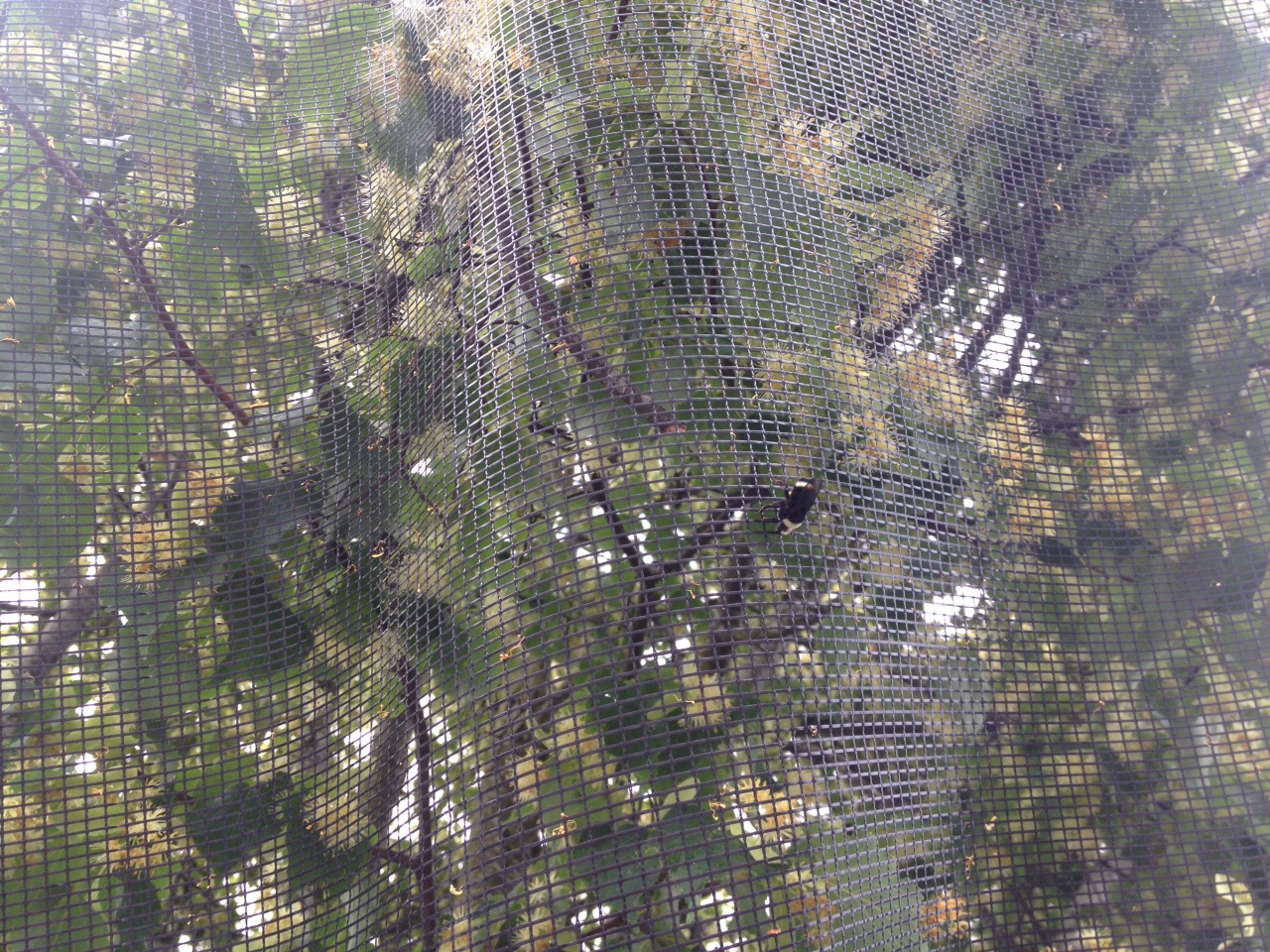
The city of Wilsonville, along with staff from the Xerces Society and the ODA, have been working feverishly to cover the trees with nets to keep the bees from coming into contact with the poison. Workers estimate that all 50 trees should be covered by the end of the day on Friday.


Update: 7 am, 6/24/13 Mace Vaughan, Pollinator Program Dir. for the Xerces Society, posted on the Xerces Facebook page: ""By 5 pm on Friday (June 21), the City of Wilsonville, with help from boom trucks and crews from at least four nearby cities, the Oregon Dept. of Agriculture and Xerces Society had covered all 55 poisoned trees in netting. Amazing!! We cannot thank the City of Wilsonville enough for their rapid response!"

Read the first report in this series: "City Steps in to Save Bees"

Video and photos courtesy Mace Vaughan, Pollinator Program Dir., Xerces Society.

The Buzz: City Steps in to Save Bees


The City of Wilsonville and the Xerces Society are wrapping 50 linden trees in netting to help save bees from the misapplication of the pesticide Safari, a powerful neonicotinoid made by the Valent Corporation, that has killed more than 25,000 bees so far in this one event.

Wrapping trees with protective netting.

The landscaping company that did the spraying, which has yet to be named, sprayed the 30-foot trees while they were in full bloom, a use specifically prohibited by the instructions that come with the pesticide. No legal action has been initiated as of today, but the city and the Xerces Society are in discussions with the property owners and the property manager, Elliot & Associates.

Neonicotinoids, a class of neuro-active insecticides chemically related to nicotine, are still legal in the United States, but have been banned in Europe due to evidence of a connection to honey-bee colony collapse disorder.

Xerces Society staff helps with netting.

Ironically, this tragic occurrence coincided with the beginning of National Pollinator Week, meant to "raise awareness about the importance of bees, birds and other pollinator species to agriculture, forest and grassland environments and other ecosystems," according to Agriculture Secretary Tom Vilsack.

Xerces Society Executive Director Scott Black, in an interview, said that to prevent future events like this, "we need to take action to protect native pollinators" from "the use and over use of toxic insecticides."


Update: Noon, 6/21/13 The Oregon Department of Agriculture (ODA) confirmed in a press release that the bumblebees were poisoned by dinotefuran, the active ingredient in Safari, the neonicotinoid sprayed on the trees. According to the press release, "ODA continues its active investigation of the incident to determine if the pesticide application was in violation of state and federal pesticide regulations."


Update: 3 pm, 6/21/13 Rich Hatfield, biologist for the Xerces Society, now estimates that more than 50,000 bees were poisoned in Wilsonville in the largest mass bumblebee death on record. (Read the post.)

Read the second report in this series: "Dead and Dying Bees Still Being Found"

Photos by Mace Vaughan, Pollinator Program Director of the Xerces Society.