Showing posts with label greens. Show all posts

Thursday, July 18, 2019

Summer Discoveries: Cicely Straws, New Greens and…Fries with Eyes?


Though I love to travel to faraway locations as much as anyone, I don't have to go far from home to make some (potentially life-changing) discoveries. We're only a little over a month into the summer—in the Pacific Northwest the good weather can extend well into September or October—and it's been a banner season so far for eye-opening experiences.

Along with making my own infused vinegar and oil from the spiky pink pompoms in my chive patch, I've had three other new-to-me revelations.

At the Hoodland Farmers Market.

While I was planning a week-long sojourn in a cabin on Mt. Hood, I heard that the Hoodland Farmers Market in Welches had launched its first season and would be open during our stay. Being the farmers' market obsessive that I am, it was immediately put on our schedule. The day after we arrived, I had picked up a few greens to tide us over for the week when a small pile of green stick-like bundles caught my eye.

A hand-lettered sign said "Sweet Cicely Straws 10¢," so I asked the tall bearded fellow standing behind the table what they were like. He said they had a mild, slightly sweet flavor and that they'd be good with light sodas, but when he mentioned he preferred them with gin and tonics, I was sold. A little research revealed that cicely is related to anise, fennel and caraway—it's sometimes used to flavor akvavit—and that the leaves, seeds and roots are all edible.

In the interest of science, on our return to the cabin we immediately tested them with gin and tonics, served al fresco by the river, and while the flavor was subtle, indeed, they were a perfect (and perfectly local), functional garnish.

* * *


Confession time: My name is Kathleen and I have a greens problem.

There. I said it. I can't pass by a pile of leafy vegetation at a market without stopping and admiring the fluorescent light green, dark green or medium green hue, caressing a leaf to find out whether it's thick and substantial or soft and ephemeral. I imagine what it would be like to cook with (or not), whether to steam, chop, chiffonade or leave it whole, what preparation would bring out its best flavor.

Like I said, a problem.

So, of course, when Josh Alsberg of Rubinette Produce mentioned in passing that he'd just received some sweet potato greens from Groundwork Organics north of Eugene, it was all I could do not to grab him by the lapels—Josh with lapels is an odd image, but an apt metaphor for my mania—and insist he give me some right away.

But I held myself in check, picked up a bunch (well, two) and brought them home. Fairly substantial, the deep forest green leaves seemed like they would hold up to a quick stir-fry, so I threw them into a hot pan already heaped with sautéed spring onions and green garlic, spritzed them with tiny bit of chive vinegar and served them alongside rotisserie chicken.

So, you might ask, am I going to try to free myself of this greens obsession? Um…no…not anytime soon, as a matter of fact.

* * *


It started with a dinner on the garden-like patio at Burrasca with owners Elizabeth Petrosian and Chef Paolo Calamai. Elizabeth had posted photos of their Tuscan artichoke dishes made with organic purple Italian artichokes, grown by Tom and Patreece DeNoble of DeNoble Farms, which included a salad of raw shaved baby artichokes, tiny and tender fried baby artichokes and a creamy, delicate artichoke sformato.

Over the fire.

Another dish on the menu was frittura con gli occhi, amusingly translated as "fries with eyes," which was, to me, an irresistible must-have, not only because of the name but it also being fresh West Coast anchovies simply breaded and fried whole. (Yes, whole, as in heads on.) Tiny, crispy and tasting of the sea, I was entranced.

Tiny, tender and delicious.

So it was fortuitous when, the very next day, I stopped by Flying Fish, Lyf Gildersleeve's outpost for sustainably sourced fish, and what should be in the fresh case but some of those very same fresh anchovies. I bought a pound and brought them home, breading half of them in a flour, salt, pepper and pimenton mixture and the other half in a panko, salt and pepper mix.

Frying them in olive oil on a cast iron skillet on the grill, the flour breading coated them more completely and gave the little fish some extra crunch, while the panko was a bit scanty and not as crispy. But oh so fun and so delicious! (Plus I got to say frittura con gli occhi several times that evening.)

Saturday, October 14, 2017

Farm Bulletin: A Proper Scolding


A previous post extolling the value of greens on root vegetables prompted contributor Anthony Boutard of Ayers Creek Farm to pen this (gentle) scolding. Message received, sir.

As a traditionally schooled market farmer—my father grew and delivered vegetables to the great Covent Garden Market all through the Battle of Britain and regaled his children with lore of the old market and its vendors—I was amused to see you perpetuating the “leave the tops on root vegetables” myth. This practice leads to a decline in the root’s quality, flavor and texture, even in short-term storage.

The reason is biological. When plants are out of the sunlight, they must still keep the leaf blade tissues alive, which requires energy and moisture. Maintaining the tops in the absence of sunlight means that sugars and nutrients are moved from the root to support the leaves, and water as well, as part of the respiration process. In fact, the leaves will pump out more moisture through respiration than a severed stem, that’s their job. That is why celery is stored with its leaves trimmed, leaving just the stalks, assuring a longer storage life. The roots with their herbage attached may “look fresher” but the leaves are actually consuming the root before you do.

Flavor and texture of the roots are determined by tasting a sample, not beholding the pretty greens. Bear in mind variety and culture are the most important determinants of quality, and many roots actually develop their flavors in storage, belying the notion that a “fresh" root is the better vegetable. Roots harvested after the frost will taste sweeter. Varieties with rattiest looking greens in the field can have spectacular flavor; there is no correlation between "fresh looking" leaves of the plant and the quality of its root. Verdant greens on a carrot may be an indicator of over-use of nitrogen rather than a healthy plant per se.

Traditional gardeners and farmers knew this fact going back at least to Pliny, based on simple observation even in the absence of a firm grasp of the biological processes involved. The discerning vendors at Covent Garden would have summarily rejected Cecil’s roots if they were delivered with a messy bunch of useless herbage attached. For historical perspective, the Baroque still life painter Juan Sanchez Cotán, and the market scenes of Pieter Aertsen (top illustration) and Joachim Beuckelaer from the 16th century, show the root vegetables properly trimmed to a short stalk. They were painting from life and felt no compunction to pretty up the roots with lush greens.

At market, we always sold our roots with tops trimmed to 1/2”, or about 14mm, of stalk. No one ever complained about freshness and in cool weather the roots stored nicely on the back stoop for weeks. The notorious “woody core” only results when the top of the root is removed. This leads to desiccation of the root’s core. A hard trim is often used for parsnips because the sap in the tops causes a nasty rash when the skin is exposed to sunlight (phytophotodermititus). To avoid any risk, some farmers trim them back too hard. For the customer the sap isn’t a problem because it dries and seals the stalk. The other vegetable commonly cut back to the root is the rutabaga because the tops rot and have an awful stench. To keep rutabagas from drying out, they are often coated in wax.

Regarding the value of the greens attached to the root, this is another glorious bit of 21st century goofiness. The greens associated with roots are just not in the same league, from a culinary or nutritional perspective, as those of the same vegetables bred for their greens. The development of a bifurcated vegetable selection, for example, knob celery and pascal celery, beet and chard, turnip and rapa/raab, rutabaga and cabbage, root chicory and heading chicory, root parsley and leaf parsley, Florence fennel and non-bulbing fennel, are a testament to this understanding extending back millennia. I always think its funny when people think they have discovered something that was missed in 3,000 years of food development and breeding that have formed the vegetable selection we enjoy today.

And regarding all the scolding about food waste that has proliferated of late in the food press, the best practice is to field trim the roots and leave the tops for nature. They belong in the farmer’s field where they continue to provide food and shelter. The superfluous greens and stems are only wasted if they are removed from the farm. Our daughter wryly notes that serving up the greens from root vegetables is the culinary equivalent of wearing a hair shirt to display virtue. She cringes when friends proclaim they are serving greens that would otherwise have gone into the compost. Many years ago I noted the importance of leaving excess crops in the field where they are valuable as a supplement to a cover crop. [See Ayersini's translation of Carolystra and Antonocoles, from the respected Gastonian Folio. - KAB] There are real issues of food waste, but serving greens best left in the field is a hollow virtue. A good green grocer should be trusted enough that the flashy and ill-advised show of “toppery" is unnecessary. It is, in fact, even a bit déclassé, dare I say.

Incidentally, the restaurants always thank us for the careful job we do trimming our roots and fennel. Chefs are happy to glean value from a delivery, but they hate paying for and disposing of compostable herbage that should have been left at the farm. The custom of displaying roots and bulbs with their tops has become entrenched in the last 20 years or so as an aesthetic gesture, probably an artifact of the proliferation of famers’ markets, but it runs counter to science with respect to food quality. Someday, perhaps, the scientifically validated wisdom of my father and the vendors he sold to at Covent Garden, and Aertsen's women of the Flemish vegetable markets carefully tending their goods, will return.

Thursday, April 13, 2017

Pesto From Carrot Tops Is…Well…Tops!


This time of year my craving for greens is practically insatiable. I'm coming home from the market with bunches of raab (or rapini or rabe) from multiple different vegetables—turnips, kale, mustard greens—and foraging through the aisles for nettles, fiddleheads…well, you get the picture. And since these days I only buy carrots with their tops still attached because I had one too many woody, flavorless carrots from the cheap-for-a-reason bulk bin, I've been giving their frilly green appendages the same lustful looks as their cousins the brassicas.

Using those tops is also a great way to keep perfectly good food out of the compost bin, so the other evening when I was casting about, as I usually do, for what-can-I-feed-my-family ideas by digging through the vegetable bin, I came across a few stalks of parsley along with the carrot tops, and decided to throw them into the blender with walnuts, a little salt and a couple of cloves of garlic. Stirring in a pile of shredded romano, the pesto got tossed with pasta and laid on top of a bed of arugula, then "garnished" with slices of a couple of seared pork loin chops I'd found in the freezer.

One-dish dinner, and it looked (and tasted) like a restaurant meal. I could get used to not wasting food!

Carrot Top Pesto

Carrot tops from one bunch of carrots, frilly greens stripped from stems
1/2 c. parsley leaves, stripped from stems
1/8 c. walnuts
2 cloves garlic
1/3-1/2 c. olive oil
1 c. romano cheese
Salt to taste

Place carrot top leaves, parsley leaves, walnuts and garlic in a blender. While blender is running, drizzle in olive oil until it becomes a smooth sauce. Pour into medium-sized mixing bowl and stir in cheese. Add salt to taste.

Toss with one pound cooked pasta. This pesto sauce is also delicious drizzled on roasted or grilled spring vegetables.

Sunday, October 16, 2016

"Hunker Down Eating"


Whether yesterday's windstorm was a blowout or a blowhard (see photo of the toppled tree in Northeast Portland, below), it's just a harbinger of winter weather to come. This recipe from contributor Jim Dixon of Real Good Food is perfect for cold weather when hardy winter greens like kale and collards are at their best. After the first frost, these plants put out sugars which act as antifreeze and make them sweet and tender when cooked!

During wet and wild weather I want to eat hot, comforting bowls of beans and greens.

Tree toppled in windstorm in Northeast Portland.

If you cook beans a couple of times each week like I do, you'll always have some on hand ready to heat up. Here's how I make the greens.

Basic Braised Greens

I think cavolo nero (aka Tuscan kale) and collard greens taste better than curly kale. My basic approach is to braise them with onion, olive oil, salt and water. The secret ingredient is time; these sturdy greens are best if cooked for at least 45 minutes. More tender greens (chard, spinach, beet, etc) cook more quickly, so they usually just get a quick sauté.

Chop an onion and start cooking it in enough extra virgin olive oil to cover the bottom of your pan (anything with a lid will be fine). While the onion cooks, chiffonade a bunch of greens: Roll several leaves at a time into a tight bundle and cut into quarter-inch slices. Or stack several flat and slice them. I like to cut these ribbons into pieces about 2 inches long for easier eating. It isn’t necessary to cut out the central stalk; you’re going to cook it tender.

Add the greens to the onion along with some salt and at least a cup of water; use more water if you want more pot likker. Cover, reduce heat to simmer, and cook. Check after 20 minutes and add water if needed to keep the bottom of the pot covered (I’ve burned greens more than once; if they're not completely black just say they’re “caramelized"). Let them simmer for at least 45 minutes; longer is okay (but check for water). Drizzle with a bit of fresh extra virgin at the table.

Monday, February 15, 2016

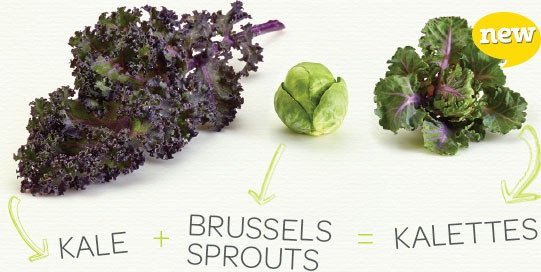
A New Vegetable on the Block: Kalettes


You remember old Gregor Mendel and his peas from junior high science, right? How he figured out the basics of genetics by breeding different varieties of peas together to see how their characteristics changed over generations?

Well, someone, in this case Tozer Seeds, a British vegetable breeding company, did something of the same thing by breeding kale and brussels sprouts together. This was possible because kale and brussels sprouts are both members of the brassica oleracea group. And, looking for a new vegetable line that consumers might just want to take home to meet the family, the plant breeders at Tozer came up with a cross between the two that has a milder flavor than a brussels sprout but packs all the nutrients and fiber of kale.

Tozer dubbed this new vegetable "Kalettes" (pron. kay-LETS) and has trademarked the name, but because they were created by using traditional cross-pollinating, any company could create their own hybrids. And they have, with names like BrusselKale, Lollipop Kale and Flower Sprout.

I ran across them at Josh Alsberg's new Rubinette Produce in the Providore Fine Foods store on NE Sandy. The purple-green, rapini-like florets in his case were grown by Mustard Seed Farms in St. Paul, but they're available right now at local farmers' markets from Groundwork Organics and Gathering Together Farm, among others.

I understand from Josh that they're wonderful roasted, and you can obviously also steam them, but I'm thinking they might be terrific stir-fried or chopped into a salad. If you get some, let me know how you like them best, and if you come up with any new nicknames!

Photo on upper left from the Kalettes website.

Friday, June 17, 2011

Summer Greens from the Subcontinent


Ssssssshhhhhhhhh…quiet, now. We don't want to frighten it. It took its sweet time getting here, but it looks like it may, it just might maybe possibly be here. But don't get too giddy and start shouting. Smile, nod, even pull out your sandals and capris, that's OK. Just don't make a ruckus and scare summer away…we want it to stick around!

So assuming it is here, I wanted to share what looks like my go-to side dish for summer barbecues, care of my friend Sophie Rahman of Masala NW. I ran into her while she was doing a demo at the Buckman Farmers' Market the other day, and when I saw how easy this stir-fried vegetable dish was I had to have the recipe.

Sophie's been teaching Indian cooking classes out of her home for a couple of years now, helping people learn to incorporate the intoxicating spices and ingredients of that coountry in their everyday cooking. Her focus is on market-fresh produce, and for her demo she'd picked up a bag of gorgeous braising greens and spring onions from a couple of vendors. These were combined with bright yellow dal she'd made ahead, then mixed in at the end of cooking.

So simple, so delicious. And would even make a meal in itself, especially with the carrot raisin salad tossed with sautéed black mustard seeds she made at the same demo!

Sophie's Poriyal

1/2 c. dry yellow split peas or moong dal
1 tsp. urad dal or white split gram beans
1/4 tsp. turmeric powder
1 c. onion, finely chopped
2 Tbsp. canola oil
2 bunches fresh spinach or other greens, washed and chopped (4-6 c.)
1 whole dried chile pepper
1 tsp. fresh ginger, minced
1 tsp. black mustard seeds
2 Tbsp. ground fresh coconut
1 tsp. salt or to taste

In a medium saucepan, bring about 2 c. of water to a boil. Add yellow split peas or moong dal and turmeric powder and cook over medium heat, uncovered, for about 20 minutes, until lentils are semi-soft (should be al dente…do not overcook). When split peas are just tender, drain and set aside.

In a deep-sided skillet over medium heat, heat oil with whole red chili pepper. When oil is hot but not smoking, stir in mustard seeds and urad dal. Cover and fry until mustard seeds pop and urad dal is golden brown, about 30 seconds. Add minced ginger, fry briefly and then add the chopped onion and stir for 1 minute. Add the chopped greens and stir well, coating the spinach with the spices. Add 1/2 c. water and salt. Cover and cook over medium heat until spinach is tender, about 7-10 minutes. Stir occasionally.

Add drained lentils to greens mixture and blend thoroughly. Sprinkle with coconut, stir briefly and serve.

Other seasonal vegetables like sugar snap peas (2 c.), green beans (3 c. diced), or cabbage and carrot (3 c. shredded cabbage, 1/2 c. shredded carrots), can be substituted for the greens. Left-over Poriyal can be used to make a wrap sandwich for lunch.