Tuesday, February 07, 2017
The Future of Our Food: Building Infrastructure for a Regional Food System
This series interviews farmers, food activists, politicians and policy wonks to try to get a handle on the seismic shift in our local food landscape due to the change of administrations in Washington.
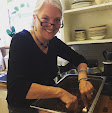
As Vice President of Food & Farms at Ecotrust, Amanda Oborne leads a team seeking to revolutionize and regionalize our food system. By harnessing the purchasing power of schools and institutions, empowering local farmers and ranchers, and developing infrastructure to connect the two, Ecotrust is helping build a resilient regional food economy that nourishes communities and renews the resources on which we depend. Recently named one of the "Most Creative People in Business" by Fast Company magazine, Amanda has a master’s degree from Northwestern University, and spent 15 years in private enterprise before joining Ecotrust in 2010. She has recently been featured in the Stanford Social Innovation Review, Fast Company and Civil Eats, and appeared at the Food Tank 2016 National Summit and the New York Times Live: Future of Food.
What are the critical issues affecting agriculture and our food system a) here in the Northwest and b) in the country as a whole?
Our biggest challenges are shared—our health, economy, environment and culture are intertwined with our food and how we produce and disseminate it. I believe the system we rely on for our food is fundamentally flawed. Our biology makes us highly susceptible to food that is bad for us, and our "always-on" culture keeps us running and distracted—all of which makes it extremely profitable, given the economic structure in which we operate, for corporations to exploit those realities for significant profit but to the collective detriment of our health and humanity.
It is inhumane, in my mind, to propagate a food system that solves for financial profit over human health and wellbeing. People from all walks of life—farmers and ranchers in rural communities, school children, hospital patients, service industry and agricultural workers, people disadvantaged by institutional racism, people living in poverty and even privileged city dwellers like you and me, suffer to varying degrees from a food system that prioritizes profit and efficiency over nutrition, access and resource stewardship.
If we are to have any hope of addressing these core issues, we are going to have to come together. That means not dividing ourselves into factions dedicated to certain types of production (organic vs. GMO vs. no-till vs. pastured, etc.), but collaborating to support restorative agriculture of all kinds, values-based supply chains and regional markets.
Putting on your best prognosticating hat, what are the issues you think are going to be at the top of the list of the new administration, and how do you think it will address them?
This administration appears to be focused on profit-maximization and deregulation, but seems unaware of how its policies, particularly on immigration and trade, would affect agribusiness. In addition to deleting all references to animal welfare from the White House website, the president has signaled a preference for commodity agriculture over "backyard tomato farming," which is how he seems to be characterizing non-commodity production and regional supply chains. The reality is, however, that many types of differentiated production have been shown to yield a higher profit per acre, and consumer demand for food free of antibiotics, pesticides, animal cruelty, added sugar and other unnecessary additives is not going away.
What’s more, a growing number of consumers want their food system to reflect their values, including livable wages and fair treatment for both farm workers and service industry employees, equitable access to nutrient-dense food and higher standards for animal welfare. Eaters are going to have to find their voices and speak up. The good news is that because food is so connected to other issues—climate change, children’s health and ability to learn in school, immigration, equity, aging, and many others—speaking up for food has a ripple effect on many other important issues.
What do we as citizens need to be paying attention to? What are the best sources for information on the issues?
If you care about any of these challenges, you would do well to read Civil Eats regularly. The foremost repository of news, thought, analysis and solutions being piloted in regions across the country, Civil Eats carries the pulse of food and restorative agriculture and is completely accessible to eaters of all stripes.
For those actively working or volunteering in food system reform, I can also recommend the Food & Environment Reporting Network and its partner publication, Ag Insider, along with Mother Jones; the weekly newsletter of the National Sustainable Agriculture Coalition; Food Tank; and Food Tech Connect.
In your opinion, what’s the most effective action citizens can take in the short term? In the long term?
Show up for local, practical, immediate causes. For example, the Oregon Legislature is considering eliminating funding for farm to school in this legislative session. This would be an incredible blow to Oregon children, farmers and processors all in one hit. Research conducted by Ecotrust has shown, without question, that every dollar spent by schools on local food creates an additional dollar of economic activity in our home economy, and creates jobs as well. Parents and supporters can stay tuned to the Facebook pages of Ecotrust and Upstream Public Health for regular updates and calls to action.
What organizations most need our support?
Becoming a monthly Ecotrust giver puts any eater squarely in the fight for an equitable, restorative, prosperous and delicious food system, and the gifts are used locally for the benefit of Oregon farmers, ranchers, and fishermen, as well as children and families facing system disadvantages in food access. Yes, of course I’m biased, but I can certainly vouch for the work!
Read more in The Future of Our Food series.
Top photo by Chloe Aftel.
Sunday, February 05, 2017
Wartime Kitchen & Garden: A Parable for Our Time?
The other night a friend of ours mentioned a show he'd watched online called Wartime Kitchen and Garden. This series, created by the BBC and aired in 1993, attempted to recreate the era just before and during World War II when England, virtually surrounded by German U-boats, was unable to import any food and had to quickly recreate a local food system to feed its people.
Harry Dodson, gardener.
Edicts were issued by the government that any arable land, including its vast public gardens, had to be converted so that at least 75 percent of it was dedicated to food production.
"How sad it was to have to throw away perfectly good plants, plants which had been tended for years," said Harry Dodson, head gardener at Chilton Lodge, who narrates many of the garden segments. "To see them thrown away on the fire heap or the compost heap, it was a period of great sadness."
Ruth Mott, cook.
Fortunately the real privations of wartime, like bombings and shortages, held off for several months and allowed people to start producing food prior to shortages and rationing became a reality. In addition to food production, the series outlined the steps that home cooks took to make the most of what little was available in shops during the war years, as well as the creative ways they conserved energy and fuel.
I'd highly recommend watching a few episodes for their entertainment value and historical detail, but also keep in mind that this is very applicable to our lives now as we try to create (or revive) a local food system.
Labels:
BBC,
Ruth Mott,
Wartime Kitchen and Garden
Saturday, February 04, 2017
Farm Bulletin: Particular About Preserves
The first time I tasted the preserves from Ayers Creek Farm, it was their black cap jam, and I was bowled over by the intensity of the fruit that burst from it. Subsequent jars of plum, blackberry, raspberry and quince jelly each carried the same concentrated flavor intrinsic to its particular fruit, and I've found very few other preserves that can match it. Here contributor Anthony Boutard reveals the secret to their preserve-making prowess, and why other brands may never measure up.
Our preserves are made from the farm's fruit only. If the fruit is shy in the field, it is shy in the kettle and then in the jar, but we hope never shy on toast. The fruit is predominantly the first run from the field, the very best for processing because it has high acidity, along with high aromatic and pectin content. Lots of character and an outgoing disposition. Acidity, not sweetness, defines a fruit. Paradoxically, on most berry farms this highest quality fruit is left to over-ripen or rot because there is not enough to justify mustering a crew to harvest it, let alone the time and fuel needed to deliver such a small quantity. The economics of berry production are tight. Fortunately, we are diverse enough that staff can harvest for a hour or so in the cool of the day, and then set up irrigation and perform other essential tasks. And we only have to deliver the fruit to one of our freezers.
Because of the fruit's quality, we achieve a good set without adding commercial pectin. We freeze the berries whole in the harvest crates without crushing them. This preserves the aromatics and avoids any enzymatic degradation while the fruit is freezing. For the plum preserves, staff harvests a blend of firm, acidic fruit and riper, more aromatic fruit. The mix lends more character to those preserves.
Most are processed using 750 grams of sugar per kilogram of fruit, and freshly squeezed lemon juice. The currants and jostaberry are prepared using 950 grams of sugar per kilogram of fruit. All are cooked in two gallon lots using a set of four small steam kettles. We use sensitive digital thermometers to track the temperature of the fruit. We generally shoot for 220-221°. However, each of the 15 fruits cooks differently, and they vary from year to year. This year, the purple raspberry set at 216°, the lowest we have ever seen in our fruit. Still scratching our heads over that. The behavior in the pot indicated a set had been achieved, but the reading on the thermometers didn't match, so we decided with our eyes rather than the instrument. An overcooked preserve is a terrible disappointment. As a general matter, we err on the side of a runnier set rather than risk a gummy texture and dull flavor.
When finished, we have concentrated about a half pound of fruit in each 10-ounce jar. When we started making preserves, we found there were all of these baffling rules of identity defining jams, conserves, jellies, sauces, spreads and preserves. We artfully dodge the identity question by avoiding any description on the label. All we do is name the fruit and ingredients.
Our ability to make preserves of this quality rests on a very special relationship we have developed with the owners of Sweet Creek Foods, Paul and Judy Fuller. Since 2005, we have produced more than 35,000 jars of preserves at their factory in Elmira, about 35 miles west of Eugene. They are set up to process large quantities of fruit in several 200 gallon kettles, thousands of jars a day. The physics of cooking in large kettles require the addition of commercial pectin, something we have avoided because those pectins bind with the fruit's acids and dull the flavor. We pay extra to use the little kettles that otherwise are reserved for testing purposes, and eke out about 1,000 jars each day. As Paul notes, he could do that in an hour if we weren't so damned picky. We sweeten the deal by bringing down a huge pot of soup for Paul, Judy and their staff.
The difference in price between the different types is not an indicator of quality differences. The difference reflects extra labor costs and shrinkage associated with deseeding, and removing the stems from the currants. In the case of damsons, it's the labor associated with pitting such a small plum. Jellies are their own challenge because the juice and pectins must be extracted by slowly stewing the fruit, and then drawing off and decanting the clear liquid. They are our art project, the test of our mettle as preservers with their fragile, jewel-like essence. With jellies, there is no gracious exit from a mistake.
We don't have a favorite preserve as such; they all find their way onto our table. However, the one that is the true measure of our efforts is the red raspberry. Commercially prepared raspberry preserves, jams, conserves, spreads, however they are identified, are found in every grocery store in the land, and many of us had parents or grandparents who put up some raspberry jam. If we felt our red raspberry tasted the same as Smuckers or some tonier brand, we wouldn't devote the time and effort. On the other hand, we are not foolish enough to compete with memories and are very happy if the quality simply reminds you of the raspberry jam you enjoyed at your parents' or grandparents' table.
Friday, January 27, 2017
Party Favor: Green Olive Tapenade
I love dinner parties. Not fancy-schmancy, dress-up affairs where people make polite small-talk over hors d'oeuvres, then sit down at a table groaning with myriad special-purpose forks and spoons. (Can you tell I've been watching too many British life-in-the-manor shows?) I prefer small gatherings where the question isn't "what should I wear" so much as "what can I bring."
It's probably because I grew up with parents who had friends over for dinner frequently, where the laughter and conversation filled the house as full plates were decimated and bottles of wine were emptied.
Potluck dinners provide great opportunities to get new recipes, since people tend to bring favorite bites they only make for special occasions—my brother's deviled eggs with pancetta leaps to mind—or when they want to try out a new recipe, a practice a surprised guest once scolded me for but I still do on a regular basis. After all, what better time to try a labor or ingredient-intensive dish? Pour enough wine and your guests will forgive (or forget) any minor disasters!
One such recent gathering featured an intriguing appetizer that I first took to be guacamole because of its brilliant green color, but on taking a bite I was startled to find it crunchy and sparked with lemon and garlic. But what was it?
I immediately turned to Michael Schoenholtz, a terrific photographer and the one who brought the fascinating tidbit, and asked what this deliciousness was. Turns out that he had been working on the recipe ever since he'd had it at a restaurant, tweaking and fiddling to recreate the experience he remembered (an exercise in patience that I seldom can manage). Based on the intensely bright green Castelvetrano olives which I've been flirting with for years—I love them plain, marinated in orange zest or chopped in a salad—and which are a ubiquitous presence in grocery store olive bars, it adds Meyer lemon juice (be still my heart), garlic, almonds and mustard seeds to achieve that intoxicating flavor.
Better yet? It can be made in a food processor in minutes. Now I'm toying with the idea of mixing the ingredients into pasta or serving it with fish or on crostini, so you may be seeing a similar combination again. So try it, and feel free to take it to your next potluck!
Castelvetrano Olive Tapenade
From Michael Schoenholtz
40 pitted Castelventrano olives
1/3 c. blanched, unsalted almonds (slivers fine)
1/3 c. fresh fennel, roughly chopped
2 tsp. garlic, minced
1/2-1 c. Italian parsley, roughly chopped
3 oz. Meyer lemon juice
1 tsp. mustard seeds
1/8 tsp. cayenne
1/2 c. olive oil
Salt to taste
Place all ingredients except olive oil and salt in food processor. With processor running, drizzle the olive oil in a steady stream until the mixture is a coarse blend. (You don’t want a smooth purée, so don't dawdle.) Empty processor into medium-sized mixing bowl and stir in salt to taste.
Thursday, January 26, 2017
Your Food, Your Legislature: Bills Address New Farmers; CAFO Air Pollution; GMO Contamination
Your Food, Your Legislature is a series of reports giving Oregon consumers a heads-up on issues before the current session of the legislature that affect the food we are putting on our tables, as well as providing you with contact information to voice your opinion on those issues. Thanks to Ivan Maluski of Friends of Family Farmers for help on details of the pending legislation.
The upcoming session of the Oregon legislature—scheduled to convene on February first—is going to be a tough one for the State of Oregon, which is facing a $1.7 billion (yes, with a "b") funding shortfall. That means that programs benefitting small farmers, like those supporting beginning farmers and for farmers transitioning to organic, as well as for Farm-to-School funding, are going to be David in a battle with big Goliaths like transportation, natural resources, education…you name it.
Here are three bills that I'll be keeping an eye on in the next few weeks and months, and I'll keep you posted on any new issues that arise.
New farmers gather to share information.Tax credit for renting farmland to beginning farmers for a term of three years (HB 2085). This bill creates a beginning farmer tax credit to encourage landowners to rent land to beginning farmers, with higher rates given for organic practices. Despite growing demand for locally grown food, Oregon is in the midst of land crisis. The state lost nearly 25% of its beginning farmers (those in business fewer than 10 years) between 2007 and 2012, according to the USDA. The average age of farmers in Oregon is now 60 years old, and fast-rising farmland prices are raising serious question about who will grow our food in the future. HB 2085 is intended to help beginning farmers gain access to land, and builds on Oregon's Aggie Bonds program, which helps lower interest rates on loans to beginning farmers. If passed, the tax credit will apply to tax years beginning Jan. 1, 2017.
Oregon CAFOs produce air pollutant like ammonia and nitrogen.
Regulation of air contaminant emissions from dairy confined animal feeding operations (CAFOs) (SB 197). This bill would require new rules be established to regulate air contaminant emissions from large dairy operations by 2019. In 2007, Oregon exempted large-scale livestock operations from air-quality oversight, and though a 2008 state task force recommended an air quality oversight program for large dairies, the state's Departement of Environmental Quality (DEQ) is not monitoring air quality impacts from large CAFOs and feedlots. Elevated concentrations of ammonia from mega-dairies like the 70,000-cow Threemile Canyon Farms (photo, above right) have been linked to acid deposits in the Columbia River Gorge, and nitrogen compounds are contributing to elevated levels of ozone in the vicinity of these operations. A recent proposal for a new 30,000-cow mega-dairy called Lost Valley Ranch near the Columbia River has prompted renewed interest from legislators in creating an air contaminant emissions program as outlined in SB 197.
Contamination from GE crops threaten Oregon's small farmers.Allowing local governments to protect farmers whose crops may be at risk of contamination from genetically engineered seed or products (HB 2469). This bill will allow counties in Oregon to protect farmers within their boundaries from contamination of their crops by genetically engineered (GE) crops. It effectively repeals a bill dubbed the "Monsanto Protection Act" that was signed into law in 2013 by then-Governor John Kitzhaber that took away the rights of local communities to set local food and agriculture policies. Up to that point, Oregon county governments had the highest degree of local discretionary authority of any state in the nation, according to the Oregon Secretary of State as quoted in an article at the time. HB 2469 would allow counties to once again regulate or ban GE crops to protect farmers growing traditional crops, and it would leave in place an existing ban on GE crops that passed in Jackson County on May 20, 2014. It would also allow a GE crop ban that passed in Josephine County in May, 2014, but which has been blocked in the courts, to finally go into effect.
The sponsors of legislation are listed on the information pages of the bills (links above), and links are provided for their offices. You can find your own legislators here if you want to contact them about these or other issues.
Monday, January 23, 2017
Meyer Lemon Relish Makes Cauliflower Sing
I adore Meyer lemons and try to use them as much as possible when they're in season. This year I made preserved lemons, the better to enjoy them long after they've disappeared from store shelves. Contributor Jim Dixon of Real Good Food chops them into a relish that he can serve with grilled fish or mix with any number of blanched vegetables and salad greens. Thanks, Jim!
It wasn't that long ago (okay, maybe it was 20 years) that the only way to get a Meyer lemon was knowing someone in California with a tree in their backyard. The citrus, thought to be a cross of lemon and tangerine, actually arrived from Asia in the early 1900s. Less acidic and puckery than the common Lisbon and Eureka lemons, Meyers also have thin, aromatic skins and a lovely fragrance.
Cauliflower with Meyer Lemon Relish
This relish, a twist on the traditional Italian herb sauce called gremolata, comes from an Alice Waters recipe for slow-roasted salmon in the 1999 Chez Panisse Cafe Cookbook. It's good with fish and almost everything else.
Drop a whole head of cauliflower into a pot of salted boiling water; pull it out after 3 minutes and let cool. Make the relish by cutting a Meyer lemon into quarters lengthwise, slicing the central white core from each quarter and removing the seeds. Then chop the lemon finely. [Preserved Meyer lemons, chopped as indicated, would be fabulous, too.]
Combine the chopped lemon with a finely chopped shallot, a quarter cup or so of chopped flat-leaf parsley, about a tablespoon of chopped chives, a tablespoon of Katz sparkling wine vinegar, a pinch of salt and a couple of tablespoons of extra virgin olive oil. Let this sit for a few minutes while you chop the cauliflower (use the core, too; just chop it into smaller pieces). Toss the cauliflower with the relish, add more salt and a little black pepper and drizzle with more olive oil. Serve cold or at room temperature.
Labels:
Alice Waters,
cauliflower,
Jim Dixon,
lemons,
meyer lemon,
preserved lemons,
Real Good Food,
recipe,
relish
Friday, January 13, 2017
It's Time for a Barn Dance
The video above is so full of joy that I just had to share. But what's not evident is the reason behind this chore dance by farmer Jay Lavery of The Permaculture Inn in Sharon Springs, New York:
"It's that time of the year for the Lets Move Challenge. Dancing is how I stay warm in the barn and I never know when I'm going to break out into a dance. But what most people don't know is that 15 years ago I had a traumatic back injury that caused me to have several back surgeries including a discectomy and a spinal fusion and neverending back pain. Dancing along with yoga and meditation are my only alternatives to pain medication. So I hope this can inspire anyone to move in spite of pain and I hope this puts a smile on your face for the New Year."
Labels:
dance,
farmer,
Jay Lavery,
Let's Move,
Permaculture Inn
Wednesday, January 11, 2017
Snowy Day Calls for a Hot Toddy
This morning I awoke to a world that looked a lot like a Japanese woodblock print. You know the ones, contoured drawings washed in delicate neutral tones with accents of blue or red, showing hillside villages covered in a blanket of white. People, if they're depicted at all, are tiny details in the larger landscape, usually bent over in the cold.
Hiroshige, Night Snow at Kambara, 1833
Having dogs, of course, I had to get them outside first thing, so I bundled up in my big coat and boots, stuffing as many extra layers underneath as I could. Being dogs, of course, they bounded out in just their fur coats and, being Corgis, they sank up to their necks in the 10 or 12 inches of fluffy snow that had fallen overnight.
A snow angel? Of course!
Fortunately we hadn't lost power like many other residents of the city, so we had coffee and hot chocolate and oatmeal to fortify us for the day. Pretty soon we'll curl up on the couch with the pups and watch a few episodes of "The Crown," a costume drama about the early days of Queen Elizabeth II that somehow matches perfectly with snowy days, with its muted colors and somber tone.
Mmmmm…hot toddy.
At some point we'll put on a kettle to make hot toddies, our new favorite winter's drink. This one, a simple concoction of hot water, lemon, honey and whiskey with warming spices, was one that our neighbors made for us one icy night a couple of weeks ago. It's become a go-to recipe, so easy that after making it once or twice it doesn't even require measuring. I'd like to think that those tiny figures in the snowy Japanese landscapes were heading home to something like this.
Ann and Chad's Hot Toddy
1 slice lemon, 1/8" thick
1 cinnamon stick
3 whole cloves
Pinch of fresh ground nutmeg
1 1/2 oz. whiskey (your choice)
2 oz. boiling water
1 tsp. honey
1 tsp. honey
Place lemon in bottom of a mug or heat-resistant cup. With a muddler or the back of a spoon, crush the lemon gently to release its juices. Add the remaining ingredients and stir to combine.
Monday, January 09, 2017
Food News: GMO Grass; MA Farmers' Success Story; 30 Years in Beervana
Lawn-care products giant Scotts has a problem with the runaway success of one of its products. In this case, the runaway is a type of grass that had been genetically modified to resist the weed-killer RoundUp, made by the agrichemical company Monsanto. As reported in an article by The Oregonian's Jeff Manning, it was planted in supposedly contained test plots around the country, but has jumped the fence, threatening to contaminate Oregon's billion-dollar-a-year grass seed industry.
The article quotes Don Herb, a Linn Country seed dealer, as saying it "would be a catastrophic event for Oregon's grass seed industry. We don't need Scotts or others to put our industry at risk."
Even more frightening, Manning reports that the grass has now crossed with wild grasses, passing along its modified genes for herbicide resistance.
And Scotts? The company was fined $500,000 in 2007 for allowing the grass to escape and was charged with eradicating the grass, a costly and painstaking process that Scotts said was largely complete. Then more of it was found in patches in Malheur County, and the company is saying the problem now falls back on state and county governments. That means you and me, my friends.
Regardless who ends up paying for it, the article quotes Herb as saying, "we need to get out in front of this. This is an invasive weed that, in my opinion, you can't control."
* * *
A USDA report, released in December, said that farmers in the US "sold $8.7 billion in edible food directly to consumers, retailers, institutions, and local distributors." Not surprisingly, California is at the top of the list, outstripping the second listed state, Michigan, by a factor of six. And Oregon, with its much-touted local food scene, farmers' markets and bounteous supply of agricultural land and coastline? Not even in the top ten.
So how did a small state like Massachusetts, known more for its industrial base than for vast tracts of farmland, manage to come in eighth on that list of farm-to-consumer sales? It may have started 18 years ago when an organization called Community Involved in Sustaining Agriculture (CISA) launched one of the nation’s first buy-local education campaigns, according to an article reporting on the ranking. Then in 2013 the Massachusetts Food Policy Council launched a statewide planning process to address the opportunities and challenges of the state’s local food system, which completed and accepted the plan in December of 2015.
The article said that these organized, sustained efforts over the years, along with a Local Hero campaign profiling local farmers, nine "buy local" organizations—which let folks know what's in season, where to find it and how to use it—as well as the support of a strong farmers' market association and the state's Department of Agricultural Resources, have helped to make this tiny New England state, and its family farmers, a national success.
“The direct sales business model can help older farms diversify their sales and often enables a beginning farm to launch their business,” Philip Korman, CISA executive director, is quoted as saying. “Farmers are able to keep every penny of their sales when they sell direct through farmers markets, CSA farm shares and farm stands.”
So come on, Oregon, we can do better!
* * *
Portland beer writer Jeff Alworth, author of many books on beer as well as the longstanding Beervana blog—he started it in 2006, the same year I began writing Good Stuff NW—has written a personal, and quite charming, story of Thirty Years in Portland. He begins in 1986, when he arrived in the city, describing it as a "poor, rough town" with one of the highest murder rates in the country, a "racially divided town [where] a century of racist policies had concentrated black Portlanders into a section of the Northeast, a poor section neglected by the city."
Alworth also chronicles the rise of Portland's beer culture from its inception—where the founding brewer of BridgePort Brewing, Karl Ockert, was told by a banker, "Breweries don't open, they shut down."—to the transformation of an abandoned warehouse district into the heavily commercialized Pearl District.
Through it all, he is still clearly in love with his adopted home. And its beer scene.
"I would argue that beer is actually the ür-product of Portlandia, the first of the artisanal products that would come to define the city and its culture," he writes. "Craft beer is in this way a metaphor for Portland. It arose because the circumstances were ripe in the city at the time (which was not unique), but flourished because of the way Portland's culture prizes indie projects, local projects, and the opportunity to do things its own way."
Photo of the farmers' market from the Shrewsbury (MA) Farmers' Market.
Labels:
beervana,
bentgrass,
farmers' market,
Food News,
GMO,
Jeff Alworth,
Massachusetts,
Scotts
Sunday, January 08, 2017
Smothered Cabbage, Louisiana Style
Contributor Jim Dixon of Real Good Food is our local conduit for all things from New Orleans. With a kid (and now grandchildren) in the Big Easy, he's got an even better reason than food to spend lots of time there. As long as he keeps bringing back (and sharing) his recipes, I'm all for it!
There are lots of foods different cultures eat for good luck in the new year, including greens of some kind (some say it's because money is green). According to Gulf Coast chef John Folse, in Louisiana they'll be eating smothered cabbage on New Year's Day. But this old school recipe is so good you'll want to eat it all year.
Smothered Cabbage
Folse's recipe calls for andouille, the deeply smoked sausage of Cajun country, but it's hard to find the good stuff here in the northwest. You can order it from Jacob's or check with with the butcher shop at Laurelhurst Market [or Old Salt Marketplace], but you can smother cabbage with just bacon if you can't wait.
Start by cooking a quarter pound or so of chopped bacon in a little olive oil (if you've got andouille, cut it into bite-sized pieces and cook it with the bacon until brown). When it's browned, add a chopped onion, about half as much chopped celery, and a small green bell pepper, also chopped. While those are cooking, chop a couple of cloves of garlic and a tablespoon or so of fresh thyme; toss them in, along with salt, black pepper, and a half head of green cabbage cut into 2 inch pieces.
When the cabbage has wilted a little, add a quarter cup of water, cover, reduce to a simmer, and cook about 25 minutes. As Folse notes in his recipe, it might seem overcooked, but that's they way they like in Louisiana. Everybody I've served this to feels the same way.
Saturday, January 07, 2017
Quick Solution for a Hearty Breakfast: Oatmeal!
On frigid mornings like we've been having lately, the best thing I can think of—besides buckets of coffee, that is—is a warm, comforting breakfast. The problem is, most of the time those hearty breakfasts entail at least an hour of prep and cooking even if I've got the ingredients handy.
Then, the other morning, Dave said, "How about oatmeal for breakfast?"
What? Oatmeal? I haven't had oatmeal for at least a year…the last time I made it was when my 6-year-old nephew was here for a sleepover while his folks made a quick escape to Seattle. And I don't think Dave has ever made it in the (mumble mumble) years we've been together.
Fortunately I usually have rolled oats in the pantry left over from making granola, along with milk, currants and brown sugar, and ten minutes later we were tucking into warm, fragrant bowls of creamy cooked oats. And honestly, when you think about it, those instant packets of oatmeal? They take just as long if you consider boiling the water, mixing it and waiting at least a couple of minutes for the mass of processed oats to congeal. Plus the flavor doesn't even come close to cooking rolled or steel-cut oats from scratch.
So next time you're at the store, get some organic rolled oats from the bulk department. They'll come in handy for a warm, hearty breakfast (with maybe enough left over for a batch of oatmeal cookies).
Oatmeal for Two
2 c. water
1 c. rolled oats
Pinch salt
In a small to medium-sized saucepan, combine water, oats and salt. Bring to a boil over medium-high heat, then reduce heat to simmer. Stir occasionally to prevent sticking, and in 3 to 5 minutes you'll have oatmeal. Serve with milk and brown sugar or syrup, and feel free to add butter, chopped fruit or other condiments as desired.
Want to make more, or even cook up enough for a few breakfasts? Keep the ratio of water to oats at 2 to 1 and you're good to go.
Monday, January 02, 2017
Farm Bulletin: The Ecological Mosaic that is Ayers Creek Farm
It is appropriate that the first post of this new year is a short essay by contributor Anthony Boutard of Ayers Creek Farm, taken from the 2017 farm calendar. His Farm Bulletins, about the intricacies of a farmer's dance with nature, have been an integral part of Good Stuff NW since 2007. I am gratified that he allows me to continue to share them with you.
Ayers Creek Farm has nearly 80 acres of ground suited to the production of crops. The remaining 64 acres include a 40-acre open wetland, 20 acres of oak savannah and some swales of green ash and hawthorn. A little over half the farm is a managed landscape, a little under is largely unmanaged. It is hard to imagine the farm without its two hemispheres. For us, a highly productive square of farmland would be a dull place indeed without the messy exuberance of the wild areas bleeding into our efforts at an organized ecology. Even on the managed parts of the farm, we seek to keep a light footprint on the landscape.
In both natural and managed ecosystems, dead plant material is the substrate of life. It can be seen as a stock market where the ecosystem stores and exchanges capital built up through the summer. The crop residue is still a productive part of life, but in a different way. During the winter months, these old cornstalks protect the soil from the driving rains, and as their roots decay, the resulting passages ease the path of the water in the soil. As the plants decay further, they contribute to humus in the soil, which provides nutrient and water storage. At first glance, it may seem messy, or even a sign of laziness, but as you observe it functioning there is actually great beauty, vitality and order in the tangled mass of death.
Photos by Anthony Boutard.
January
In both natural and managed ecosystems, dead plant material is the substrate of life. It can be seen as a stock market where the ecosystem stores and exchanges capital built up through the summer. The crop residue is still a productive part of life, but in a different way. During the winter months, these old cornstalks protect the soil from the driving rains, and as their roots decay, the resulting passages ease the path of the water in the soil. As the plants decay further, they contribute to humus in the soil, which provides nutrient and water storage. At first glance, it may seem messy, or even a sign of laziness, but as you observe it functioning there is actually great beauty, vitality and order in the tangled mass of death.Photos by Anthony Boutard.
Labels:
Anthony Boutard,
Ayers Creek,
Farm Bulletin,
farming
Friday, December 30, 2016
Meyer Lemon Season? Make Preserved Lemons!
There's something about the color yellow tinged with a hint of orange that I find intoxicating. It's that golden-hour hue that comes just before sunset as the sun is sinking toward the horizon, slanting at just the right angle—some sources say between four and five degrees—to brush everything it touches with a yellow-orange glow. If you've seen the work of Van Gogh, you've certainly seen it. Or the movie Days of Heaven, which was shot by the legendary cinematographers Néstor Almendros and Haskell Wexler during the hours just after dawn and before sunset, suffusing the film with a dreamy, fairy tale-like atmosphere.
Meyer lemons, a hybrid of lemons and tangerines, are the fruit of the golden hour, carrying a warmer hue and a milder flavor than regular lemons. When they're in season—hint: now—I can't get enough of them. So this year I decided that I was going to stretch out the pleasure of these golden jewels by preserving them in salt and lemon juice, perhaps one of the simplest methods ever devised and one that is virtually impossible to get wrong.
And the possibilities for them is endless. I've written about using them in risotto, lemoncello, a crab risotto (again, make this now), a cocktail, pasta, a salad…the list goes on and on. So run, don't walk, to your favorite produce department, get some of these gorgeous orbs and start squeezing them…need I say…now.
Preserved Meyer Lemons
12-14 Meyer lemons
Kosher salt
Wide-mouth quart jar with screw-on lid (either a metal ring and lid or a plastic lid)
Lightly rinse the lemons to remove any surface dust or dirt and dry them with a towel. Cover the bottom of the jar with a 1/8" layer of salt. Take six of the lemons and slice them vertically in quarters to within 1/2" of the base. Holding one upright in your palm over a small bowl, fill it with salt and place it in the jar. Do the same with the other five lemons and pack them tightly into the jar. Use more lemons if required to fill the jar within 3/4" of the top (you can slice the lemons into quarters to fit in the nooks and crannies). Pour the salt from the bowl into the jar. Squeeze the juice from the remaining lemons to fill the jar within 1/2" of the top (you can also use regular lemons if you need to). Screw on the lid and place in the refrigerator. Every day or so, shake the jar to distribute the salt and juice, and after three or four weeks you're good to go.
This recipe will work with regular lemons as well. You can also add herbs like bay leaves, peppercorns, cinnamon and cardamom.
Labels:
meyer lemon,
preserved lemons,
preserving,
recipe
Thursday, December 29, 2016
A Christmas Story in Fourteen Pounds
I knew we were in trouble when I mentioned to Ben Meyer that we were planning to smoke a bone-in ham leg for Christmas dinner in a week's time. The owner of Old Salt Marketplace got a concerned look on his face and said, "So how long have you had it brining?"
"Um…you mean I should have taken it out of the freezer already?" I responded.
The meat injector. Scary, huh?He went on to say—to his great credit there was no eye-rolling, at least that I noticed—that in order to have it ready by Christmas we would need to inject it with brine. There was no way that the brine for a ham that large, about 14 pounds or so, would have time to penetrate all the way through the meat. (I found out later that it can take as long as a month for that to happen. Heh.)
A classic on all fronts.
Fortunately he happened to have a spare injector that he could loan us, and brought out a tool that looked as if it was used in medieval dentistry or some other torture. The main chamber is pumped full of brine, then the needle—in this case, one with holes on the sides instead of the end—is inserted perpendicular to the bone, spraying the brine into the meat. For the brine itself, he suggested using Paul Bertolli's recipe from Cooking By Hand, a groundbreaking collection of recipes for making everything from bread to charcuterie.
Brining the ham.I came home and ran to take the ham out of the freezer, leaving it on the counter to thaw. Two days later Dave made the brine, a beautiful and fragrant blend of vegetables, herbs, salts and water, and injected it every inch-and-a-half or so all the way around the leg. Then into the fridge it went, submerged in the brine to soak for six days.
Going in the smoker.
Dave pulled it out on Sunday morning, noting the hammy, dark pink tinge the meat had taken on from the curing process. He rinsed off the ham, then started the smoker with charcoal briquets, as well as soaking chunks of apple wood to add their unique notes to the smoked meat. He'd read various accounts of how long it might take to smoke a leg of pork that large, which ranged from six to 12 hours to reach his target of 140 degrees. He planned to keep his smoker in the 200 to 250-degree range, hoping for an overall time of eight hours.
When the smoker was ready, he put on what we hoped was going to be a perfect ham. After diligently tending the fire, six hours and two or three beers later it reached the desired temperature. Since the ham needed to rest anyway, we just wrapped it in foil, planning to serving it at room temperature. But first, of course, a few samples were sliced off to make sure it was company-worthy.
Six hours later…
I have to mention here that, lest you think that this project was a no-muss, no-fuss affair that we just dashed off casually, the night before I'd laid awake worrying about how salty the ham might be, running through the coulda-woulda-shoulda factors of whether we should have soaked it in water the night before to desalinate the ham and what to do if we had 14 pounds of puckeringly salty meat to somehow find a use for. And what would we be having for Christmas dinner? The Chinese restaurant scene from the movie A Christmas Story briefly flashed through my mind.
Fortunately I didn't turn over and shake Dave awake to relate my awful fears, I just turned over and forced myself to go back to sleep, probably one of the reasons we've managed to stay married for this long.
Oh, and those first slices? Heavenly, probably some of the best ham I've had in my entire life. Which was confirmed by our happy guests, who demolished a good third of the monster along with the creamy scalloped potatoes infused with bacon, caramelized onions and mushrooms, as well as the roasted vegetables and the apple pie for dessert.
A Christmas story with a happy ending? I'd say so. And the epilogue is that, after dinner, Dave was already saying he wanted to do it again. Soon.
Christmas Ham
Brine and preparation of leg from Cooking By Hand by Paul Bertolli, republished with his permission.
For the brine:
3 gallons water
454 grams salt
300 grams sugar
10 grams allspice berries
20 grams black peppercorns
5 grams whole cloves
10 grams whole juniper berries
2 onions (1 lb.), sliced thin
2 carrots, peeled and sliced thin
2 celery stalks, sliced thin
Small bunch of flat-leaf (Italian) parsley
Small bunch of fresh thyme
8 bay leaves
57 grams Instacure No. 1 [pink curing salt]
For the ham:
1 fresh leg of pork, 13-15 lbs. (can also be thawed from a frozen leg)
To prepare the brine solution, put the water in a large pot. Add the salt and sugar. Crack the whole spices coarsely in a mortar and add them to the brine along with the sliced vegetables and herbs. Warm the brine to 160° (F) to release the spice and vegetable aromas and to dissolve the salt and sugar. Chill the brine to 34°, stir in the curing salt, and dissolve it thoroughly.
While the brine cooks, prepare the pork leg. Cut away the tailbone [if it hasn't been removed already] and trim away any skin, fat and glands that may remain on the flank side. Remove any excess fat around the skinless area of the aitch-bone.
Place the ham inside a deep pan with the shank end facing you. First, inject brine directly through the base three or four times, adjusting the position of the needle so that the entire shank section receives the brine. Next, turn the leg aitch-bone up so that the shank end is facing away from you. Beginning at one edge, plunge the needle deep into the heavy muscle of the lower leg, directing the needle toward the bone. Continue injecting brine at 1 1/2-inch intervals across the leg. You will notice the various muscles of the leg swelling as you pump the brine [some will leak out, which is fine]. Once you have reached the edge of the leg, return to the starting point and make a second row of injections 1 1/2 inches behind the first. Continue altering the angle of the needle around the bone until you have injected the entire leg. In all it should take 15 to 16 injections.
Place the leg into a bucket—we used a 12-quart Cambro container that fits in our fridge—and pour in the brine until the leg is submerged. Place the lid on the container and refrigerate for at least six days. After six days, remove the ham from the brine and rinse off. Discard the remaining brine.
Prepare the fire in the smoker, adding whatever well-soaked wood chunks you prefer. Put the ham in the smoker and maintain the internal temperature of the smoker between 200 and 250 degrees, adding more briquets as needed. When the internal temperature of the ham reaches 140°, remove from the smoker and rest for at least 30 minutes before serving.
Labels:
brine,
Christmas,
curing,
ham,
Paul Bertolli,
pork,
smoker,
weber smokey mountain
Saturday, December 24, 2016
Great Gifting: Gifts of the Last Minute
It's Christmas Eve and I still have one gift to figure out, so I'm assuming that some of you might be in the same awkward spot. I won't suggest that you take the route of one friend of mine whose aunt was a vociferous supporter of the current president-elect, so is giving a donation in her name to Planned Parenthood as her Christmas present, for which she will receive a thank-you note. [Side note: as of early December, more than 82,000 donations have been made to Planned Parenthood in Mike Pence's name. That's alotta thank-yous.]
So I'll make a short suggestion list below in a few categories for your delectation. Do with them what you will. Feel free to add your suggestions in the comments below. And happy holidays!
Organizations
- Friends of Family Farmers Great folks working to bring together farmers and citizens to shape and support socially and environmentally responsible family-scale agriculture in Oregon.
- Organic Seed Alliance Helping farmers, plant researchers and seed advocates work together to ensure that our organic food supply is healthy, resilient, and adaptable.
- The Portland Kitchen Changing the lives of underserved youth through food and cooking, helping them create healthy lifestyles, get meaningful employment and become great citizens of our community.
- The Pongo Fund Providing quality food and vital veterinary care for the family pets of anyone in honest need, keeping them safe, healthy and out of the shelters.
- Zenger Farm A working urban farm that models, promotes and educates the community about sustainable food systems, environmental stewardship, community development and access to good food for all.
- Providore Gift certificates from this store will be the bomb. Choose from Rubinette Produce, The Meat Monger, Flying Fish or Pastaworks. All delicious, all the time.
- Old Salt Marketplace* Meat lovers will celebrate with a gift certificate for anything in their butcher case and the foodies will love their lunch, brunch and dinner offerings. Plus they've got charcuterie packs for stocking stuffers and classes galore!
- Hopworks Urban Brewery* More gift certificate goodness. Beer, pizza, lotsa merch, with three locations (helloooo Vancouver!)—and it's all organic and BCorp certified. Good guys.
- Portland's Culinary Workshop Cooking classes for all ages, all skill levels, all cuisines. Just browsing their class offerings is inspiring. Gift certificates for any amount, never expire!
- Turnip the Heat Cooking School Kids will love Joanna Sooper (an elementary school teacher is her regular gig) who's committed to helping kids learn about—and love—fresh, delicious food. I know from personal experience! Gift certs available.
* Old Salt Marketplace and Hopworks are sponsors of Good Stuff NW. And fantastic, local, ethical businesses, at that.
Labels:
gifts,
great gifting,
holiday
Friday, December 23, 2016
Travels with Chili: Overnight in Astoria (with Mushrooms)
Mention the word foraging. I dare you.
Chances are if I'm within earshot, I'll "lean in." And I don't mean that in a groovy, women-in-corporate-boardrooms, outta-my-way-mister sort of way. I mean I'll literally walk over, shove my nose into the conversation and say, "Did I hear something about foraging? For what? Where? And can I come?"
Ranger Sam shows off an Amanita muscaria.
So by the time I got to the end of the sentence "I’m writing to see if you’d like to visit Astoria for a guided mushroom foraging trip…" I was already typing "yes" in reply to the e-mail from my friend Vicky Hastings, whose agency works with the Astoria-Warrenton tourism bureau.
You see, not only do I love hunting for mushrooms, I also adore Astoria. We've been there several times over the years and have watched it turn from a working port city on the Columbia into a great destination for day trips, overnight visits and vacations, all just a 90-minute scenic drive from Portland. Its dining scene has evolved from a few scattered cafés to one with several very good restaurants featuring local seafood, produce, breads, cheese and beer. And a new brewery seems to be popping up every few months to join ranks with the big kahuna that is Fort George Brewery.
The afternoon's haul.
Our first stop was at Fort Stevens State Park to meet Ranger Sam Gibson, a strapping young fellow with a big smile who was leading us on our foraging tour that day. Our group was small, just another couple and us, so we opted for the "off-road" tour that would give us more foraging time and less walking on trails to get to the more accessible—meaning more well-known and thus potentially picked-over—spots.
As we walked to a spot where Ranger Sam had found mushrooms in previous seasons, he gave us some historical background on the park, as well as pointing out some of the different varieties of mushrooms that we would be seeing during the afternoon. He said that the park staff had started offering foraging trips as a way to encourage people to discover its natural beauty during the winter months. (Contact the park office to arrange a tour, and check this guide for other foraging opportunities.)
Commodore Hotel lobby in Astoria.
Tramping up and down hillsides and gradually filling our bags with the large porcini mushrooms that were springing up out of the wet, moss and fern-covered forest floor, I was surprised when Ranger Sam mentioned that these densely forested hills were once barren sand dunes that had been planted with trees in the first half of the 1900s. Which is interesting, since Fort Stevens was originally constructed during the Civil War to protect the mouth of the Columbia River. Featuring eight gun batteries scattered across its more than 4,000 acres, those same trees have now grown to obscure the view of the Columbia from the batteries.
Lovell Taproom at Ft. George Brewery.
Saying goodbye to Ranger Sam back at the parking lot, we made the short drive into Astoria and our room for the night at the Commodore Hotel downtown. A restored 1925-era hotel that seeks to maintain its historic roots, it caters to modern guests with hipster amenities like beer on tap and an Ace Hotel-style lobby for communing. Rooms are updated with modern furniture and tiled bathrooms, but we were tipped off to a noise problem when we found packets of earplugs in the bedside table drawers—windows overlooking the street let in lots of light, but also lots of traffic noise, and the original wooden doors do nothing to keep out noise from the hallway.
IPA at Buoy Beer on the waterfront.
That said, Astoria's downtown district is bustling with activity and the hotel is within a few blocks of some terrific restaurants. We chose to go to Albatross & Co. across the street, chef Eric Bechard's intimate local watering hole-cum-oyster bar that has recently expanded its offerings to include a full dinner menu. Other dinner options nearby include the eclectically themed T. Paul's Urban Café, and Clemente's Cafe and Public House on the waterfront.
More casual dining can be had at any of the many brewpubs, including the aforementioned Fort George Brewery, as well as at Buoy Beer and Wet Dog Café, the taproom for Astoria Brewing Company. But a hidden gem we found this trip is the Lovell Taproom in the building next door to Fort George. An intimate pocket bar with a blazing fireplace, it often has special small-batch beers not found in the main brewpub next door.
Ordering at Street 14 Café.
The next morning we took the most direct route and checked out Street 14 Café, located on the first floor of the hotel. A comfortable cross between an espresso bar and an old-fashioned diner, the coffee is hot and strong and the food is affordable and delicious. If they could only get those well-seasoned waitresses with a coffee pot in one hand and a cigarette dangling from their lips, it would be the perfect throwback.
Wednesday, December 14, 2016
Green Tips for Holiday Recycling
My friends Christine and Mike at Green Dog Pet Supply, purveyors of environmentally friendly pet supplies and gifts in the Beaumont neighborhood of Northeast Portland, recently shared the following information on their blog. Some of it was news to me, so I'm hoping you'll be able to make use of these handy holiday tips, too!
Portland allows us to recycle a lot of things at curbside, including plastic plant nursery pots, empty spray oil cans, motor oil (next to bins in a clear milk jug) and food waste. In fact, in five years of curbside composting, the city has been able to turn food waste into over 400,000 tons of finished compost, which is enough compost to cover 2,400 acres of farmland, about 4 square miles. That alone is a lot of volume kept out of our landfills!
Unfortunately, it’s easy to contaminate our curbside recycling bins with well-intentioned attempts to recycle things we wish they would take, or with little things that we don’t realize can ruin the ability to recycle the rest of the material.
For example, lids are almost always made of a different plastic than the bottle or tub they’re sold with. It’s too work-intensive for workers to remove them—recyclers have too few people, too much recycling to pick through quickly, and everything still needs to get washed and processed or packed up to be processed elsewhere. Since the plastic in the lid is a very different plastic, with a higher melting point than bottles, they need to be processed an entirely different way.
Plastic bags and caps can also jam machinery when they get into the mix accidentally, which can cause damage and increases the likelihood that recyclers will toss “contaminated” recycling instead of sorting through it. A light bulb might be made of glass, but their different melting points and chemical compositions will ruin new glass bottles. If a buyer of glass sees a light bulb at the top of a load, the entire load could be rejected for recycling. This can mean that all of our good intentions are foiled, so when in doubt, leave it out!
Here’s a list of some common things that are mistakenly added to recycling, but could in fact be recycled elsewhere:
- Soft plastic bags can’t go into your curbside recycling bin, but can be recycled at both Whole Foods and New Seasons (just not hard and crinkly bags like chip bags—those need go in the trash).
- Plastic “clamshell” containers like spinach or to-go boxes can’t be recycled curbside, but can be recycled at both New Seasons and Whole Foods, as well as plastic things like yogurt/deli lids and coffee lids. (The coffee cups need to go in the garbage, because they contain waterproofing additives).
- Any paper made to contain frozen foods or takeout containers must go in the garbage. It also contains additives to make them waterproof and these additives make it non-recyclable.
- Any paper with decorative foil has to go in the garbage (though all other wrapping paper, tissue paper, cards and envelopes can go in, minus the ribbons). When it's time to unwrap gifts, you can set up two collection bags ahead of time, one for wrapping paper, tissue and cards, and the other for ribbons and foil. It can be fun for kids to be in charge of things, so have one little elf in charge of bringing presents to people to unwrap, and another little elf in charge of grabbing that wrapping paper and getting it into the right bag. You’ll be amazed at how much tidier the living room looks after present opening! And don’t forget: Those foil-covered papers and ribbons are great for kids’ craft projects.
- Packaging peanuts and styrofoam cannot go in your curbside bin, but check for places will reuse them. The UPS and Fedex stores are often happy to take your clean, bagged styrofoam peanuts—call your local store and ask. Excess cardboard boxes and packing peanuts can be posted on Craigslist or Next Door. People who are moving might appreciate them, or small businesses in the neighborhood might be able to use them for shipping and might even come take them off your hands!
- Styrofoam blocks are a challenge at the time of this writing. Check out this link for your options.
- When you take a toy out of a formed plastic insert, take it to Whole Foods. They have a bin labeled “non-curbside plastic” which is good for caps, lids and other misc hard plastics.
- Corks can’t go in curbside, but Whole Foods has a natural cork recycling bin inside the store. Just make sure it's natural cork, not a plastic cork.
Thursday, December 08, 2016
Gleaning Cocktail Ingredients
Portland can be a funny place, and I'm not saying that with a "Keep Portland Weird" smirk. Stroll through any neighborhood in town from late summer to early fall and you'll see fallen prunes, plums and apples smearing sidewalks. This time of year persimmons glow like orange lanterns from trees planted decades ago.
Persimmons in vodka.
Some of those fruit trees were left when the east side of the river, much of it consisting of farms and orchard land, was developed for housing in the early part of the 1900s. Other fruit trees, like cherries, prunes, quince and plums, were planted as street trees back when families had large gardens and preserved the fruit and vegetables they grew to use in the lean days of winter.
With the emergence of large supermarkets that stock fresh greens and fruit year round—not to mention women needing to get full-time jobs to support their families—big gardens gave way to landscaping, and the pantries stocked with row upon row of fruit, vegetables, tomatoes and preserves were torn out. Sadly, this meant that the skills to do all that preserving were also lost in many families like mine, though they're now being rediscovered through books, classes and online videos.
Quince in vodka.
Another way of preserving fruit, aside from submerging it in sugar syrup and "putting up" jars in the pantry, was to make liqueurs and infusions. I've now done that with quince, green walnuts, black currants and persimmons, and it's always fun to pull out a few of these colorful containers to share with friends as an after-dinner digestif. They also make great gifts decanted into small bottles available in most kitchen supply stores.
But aside from sippers and hostess gifts, they're also great mixers in cocktails. The persimmon-infused vodka I made from foraged fruit last year pairs particularly well with brown liquors like bourbon and rye. This is a cocktail that Dave created the other night, and I hope that one winter's day you'll consider making your own infused liqueur when you see those glowing orange orbs dangling from a tree.
Good Fuyu #2
2 oz. rye
1 oz. persimmon-infused vodka
1/2 oz. sweet vermouth
2 dashes Angostura bitters
Fill cocktail mixing glass half full of ice. Add ingredients and stir 30 seconds until well-chilled. Strain into cocktail glass or coupe. Garnish with amarena cherry.
Labels:
cocktail,
infused vodka,
liqueur,
persimmons,
preserving,
recipe,
rye whiskey
Subscribe to:
Posts (Atom)


