Showing posts with label Your Food Your Legislature. Show all posts

Tuesday, June 04, 2019

Your Food, Your Legislature: Take Action to Protect Oregon from Invasive Canola


Canola has a long and sordid history in Oregon going back to 1990, when it was designated as a controlled crop with strict regulations on where it could be grown in the Willamette Valley, because of its habit of cross-pollinating with other crops. And ever since, producers have come back again and again to try to expand the restrictions on its production.

On July 1, current rules that cap annual canola production at 500 acres in the Willamette Valley expire, and—suprise, surprise—once again canola producers are attempting to roll back that restriction. The Oregon Legislature is considering SB 885, a bill that would maintain the current 500 acre per year cap indefinitely.
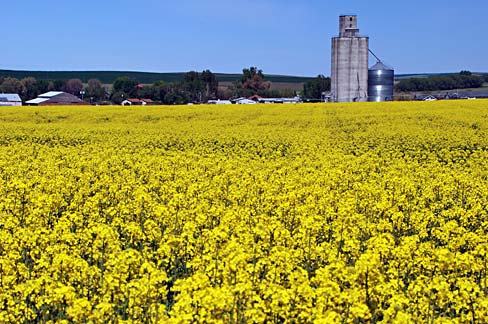
Canola field in Boardman, Oregon.

Meanwhile, according to Ivan Maluski, Policy director of Friends of Family Farmers, the ODA has announced a newly proposed rule to replace current expiring canola restrictions. "This draft proposal simply falls short of what is necessary to protect the unique attributes of the Willamette Valley’s specialty seed industry," Maluski writes. "ODA’s proposal includes no acreage cap, doesn’t explicitly prohibit canola production in a proposed Isolation Area, doesn’t prohibit herbicide tolerant or genetically engineered canola varieties, and leaves large parts of the Willamette Valley unprotected."

What can you do about it? You can e-mail your legislators and tell them to maintain the current restrictions as outlined in SB 885 (sample letter at bottom). You can also submit e-mail comments on the ODA canola rule by Friday, June 21 at 5 pm (sample text at bottom; written comments can be sent to Sunny Summers, Oregon Department of Agriculture, 635 Capitol St. NE, Salem, OR 97301).

Canola blossom.

Why should you bother? Here's what I wrote in 2012:

"The Willamette River, from its headwaters in the Calapooya Mountains outside of Eugene to its confluence with the Columbia north of Portland, forms the base of a long narrow valley that not only contains 70% of the state's population, it's also Oregon's most fertile agricultural area. Averaging only 25 miles wide, the valley's rich volcanic and glacial soil was deposited here by ancient Ice Age flooding and can be half a mile deep in some areas.

"Orchards, vineyards and farmland vie with urban areas for space in its narrow confines, and some crops have been tightly controlled to prevent problems with cross-pollination from the distribution of pollen by the wind, water and dust churned up by traffic along its length. Canola, also known as rapeseed, has been one of those controlled crops and has been regulated in Oregon since 1990.

"Because it is a member of the Brassica family (Brassica napus, B. rapa and B. juncea), it can cross-pollinate with with similar brassicas like cabbage, broccoli, cauliflower, kale and turnips, endangering these valley crops and the farmers who depend on them for their livelihoods. With the bulk of the domestic canola crop also contaminated with GMOs (approx. 93%), this presents a particular threat to organic farmers and seed producers, since current USDA Organic guidelines do not allow for genetically engineered material."

Canola cross-pollinates with other brassicas.

The Oregon Dept. of Agriculture (ODA) issued a temporary ruling in 2012 to allow planting of the crop in certain formerly protected areas, prompting Friends of Family Farmers (FoFF), the Center for Food Safety (CFS) and three Willamette Valley specialty seed producers to file suit to stop the ruling from taking effect. As a result, the Oregon Court of Appeals overturned the ODA's action, whereupon the ODA filed for a permanent ruling to allow growing of canola, prompting the legislature to pass a ban on the production of canola in most of the valley through 2018. Unfortunately, in 2015 a handful of canola growers unhappy with the previous bill pushed through HB 3382, which authorized 500 acres of commercial canola production per year from 2016 through July of 2019.

What all this means that if you care about being able to buy locally grown, organic, non-GMO produce at the farmers' market or greengrocer's, it would behoove you to write your legislators and submit a comment to the ODA. I've made it simple to do by supplying suggested text (below) that you can copy and paste into your e-mails or letters. (Thanks to FoFF for supplying bullet points).

* * *

(Find your legislator here.)

Dear [legislator],

I am writing to urge you to support SB 885. We must maintain current restrictions on Willamette Valley canola production that expire July 1 in order to protect the region’s important specialty seed industry and the hundreds of farmers, gardeners, and food producers who depend on it.

Thank you,

[your name and address]

* * *

(Here's the ODA's e-mail address.)

Dear Director Taylor:

I am writing because the Oregon Department of Agriculture’s draft proposal to address the risks from canola production falls far short of what is necessary to protect the unique attributes of Oregon’s world-renowned specialty seed industry.

I oppose the draft rule because it includes no acreage cap, doesn’t prohibit canola inside the proposed Isolation Area, doesn’t prohibit herbicide tolerant or genetically engineered canola varieties, and leaves many Willamette Valley farmers unprotected from the risks associated with canola.

The final rule should include: an acreage cap not to exceed 500 acres per year inside the Willamette Valley Protected District; a clear prohibition on canola production inside the proposed Isolation Area; a larger Isolation Area where no production of canola would be allowed; clear protections for seed farmers outside the proposed Isolation Area; and a clear prohibition on growing herbicide tolerant or genetically engineered varieties of canola.

Thank you,

[your name and address]

Wednesday, May 15, 2019

Your Food, Your Legislature: Time to Take Action!


With just a few weeks left in the 2019 session of the Legislature, it's time to get in gear and let your legislators know where you stand. Type your address into the box at the top of the directory and write or e-mail your own letter (addresses are included in the listings for each legislator), or copy and paste the sample letter below each bill. If you want to take an extra step, click on the "Current Committee" in the listings under the explanation and send a copy to each member of the committee.

HB 2619 would ban the use of the toxic pesticide chlorpyrifos, a dangerous neurotoxin that affects brain development in young children. Here's a sample letter:

Dear [legislator],

I am writing to urge you to support HB 2619 and ban the use of the pesticide chlorpyrifos in Oregon so that children living in our state may have a permanent reprieve from exposure to the highly toxic pesticide.

Current exposure levels to this developmental neurotoxicant, by children ages one to two, exceed the US Environmental Protection Agency’s (EPA) own allowable threshold by a staggering 140 times.

Even at low levels of exposure by women during pregnancy, chlorpyrifos has been shown to alter brain functions and impair the learning ability of children into adulthood. Researchers at Columbia University have demonstrated that the presence of chlorpyrifos in the umbilical cord of developing fetuses is correlated with a decrease in psychomotor and mental development in three-year-olds. At high levels of childhood exposure, chlorpyrifos has been found to cause attention deficit, hyperactivity, slow cognitive development, a significant reduction in IQ scores and a host of other neurodevelopment problems. Children who live near farm fields experience the highest risks and impacts. A University of California Davis study found that women who resided within a mile of farms where chlorpyrifos and other organophosphate pesticides were applied had a 60 percent higher chance of giving birth to children with autism spectrum disorder.

Two states, Hawaii and California, have already passed bills banning this dangerous pesticide. I can only hope that the Oregon Legislature follows suit and declares our children are more important than corporations that profit from exposing them (and us) to toxic chemicals.

Thank you,
[your name]
[address]

* * *

HB 2882 protects farmers by making the patent-holders of genetically engineered crops financially liable when their products contaminate neighboring farmers' fields. Sample text:

Dear [legislator],

I am writing to urge your support for HB 2882, which would protect Oregon farmers by holding the patent-holders of genetically engineered crops financially accountable when their products cause economic harm to farmers who experience unwanted contamination.

Contamination from genetically engineered crops can make organic and conventional crops unable to be sold. When these genetically engineered crops escape their fields, the contamination can cost farmers not just the value of that season's crops, but can can take years to eradicate, with the potential that the farmer would be deprived of a livelihood.

Oregon's family farmers and the integrity of our food supply should not be at the mercy of corporate agribusiness giants.

Thank you,
[your name]
[address]

* * *

SB 727 supports the Double Up Food Bucks program that gives food assistance (SNAP) recipients assistance in purchasing locally grown fruits and vegetables from farmers' markets, farm share sites and retail outlets that participate in program. Note that very SNAP dollar spent at farmers market can generate $1.79 in local economic activity!

Dear [legislator],

I am writing to urge your support for SB 727, which supports the expansion of Double Up Food Bucks Oregon, a SNAP incentive program with a proven record of success.

For every dollar spent on SNAP-eligible foods at participating farmers markets, farm share programs, and grocery stores across the state, shoppers will receive a dollar to spend on Oregon-grown fruits and vegetables. State appropriations have successfully funded similar statewide SNAP incentive programs in CA, MA, MI, MN and NM. 

Passage of this bill would:
  • Allow 250,0000 low-income Oregon families will be able to expand their buying power and consume more fruits and vegetables 
  • Connect family farmers with new customers, giving them a financial boost 
  • Encourage our local economies will grow: every SNAP dollar spent at farmers market can generate $1.79 in local economic activity 
  • Enable all farmers markets in Oregon to accept SNAP, by providing technical assistance: currently 25% of Oregon’s farmers markets are not currently accepting SNAP
  • Enable all farmers markets in Oregon to offer SNAP matching programs: currently they exist at only 60 of Oregon’s 120 farmers markets. This leaves many rural markets without any SNAP matching program. 
  • Leverage future federal, other public and private matching dollars to ensure the long-term sustainability of the program.
Voting for this bill helps Oregonians in need to increase their access to fresh, local food, but it will also support family farmers and boost our economy.

Thank you,
[your name]
[your address]

* * *

HB 2020, the Clean Energy Jobs bill, would cap greenhouse gas emissions from most large industrial sources—those that emit more than 25,000 metric tons of carbon dioxide (or equivalent) per year—and effectively put a price on carbon. Currently large industrial farms are excluded from this cap, though one of the largest emitters of ammonia gas in the country is Threemile Canyon Farms in Boardman.

Dear [legislator],

I am writing to urge that HB 2020, the Clean Energy Jobs bill, include large industrial farms in its cap on greenhouse gases.

Climate change is a growing threat to Oregon agriculture. From extreme, unpredictable weather and drought, to declining water supplies, our rural communities, farms, and ranches are experiencing dramatic changes to the climate. While we need to stabilize the climate by reducing industrial and other large sources of greenhouse gas emissions, we also need to invest in climate-friendly agricultural practices. Oregon needs to offer a framework for Oregon’s farmers and ranchers to be a part of the solution by providing grants to engage in climate-friendly agricultural practices.

Under HB 2020, emissions from agriculture are generally exempted from the cap on emissions, even for individual large sources that exceed 25,000 metric tons per year in CO2 equivalent like mega-dairies and feedlots with more than approximately 10,000 cows. Because they are exempt from the cap, these very large operations may also qualify for "offset" funding under the bill, which are for emissions reduction projects that most smaller farms are unlikely to qualify for.

I am requesting that:

  • A minimum of 20% of the Climate Investment Fund allocated for activities on natural and working lands.
  • Applying the cap on emissions to large agricultural sources that exceed 25,000 metric tons CO2 equivalent emissions per year (for example, mega-dairies or large feedlots with at least 10,000 cows).
  • The creation of a Healthy Soils Program and an Alternative Manure Management Program like those in California which have generated millions of dollars in grants for farmers to engage in climate friendly practices.
  • Sustainable agriculture or small farm representation on the Climate Investment Fund advisory committee.

Thank you,
[your name]
[your address]

Friday, April 12, 2019

Mega-Dairy Reform Bills Die, Threatening a Repeat of Lost Valley Disaster


I have rarely, if ever, republished a press release from any organization. But I was so appalled and ashamed by the spineless, kowtowing obsequiousness of the Oregon legislature when it comes to factory farms in our state that I'm making an exception in this instance. Instead of instituting a simple moratorium on approval of new mega-dairies in our state in order to get its regulatory house in order when it comes to our air, water and groundwater quality, animal welfare, human health, the survival of small farms and the vibrancy of rural communities—read my article on Big Milk Brings Big Issues for Local Communities for details—our legislators instead bowed to pressure from agribusiness industry lobbyists to kill the bill before it even got out of committee. This denies Oregonians the right to listen to a full airing of, and a debate on, the future of our state.

The following was released by the following coalition: Columbia Riverkeeper, Food & Water Watch, Friends of Family Farmers, WaterWatch of Oregon, Center for Food Safety, Farm Forward, Animal Legal Defense Fund, Humane Voters Oregon, Factory Farming Awareness Coalition, Humane Society of the United States

April, 12, 2019

(SALEM, Oregon) — Oregon is at risk of repeating the ecological and economic disaster that occurred at the Lost Valley mega-dairy in Eastern Oregon after three bills aimed at fixing the problem failed to pass this legislative session. This means the loopholes that allowed the Lost Valley mega-dairy (top photo) to rack up hundreds of environmental violations, threaten groundwater, and leave behind more than 30 million gallons of liquid manure can be exploited by the new owner of the property near Boardman. In the wake of regulatory and environmental failures surrounding the Lost Valley, which was permitted for up to 30,000 cows in 2017 despite significant public opposition, a coalition of nearly two dozen farming, consumer, animal welfare, and environmental groups had called for reforms, including a 'time-out' on state-issued permits for new mega-dairies.

Irrigating crops with manure slurry at Threemile Canyon Farm on the Columbia River.

Senate Bill 103 would have put a hold on licensing new mega-dairies to allow the Oregon Department of Agriculture and other state agencies time to ensure future industrial dairies wouldn’t cause similar unchecked damage. Senate Bill 104 would have allowed local governments to enact common-sense measures to prevent groundwater and environmental contamination from sewage and dead animals at new mega-dairies. Both bills received a public hearing but have died in committee without a vote

“The Legislature had an opportunity to place a time-out on new mega-dairies in the wake of the Lost Valley disaster, but failed to take any meaningful action,” said Tarah Heinzen, senior staff attorney for Food & Water Watch and a member of the coalition. “We will continue to call for a mega-dairy moratorium on behalf of all Oregonians—who value clean water, vibrant rural communities, and ethical business practices.”

A cow standing in manure slurry at Threemile Canyon Farm.

“Industrial mega-dairies are using loopholes in Oregon law to expand their operations while operating under the same rules as the small and mid-sized family farms they are driving out of business,” said Ivan Maluski, Policy Director for Friends of Family Farmers, another coalition member. “Unfortunately, even the most reasonable reforms were blocked by lobbyists representing the growing number of mega-dairy operators that are putting our family-scale dairy farms out of business.”

According to new data released this week from the USDA Census of Agriculture, the dairy industry in Oregon and across the US is consolidating into larger and larger operations. Nationwide, the number of dairy farms dropped by more than 17 percent in the last five years even as milk production and sales increased, with smaller dairy farms going out of business as the largest farms grow larger.

Another bill, SB 876, was requested by State Senator Michael Dembrow to tighten up rules to prevent unsustainable water use by new large dairies. An amendment focused on preventing pollution and overuse of threatened groundwater by new large dairies with over 2500 cows was offered in the Senate Committee on Environment and Natural Resources in the final days before a key legislative deadline, but even this modest proposal failed in a 2-3 vote with Senator Arnie Roblan (D-Coos Bay) aligning with two committee Republicans, Senators Cliff Bentz (R-Ontario) and Alan Olsen (R-Canby) to kill the reform.

A section of a 20-acre slurry lagoon at Threemile Canyon Farm.

"We participated in Senator Dembrow's work group for several months, and had hoped it would have led to reasonable industry groups working together with us to prevent the worst mistakes made at Lost Valley from happening again,” said Brian Posewitz, who worked on the issue both as a staff attorney for WaterWatch of Oregon and as a board member for the animal welfare group Humane Voters Oregon. “For example, lobbyists representing industrial dairies blocked a provision in an amendment to SB 876 to prevent unlimited exempt use of groundwater by new operations over 2500 cows in areas where other agricultural water rights are restricted by rule or order due to declining and limited supplies. They also prevented creation of a task force, which would have had equal representation from the industry, simply to talk about animal welfare issues at industrial dairies.”

"I think Oregonians would be shocked to know that the majority of dairy products now come from industrial mega-dairies like Lost Valley that raise cows in extreme confinement, where animals often stand in their own feces, with little to no access to the outdoors. While it's no surprise that Big Ag worked hard to defeat these bills, we're disappointed that three legislators on the Senate Environment and Natural Resources Committee didn't listen to the majority of Oregonians who value animal welfare and sustainable food,” said Erin Eberle, Director of Engagement for Farm Forward.

"Lost Valley threatened groundwater, racked up hundreds of permit violations, treated their animals inhumanely, and left 30 million gallons of manure and wastewater behind, and yet the State Department of Agriculture didn’t prevent it from happening when they could have,” said Scott Beckstead, Rural Outreach Director with the Humane Society of the United States. “With a new owner of the Lost Valley site likely planning to re-open the 30,000 cow facility soon, we will keep working to ensure this and other industrial dairies aren’t allowed to exploit the loopholes in Oregon’s laws again.”

* * *

Read my series of posts outlining the long history of problems at Lost Valley Farm since it opened two years ago, including cows standing in manure from overflowing lagoons and a leaking tank containing dead cows, plus massive groundwater pollution, lawsuits from the state of Oregon and the farm's creditors, and former owner Greg te Velde's own arrest for soliciting a prostitute and possession of methamphetamine in Benton County, Washington.

My article Big Milk, Big Issues for Local Communities reports on the issues mega-dairies pose to Oregon's air, water, environment and communities. You can also find out Why I'm Quitting Tillamook Cheese and read other coverage about factory farms in Oregon.

Thursday, April 11, 2019

Your Food, Your Legislature: Take Action Now on Climate Change; Mega-Dairy Moratorium Fails


On the first day of the 2019 Oregon legislative session in January, more than 1,500 bills were introduced, and there are likely to be at least twice that many by the time the session ends. Here is the latest report on issues affecting the food we put on our tables. Thanks to  Friends of Family Farmers for their assistance with this report.

Clean Energy Jobs or Cap-and-Trade (HB 2020): As anyone who's paid attention to the news the last few days knows, there is historic flooding happening in the Willamette Valley, made worse by the effects of climate change. This bill attempts to deal with greenhouse gas emissions from the state's largest emitters of these gases by capping these emissions from most large industrial sources—those that emit more than 25,000 metric tons of carbon dioxide (or equivalent) per year—effectively putting a price on carbon.

Flooding in Benton Co.

Shockingly, the bill exempts the state's largest agricultural producers of greenhouse gases, and your voice is needed to amend the bill to include these factory farms under the cap. Sign here to send an e-mail to your legislator that Oregon needs to stabilize the climate by reducing industrial and other large sources of greenhouse gas emissions, as well as invest in climate-friendly agricultural practices.

Moratorium on Mega-Dairies (SB 103 and SB 876): Despite efforts on the part of a coalition of 22 health, environmental and animal rights organizations, both of these bills to tighten regulations on factory farm dairies, in part based on the egregious violations and environmental damage from the recent closure of Lost Valley Farm, were voted down in committee.

Toxic emissions into the air are not currently regulated in Oregon.

“Even the most reasonable reforms were blocked by lobbyists working with these big corporate agribusinesses,” said Ivan Maluski, policy director for Friends of Family Farmers, in an article in the Salem Statesman-Journal.

The article goes on to say that Tillamook County Creamery Association (TCCA), maker of Tillamook Cheese, and Threemile Canyon Farms, the Boardman-area factory farm dairy that supplies the bulk of the milk used to make Tillamook's cheese, testified against the bills, saying the entire industry should not be punished for the faults of one bad actor. It also mentions Easterday Farms, based in Pasco, Wash., which purchased Lost Valley Farm, has indicated it will reopen it as a dairy. The facility was previously permitted for as many at 30,000 cows.

Bans Sale or Use of Neonicotinoid Pesticides (HB 2619): Originally a statewide ban on the sale or use of products containing neonicotinoid pesticides, a class of powerful neurotoxic pesticides that is lethal to pollinators, this bill was amended to ban chlorpyrifos, a pesticide that has been shown to damage children's brains. It no longer mentions neonicotinoids.

Bill to limit aerial spraying of pesticides failed.

Ban Aerial Spraying of Pesticides (HB 2493): This bill, one of three that dealt with aerial spraying of pesticides, would have prohibited aerial spraying of pesticides of land within the McKenzie River and Santiam River watersheds, which make up much a significant portion of the Willamette Valley. It died in committee along with the other two bills.

Family Farmer Loan Program (HB 3085): Provides low-interest loans to small and mid-sized farmers for land and equipment, including beginning farmers, is now in the Ways and Means Committee where funding will be decided between now and the end of the session.

Beginning Farmer Incentive Program (HB 3090): Helps beginning farmers with student loan debt and tuition assistance. It passed out of committee and is now in the Ways and Means Committee where funding will be decided between now and the end of the session.


Farmers market tokens.


Double Up Food Bucks (SB 727A): $3 million in funding for Double Up Food Bucks programming at farmers markets and other farm-direct locations passed the Senate Human Services Committee and is awaiting action in the Ways and Means Committee.

Restrictions on Canola in Willamette Valley (SB 885): Maintains current restrictions on canola production in the Willamette Valley, capped at 500 acres per year and only under permit to protect the region’s specialty vegetable seed industry. Passed out of committee and awaits action in Ways and Means.

Ability to Sue for GMO Contamination (HB 2882): Protects farmers by holding the patent-holders of genetically engineered crops financially accountable when their products cause economic harm to farmers who experience unwanted contamination. Passed out of committee and moves to the House Rules Committee for further discussion.

Find your legislators and let them know you expect action on the issues that concern you.

Tuesday, March 12, 2019

Your Food, Your Legislature: Report from the Halfway Mark


On the first day of the 2019 Oregon legislative session in January, more than 1,500 bills were introduced, and there are likely to be at least twice that many by the time the session ends. Here is the latest report on issues affecting the food we put on our tables. Thanks to the Center for Food Safety and Friends of Family Farmers for their assistance with this report.

Moratorium on Mega-Dairies: Introduced by the Senate Environment and Natural Resources Committee to address the impacts of factory farm dairies in Oregon. Take action here. Read more about mega-dairies in Oregon.
  • SB 103: Establishes a moratorium on new "industrial" dairies—defined as those over 2,500 cows or large dairies that don't provide seasonal access to pasture—while making sure environmental impacts to water and air, as well as impacts to smaller farms, are considered when permitting these operations.
  • SB 104: Allows stronger local rules over siting of these industrial facilities.
Management of Future Mega-Dairies: Two bills emerged from a work group organized by the Senate Environment and Natural Resources Committee.
  • SB 876: Creates a two-step permitting process for large confined animal feeding operations (CAFOs) to ensure greater scrutiny before they go into operation.
  • SB 886: Sets limits (not yet specified) on the use of groundwater for watering livestock at large confined animal feeding operations. 
  • HB 3083: Establishes a "Task Force on Large-Scale Dairy Farms" which would submit a report to the Legislature by September, 2020.
"Clean Energy Jobs" or Cap-and-Trade (HB 2020): Establishes a cap on greenhouse gas emissions from the state’s largest emitters—except for agriculture and forestry, two large sources of emissions and industries heavily represented by lobbyists in the Capitol—while creating an ‘allowance’ program intended to generate funding for climate adaptation and other programs. Public interest and small farm organizations are working to include agriculture and forestry in this bill.

Ban Aerial Spraying of Pesticides (HB 2493): Prohibits aerial spraying of pesticides of land within the McKenzie River and Santiam River watersheds, which make up much a significant portion of the Willamette Valley.

Ability to Sue for GMO Contamination (HB 2882): Allows farmers who have been harmed by contamination from genetically engineered crops to sue the patent holders of those crops.

Bans Sale or Use of Neonicotinoid Pesticides (HB 2619): Statewide ban on the sale or use of products containing neonicotinoid pesticides, a class of powerful neurotoxic pesticides that is lethal to pollinators.

Beginning Farmer & Family Farmer Land Access: Three bills that would support new and existing small farmers have been sent to the House Committee on Agriculture and Natural Resources with a hearing set for 3 pm on Thursday, March 14. E-mail a letter of support for all three before that date (link for address and suggested verbiage).
  • HB 3085: Creates a new Family Farmer Loan Program managed by the state’s economic development agency, Business Oregon, to offer direct loans to family-scale farmers and beginning family farmers for land or equipment.
  • HB 3090: Establishes a new beginning farmer and rancher incentive program at the Oregon Department of Agriculture focused on issues of student loan and tuition assistance.
  • HB 3091: Reduces fees and costs to borrowers using the state’s existing "Aggie Bonds" beginning farmer loan program, which incentivizes private lower interest lending to beginning farmers and ranchers for land and equipment.
Beginning Farmer Tax Credit (HB 3092): Incentivizes landowners to lease land to beginning farmers and ranchers. Sent to the House Revenue Committee.

Oregon Agricultural Heritage Program (HB 2729): Provides $10 million in grants for farm succession planning and funding for both long term conservation planning and protection for working farmland at risk of development or conversion to non-farm uses.

Limits on GMO Canola in the Willamette Valley (HB 3026; SB 885; HB 3219): A 500-acre restriction on growing this crop is expiring in July, 2019. These bills seek to extend that limitation going forward because canola easily cross-pollinates with food crops in the brassica family, endangering organic growers and specialty seed growers. Contact your legislators here. More info on canola in Oregon.

Find your legislators here and let them know you expect action on the issues that concern you.


Wednesday, January 30, 2019

Your Food, Your Legislature: 2019 Session Kicks Off with Big Issues on the Docket


On the first day of the 2019 Oregon legislative session, more than 1,500 bills were introduced, and there are likely to be at least twice that many by the time the session ends in five months. Here at Good Stuff NW I'll be reporting on the issues facing our legislators, particularly those bills that could affect our food system here in Oregon. Plans are afoot for monthly installments titled Your Food, Your Legislature, bringing you updates with background on, and the dirt from, the major players.

A bill banning aerial application of pesticides considered.

Among the top issues for our food system so far are bills that could ban or heavily limit aerial spraying of pesticides (HB 2493); a bill that seeks to assign responsibility to the patent-holder of genetically modified seeds for losses to a farmer's income due to contamination from genetically modified crops (SB 434); restrictions on the home use of neonicotinoid pesticides (HB 2619); and the proposed moratorium on current and future mega-dairies—factory farms that typically house thousands of cows in indoor facilities—until legislators establish regulations for these industrial facilities (SB 103 and SB 104).

Another big issue that's being pushed this session is the so-called "Clean Energy Jobs" bill (HB 2020), a cap-and-trade effort that seeks to, in the words of advocates, "put a limit and price on climate pollution from the largest polluters in the state" as well as "secure greenhouse gas reductions and reinvestment into communities across Oregon to create clean energy jobs and a thriving economy, especially in communities that need it most."

Wind turbines in the Columbia River Gorge.

An article in the Oregonian said that Oregon Governor Kate Brown, Senate President Peter Courtney and House Speaker Tina Kotek "are all in on putting a price on greenhouse gas emissions, and Oregon could become the second state after California with an economy-wide cap on such emissions. What remains to be negotiated is how many big emitters qualify for free emissions allowances under the law, and whether the program has any environmental integrity." Another big question is whether the new bill will broadly exempt agricultural sources like factory farms from the cap, as did a similar cap-and-trade bill that failed to pass two years ago.

Ivan Maluski, Policy Director for Friends of Family Farmers (FoFF), which conducted a series of "listening sessions" with farmers across the state, said that farmers expressed the need for legislators to do more to support Oregon's small and mid-size family farmers. "Small and mid-sized family farmers face significant challenges," Maluski said. He outlined the farmers' primary concerns as getting assistance in accessing land and capital, enabling access to small farm meat processing infrastructure, expanding opportunities for agritourism, and aiding farmers in improving water conservation efforts. Follow HB 2020.

On the issue of aerial spraying of pesticides, concerns around this practice—widely used on agricultural and public lands in Oregon—center on the damage cause by "off-target drift," that is, the tendency for these sprays to drift beyond the targeted areas, causing damage to nearby crops, waterways, wildlife and beneficial insects. Several environmental, agricultural and consumer groups can be expected to be involved in this legislation as it develops. Follow HB 2493.

Oregon taxpayers are on the hook for cleaning up escaped GE bentgrass.

The subject of what happens to a farmer who suffers losses when a crop is contaminated by genetically modified crops is an issue that the legislature has wrestled with in past sessions.

"I’ve had a front row seat to the damage caused by Roundup Ready GE bentgrass, which spreads easily on the wind and through water, infesting irrigation ditches and cross-pollinating with wild relatives," wrote Vale farmer Jerry Erstrom in an op-ed when a similar bill was before the 2017 legislature. "I am not opposed to genetically engineered crops, but as a farmer of some non-GE varieties, and after my experience with GE contamination in my alfalfa seed production, and with the GE creeping bentgrass escape, I am a supporter of making the right people accountable if crops are damaged."

 "The legislature tends to be crisis-oriented," said Maluski, indicating that FoFF will be actively involved with the Center for Food Safety and Our Family Farms Coalition as the bill moves through the legislative process.

"We shouldn't have to wait for a contamination incident before we put rules in place," he said, citing the appearance of an experimental variety of Monsanto's genetically modified wheat that appeared in an Oregon field in 2013. Follow SB 434.

Toxic emissions are just one problem with factory farm dairies.

Two bills, SB103 and SB104, are an effort to establish regulations governing factory farm dairies that are already located, or that may want to locate, in Oregon. Both bills apply to mega-dairies, that is, facilities with more than 700 cows that are confined without seasonal access to pasture, or 2,500 cows. The legislation would regulate these dairies as the industrial factories they are rather than treating them as traditional agricultural farms, and would require limits on toxic emissions to air and water, including groundwater. These bills would require studies on the impacts to Oregon's small and mid-size dairies and on animal welfare. They would also close existing loopholes that allow excessive use of scarce groundwater, and establish a course of action if a facility fails to meet state standards, as happened with Lost Valley Farm, a mega-dairy that piled up more than 200 violations in less than two years of operation and yet was still allowed to keep operating.

“Lost Valley showed us how horribly wrong things can go given our current laws,” said Amy van Saun, staff attorney at the Center for Food Safety in Portland, in an article in the Salem Statesman-Journal. If these bills pass, according to the article, factory farms "wouldn’t qualify for regulatory exemptions available to farmers under the state’s right-to-farm and other laws. That would allow local communities to have input into siting decisions and enact health and safety ordinances restricting or prohibiting air and water emissions," a problem that's occurred with other industrial agricultural operations looking to locate in Oregon.

Since it's still early days in this session, there will be more to come, and you can count on reading about the legislative sausage-making in future updates. Stay tuned!

Read more about the ongoing problems at Lost Valley Farm.

Tuesday, February 06, 2018

Your Food, Your Legislature: 2018 Session May Be Short on Agreement


The 2018 session of the Oregon Legislature may end up like the vacation we took to France many years—by that I mean decades—ago. I'd studied maps and read guide books, planning what I was sure would be a leisurely road trip through the French countryside, sipping coffee at sidewalk cafés, staying in small inns and meeting charming locals. While it certainly had moments of leisure and charm, it turned out to be a two-week, cross-country marathon of rushing from one pre-arranged reservation to the next.

In other words, I had bitten off more than we could (comfortably) chew.

Do we want our farms to look like this?

That little tale relates to this year's legislative session in the fact that legislators, by law, have just 35 days to convene, conduct and finish their work in Salem. That's because, in 2010, Oregon went from bi-annual sessions to annual sessions, lasting 160-days in odd-numbered years with the shorter sessions in even-numbered years.

These shorter sessions were originally designed so legislators could take care of budget issues that might arise between the longer sessions. But, of course, politicians being politicians, the agenda often strays beyond that boundary. This year is no different.

Originally the session would have dealt with a devastating budget shortfall that would have befallen the state had Measure 101, the Healthcare Insurance Premiums Tax for Medicaid Referendum—a fee on hospitals and insurance companies to fund Medicaid, which provides healthcare coverage to 1 in 4 Oregonians—not passed.

Or like this?

Though Oregon still faces a $200 to $300 million dollar shortfall due to cuts in federal tax laws passed by the Republican-controlled Congress in Washington, DC, legislators have decided to take up a bill they're calling the Clean Energy Jobs bill (Senate bill SB 1507 and a House version, HB 4001). According to an article in the Oregonian, it would create "a limit on greenhouse gas emissions [that] would require many of Oregon's largest polluters to pay for their emissions by purchasing allowances at an auction. The state would spend the proceeds from the auctions to reduce the financial impact to households, support projects that reduce greenhouse gas emissions and help areas disproportionately impacted by climate change."

In other words, a classic cap-and-trade system.

Though House leaders like Speaker Tina Kotek and Majority Leader Jennifer Williamson are working hard to push it forward, Senate leaders, particularly Senate President Peter Courtney, are already backing away from committing to pass a major piece of legislation on such a short timeline.

And how does this affect issues of the state's food system, which you'd expect to read about here?

Like this?

When establishing this cap on greenhouse gas emissions from industrial sources, it will create a fund to address the impacts of climate change and support climate-friendly farming practices.

"While the amount of money available is unknown at this stage, the bills have the potential to support a wide range of activities and practices on farms that sequester carbon in soils, reduce energy use, encourage irrigation efficiency, and protect both working land and natural areas on farms and ranches," wrote Friends of Family Farmers Policy Director Ivan Maluski. "Farmers are not only on the front lines of experiencing climate change impacts like extreme weather and uncertain water supplies, as land managers we can also be part of the solution."

Or like this?

Not unexpectedly, industrial representatives are working to alter, if not quash, the legislation. Already the state's largest mega-dairies have inserted a loophole to exempt them from reducing, or even reporting, their annual methane emissions. And Shelly Boshart Davis, Monsanto's 2015 Farm Mom of the Year, weighed in on the bill in an op-ed, writing  that she was "dismayed" by legislation she feels would "stifle my ability to invest in sustainable technology and dramatically increase the cost of running my company," complaining about the increase of "$50 per month by some estimates" to her family's business, Boshart Trucking, reported to have annual sales of more than $8 million.

Whether this bill actually makes it to a vote this session or legislators decide to postpone it until 2019, you can get more information and weigh in on this legislation now.

Friday, June 30, 2017

Your Food, Your Legislature: Death by a Thousand (or a Billion) Cuts?


A black hole—a region of space having a gravitational field so intense that no matter or radiation can escape—may well be the metaphor that engulfs the 2017 session of the Oregon legislature. Prior to convening, it was announced that the state faced a 1.6 billion dollar shortfall despite record low unemployment and jobs being added at a steady pace. Though that scary figure was revised slightly downward to $1.4 billion, it was still a frightening gap to fill.

The school garden at Sabin School.

A proposal, spearheaded by House Speaker Tina Kotek, was made to increase the corporate tax to help fill the hole. But even though Democrats hold a majority in both houses of the legislature, they were unable to sway enough Republicans to their side to get the three-fifths majority required to pass budgetary measures, so the effort fizzled late in the session.

See what I mean about the Black Hole of 2017?

With the corporate tax proposal dead and not likely to be revived, if at all, until the 2019 session, all that was left was to start cutting state budgets. Which means that any new programs with even a whisper of a budget are dying instantly in the airless vacuum inside the hole, and even existing programs may well die a death by a thousand cuts.

For Oregon's small farmers and ranchers, this is not good news.

Getting healthy local food to kids.

For instance, the state's Farm-to-School program was cut altogether from the governor's budget early in the session but was included in a bill (HB 2038) that is currently languishing in the Ways and Means committee, perhaps facing elimination or drastic cuts. This program not only gets healthy, local farm products into school meal programs across the state (and into the bellies of our kids), it is a revenue stream for many Oregon farmers. (Contact your legislator about this bill.)

Another key bill (HB 2739) is one that would protect farmers who have experienced financial losses due to contamination from genetically engineered (GE) crops. It would allow farmers to be compensated by GE crop patent-holders when their products have crossed property lines and caused financial damage.

Scotts genetically engineered bentgrass.

"I’ve had a front row seat to the damage caused by Roundup Ready GE bentgrass, which spreads easily on the wind and through water, infesting irrigation ditches and cross-pollinating with wild relatives," wrote Vale farmer Jerry Erstrom in an op-ed published in the Capital Press.

"I am not opposed to genetically engineered crops, but as a farmer of some non-GE varieties and after my experience with GE contamination in my alfalfa seed production and with the GE creeping bentgrass escape, I am a supporter of making the right people accountable if crops are damaged," he wrote. (Contact your legislator about this bill.)

Preserving biodiversity on Oregon's farms.

Way back in 2015—officially the "good old days," budgetarily speaking—the legislature made significant new investments in the Oregon Statewide Public Service Programs which led to new work in support of small farms, on-farm conservation and more. But now Oregon’s budget crisis has put those 2015 investments at risk. At $9.4 million (part of the larger Extension and Agricultural Research budget in SB 5524), cutting it doesn't represent a huge savings, and cancelling a promising program that benefits small farmers seems like a waste of that initial investment. (Contact your legislator about this bill.)

Even as this session winds down—the legislature is required by law to adjourn sine die, by July 10—there is still time to make your voice heard. I hope you take a moment to contact your legislator on behalf of Oregon's small farmers and ranchers.

Monday, April 17, 2017

Your Food, Your Legislature: Mega-Dairies Win, Oregon's Air Quality Loses


"Threemile Canyon Farms in Boardman, Oregon, reported that its 52,300-dairy-cow operation emits 15,500 pounds of ammonia per day, totaling more than 5,675,000 pounds per year. That is 75,000 pounds more than the nation’s number one manufacturing source of ammonia air pollution (CF Industries of Donaldson, Louisiana)." - from a letter to the EPA from the National Association of Clean Air Agencies, March 27, 2008

Not to scare the pants off of you, but Threemile Canyon Farms, the mega-dairy mentioned above, now has 70,000 cows, with a concomitant increase in the amount of ammonia produced per day—meaning its cows now produce 20,746 pounds of ammonia per day, every day, for a grand total of 7,572,180 pounds per year. Not only that, it's soon to be joined by Lost Valley Farm, which is initially slated to have 30,000 cows. Oh, and Boardman? It's right on the banks of the Columbia River, at the east end of the Columbia River Gorge.

Slurry at Threemile Canyon Farm.

Luckily for these factory farms—both of which have contracts to supply much of their milk to Oregon's own Tillamook cheese so it can be sold from here to Micronesia—the legislature's Senate Committee on Environment and Natural Resources today killed a bill, SB 197, that would have begun the process of setting up basic regulations on air contaminant emissions (like ammonia) from these types of mega-dairies. Contaminants are not monitored or regulated due to a loophole in Oregon law that exempts these factory farms from any requirement to monitor, report or reduce air pollution associated with the manure from the tens of thousands of animals they keep.

Cow standing in slurry at Threemile Canyon.

In a statement on the demise of SB 197, a coalition of farm and environmental watchdogs said that "large mega-dairies like Threemile Canyon Farms, with 70,000 cows, and the recently approved 30,000-cow Lost Valley Farms, have been identified as major sources of ammonia, a gas responsible for haze and acid deposition in the Columbia River Gorge."

"The landscape of agriculture in Oregon is changing," according to Ivan Maluski, Policy Director of Friends of Family Farmers. "Since 2002, the state has lost roughly 75% of its dairy farms even as cow numbers have grown and large industrial scale dairies have moved in. Instead of supporting small and mid-sized family farms, the state has opened its doors for increasingly large, factory-scale industrial dairy operations. All the while, Oregon decision-makers have been putting their heads in the sand with regard to their harmful emissions of gases like ammonia and methane from these increasingly large operations. Today will be marked as one in which Oregon chose to do nothing to address the harmful air emissions from the growing number of large confinement dairy operations coming here to take advantage of our misguided air pollution loophole."

Read my post on Why I'm Quitting Tillamook Cheese.

Read the other posts in this series. Find your legislators here and share your concerns.

Thursday, April 06, 2017

Your Food, Your Legislature: Do-Or-Die Time


Your Food, Your Legislature is a series of reports giving Oregon consumers a heads-up on issues before the current session of the legislature that affect the food we are putting on our tables, as well as providing you with contact information to voice your opinion on those issues. 

The 2017 Oregon legislative session is half over, which means it's make-or-break time for bills to move out of committees or die if they don't get the support needed to go to the legislature for a vote. There are bills that directly affect our food system and the farmers we depend on to put food on our tables, so it's urgent that you act now.

Regulating air contaminants from mega-dairies, SB 197, has just taken on new urgency with the approval last week of Lost Valley Farm, a California-owned, 30,000-cow mega-dairy in the town of Boardman on the Columbia River, joining North Dakota-based Threemile Canyon Farms, a 70,000-cow factory farm nearby. This bill is based on the Dairy Air (no, I didn't make that up) Quality Task Force recommendations from 2008—never enacted—that called for the adoption of a combination of voluntary and regulatory measures to monitor and control the emissions from larged Concentrated Animal Feeding Operations (CAFOs).

Young supporters of Oregon farmers rally at the State Capitol in Salem.

Since 2008, elevated concentrations of ammonia from Threemile Canyon Farms has been linked to acid deposits in the Columbia River Gorge, and nitrogen compounds are contributing to elevated levels of ozone in the vicinity. Acid rain falls frequently and a permanent haze hangs over the area. If these problems aren't dealt with now, especially with the addition of Lost Valley Farm and the pollution from both facilities' open-air cess-pits (one of several covers 20 acres of land), the cost of clean-up could run into the millions for Oregon's taxpayers, not to mention the degradation of the quality of life and safety of the area's residents.

Oregon has lost nearly 75% of its small dairies since 2001, when the first mega-dairy opened in the state and started flooding the market with cheap, factory farm milk, driving down prices to the point where smaller family-run operations couldn't make a living. With neighboring states (California, Washington and Idaho) establishing tougher environmental standards, these out-of-state-owned mega-dairies and their polluting systems are flocking to Oregon.

Farmers and supporters rally in Salem.

To act now, contact your state legislators, especially your Senators, and urge them to support this bill, currently in the Senate Environment and Natural Resources Committee. It must move out of that committee by Tuesday, April 18, or it will die. Call or e-mail and tell your legislators who you are, where you live, what you do and why it's important for them to act on this bill. If you can, also contact the members of the committee, listed below. They are under tremendous pressure from mega-dairies—with their mega-money—and agribusiness lobbyists who are against any attempt at regulating their industries.
  • Sen. Alan Olsen: phone 503-986-1720; e-mail
  • Sen. Michael Dembrow: phone 503-986-1723; e-mail
  • Sen. Floyd Prozanski: phone 503-986-1704; e-mail
  • Sen. Chuck Thomsen: phone 503-986-1726; e-mail 
Here is the message I sent in an e-mail to the Senators listed above: "I am an Oregon resident and I am contacting you to ask that you pass SB 197 out of your committee and send it to the legislature for a vote. Oregon’s air quality should not be compromised by out-of-state mega-dairies flocking here to take advantage of our lax regulatory system. Thank you."

* * *

Local regulation of genetically engineered crops (HB 2469): This bill allows counties in Oregon to protect farmers within their boundaries from contamination of their crops by genetically engineered (GE) crops. It effectively repeals a bill dubbed the "Monsanto Protection Act" that was signed into law in 2013 by then-Governor John Kitzhaber that took away the rights of local communities to set local food and agriculture policies. If passed, it allows counties to once again regulate or ban GE crops to protect farmers growing traditional crops, and it would leave in place an existing ban on GE crops that passed in Jackson County on May 20, 2014.

Oregon farmers and supporters rally in Salem.

Allowing farmers to seek damages for contamination (HB 2739): This bill clarifies that the responsibility of contamination of a farmer's crops by another farmer's GE crops lies with the patent-holder, allowing the court to award prevailing plaintiff costs, attorney fees and triple the economic damages. In many cases in the past, the farmer who is the victim of contamination has not only lost his crops, but has been successfully sued by the patent-holder for "stealing" the GE crops. In addition, in some cases organic farmers have lost their organic certification due to this kind of contamination by GE crops, essentially putting them out of business. Oregon farmers deserve to have legal recourse in the event of this kind of contamination.

Maintaining funding for farm-to-school programs (HB 2038):  Currently, Governor Kate Brown’s proposed two-year budget cut all funding for Farm-to-School programs. In 2015, the Legislature provided over $5 million in funding for a farm-to-school program, but because Oregon is facing a severe budget shortfall of roughly $1.8 billion, top Legislative budget writers earlier this year proposed significant cuts to the program. This bill appropriates funds to the Department of Education for grant programs allowing school districts to purchase Oregon food products and to pay for costs related to food-based, agriculture-based and garden-based educational activities.

Tax credit for renting farmland to beginning farmers (HB 2085). This bill creates a beginning farmer tax credit to encourage landowners to rent land to beginning farmers, with higher rates given for organic practices. Despite growing demand for locally grown food, Oregon is in the midst of land crisis. The state lost nearly 25% of its beginning farmers (those in business fewer than 10 years) between 2007 and 2012, according to the USDA. The average age of farmers in Oregon is now 60 years old, and fast-rising farmland prices are raising serious questions about who will grow our food in the future.

Read the other posts in this series. Find your legislators here