Showing posts with label vegan. Show all posts

Monday, October 29, 2018

Empowerment through Food: Claudia Lucero of Urban Cheesecraft


"The line I draw between my former career in nonprofits and my company, Urban Cheesecraft, is empowerment." - Claudia Lucero

Raised for the first three years of her life by her grandmother, who'd immigrated from Mexico and lived in a neighborhood near the border in San Diego, Claudia Lucero said that her grandmother was a huge influence on her life and that they shared a special bond, one bound up in culture and a common passion for good food. Lucero remembers regular visits to Mexico so that her grandmother could see relatives there, and that during those visits they'd go to the tortillerias and fresh cheese shops and make cheese tacos right on the spot. Another treat was the instant chocolate mix called Maizena that her grandmother used to make a drinking chocolate called atole.

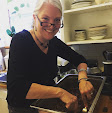
Cheese maker and author Claudia Lucero.

There were also the doughnuts her grandmother would make using inexpensive rolls of biscuit dough from the store that she'd roll out into disks. She'd have Lucero rummage in the kitchen for a just-the-right-size cap from a bottle to use for cutting the hole, then she'd fry the disks in oil until they puffed up before young Claudia's eyes.

Large blocks of surplus government cheese were a staple that was always available and "kept us going," Lucero recalled. After the age of three, she and her sister lived with their mother, who considered herself "a modern woman and working single mother" who had no interest in cooking. Lucero took over the job and recalled cutting the orange government cheese into cubes and cooking them in the microwave until they melted, turning them into crunchy cracker-like crisps just like the frico that's so popular now on restaurant menus and at deli counters.

Fresh cheeses you can make at home.

For several years Lucero worked for nonprofit organizations in San Diego focused on providing support services to girls, women and the LGBTQ community, then came to Portland to work for the Rock and Roll Camp for Girls. For several years she'd been dabbling in home cooking projects like pickling and making bread, yogurt and simple fresh cheeses such as paneer, but it was feedback from friends at a weekly soup night that caused Lucero to take these pursuits more seriously.

The breads and cheeses she made and contributed to the communal meals got consistent raves, so when a friend's mother was visiting, Lucero put together a simple cheese making kit—containing citric acid, salt and cheesecloth—as a gift. With her nonprofit job barely covering her living expenses and with student loans to pay off, she had the timely epiphany that these home cheese making kits might be something people would buy for themselves or for a gift.

Queso blanco and paneer traditional cheese kit.

At the time, that meant getting her home kitchen approved for food production from Oregon's agriculture department, a process that has been made easier by Oregon's Home Kitchen Licensing law passed in 2016. Coincidentally, the website Etsy had launched a couple of years before Lucero formed her company, Urban Cheesecraft, in 2009, and it provided the creator-friendly platform she needed to get her business up and running.

A success almost from the start, Lucero was producing her kits solo, doing all the purchasing, promoting, packaging, sales and distribution out of her home. That's when she got a call from Whole Foods asking if she could supply their Pacific Northwest stores with her kits, to the tune of 20 kits per store, which added up to 500 kits per month. Shortly thereafter, New Seasons Market started requesting her kits for their stores. The good news? She paid off her student loans within a year. The bad news? After two years, she was exhausted and realized she could no longer do everything herself.

Lucero's first book on home cheese making.

Fortunately, at about that time Portland distributor Provvista Specialty Foods (sold in 2011 to Chef's Warehouse) stepped in to pick up the sales and distribution aspects, which took a huge load off of Lucero's shoulders. Then she was laid off from her job, giving her more time to focus on the business. Fortuitously, within a month of being laid off, kitchenware and home furnishings retailer Williams Sonoma came to her with an opportunity to develop custom kits for the chain's stores, and Workman Publishing offered her a book deal.

Her book, One-Hour Cheese: Ricotta, Mozzarella, Chèvre, Paneer—Even Burrata, was an almost instant hit with its simple instructions and step-by-step photos that guided even the most cooking-averse readers through properly heating milk, stirring curds, molding, kneading, and stretching the cheeses. One reader commented, "[Lucero] starts you out at the very beginning with a fast and easy farmer's cheese. This is so basic and easy that it encourages you to know you can do this and will keep people reading the rest. She also has many photos, so you can really see if you are on track. Very well thought out."

New dairy-free kits.

As the business grew, Lucero found a co-packer, DePaul Industries, which could put together the kits for her. She then switched to another outsourcing company, Relay Resources, to assemble the kits so she could concentrate on recipe development and work on her second book about making dairy-free cheeses at home. Called One-Hour Dairy-Free Cheese, it came about because of the questions she got "from day one" about using non-dairy ingredients with her traditional kits. (You can't.) She also hired a sales director to manage the business flow, and found a new distributor, Frontier Co-op, to handle the new dairy-free kits.

Urban Cheesecraft's dairy-free cheeses.

Lucero said that, as a person who loves cheese, it was interesting to start making the dairy-free versions. Judging from the types of vegan cheeses available in stores, she came to believe that most vegan cheese makers—understandably—don't know what real cheeses taste like any more. So her aim? To develop vegan cheeses that taste like real brie, fondue and feta, just a few of the many styles she's developing.

"Cheese is milk's leap toward immortality," she says in her video on Etsy, quoting author and media personality Clifton Fadiman. She adds, "Whether it takes an hour or a month [as with aged cheeses], I want to make it easy, accessible and empowering for people."

Monday, July 09, 2018

Chillin' in Summer: 15-Minute Ramen Salad


It looks like summer's heating up, which means the oven is getting a break and the stove is only turned on for a few minutes at a time, if at all. We'd just come back from a blessed few days off the grid camping on Mt. Hood and hadn't yet made a trip to the store, so I was rummaging through the leftovers from our cooler and peeking behind tubs in the fridge for something to make for dinner.

Fortunately our son, who was cat-sitting while we were gone, hadn't devoured all of the goodies I left in the fridge, so there was a box of fresh ramen noodles—my new favorites are Lola Milholland's Umi Organic—and a half jar of Choi's Kimchi. Adding a leftover Persian cucumber that still had plenty of crunch remaining, plus a delightful dressing using miso, again from a local producer, Jorinji Miso, and in about 20 minutes, dinner was in the bag. Or the bowl, as the case may be.

15-Minute Ramen Noodle Salad with Kimchi

For the dressing:
1/3 c. canola or peanut oil
2 Tbsp. rice vinegar
1 Tbsp. garlic
2 tsp. tamari
2 Tbsp. white miso
1 tsp. gochugaru (optional)
1 tsp. roasted sesame oil

For the salad:
12 oz. fresh ramen noodles (not dried)
1/2 c. kimchi, chopped
1 Persian cucumber (can substitute 1/2 c. chopped English cucumber)
1 Tbsp. chopped chives for garnish

Bring a pot of water to rolling boil.

While the water is heating, make the dressing by placing all ingredients in a blender and blend at high speed until well puréed.

When the water comes to a boil, gently pull apart ramen noodles while adding them to the water. Tease the strands apart with chopsticks while the water returns to a boil and reduce heat to simmer. Cook for two minutes, stirring occasionally to keep noodles from clumping. When they're done, drain them in a colander and rinse in cold water to stop them from cooking further.

Chop kimchi into bite-sized pieces. Quarter the cucumber and slice crosswise into 1/8” slices. Place noodles, kimchi, cucumber and dressing in serving bowl and combine. Garnish with chives.

Tuesday, August 05, 2014

Chilling Out with Refreshing Chilled Soup


The last thing I wanted to do was turn on the stove when the temperature hit 90 degrees for the fourth day in a row. The house was already uncomfortably warm, and even with the AC unit in the upstairs window cranking on high and fans buzzing all over the house, the effort to create something like a wind chill effect felt more like a sirocco on the Sahara.

I could tell that crankiness was right around the corner, so taking inspiration from Mark Bittman's article on gazpacho in the NYT, I decided to turn that sweaty frown upside down with a chilled vegetable soup. Eschewing the idea of steaming or sautéing anything beforehand, I decided to try my luck with raw ingredients. A minimum of chopping, a bit of time in the blender and dinner was ready.

Very refreshing served with sliced heirloom tomatoes and a dry white wine, I was almost able to imagine myself dining poolside in the tropics.

Chilled Cucumber, Avocado and Fennel Soup

2 cucumbers, seeded
1 avocado, peeled and seed removed
1 fennel bulb, cored and quartered
1/4-1/2 onion, roughly chopped
1 clove garlic, roughly chopped
Juice of 1/2 lemon
1 c. water
1/2 c. sour cream or tofu sour cream
1, 1" slice day-old artisan bread, crusts removed and cut in 1/2” cubes
Salt to taste

Place half of the cucumbers, avocado, fennel bulb, onion, garlic, lemon water and sour cream in a blender. Blend until mixture is thoroughly puréed. Add half of bread cubes and continue to blend until it is a smooth mixture. Add salt to taste. Pour into large mixing bowl. (At this point you can taste and adjust amount of onion, etc., for the other half of the soup.) Repeat with second half of ingredients. Stir to combine. Can be refrigerated (or not) before serving.

Friday, June 14, 2013

In Season NW: Green Garlic


Like Hood strawberries, fiddleheads and spring onions, green garlic is only available for a short stint in late spring. You'll see these immature heads of garlic, usually with at least some of the stalk attached, in bunches or singly on farmers' market tables, and you should grab a few to take home to use in sautés or to toss with other spring things.

Trimming, step 1.

The other evening I felt like we needed a break from some recent meat-binging, so I clipped some parsley from the raised beds, pulled three or four of the first radishes from their loamy naps in the garden and stripped the feathery green tips from a bunch of carrots.

The immature cloves, right.

It took just a few minutes to trim up a head of the garlic and throw it and the greens (including the radish greens, of course) into the processor to make a quick pesto, then I sliced the radishes into matchsticks and tossed it all with pasta for a quick main course. Paired with a glass of rosé and a salad of garden lettuce dressed with balsamic and olive oil, it was a seasonal feast fit for a king.

Tuesday, April 09, 2013

Scalloped Potatoes à la Patty


Funny how it is with cookbook authors whose work I know and admire—the pages of their books get well-thumbed and splotched, and over time they're like old friends. For instance, I've never met Patricia Wells, but her books on country French cooking have inspired me for years, and continue to do so. I've even toured her house in France a few times, if only in the pages of her books and travel magazines. That pretty much means I know her well enough to call her Patty, right?

In her book Patricia Wells at Home in Provence (one of those with pictures of her farmhouse in France), she shares a recipe for scalloped potatoes with artichokes that doesn't have the usual cream-based sauce, but instead relies on the juices and fat from a leg of lamb roasted atop them to baste the potatoes to perfection. I found another version of the same technique, attributed to Ms. Wells, in Sheila Lukins and Julee Rosso's The New Basics Cookbook, though that recipe substituted onions and tomatoes for the artichokes.

In my version, all I do is drizzle the sliced potatoes and vegetables with some wine and olive oil and it's just as rich and luscious as any creamed version. It makes a terrific side for dinner, with or without the meat roasted on top, and it pairs with chicken, pork, lamb, salmon or just about any other roasted meat you can imagine. Or not, since it's basically all vegetables, thus qualifying it as vegan!

I think Patty would approve, though, to tell the truth, she really seems like more of a "Patricia" sort to me.

Scalloped Potatoes with Leeks, Onions and Olives

1 clove garlic, halved
1 yellow onion, halved lengthwise, quartered and thinly sliced crosswise
3 leeks, white and light green parts only, halved lengthwise and cut in 1/2" slices
1 c. oil-cured olives, pitted and torn in half
4 medium-sized russet potatoes, halved lengthwise, thinly sliced, 4-6 c.
1 Tbsp. oregano
1 c. white wine
1/3 c. olive oil
Salt

Preheat oven to 350°.

Rub the inside of 9" by 12" baking dish with the cut sides of the garlic clove. Discard garlic. Add half the potatoes, spreading them evenly across the bottom of the dish. Add half the sliced onions, then half the leeks in even layers. Scatter half the olives and oregano over the top. Salt lightly. Repeat with the rest of the potatoes, onions, leeks, olives and oregano to make a second layer. Salt lightly. Drizzle the top with the wine and olive oil. Bake for 45 min. to 1 hour until top is browned and potatoes are tender. Serve.

Thursday, January 19, 2012

A Good Woman Makes A Good Soup


Just before the holidays I was out at Ayers Creek Farm helping Carol and Anthony get ready for the big holiday market at Hillsdale. Well, I say "helping" but it's more like "trying to not seriously f*** things up" while packing boxes of preserves, weighing and measuring beans, polenta and wheat into little bags with a big scoop.

One of the great things about these days at the farm, aside from getting to wear my boots if outside work is required, is sitting down at the table for a big lunch of soup or stew, a hefty loaf of bread and a nice chunk of cheese. On this day, a bit before lunchtime, Carol asked me to pull a big pot out of the fridge that contained braised leeks and potatoes in a white-ish liquid.

While that warmed on the stove, Carol and I went just outside to the kitchen garden to gather a few leaves of sorrel that hadn't yet gone dormant. (Note to self: plant this next year!) It was chopped and thrown into the pot, a cup or so of sour cream was stirred in with some salt and we had a classic "Potage Bonne Femme," a potato leek soup rather like vichysoisse only with more leeks than potatoes.

Carol prefers to use water to cook her vegetables rather than chicken stock, feeling that the flavor of the leeks is more pronounced. In my attempts to recreate this at home, I used half chicken stock and half water and it didn't seem to overwhelm the leeks, and also added a little richness. I've made it with both real sour cream and (purists don't choke) Tofutti sour cream—Dave's lactose intolerant, remember—and both were amazing, even according to my very choosy son who's not crazy about substituting tofu products for the real thing.

It's a comforting, rich and company-worthy meal that is super simple to make in an hour or so. Add a crusty loaf of bread and some cheese with an ice-cold glass of French chardonnay alongside and you're going to get raves from your crew.

Potage Bonne Femme (Potato Leek Soup)

3 Tbsp. butter
4 leeks, halved and cut into 1/2" slices, about 4 c.
3 Tbsp. flour
2 c. water
2 c. chicken stock
4 med. Yukon gold potatoes, peeled and chopped into 1/2" or so cubes
2 tsp. salt
1 c. sour cream
1 c. coarsely chopped sorrel (optional)
3 Tbsp. chives, minced (optional)

Melt butter in soup pot or large Dutch oven over medium heat. Add chopped leeks and cook slowly for 5 min. Remove from heat, add flour and stir. Put back on heat and cook, stirring constantly and without browning for a minute. Add remaining water and stock, stirring well. Add potatoes and salt. Bring to boil and lower heat to simmer for 50 minutes. Add sour cream and chives and stir to heat. Adjust salt to taste. Serve, garnished with chopped chives.

Option: Purée with immersion blender before adding the sour cream or cool and purée in a food processor (or blender) in batches. For a vegetarian or vegan version, substitute margarine for the butter and use water or a vegetable stock and Tofutti sour cream. Really, it'll be fantastic.

Thursday, May 05, 2011

Evolutionary Breakthrough


Today I'm announcing that there is concrete evidence proving beyond a shadow of a doubt that the creationists are wrong and Darwin had it right when he theorized that populations evolve over the course of generations through a process of natural selection. I saw it happen, not on some remote island or in a laboratory, but right there on my plate at dinner last night.

Asparagus and caramelized shallot crêpe with parsnip, rhubab compote and tangerine oil.

Chef Aaron Woo (at left in top photo), co-owner of Vita Café, the ever-so-crunchy natural foods restaurant on Alberta, had sterling creative credentials from places like San Francisco's Stars and Portland's ClarkLewis. But he was feeling constrained by the 70s-era mindset found in the vegetarian dining scene in Portland and longed for a challenge.

Tabetha Warren at the bar cart I'm planning to steal.

So he packed up and went to Greystone, the Culinary Institute of America's outpost in the Napa Valley, where he studied modern cuisine with Kyle Connaughton, chef at The Fat Duck in England and a devotee of modern as well as Japanese cuisine, and Aaron London, executive chef at Ubuntu, the Michelin-starred "vegetable" restaurant in Napa.

Rapini, corona beans and orecchiette with fennel, garlic, chiles and parmesan.

The inspiration and experience he gained inspired Woo to open Natural Selection, a warm and inviting place where he could experiment with the modern techniques he'd learned and apply them to rustic European dishes. Its 30 or so seats surround what's basically a large kitchen island that fronts the stove and grill, giving every seat in the house a view of Woo at work. A fabulous industrial cart that would be the envy of any steam-punk-obsessed nerd serves as a bar cart. (Note: don't be surprised if it disappears and rematerializes in my dining room.) It's ably manned by talented mixologist Tabetha Warren, who creates the restaurant's signature cocktails with the same eye for ingredients that Woo brings to his kitchen.

Moroccan spiced chickpea stew with almonds, harissa and couscous.

With a prix fixe menu of four courses for $35, there are two choices for each course, including at least one gluten-free or vegan (or both) dish per course. Woo and his staff bend over the counter arranging each exquisitely plated leaf and smear, each composition offering a thoughtful balance of flavor, texture and color.

Brioche bread pudding with dried pear, huckleberry sauce and vanilla cream.

The food is so good, as a matter of fact, that I hesitate to sully it with the baggage that goes along with the label "vegetarian," since even the most ardent carnivore isn't going to miss his ration of animal flesh after a meal here. And that's what I'd call a step forward in Portland's evolution.

Details: Natural Selection, 3033 NE Alberta St. 503-288-5883.

Thursday, February 04, 2010

Don't Call It Vegan


There's something about the term "vegan" that really rubs people the wrong way. It has a certain holier-than-thou tone to it, as if all other foods, the ones most of us eat, have been declared unclean.

Even worse, the foods deemed worthy of consumption have a reputation for being dull and flavorless. Think tofu, brown rice or rutabagas. Then there are the foods that try to mimic cheese or bacon or turkey and fall pathetically short. Which makes the vegetarian diets of yore look positively lush by comparison.

But you don't have to take a lemons-into-lemonade, turn-that-frown-upside-down attitude to switch your thinking around to what you can have instead of what you can't. Think of the intense flavors we love: heat, spice, sweet. All perfectly fit a vegan diet. Then there are the fats: olive oil, sesame oil and nuts spring to mind. And the great flavors of legumes, fresh greens, squash, garlic, mushrooms. Makes you think, right?

So when I saw the following recipe in John Ash's book From the Earth to the Table,it looked like a tasty new pasta recipe using pesto, cauliflower, pasta and beans. Not some wacky vegan food-like substance. Try it sometime when you're craving a flavor-packed, hearty dinner. You'll be surprised when you don't feel like you've done without.

Pasta with Roasted Cauliflower and Parsley Pesto
Adapted from John Ash's From the Earth to the Table

For the pesto:
4 c. packed fresh parsley leaves
4-5 cloves garlic, fresh or roasted
2 Tbsp. pine nuts, fresh or toasted
Zest of 1 lemon, grated
1/2 c. olive oil
Salt to taste

For the pasta:
1 med. cauliflower
2 Tbsp. olive oil
1 lb. rigatoni, penne or other pasta
3/4 c. kalamata olives
1 c. cannellini, borlotti or other beans, cooked
Mint sprigs for garnish

Put parsley, garlic and pine nuts in bowl of food processor. While processing, drizzle in olive oil until smooth. Empty processor into medium-sized bowl and add rest of ingredients. Combine.

Preheat oven to 350°. Break cauliflower into 1" pieces and place in large mixing bowl. Drizzle with olive oil and stir to coat. Empty into 9" by 12" roasting pan and place in oven for 30-40 minutes until nicely browned.

While cauliflower is roasting, bring a large pot of salted water to boil. When cauliflower is almost done, put pasta on to cook until just al dente. Drain and put in large serving bowl, adding pesto, roasted cauliflower, olives and beans. Mix. Serve garnished with chopped mint leaves.

* You can also add 1/4 c. parmesan to the pesto, and served grated parmesan at the table for sprinkling.