Showing posts with label In Season. Show all posts

Saturday, October 26, 2019

Eggplant Parmesan My Mother Would Love


Nothing's better on a crisp, blustery fall day than something cheesy, melty and creamy. Grilled cheese sandwiches with a steaming bowl of cream of tomato soup. A multi-layered lasagne infused with sauce, mushrooms and meat, its edges crusted with caramelized cheese. An eggplant parmesan, the meltingly tender purple-rimmed slices stacked in their casserole as carefully as a fieldstone wall, held together by roasted tomatoes and parmesan.

The definition of comfort food.

My go-to recipe for eggplant parmesan was one from "The Cooking of Italy," part of the Time-Life "Foods of the World" series that my mother had subscribed to when I was a child. It calls for salting the sliced eggplant to draw out moisture, then frying the slices in olive oil. It says to somehow limit the amount of oil, a task I've found impossible since the slices soak up oil like a shaggy dog in the rain. Plus it takes way too long to do, at least for this impatient cook.

That was when I started searching online and found a recipe by Food52's Nancy Jo that called for roasting the slices in the oven, which made much more sense since I could cook all of them at once. (Thanks, Nancy!)

Roasting, not frying? Brilliant!

The Time-Life recipe is extremely simple—other than its time-consuming eggplant prep—only calling for five ingredients: the eggplant, salt, flour, tomato sauce and cheese. I dispensed with the tomato sauce recipe it uses, since at the time it was published, cooks like my mother would have used little cans of not-very-flavorful industrial tomatoes that required some "doctoring" (another common phrase back in the day). I had my roasted Astiana tomatoes that require no zhooshing other than a few slices of garlic.

I had picked up some aged provolone to accompany the Parmegiano Reggiano and Pecorino Romano we always have on hand, so those were mixed and layered with the roasted slices and sauce. The result was a bubbling, rich, gooey, hearty casserole that I think my mom would have approved of.

Eggplant Parmesan

3 lbs. eggplant
6 oz. Parmigiano Reggiano, Pecorino Romano and/or aged Provolone, grated*
1 qt. roasted tomatoes
3 garlic cloves
Flour
Salt

Preheat oven to 450°.

Slice eggplants lengthwise into 1/4" slices. Salt both sides and place in single layer on paper towels to drain, at least 30 min. Pat dry and dredge in flour, knocking off extra flour that may be clinging to the slices. Line baking sheet(s) with parchment and lay the eggplant slices on the sheet in a single layer, lightly drizzling them with olive oil. Bake eggplant slices for 15 min., then flip slices over and bake another 15 min. Remove from oven and reduce oven heat to 400°.

While eggplant bakes, slice garlic cloves thinly. Heat olive oil in small skillet over medium heat. When the oil shimmers, add garlic slices and heat briefly, then add roasted tomatoes. When sauce just begins to boil, reduce heat and simmer.

Oil casserole or baking dish. Add a thin layer of tomato sauce in the bottom of the dish. Place a single layer of eggplant slices on it, then a thin scattering of grated cheese, then another layer of sauce. Repeat until all the eggplant is used, then top with a final layer of sauce and cheese.

Bake for 30 min. at 400° until bubbling.

* Can be a mix of any of these cheeses, though I used roughly half provolone, half Romano/Parmesan. Also (note to self) a smoked, aged provolone might be, as they say in Italian, perfetto!

Saturday, October 12, 2019

In Season: Fall Has Fell? More Like Exploded!


Like many farmers I've talked with in the last couple of weeks, Josh Alsberg of Rubinette Produce seemed shell-shocked at how quickly summer has left the scene. "It fell off the cliff real fast," he said, recalling how our usual leisurely stroll from summer into fall seemed more like a bad writer's solution to tying up the loose ends of a messy script.

A high mountain pass, a hairpin curve, screeching brakes and a looping, slow-motion tumble into the canyon. (Like one person's summary of the voluminous Anna Karenina: "Anna. Train. Squish.")

Espelette peppers for a spicy hot sauce.

It's certainly not all doom and gloom, though. Alsberg emphasized that farmers' market shoppers will find that some peppers are still available, as are some local table grapes that weren't mush-ified by the cold rains, but you'd best catch them now or say sayonara until next year.

Josh's favorite apple, the Rubinette, of course!

What you will discover at farmers' markets are a panoply of apples and pears from local orchards, along with fresh ciders by the gallon. And, on October 19th at Providore Fine Foods, Alsberg is hosting a tasting of more than two dozen varieties of heritage, heirloom and hard-to-find apples—specially priced for the event—as well as local ciders and a variety of apple-y treats from Tim Healea at Little T American Baker. Another reason to go? Five percent of the day's sales will go to benefit the Sauvie Island Center, which provides local children with unique experiences that helps them make the connection between the food they eat, farming and the land.

Black futsu.

Look for squash to come on strong—Alsberg hates the term "winter squash," preferring instead the term "hard squash" to differentiate it from the softer-textured summer squash like zucchini, costata romanesco, crookneck and pattypan. He rattles off delicata, acorn and butternut as the more common exemplars of the hard squashes, but gets a gleam in his eye when he talks about his fondness for more unusual (and usually better-flavored) varieties like Black Futsu, Tetsukabuto, Gill's Golden Pippin and Robin's Koginut, an organic variety developed by rock star vegetable breeder Michael Mazourek of Cornell University.

If you're looking for the best flavor, it's always better to know your local grower, Alsberg believes. "When it's industrially grown the flavor goes out the window," he said. Big growers are looking for yield and an ability to sustain less-than-ideal shipping conditions; flavor is way down the list of their priorities, he says.

Castelfranco chicory.

Chicories are also going to be abundant, and you'll find local farms offering not just radicchio, escarole and frisée on farmers' market tables, but pale green-speckled-with-red heads of Castelfranco, the long green romaine-like Sugarloaf (known as Pan di Zucchero in Italy) and the pink-to-deep-rose Rosalba. Tardivo is another variety that's gaining popularity, with its long, thin, arching leaves and thick white ribs. (Alsberg claims to have created the hashtag #ChicoryIsTheNewKale, and who am I to argue?)

A good year for mushrooms!

Local mushrooms are going strong, plentiful enough that you can look for good pricing on chanterelles in the coming weeks. Persimmons are also looking plentiful, and you might begin to find pawpaws from a couple local farms. Pawpaws, also called the Indiana banana, are the largest edible fruit native to North America with a flavor that tastes like a cross between a mango and a banana, and breeders have been adapting them to the Northwest's maritime climate.

Purple sprouting broccoli.

When I exclaimed at the bunches of purple sprouting broccoli that I saw on his shelves, Alsberg launched into the glories of brassicas, saying that they're just beginning their season and should be abundant for the next few weeks. The bottom line is, don't mourn the passing of summer, because there's plenty to be excited about in the chilly days to come.

Providore Fine Foods, which includes purveyors Rubinette Produce, Pastaworks, Flying Fish, The Meat Monger, Little T American Baker and Hilary Horvath Flowers, is an advertiser on Good Stuff NW.

Monday, July 08, 2019

Summer Essentials: Berries Call for Shortcakes!


It's high season in Oregon for berries, folks, and while I don't have an argument with pies, crisps or cobblers—drop one off any time, really!—in my family's opinion there's no higher or better use for fresh berries than finishing a summer's feast with fresh berry shortcakes.

Simple, lightly sweet shortcakes.

The buttery, lightly sweet shortcakes, which can also do double duty as breakfast scones, come together quickly in a food processor. Shower them with a scattering of lightly sugared berries and a plop of whipped cream (or ice cream, depending on your druthers) to make these ephemeral seasonal delights shine.

Berry season calls for shortcakes.

Whether you've got raspberries, loganberries, blackberries, tayberries, strawberries, boysenberries, blueberries or—I know I'm forgetting some—a mixture of two or more, save a couple of pints out of your next flat of berries to make this startlingly simple and stunningly delicious classic.

Berry Shortcake

For the shortcakes:
2 1/2 c. flour
1 Tbsp. baking powder
1/2 tsp. salt
8 Tbsp. (1 stick) frozen butter or margarine, cut up
1/4 c. sugar
2/3 c. whole milk

For the berries:
2 pints berries
1/4 c. sugar (adjust according to sweetness of berries)
Whipped cream or ice cream

Preheat oven to 425°.

Put flour, balking powder, salt and sugar in bowl of food processor. Pulse four or five times to combine. Add butter or margarine and pulse several times until the mixture resembles cornmeal. With processor running, add milk in a stream. Keep processor running until the dough comes together in a soft mass.

Remove dough from processor, place on floured surface and form into a soft ball shape. Divide dough ball in half and gently pat out each half with your hands into six-inch disks (they will be about 1/2"-5/8" thick). With a butcher knife, slice each disk into six triangle-shaped wedges. On a sheet pan lined with parchment paper, place wedges slightly apart for crispier sides, touching for soft sides. I usually separate them by 1/8" and they puff up into wedges that break apart easily. Bake about 12 minutes or until tops are medium brown. Remove to racks to cool.

While the shortcakes are baking, put the berries into a large mixing bowl and add sugar. Using a spatula, gently fold the sugar into the berries. Allow to macerate for at least an hour (you can also place berries in the refrigerator until assembling). Using one wedge per serving, slice wedges in half lengthwise and place on individual serving plates or bowls. Scatter berries over the top and drizzle with juice that collects in the bottom of bowl. Top with whipped cream or ice cream as desired.

Thursday, June 20, 2019

In Season: Summer Avalanche Warning


It wasn't an auspicious beginning to a meeting. As I sat down to talk with Josh Alsberg, aka "Fruit Monkey" and proprietor of Rubinette Produce in the wondrous land of food that is Providore Fine Foods, he said he had sad news.

"Strawberries are done," he deadpanned.

Hood strawberries.

My shocked expression caused him to quickly add, "I mean Hoods. The heat cut them off." Then Alsberg assured me that we will be seeing other varieties like Seascapes and Albions through the summer and into September, though the harvest this year is looking slimmer than usual—the word he used was "trickle"—so he's advising you strawberry addicts out there to get to the farmers' markets on the early side to get your fix.

In happier news, he said the bounty of other berries is about to bury us, and he's started to see raspberries, blackberries, tayberries and loganberries on farmers' fresh sheets. He expects marionberries and local blueberries to appear en masse by the 4th of July, and the "bloobs," as we refer to them here at home, should stick around well into August.

Blueberries ahoy!

A caveat: Alsberg emphasizes that the summer's heat will affect all the berries—it can make strawberries more woody. He said the best time to buy berries at the markets is on the early side while they're still cool, then process them soon after you get home so they're not sitting around in the heat. As for freezing, his advice is to spread the berries out on sheet trays—the industry refers to it as "IQF" or "Individually Quick Freeze"—before freezing and bagging. (I hasten to add that Monsieur Boutard of Ayers Creek Farm would disagree…)

Cherries aplenty

Alsberg also crows that "cherries are on!" and we should be seeing local—he includes Washington's Yakima-area fruit in that definition—red-fleshed varieties like Attikas, Royal Brooks and Chelans at farmers' market stalls. Pro tip: Alsberg shares that local cherries tend to be more expensive at the beginning of the season when the harvest is just getting going, so if you can hold off until after July 4th, you should see prices begin to drop somewhat. (Wink wink, nudge nudge.)

Costata romesco squash.

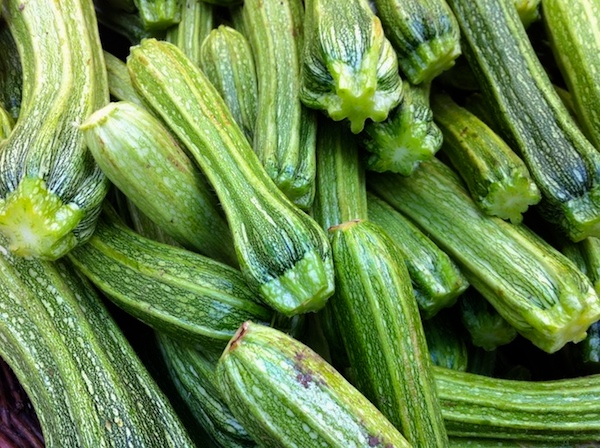
It's not all fruit out there, either, and despite his Fruit Monkey moniker, Alsberg is equally excited about the coming avalanche of vegetables about to bury us in local green (and yellow and red and…). We're in the throes of squash season, he says, with zucchini, crookneck, eight-ball (a type of ball-shaped zucchini), pattypan and costata romanesco (a ribbed green summer variety) flooding in. You'll also find alliums in abundance, with scapes of all sorts—leek, shallot, garlic, etc.—sticking around for a bit, soon to be overshadowed by fresh, as opposed to cured, Walla Wallas, red onions, scallions and fresh shallots.

Sprouting cauliflower.

There is the slightest whisper about local tomatoes starting to appear, but Alsberg said that it'll be mid-July before they'll be available in any quantity. Peas, asparagus and favas, those fleeting bright green delights of spring, are on their way out, as are the spring roots like radishes and turnips, but cucumbers are coming and local lettuces are in their glory right now. Romano beans and their compatriots are just starting to appear, as are all the herbs, including my favorites, basil and tarragon, along with local celery and carrots, as well as newer faces like sprouting cauliflower and purple sprouting broccoli (referred to as PSB in certain circles).

A rainbow of potato varieties.

Alsberg didn't realize he'd made "ze leetle joke" when he said that "new potatoes are starting to turn up" (ha!), but shoppers should find yellow, red and fingerlings aplenty. With warming temperatures, rhubarb will be getting scarce, but don't despair, local eggplant is coming, as are melons (by the end of July) and apricots.

Other bits and bobs to look for include orach, a red-leaved plant in the same family as spinach and chard, and arugula. Local corn will be coming around the end of July, as will the plethora of peppers from sweet to hot. You'll start seeing plums in mid-July with the full panoply appearing in August along with table grapes.

My advice? Boot up your spreadsheets and make a plan to use some of this local goodness now with schemes to preserve some for winter!

Tuesday, May 07, 2019

In Season: Shungiku, or Chrysanthemum Greens


When wandering through the stalls at the farmers' market or in the aisles of my local greengrocer's, I pick up the usual salad greens and vegetables (including those for my dogs), but I'm always drawn to any unusual seasonal gems that might be tucked into the displays. Chicories? Garlic shoots? Espellette peppers? Any new raabs?

On one of my last trips to Rubinette Produce, I ran across something called "shungiku" grown by Katie Boeh at Fox + Bear urban farm, who last year  expanded her offerings through a collaboration with Willow Bar Farm on Sauvie Island. (Check out Fox + Bear's impressive CSA offerings!)

An edible chrysanthemum.

Shungiku, while it sounds exotic, is actually the leaves from a type of chrysanthemum, Glebionis coronaria, a native of the Mediterranean that became a popular part of Japanese cuisine. The young leaves of the spring plant are often used fresh in salads, but it is sturdy enough to stand up to being blanched and chopped in dishes like sukiyaki. (I'd probably mix it into pasta dishes or stir it into a risotto.)

Adds a fresh zing to salads.

My copy of Japanese Cooking: A Simple Art, by Shizuo Tsuji, effuses that "its fragrance and distinct, light, astringent flavor harmonizes with meat or fowl, onion, and other vegetables," but warns to "take care not to overcook in one-pot dishes—a minute or two in the seasoned broth is enough. If overdone, chrysanthemum leaves tend to develop a bitter aftertaste." When purchasing, Tsuji advises looking for bright green leaves and stalks that are strong and perky. If they're showing buds or flowers, they're too old and may be tough.

Janis Martin, former owner of the idiosynchratic Tanuki izakaya—now chef at East Glisan Pizza Lounge—said that for a hot weather refresher, place a few sprigs of shungiku in a large pitcher of water along with a sprig of Chinese celery and a strip of yuzu rind (or lemon, if yuzu is not available). She lets it infuse at least three hours and serves it ice cold. (Thanks, Janis!)

Only available for a very short season in the spring, it's a plant that gardeners should check out for their spring gardens. Organic seeds are available from Andrew Still and Sarah Kleeger of Adaptive Seeds in Sweet Home, whose seeds are bred specifically to thrive in the maritime climate of the Pacific Northwest. Even better, they're dedicated to making available public domain, open pollinated (OP) seed, none of which are genetically modified (GMO) or grown with chemical fertilizers, herbicides or pesticides.

So get out there and find your own hidden gems, and maybe a new favorite garden green!

Saturday, April 06, 2019

In Season: Bound, Hop, Jump, Leap, Vault!


No matter how you say it, spring in the Northwest is a much-anticipated season. Gardeners are getting out their seed packets and determining how many yards of compost their backs can withstand—see this post about holding off on the tomatoes for now—and cooks are dreaming of the bright green herbs and greens that will soon festoon their tables.

Seeing nettles and fiddleheads already popping up in my social media feeds, I figured it was time to talk with produce guy and fruit monkey Josh Alsberg of Rubinette Produce about what he's seeing on his local farmers' fresh sheets. So grab a pencil, kids, it's time to make our spring farmers' market shopping lists!

Raab-o-Rama

Josh knows my weaknesses, so of course the first thing he pulls out is the list of the various raabs, rapinis and rabes on offer. We could both hear Anthony Boutard of Ayers Creek Farm snorting that the only true raab comes from turnips, the rest are the inflorescence of plants, defined as "a group or cluster of flowers arranged on a stem that is composed of a main branch. Morphologically, it is the modified part of the shoot of seed plants where flowers are formed."

Raab with mushroom sauce.

So, with that, in alphabetical order, look for these inflorescences at the markets: bok choy, brussels sprouts, cabbage, kale, kale sprouts, mizuna, red choy, spigarello, tatsoi and turnips, among others. Josh notes that each tastes slightly different depending on the parent plant's particular flavor profile, but all have that amazing, vibrant flavor and crunch when pan-fried—I like to brown a little homemade bacon and chopped garlic first, then add the greens, chopped or not—or, in the case of the bigger sprouts, roasted quickly in a hot oven.

Whew!

More Greens

As for other greens, look for watercress, various mustards, mizunas both green and red, arugula, and a new one to me, wasabi arugula—Josh said it has the tangy bite of that Japanese root. (Note to self: must try.) Lettuces are just barely coming on but will be available shortly, and spinach, which is a bit more cold-tolerant, is here now.

Fiddleheads.

With spring running about a month later than last year, wild things are going crazy trying to catch up. Look for the aforementioned fiddleheads, as well as "triangle leeks" or wild onions, which have a curious folded vertical green, as well as nettles. These will be available at the markets, but if you're headed out on a hike, here's a guide to foraging wild onions and garlic.

Calçots, that spectacular Spanish scallion relative pioneered in Oregon by Manuel and Leslie Recio at their late, lamented Viridian Farms, are appearing, too, so make some salbitxada sauce and throw a spring calçotada! Spring onions like Walla Walla and red onions should be appearing soon, but green garlic is here now—use them like scallions or make a pesto to toss with pasta or serve it alongside grilled meats and fish.

Purple sprouting broccoli.

Dribs and drabs of local asparagus and purple sprouting broccoli—refer to it as PSB if you want to sound cooler-than-thou—are just now coming into season, but Josh advises that you need to get to the markets early to get the little asparagus available, at least for the next couple of weeks before the full harvest comes in.

Bundles of fresh spring herbs like parsley, oregano, chervil, thyme and chives are beginning to show up, so chimichurries and other herb sauces are definitely called for. Microgreens and shoots of favas and peas should also make your list and will only get more abundant as the season rolls out.

Roots and More

Radishes, spring beets and the small, white hakurei turnips as well as their greens are terrific roasted and served with the herb sauces mentioned above. Small local bulbs of fennel will be here toward the end of the month.

Rhubarb.

One of my favorite vegetables-that-cooks-like-a-fruit, rhubarb, is flashing its red stalks, and Josh said a green variety that, unlikely as it seems, is a bit more sour than the red variety, is also being grown locally.

Look for local mushrooms like maitake and lion's mane are coming in from forests and fields, and I've heard whispers that this year's morel harvest may be a big one. Though Josh warns that false morels, or verpa bohemica, a species of fungus known informally as a "false morel" is sometimes sold as a true morel, so be sure to ask your vendor.

Strawberries?

Still two to three weeks off, according to Mr. Alsberg. Look for them at the end of April or the beginning of May. He said that Unger Farms in Cornelius is the driver for strawberry season in the Willamette Valley, and the first to appear will be Albions, followed by Seascapes. The first Hoods will most likely be available around Memorial Day, though—and this is a mantra we should all take to heart—"everything is subject to Mother Nature."

Friday, March 01, 2019

In Season: Galangal, Lemongrass and Turmeric


In the most recent Beaverton Farmers Market newsletter, market manager Ginger Rapport offered a primer on using galangal, lemongrass and turmeric. Normally thought of as exotic ingredients, they've been adapted to grow in Oregon's maritime climate and are now being grown by several local farms. Find them at your neighborhood farmers' market, as well as at Rubinette Produce or other stores that carry produce from local farms.

Galangal

This flavorful tuber (top photo) is the spicy cousin of ginger and is prized in Thai cuisine for the citrus-like flavor it imparts to soups and its burst of herbal heat in curry pastes. Usually found in Asian grocery stores, you can also find organic galangal at Denison Farms’ booth this Saturday alongside fresh lemongrass and turmeric.

Galangal’s knobby tubers are prepared much like ginger. To be recipe-ready, they are usually peeled and then minced, sliced or grated. It is possible to substitute ginger for galangal when it is unavailable, but we recommend you make the effort to use this zingy aromatic when it is in season. According to Cook’s Illustrated magazine, galangal’s distinctive piney flavor is best used in savory dishes as opposed to sweet dishes where ginger is a better option.

Since fresh galangal is not available all year round, we recommend putting a stash of peeled fresh tubers in your freezer for use when it is out of season. While you are thinking in advance, we recommend freezing lemongrass as well. Together, they provide the exciting flavors required for a variety of delicious dishes including soups, curries and sauces. To freeze lemongrass, trim stalks to the bottom six inches, then transfer to zip-lock bags and freeze.

Galangal is a critical ingredient in the popular hot and sour Thai soup known as Tom Yum or Tim Yam (above right). And, while it's possible to substitute ginger for the galangal, why bother when you are lucky enough to access the real thing? The combination of spicy aromatics, flavorful broth and tasty add-ins make this the perfect dish for our chilly winter days.

Lemongrass

Lemongrass is a stalky plant that gives dishes a zesty lemon flavor and aroma. Look for stalks that are fragrant, tightly formed, and a lemony-green color on the lower stalk. To prepare lemongrass, remove tough outer leaves to expose the pale yellow interior that is softer and easier to slice. Use a sharp serrated blade to slice off the lower bulb, about two inches from the end of the stalk. Discard bulb. Stop slicing when you have cut two-thirds of the way up the stalk, or when it is no longer yellow and fleshy. Because lemongrass is so tough, the slices will need a to processed in the food processor on high, or pounded in a mortar and pestle for a minute or two.

Fresh Turmeric

Livelier than its dried form, fresh turmeric has bright orange flesh and is earthy, peppery and slightly bitter. Like ginger and galangal, it is usually peeled before using. Store fresh turmeric in the refrigerator in a plastic bag, or airtight container, or freeze it for several months. In recipes, one inch of fresh turmeric is equivalent to one tablespoon freshly grated turmeric, or 1 teaspoon of ground turmeric.

Saturday, September 15, 2018

In Season: Late Summer and Fall Bounty


As Anthony Boutard of Ayers Creek Farm is fond of pointing out, we here in the Northwest live in a maritime climate, on the same latitude as Italy's Piedmont and, interestingly, Hokkaido, the northernmost of the islands that comprise Japan. Which means, fellow travelers, that we have a relatively mild climate moderated by its proximity to the ocean, with a fairly long growing season that can extend well into the fall.

So here we find ourselves, on the cusp between late summer and autumn with the harvest still pouring in from local fields, and I thought it was a good time to chat with Josh Alsberg about what we can expect to find at farmers' markets (as well as at local greengrocers like his own Rubinette Produce).

His summary? "Apples, pears, squash, roots and greens. 'K, bye!"

Price and canadice grapes.

Pushed for just a teensy bit more detail, he added that local table grapes are just coming into full bloom and should be available for the next three or four weeks. One of his favorite farms for grapes, aside from Ayers Creek Farm, is Farmers Table Grapes, owned by Bill and Karen Farmer in Rickreall. Certified organic, they grow more than 30 varieties of grapes like Interlaken and Eisenstadt.

As for apples, he suggests getting them at farmers' markets, since most apples found in supermarkets come from large corporate farms. Whether at the market or the store, he said the best way to know if you'll like a variety is to ask for a taste. His mantra? "You have to be brave enough to ask questions," whether for a sample or to learn more about a farm's practices. Fresh local apples—as opposed to storage apples, which tend to be "older and more tired"—should be available until the end of November.

Forell pears.

Alsberg noted that pears are also going to be available in abundance, at least through the end of October. He said the early pears like Bartlett, Starkrimson and Cascade tend to have a slightly more astringent quality, and that as we move into October dessert pears—think Comice, Bosc and Taylor's Gold—will start appearing along with Seckel and Forell pears.

Local plums and pluots, which hang to ripeness on the trees and tend to have a more nuanced flavor than those imported from outside the Northwest, will be available through September. He said that melons are on the way out, so enjoy them now because they'll disappear from the scene.

There's still time to make corn salsa!

Sadly, I am obligated to report that the supply of local tomatoes is also waning rapidly (personally, I'm eating as many tomato sandwiches as I can) and the window for corn and eggplant is closing quickly. Peppers will be strong through early October, and a few farmers' markets are featuring fresh-roasted peppers for sale.

The good news is that local potatoes, onions and winter squash are beginning to appear. Some sage advice Alsberg shared is to pace yourself when it comes to winter squash. "You don't want to burn out before the good stuff gets to you," he said, and suggested referring to the Winter Squash Cooking Chart that lays out the four categories of winter squash—Simple, Saucy, Sweet and Salad—and easy recipes to take advantage of each variety's unique flavor profile.

Fresh shell beans are a fleeting pleasure.

Asked what excites him about this time of year, he mentioned different onion varieties that are being grown by area farmers. "It's more than just red and yellow," he said, and suggested trying Tropea, a sweet red onion often labeled "Torpedo," along with cipollini, shallots and elephant garlic.

Greens are still available in abundance but Alsberg said that we're moving away from leaf lettuce and into the hardier varieties like kale, chard, radicchio and other chicories, as well as frisée, all of which he says are best in late September when cooler temperatures cause the plants to put out more sugars to protect them from frost. Green beans are also going strong, and we should be looking for shell beans and brussels sprouts in October and November. Roots like beets, turnips and rutabagas will come on in October, too, so check out some recipes for roots and belly-warming soups to whet your appetite.

A quick note that Rubinette will be holding it's annual Apple Tasting on Oct. 20 that will feature at least a dozen heirloom and hard-to-find varieties like the Oregon-bred Rubinette—not surprisingly Alberg's favorite—Crimson Crisp, Ashmead's Kernel, Pippin and more for sampling as well as for sale.

Wednesday, June 06, 2018

In Season: Summer's Tsunami Starts Now


In case you've been living in a cave the past couple of weeks, it's time to peek out and smell the strawberries. Or, as Josh Alsberg of Rubinette Produce said, "Strawberries are in full effect," though he adds that for Oregon's beloved native strawberries, whose season lasts for a couple of weeks at most, "Hoods are going to be over in a minute-and-a-half, so if you haven't bought them yet, go now."

Shortcake season!

After the Hoods are done for the season, two types of strawberries dominate the Oregon market. Albion and Seascape are everbearing varieties, which means they will produce two or three harvests during the summer. Both are good for fresh eating, but the Albions are a bit sweeter and are best sliced in fruit and green salads or dipped in chocolate or a fresh sheep's cheese. Seascapes, which have a less sweet, earthier note, are your best best for baking—think strawberry cake or as a topping on vanilla ice cream—because they're denser and hold their shape during cooking instead of just melting away. I served organic Seascapes from Winter Green Farm that I halved and sprinkled with a bit of sugar to draw out their juices, then spooned them over shortcakes topped with a dollop of whipped cream. (Excuse me while I drool at the memory…)

Local cherries galore…

Starting this weekend Alsberg said you'll also begin seeing local cherries in earnest, which will last at least through mid-July. Chelan cherries are generally the first on the market, followed by Brooks, Vans and Lamberts. Two other varieties to look for are Attica cherries, which he said have the most incredible flavor he's ever tasted, and Royal Brooks, which he described as "big and meaty and sweet." Rainiers and Bing cherries will make an appearance in mid to late June. (Pro tip: for best selection and quality, as well as the more unusual varieties, Alsberg recommends seeking out Baird Family Orchards, which has booths at most of the larger markets in town. He also gives a thumbs-up to Gala Springs Farm at the PSU farmers' market.)

In the parade of local fruit that will soon be marching down farmers' market aisles, cherries are followed by blueberries, which will be appearing in mid to late June. Alsberg recommends holding off until then, since many of the early blueberries in stores now aren't fully ripe and won't be until they get some significant sun. Raspberries will be arriving shortly thereafter, followed by the rest of the cane berries like tay, loganberries and blackberries, which will all arrive by the fourth of July.

Peachy keen.

July 4th also signals the beginning of peach season, which Alsberg also recommends getting from farmers' markets rather than at the supermarket. Farmers will be happy to provide samples for you to try as well as to talk about which varieties are the best for fresh eating and using in pies and preserves. Apricots and nectarines will be available before the end of June, preceding peaches by the slightest of margins. Call it nature's way of whetting your appetite.

I don't want to lose summer vegetables in the excitement over fruit season, since there's a boatload of local produce ready to cascade onto our picnic and dining tables this summer. Favas, asparagus and peas are dwindling, as are spring onions and some of the bitter greens like mustards and mizuna, so Alsberg recommends getting them ASAP. Local lettuce is coming on strong, with leaf lettuces, Little Gems and butter lettuce available in abundance through July. Spring roots like radishes and spring turnips will stick around until it gets hot, most likely through much of July.

Get your local corn on.

July will also bring local corn, along with the new crop of potatoes, fennel, cabbages and brassicas. Cucumbers, especially the seductively flavorful Persian variety, will start appearing along with their cousins meant for slicing and pickling. No summer would be worthy of the name without summer squash, so get ready to barricade your porch swing from your neighbors' giant I-forgot-to-check-the-garden-today zucchinis. Count on melons, figs and grapes to be rolling in later in July.

So get to the gym and start working out with your market basket to build those upper body muscles. Summer's here!

Watch Josh wax eloquent over local strawberries.

Tuesday, April 10, 2018

In Season: Tender Young Things


I noticed it a few weeks ago. Little yellow buds had appeard on the forsythia outside my kitchen window, one of the first signs that spring was, indeed, on its way. So I quickly made an appointment to sit down with veggie guy Josh Alsberg at Rubinette Produce to get the skinny on what farmers would be bringing in from their fields.

He led off with a recitation of a prodigious list of brassica inflorescences—sometimes labeled raab, rapini and rabe—that would be trooping through his doors and appearing on farmers' market tables around the area: kale, collard, chard, cabbage, bok choy, spigarello, turnip and brussels sprouts, among others. He noted that these tender green flowering shoots get their sweet flavor from the sugars that the plants pump out to ward off damage from frosty temperatures in early spring, protecting the seeds that will develop after the buds flower.

We agreed that the best way to prepare these shoots is to simply sauté them in olive oil and a showering of salt just before serving, though adding a couple of cloves of garlic or bacon wouldn't be a bad idea. But they're also appropriate when combined in stir fries, soups, stews, pastas, grains and beans.

"Spring bulby things" was the next category, which included spring radishes and early turnips like the Japanese Hakurei variety. He recommends consuming the radishes raw with unsalted butter, but both the radishes and turnips can be sautéed or roasted, as well. Alsberg didn't have to add an admonishment to use the greens from both, since I'm dedicated to sautéeing the tender greens from the turnips or making pesto from the tiny radish greens.

A pro tip if you're picking up radishes and turnips from a supermarket—which might be bringing them in from a faraway conventional farm—is to smell them first, he said. If they smell chemical-ly or off, "don't eat 'em," adding it's best to "follow your nose" when it comes to fresh vegetables.

Alsberg's also getting spring onions and garlic from local foraging companies, and emphasizes it's appropriate to use the whole plant after trimming off the roots, and that they're best added at the end of cooking to preserve their fresh, delicate taste. Washington asparagus is starting to appear, though you'll have to get to the farmers' market early (which counts me out) to get the small amounts coming in from Oregon growers. The season for Oregon asparagus won't really get going until later this month and into May.

Salad greens like arugula and watercress are beginning to flood in from the fields as the weather warms and should be around for the rest of the spring months. Alsberg encourages buying watercress in bunches rather than bags, since most of the bagged version are "upland cress," which is a different genus. Black Locust Farm in Boring, Oregon, part of the Headwaters Farm incubator project, is growing a Persian, or crinkled, variety that Alsberg is excited about.

Mustards, including mizuna, and mache are appearing, as is baby spinach. The babies will soon be followed by adult bunches in a matter of weeks, which you always want to buy from organic growers, since a recent report found "conventionally grown spinach has more pesticide residues by weight than all other produce tested."

Alsberg effuses over the "luxurious, beany flavor" of fava shoots (above, right), so you may have to fight him off at the farmers' market when he's there, as well as pea shoots, which he describes as the essence of spring with their "mellow, green, pea flavor." Look for lettuces to start coming in from local farms in late April and May.

And what about local strawberries, you might ask? They'll be dribbling in from hoop houses starting in mid-April, with the full-on flood starting around Mother's Day in mid-May.

As regards strawberry varieties, his advice on our precious Hood strawberries, known for their delicate and perishable natures, is to "take the whole pint and shove them in your face, stems and all."  Albions are wonderful for slicing into salads and fresh with desserts; Seascapes, not quite as sweet as Albions or Hoods but full-flavored and robust, are good for cooking; and Shuksan, which are touted as combining the best of Hoods and Seascapes, are excellent for both cooking and eating out of hand.

Pro tip: In his humble opinion, the best strawberries come from Deep Roots Farm between Corvallis and Albany. "Everybody should always be buying their berries from Deep Roots." So there you go. Happy spring!

Tuesday, January 23, 2018

In Season: Eating Well in Winter


Despite what you think, true winter in the Pacific Northwest, at least as far as most of the country is concerned, is a fleeting thing. Yes, we may have a few freezes and snowstorms, but not like New England where snowplows—what are those, you might ask?—pile up banks of the stuff that last well into spring. And thank goodness we don't have the hurricanes, tornadoes and extreme flooding that many areas experience on a regular basis.

My six-foot-tall mother-in-law next to a snowbank in northern Maine.

Of course, with the unknowns brought on by climate change (and our denial of it), all of that could change in the future.

But this year, at least according to produce guy and self-described Fruit Monkey, Josh Alsberg of Rubinette Produce, we can look forward to spring things like nettles, wild mushrooms and fiddleheads, plus herbs like sorrel and chervil, to start appearing as early as March, a mere eight weeks away.

Until then? "Roots and citrus!" says Alsberg.

Beets, yes, but don't waste those greens!

By which he means colorful varieties of beets—red, gold and stripey Chioggia—as well as the knobby Gilfeather turnip, a half-rutabaga, half-turnip hybrid that is a favorite of local chefs, tracing its lineage to Gilfeather Farm in Wardsboro, Vermont. Rutabagas, turnips, celery root and storage potatoes will also be appearing on farmers' market tables over the next few weeks, as will onions, kohlrabi and locally grown white and purple daikon. Winter radishes will also be available, like the watermelon radishes from Black Locust Farm and black radishes from several farms, including Sauvie Island Organics.

There are plenty of seasonal greens available, too. Think mustard greens, cabbages, beet greens, kale, collards, local chicories and gorgeous, deep red heads of radicchio. Gathering Together Farm and Groundwork Organics are growing Kalettes, purple-green, rapini-like florets that are a hybrid of kale and brussels sprouts, with a flavor that shines when roasted or stir-fried.

On the citrus front, I have big bowls of tangerines and Meyer lemons sitting on my counter right now, as fragrant as any store-bought potpourri or essential oils (and not as toxic to pets) and they're edible, to boot! The Meyer lemons will be used for my yearly batch of preserved lemons, to be parceled out in savory dishes, relishes and salads over the next few months, and if I can manage to spare a few, maybe some lemon sorbet.

Alsberg is in hog heaven right now, gleeful at the prospect of citrus season. Several varieties of mandarin oranges and tangerines are beginning to appear, varieties like Shasta Gold, Murcott, Pixies and the teensy Kishu, with blood oranges, navel oranges and Cara Cara navel oranges rolling in now. He's also starting to see a rainbow of grapefruit on distributors' lists, and said that word on the street is that the white grapefruit called Mellow Gold is super juicy and sweeter than most. Pomegranates and kumquats have been in stores since Christmas, and we should be seeing local kiwis making an appearance soon.

Kabocha squash is a personal fave.

Winter squash is starting to clear out of his lists, but he said local growers should have plenty of kabocha, Kuri, butternut and acorn squash through mid-February. After that, though, he warns that the squash you see in stores will be from Mexico. "Enjoy them now" is his mantra. Look for recipes in my Squash Chronicles series.

Rubinette Produce is a vendor inside Providore Fine Foods, an advertiser on this blog. Josh gives his advice quarterly on what's coming in from local farms and what we can expect to see on store shelves.