Showing posts with label raw milk. Show all posts
Wednesday, March 18, 2015
Your Food, Your Legislature: The Good, the Bad and the Ugly
The following is an edited version of an original report that was published on the Friends of Family Farmers' Muckboots in the Capitol blog. The numbered title of each bill (in bold) is linked to an overview on the state website.
The Good
House Bill (HB) 3239: The "Aggie Bonds" bill was introduced with bipartisan co-sponsorship on February 27. It builds on 2013’s Beginning and Expanding Farmer Lending Program (aka Aggie Bonds) by expanding the definition of "lender" to include both NW Farm Credit Services and what are called seller-carried financing contracts, when a landowner agrees to carry the loan for the beginning farmer. This bill will help provide lower interest loans for qualifying beginning farmers.
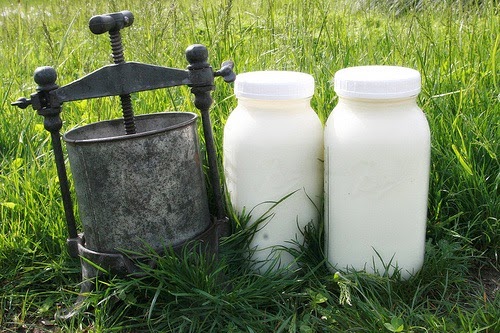
HB 2446: The raw milk advertising bill would repeal the Oregon Department of Agriculture’s (ODA’s) ban on advertising legally available raw milk. Oregon allows small batch raw milk production if it is sold directly to consumers on-farm, but prohibits advertising of this legally available farm product, which severely limits farmers' ability to reach consumers.
The ODA had been directing some farmers to remove information about raw milk from their website, threatening them with penalties. Cast Iron Farm in McMinnville sued the ODA with help from the Institute for Justice, arguing that the advertising ban was an unconstitutional restriction on the First Amendment right of free speech. ODA settled the suit and agreed to not enforce the ban and introduced HB 2446 to repeal it.
The Good and Bad
Senate Bill (SB) 341: Similar to laws on the books in over 20 other states, this bill would protect agritourism providers—farmers and ranchers—from lawsuits and legal liability when customers come onto their property and are injured through no fault of the owners. This is based on the customer's presumed acceptance of the "inherent risks" of being on a farm or ranch.
The bill requires posting of clear signs, inspection of equipment and other steps to ensure baseline safety standards are being met. The goal is to help support agritourism activities in Oregon, which can be an important "value-added" source of income for farms, and it includes actives like U-Pick, harvest-your-own, pumpkin patches and educational activities.
On the "bad" side, this bill was firmly opposed by the powerful Oregon Trail Lawyers Association during the committee hearing. That means there will be a lot of extra work to do to ensure it gets a full public hearing rather than the lower-level "informational hearing" it received, and a committee vote.
HB 2674 and HB 2675: These two bills would give the ODA authority to set up "control areas" and other designations to keep genetically engineered (GE) crops from contaminating non-GE crops. The bills would also require that ODA gather information on the use of genetic engineering in agriculture in Oregon to fill in substantial data gaps that make responsible management difficult.
The bill got a generally cool reception from the House Rural Communities, Land Use and Water Committee, including from legislators who voted for a bill in 2013 that put ‘exclusive regulatory power’ over GE crops in the hands of the state, while preventing local communities from enacting their own GE regulations. The committee chair announced he would form a ‘work group’ to see if any ideas from the legislation can garner enough support to move forward and pass the committee.
The Ugly
SB 25: This bill would exempt a number of counties in Oregon from the statewide land use planning system, including requirements for citizen involvement and protecting farmland from development. This could lead to a loss of valuable farmland and make it harder for farmers to compete for land against developers and other interests when land prices are driven up. The bill received a hearing in the Senate Environment and Natural Resources Committee on February 23.
HB 2449: This bill would extend the sunset on bioenergy tax credits and amend a number of the credits. The Oregon Department of Energy has proposed a significant reduction in the amount of tax credit that would be available to animal manure digesters. These tax credits have primarily benefited large factory farms, providing an unnecessary and costly taxpayer subsidy for these operations in the name of "green energy."
Unfortunately, this proposed change has not gone unnoticed by the the large-scale dairy operations that benefit most from the current tax credit. Several amendments to keep the tax credit high for manure digesters have been proposed and, if adopted, may not only support existing factory-scale farms that have significant manure management and air pollution problems, but would amount to a taxpayer handout for new large-scale factory farms that may want to set up shop in Oregon as long as they install a manure digester.
On March 5, the House Energy and Environment Committee heard testimony on this bill, which Friends of Family Farmers, among others, supports as written without the amendments.
Click here for more information on the bills that are coming up before the Legislature this session. Find your legislators and let them know what you think. And stay tuned for further updates as the 2015 session progresses!
Read the other posts in this series, Opening Salvos, The Personal Gets Political and The Fight Takes Shape and Hanging in the Balance.
Photos: Evan and Rachel of Boondockers Farm; raw milk from Cast Iron Farm; manure digester from Farm Energy Images.
Wednesday, January 21, 2015
Your Food, Your Legislature: Opening Salvos
This blog is about my ongoing journey to discover the connections between what's going on in the field and what I put on my table. It took me awhile to realize part of that road makes a detour through the halls of the Capitol building in Salem. In other words, the decisions that our elected officials make about agriculture in Oregon directly affect what I'm going to feed my family, whether I buy it at the farmers' market or the grocery store.
With the opening of the 2015 regular session of the state legislature, I thought it might be helpful to sit down with Ivan Maluski, the Director of Friends of Family Farmers, an organization working to promote and protect socially responsible agriculture in Oregon, and get the bullet points on what's he's paying attention to this session.
Senate Bill 207: Authorizes the Oregon Department of Agriculture to establish control areas to allow for the regulation of genetically engineered crops to prevent conflicts with growers of non-GMO crops.
The ability of communities to make decisions about their local food systems as well as assuring farmers that the integrity of their crops is protected is at the center of this bill. The federal system for regulating genetically modified organisms (GMOs) is an "outdated patchwork" according to Maluski, who said that protecting non-GMO crops is a hot topic nationally. He added that no other state has taken a leadership position on this issue, and doing so would put Oregon at the forefront of the debate.
The bill basically gives the ODA the authority to establish legally binding isolation distances between GMO and non-GMO crops, necessary because pollen and seed from GMO crops can potentially contaminate fields of non-GMO crops. It's clear that Oregon industries like organic farms, organic seed producers and conventional vegetable growers can be potentially devastated by contamination from GMO crops.
For instance, last November the Salem Statesman Journal reported that Monsanto Co. reached a $2.4 million settlement with Pacific Northwest wheat farmers who sued after unapproved genetically modified wheat was discovered growing in Eastern Oregon. According to the article, the discovery of the wheat had prompted Japan and South Korea to temporarily suspend some wheat orders, a disastrous situation in any industry.
* * *
House Bill 2598: Prohibits the use of medically important antibiotics on healthy food-producing animals for non-therapeutic purposes such as growth promotion and disease prevention. Requires documentation of reporting of antibiotic use in large concentrated animal feeding operations in Oregon.
Simply put, this bill says that large factory farms will only be able to use antibiotics on sick animals. Currently, concentrated animal feeding operations (CAFOs) routinely use antibiotics on healthy animals to promote faster growth and for disease prevention (rather than treatment when an animal is actually sick). OSPIRG is currently taking the lead in this effort, positioning it as an important public health issue, since overuse of antibiotics in food-producing animals—meat animals in particular—is causing existing antibiotics used to combat human illness to lose their effectiveness. A prominent example of this was the outbreak of antibiotic-resistant salmonella traced to Foster Farms chicken that sickened hundreds across the country in 2014.
* * *
Senate Bill 204: Establishes a new Working Forests and Farms Advisory Program to provide low interest loans, loan guarantees and grants to help maintain or restore conservation benefits on working forests and farms.
In essence this bill would provide loans, loan guarantees and grants to keep existing farmland in production and encourage farmers to pass their land on to a new generation of farmers rather than convert farmland to non-farm uses. Considering the average age of a farmer in Oregon is 58, it's critical for the continuation of our local food supply to keep farmland in production and provide avenues for new farmers to get onto the land.
* * *
Other issues that may come up this session are:
- Establishing pilot projects to give Supplemental Nutrition Assistance Program (SNAP, formerly known as food stamps) recipients regular access and incentives to purchase fresh fruits and vegetables.
- Creating incentive areas and reducing roadblocks to the development of urban agriculture enterprise zones on underutilized city lots.
- Promoting agritourism through liability protections for farmers who want to offer public access to their property.
- Allowing farms to advertise raw milk sold on their farms. Currently farms are not even allowed to put that information on their websites.
Click here for more information on the bills that are coming up before the Legislature this session. Find your legislators and let them know what you think. And stay tuned for further updates as the 2015 session progresses!
Read the other posts in this series, The Good, The Bad and the Ugly, The Personal Gets Political , The Fight Takes Shape and Hanging in the Balance.
Photos of Oregon Capitol building and CAFO from Wikipedia.
Thursday, December 11, 2008
Thoughts On: Home Dairying

In this second in a series of essays reflecting on her life as a small-scale farmer in Yamhill, Oregon, Chrissie Zaerpoor of Kookoolan Farms shares her education in the joys of dairy cow ownership.
Back in the day, one supposes it must have been pretty straightforward: You obtain a cow, you milk the cow, you drink the milk. If the cow is making more milk than you can drink, then you share it with your friends or culture it up as yogurt or cheese to preserve it for later when there will be less milk available.
When we decided to buy a family cow, the first thing I did was read The Family Cow by Dirk Van Loon,
The cows were all Holsteins: giant, gentle behemoths that produce huge quantities of milk. All of the cows on this dairy were quite young; the worker explained that cows only live four or five years. He was treating a bad knee on one of the cows with an antibiotic. We commented that it must be unusual to have such an injury; he explained that no, lots of the cows had bad knees. We asked what other kinds of problems cows might have (since we were new to the whole thing and genuinely curious and concerned about what we might be getting ourselves into). He listed a scary litany of ailments, and finished the list by asserting, "You can't raise cows without antibiotics. We use 'em for everything." And with that statement ringing in our ears, we left.
Well, later we found our farm, and some months after that, we found our cow, the lovely Jersey pet Ariba (top and left). She had been a pet show cow as a heifer (that's the word us farmer types use for a cow that hasn't yet had her first calf). But after she had her first calf, her udder was droopy, so she was retired from showing. For me, her most attractive characteristic was that she was currently being milked by hand by an 8-year-old child. I figured if a little kid could do it, I could do it too.We brought Ariba home and waited two dry months for her calf to be born. And then I started milking by hand. It took a good two hours to get all the milk out of her mammoth udder, a good five gallons a day. Within a week I was looking in the refrigerator at more than 25 gallons of gorgeous, raw, grass-fed Jersey cow milk, loaded with cream that filled one third of each bottle.
I've been a home winemaker and beermaker for years, so, unintimidated, I started calling homebrew supply shops to find some cheesemaking supplies. There were none to be had anywhere. Finally I found the New England Cheesemaking Supply Company, from which it's possible to buy almost anything for home cheesemaking. However, shipping it overnight proved to be cost prohibitive, and shipping it by ground took more than a week. Next thing I knew, I was pouring out almost 30 gallons of hand-milked milk for the laying hens to drink.
Thus we started carrying a few basic cheesemaking supplies as a natural adjunct to milk. And within several months, we were carrying nearly the entire product line from the New England Cheesemaking Supply Company. Now our farm store always has in stock pretty much every single ingredient or supply you'd need to make any kind of cheese you can think of.Still, the milk comes in waves, with new lactations producing copious quantities of milk, and dry cows dropping out of the milk pool and reducing the volume of milk by a third or a half.
This week we have the newly-lactating "Caramel" producing enormous quantities of rich, creamy milk, and once again we find ourselves well, almost swimming in milk, or at least considering the possibility of bathing in it. Tonight I made a gallon of vanilla ice cream and a gallon of egg nog ice cream. Yesterday I churned two quarts of cream into butter. So now it's time to make cheese. I favor soft fresh raw cheeses, which are considered health foods in Europe, but in America the USDA has turned them into suspicious cousins of heroin. (Check the website for the schedule of upcoming cheesemaking classes.)
As to the adventures of dairy farming, I have been stepped on and kicked. We have participated in the births of two of the calves. We've bottle-fed calves. We've given shots, taken out stitches and retrieved wayward cows from the other side of the highway. We've bought alfalfa hay $8,000 at a time, learned how to milk cows, how to test milk and learned what the hygiene standards are for raw and pasteurized milk in three states which, by itself, could be a whole other essay.
Basic Vanilla Ice Cream Recipe
1 qt. cream
4 egg yolks
1/2 c. maple syrup (Grade B preferred)
1 Tbsp. arrowroot powder
2 tsp. vanilla
Blend all ingredients together in blender, then pour into ice cram maker. (Tip: Get a new ice cream maker in Sept. when they're on sale for 50% off. I bought a new ice cream maker a couple of months ago and the new ones are WAY better than the old wood-barrel design. The new ice cream makers are a smooth, self-contained unit that you store in the freezer: no more ice and salt!)
For egg nog ice cream, add 1/2 tsp. ground cinnamon, a little mace, a little nutmeg, and 1/4 c. of brandy or rum.
Basic Fromage Blanc (soft fresh cheese)
Warm a quart of whole milk up to 86 degrees farenheit. Add Fromage Blanc culture (available from Kookoolan Farms or online) and stir or shake. Leave the milk on the kitchen counter at room temperature for 6 to 12 hours, until a firm curd sets up. Put a colander on top of a mixing bowl and line the colander with a cheesecloth. Pour the curd through the cheesecloth and tie up the cheesecloth to drain. Drain for 1 to 4 hours, leaving the bowl under the cheesecloth to catch the whey. (Save the whey for later. You can use it to soak dry beans and grains. That's a whole other topic: lactofermentation.)
Fromage blanc can be used fresh for about ten days, or frozen. You can stir garlic and herbs into it and form it into a festive log for holiday parties. Or stir dried cranberries, honey and crushed nuts into it and spread on bagels.
Labels:
chrissie zaerpoor,
kookoolan farms,
raw milk
Subscribe to:
Posts (Atom)