Showing posts with label gathering together farm. Show all posts
Friday, September 14, 2018
Dropping Knowledge Word by Word
Revelations often come from unexpected places, and this week's CSA newsletter from Gathering Together Farm struck me with the idea that the food I put on my table has much deeper benefits than just a meal for my family—it's also nourished the minds and hearts of the farmers and crew members who grew and harvested it.
"Whenever I sit down to write this newsletter, the conversations that took place while we harvested your produce starts flitting through my mind. More than any one particular conversation, I wanted to draw attention to the amazing language immersion experience that one has on our harvest crew. While we’re sharing immense amounts of knowledge about how to harvest vegetables properly, in doing so we are also exchanging immense amounts of language in order to get the job done.
"Our 2018 harvest crew is an incredibly diverse bunch of folks, all of whom speak different combinations of languages. There are those who speak Spanish and English to varying degrees, those who speak either Spanish or English, and then there are Spanish speakers who speak indigenous languages, including Mixteco from Mexico, and Mam and Kanjobal, both Mayan languages from Guatemala. Some people have been farming their whole lives, some for the past decade, and others are experiencing farm life for the first time.
"At the beginning of the season, it felt like the language barrier hindered efficiency, but the barrier has since been broken. Over this season, everyone has learned so much English and Spanish, and a few select language buffs have even taken to learning the differences and similarities between the indigenous languages. For me, I have honed my Spanish abilities to a whole new level that is simply not possible in a classroom. But what’s more important than the words we’ve learned has been the relationships that we’ve built with each other as we laughed and grumbled our way through communication breakdowns and successes, just as any good learning process should be.
"As you eat your way through your box this week, remember the diversity of words that passed through the air as we harvested, the words that made possible the logistics of assuring quality control and efficiency as we moved from field to field, the words that maybe didn’t make sense the first time and had to be laughed off and said again before they got the message across. As we have spent our days working our bodies in the fields, our minds have been far from dormant. It’s been one stimulating season of knowledge exchange, and I wouldn’t trade it for the world.
"Best, Laura Bennett"
Read more about Gathering Together Farm and owner John Eveland.
Top photo by Gathering Together Farm.
Labels:
CSA,
farmworkers,
gathering together farm,
Laura Bennett
Tuesday, March 28, 2017
In Season: Into Inflorescence & Other Spring Things
in·flo·res·cence
noun 1. The complete flower head of a plant including stems, stalks, bracts, and flowers. 2. The arrangement of the flowers on a plant. 3. The process of flowering.
Spring is officially here. Not only is the light sticking around longer in the evening, but it's not pitch black when I wake up, stumbling half-awake in a coffee-deprived stupor around the yard with the dogs every morning. More light means more warmth, said Josh Alsberg, owner of Rubinette Produce, the greengrocer inside Providore Fine Foods, and that means we'll be seeing a lot more early spring greens popping up in store aisles and at local farmers' markets.
Josh Alsberg of Rubinette Produce.
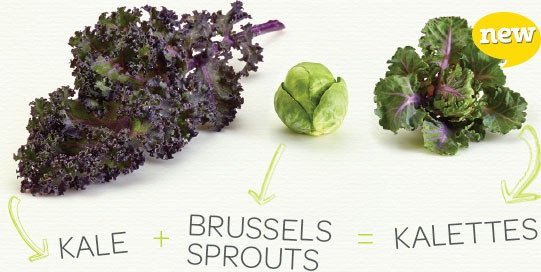
"The thing that signals spring to me is purple sprouting broccoli," he said, pointing out that the seed for this variety was developed to provide an overwintering crop for farmers to take to market at a time of the year when there aren't a lot of other greens available. Another new-ish sprout that serves the same purpose are kalettes (top photo), a cross between broccoli and brussels sprouts that was developed by a British plant breeder.
All of the large family of brassicas—think cauliflower, broccoli, mustard greens, arugula, bok choy, turnips, rutabagas, kales and cabbages—send out sprouts when it starts to warm up, which means you'll see lots of raab (aka rabe or rapini) coming from area farms like Groundwork Organics, DeNoble Farms and Gathering Together Farm, among many others. (Read a complete treatise on raab, rabe, rapini and broccolini, then check out these recipes.)
Castelfranco chicory.
Chicories are another hardy crop that grows slowly over the winter and is ready to harvest when the ground is still muddy and wet. The dark red blades of Arch Cape chicories from Ayers Creek Farm have come and gone already, but some pale yellow and white heads of Belgian endive have been seen hereabouts, and Josh said escarole and treviso radicchio will be plentiful in a couple of weeks.
So-called "baby roots" were a new thing to me, but Josh said that they're gaining a foothold on restaurant menues around the city and in bins and baskets at our farmers' markets. Look for teeny versions of radishes, Hakurei turnips (also called white salad turnips), kohlrabi and other roots to show up soon, usually appearing fresh in salads and slaws because of their sweeter flavor and crunchy texture.
Calçots on the grill.
One other group that's on the way are the alliums like green garlic, spring onions and those delicacies from Spain, calçots. I'm definitely planning another calçotada in the back yard with plenty of the traditional Salbitxada sauce to dunk them in.
Filling out the soon-to-be-an-avalanche of fresh from the farm goodness that's coming our way are salad greens and braising mixes of kales, chard, mizuna, traditional mustard greens along with a new variety, Tokyo Bekana, a small Chinese type mustard-cabbage with bright lime green leaves and ruffled edges. Fast on their heels will be lettuces, early spinach, all kinds of microgreens and leaf herbs like tarragon, sorrel and chervil. There's not a lot of fruit due right away, but you'll see blazing red ribs of rhubard piled up soon. Sadly, Josh said the first strawberries are going back to their usual schedule, holding off until late April or May (which is still early in my book).
Excited yet? I sure am!
Tuesday, June 14, 2016
In Season: Hear That Rumble? It's Summer Coming!
It's mid-June and already heads are spinning among farmers, produce buyers and customers. Last year's spring temperatures brought crops to market a couple of weeks early, but with this year's temperatures in May and June at times topping 90 degrees, we're seeing some fruits and vegetables ripening as much as a month (or more) earlier than usual. So buckle up your seat belts, folks, because according to local produce maven Josh Alsberg at Rubinette Produce it's going to be a crazy roller coaster ride of deliciousness this summer.
With hyper-local Hood strawberries done, you'll still see everbearing Seascapes and Albions trickling in through the rest of the summer. This week Josh has witnessed farm trucks loaded with cane berries like raspberries and blackberries—mostly Obsidian and Silvan varieties—rolling in, and the farmers are telling him that marionberries and boysenberries will be arriving in about two weeks. Fans of Ayers Creek Farm's legendary Chester blackberries are going to be in for a bit of thumb-twiddling and knee-jiggling, though, since Anthony and Carol Boutard don't see that harvest starting until mid-July.
Blueberries are in plentiful supply, so look for them to be available for at least the next month. And you may be seeing peaches and nectarines in stores now, but Josh warns that these first ones are not the most flavorful—he recommends waiting a couple of weeks for the best varieties for your pies and preserves. It'll be worth it! And due to the vagaries of weather and the whims of the gods, there's apparently a smaller-than-usual harvest of apricots this year, but they will be available for the next several weeks.
Believe it or not, the magicians at Philomath's Gathering Together Farm are bringing a few varieties of cherry tomatoes to market, along with their early Siletz tomatoes. Heirlooms and beefsteak tomatoes will start popping up this weekend and arrive in earnest by the end of the month. (It's a good thing this whole "climate change" thing is a hoax or I'd be tempted to start some serious hand-wringing about now. [Hashtag: just joking])
Other items Josh advises keeping an eye out for: slicing and Asian cucumbers are in now and by next week you'll start to see other varietals, as well as pickling cukes, which should be around for awhile. There'll be oodles of those gorgeously alive lettuce heads as long as the heat doesn't kill them, and—hold onto your hats—early corn should appear within 10 to 14 days.
Look foward to local table grapes, figs and melons around the middle of July, with the first new crop of apples, like Gravensteins, available at the end of July. But, as Josh made sure to reiterate, all of this is speculative: "Only Ma Nature knows the real harvest schedule."
Monday, February 15, 2016
A New Vegetable on the Block: Kalettes
You remember old Gregor Mendel and his peas from junior high science, right? How he figured out the basics of genetics by breeding different varieties of peas together to see how their characteristics changed over generations?
Well, someone, in this case Tozer Seeds, a British vegetable breeding company, did something of the same thing by breeding kale and brussels sprouts together. This was possible because kale and brussels sprouts are both members of the brassica oleracea group. And, looking for a new vegetable line that consumers might just want to take home to meet the family, the plant breeders at Tozer came up with a cross between the two that has a milder flavor than a brussels sprout but packs all the nutrients and fiber of kale.
Tozer dubbed this new vegetable "Kalettes" (pron. kay-LETS) and has trademarked the name, but because they were created by using traditional cross-pollinating, any company could create their own hybrids. And they have, with names like BrusselKale, Lollipop Kale and Flower Sprout.
I ran across them at Josh Alsberg's new Rubinette Produce in the Providore Fine Foods store on NE Sandy. The purple-green, rapini-like florets in his case were grown by Mustard Seed Farms in St. Paul, but they're available right now at local farmers' markets from Groundwork Organics and Gathering Together Farm, among others.
I understand from Josh that they're wonderful roasted, and you can obviously also steam them, but I'm thinking they might be terrific stir-fried or chopped into a salad. If you get some, let me know how you like them best, and if you come up with any new nicknames!
Photo on upper left from the Kalettes website.
Tuesday, April 07, 2015
Livin' in the Blurbs: Farm Restaurant, Butchery Classes and Doing Good for Local Kids
That 100-mile diet that was all the rage a few years ago? So passé! At one farm in Oregon's mid-valley you can dine on food that comes from 100 feet away.
In 2003, farmers John Eveland and Sally Brewer of Gathering Together Farm opened what they thought was just going to be a farm stand selling their organically grown produce along with pastries, soups and salads. But demand was so great that they eventually opened for lunch, dinners and Saturday breakfast, hiring Chef J.C. Mersmann and bringing in locally grown meat and products from other neighbors.
They've just opened the restaurant for the spring season, with lunches Tuesday through Friday and dinners Thursday through Saturday. And keep your eyes peeled for their summer wine dinners, which are said to be some of the finest, not to mention freshest, dining available in the state.
Details: Restaurant at Gathering Together Farm. Lunch Tues.-Fri., 11 am-2 pm; Dinner Thurs.-Sat., 5:30-9 pm; Breakfast Sat., 9 am-2 pm. 25159 Grange Hall Rd., Philomath. 541-929-4270.
* * *
There's no better way to understand more about the meat you eat than to take a butchery class, and we're lucky to have several places where you can learn how animals are raised, how to break down a whole carcass and then how to make use of every single part to feed your family. Listed below are three places that have regular butchery classes, teaching everything from how to fillet a fish, to breaking down a chicken or rabbit, to butchering a lamb, goat or pig. Check out their classes online, or take a gander at the calendar on the left. From personal experience, I guarantee it'll be an eye-opening and meaningful, not to mention delicious, way to get closer to your food source.
- Old Salt Marketplace just released its spring and summer schedule of classes. 5027 NE 42nd Ave. 971-255-0167.
- Portland Meat Collective has a full lineup of classes for all kinds of butchery. At Elder Hall, 3929 NE MLK Jr. Blvd. 503-347-5540.
- Portland's Culinary Workshop features butchery classes with a turducken class at the holidays. 807 N Russell St. 503-512-0447.
* * *
Every parent knows how hard it is to keep teenagers interested and engaged during their high school years. It's even harder when kids come from challenging backgrounds. The Portland Kitchen is a free, comprehensive culinary program for urban kids from disadvantaged families, empowering them to graduate high school with job skills and improved eating habits. A friend of the program has pledged to match donations between now and May 15, dollar for dollar up to a total of $25,000, an amount critical for it to move into its third year of serving area youth. If you can, please consider helping them reach their goal.
Monday, October 27, 2014
Gathering Together Farm: Growing for 27 Years
"I still go to the markets because I love talking to people about food."
- John Eveland, Gathering Together Farm
On a quiet stretch of the Marys River just outside Corvallis in the tiny town of Philomath, John Eveland (top photo) and his wife, Sally Brewer, are running a certified organic farm on a combination of rented parcels and land that's been bought from neighbors over the past 27 years. John estimates that in 2014, total sales at their Gathering Together Farm will top two million dollars between 12 farmers' markets—three in Corvallis, six in Portland, the Beaverton Farmers Market and two at the coast—a year-round CSA, wholesale customers, restaurant customers and the farmstand and restaurant on the property.
John checking a hoophouse.
John and Sally don't get to keep all that money, of course, since, aside from hard costs, at the peak of harvest season John signs 128 full and part-time paychecks every month and even in the slower winter months he employs a crew of 40. The farm has two managers, Rodrigo Garcia and Joelene Jebbia; a chef, J.C. Mersmann, who runs the farm restaurant and catering arm; as well as an HR department.
All this started on just two acres of land in 1984. It wasn't meant to be more than that, originally, just enough to supply the vegetarian restaurant, Nearly Normal's, that John, his first wife and three friends started in Corvallis in 1980. Dissatisfied with the quality of vegetables they could get from distributors, a group of them decided to try to become farmers and grow their own. The other partners found it a bit more of a commitment than they anticipated and dropped out, leaving John and his first wife (and eventually him and Sally), to manage the new farm on their own.
Year-round markets were a game-changer.
John said that, unlike today when we have a rainbow of heirloom vegetables to choose from, back in those early days carrots came in one color, orange, and tomatoes were big red slicers, mostly beefsteaks. From the beginning the farm used hoop houses, a series of plastic-covered hoops set over rows of crops, to extend their growing season, but things would pretty much shut down in November until planting season began again in January.
"The game has changed with winter markets," he said, and more varieties of cold-tolerant crops that do well in the maritime Northwest made it possible to keep plants in the ground through the winter. But what really pushed Gathering Together Farm into its current year-round status was that his crew needed full time employment to stay in the area, so the farm now grows leeks ("They're bullet-proof," Eveland said.), turnips, rutabagas, parsnips, kale and a popular winter salad mix, with more added every year.
The covered patio at the restaurant at the farmstand.
Plus, he said, "People are a lot more sophisticated in terms of their taste and what they're looking for." Unlike the old days where shoppers would turn up their noses at root vegetables or anything that wasn't a standard shape, he said they're now willing to try new things and buy non-uniform vegetables. And for those crops that might have blemishes but are otherwise perfectly good to eat, the farm has developed what are called "value-added" products like salsas, jams, pickles and sauces.
Delicatas are perfect for soup (recipe below).
Now pushing 66 years old, Eveland laughed and said he plans to be out in the field until he drops. Turning momentarily serious, he said that it's been critical to develop a staffing structure that provides a pool of expertise and knowledge to keep the farm humming along, especially since he considers himself "a creator, not a maintainer."
Reflecting on nearly three decades of farming, Eveland said it's certainly a much bigger, more complex farm than he would have ever dreamed of back in those early days.
"We're proud of what we've created in the community and the reputation we've earned," he said. "I just hope we've created something solid that makes the world a better place in some small way."
Ricky’s Delectable Delicata Soup
Adapted from Gathering Together Farm
The farm’s CSA coordinator, Hannah, says this is her favorite soup. It comes from Ricky, one of the cooks in the farm’s restaurant.
2 medium onions, julienned
4 garlic cloves, minced
2 leeks, whites only, chopped
8 oz. roasted red peppers
3 small delicata squash or 2 large ones (the flesh should equal 4 cups)
1 qt. vegetable stock (chicken stock works well, too)
1/2 c. cream
Pinch of cayenne
Juice of 1/2 lemon
Salt to taste
Preheat oven to 350°.
Halve squashes and scoop out seeds. Roast in oven until flesh is tender when pierced with a fork, about 40 min. Cool and scoop out flesh to make 4 cups. Purée in blender or food processor.
Over medium heat, sauté onions, garlic and leeks until they are softened and glassy.
Add roasted peppers, delicata purée and stock. Bring to a simmer and cook for 15 minutes. Add cream, cayenne, lemon juice and salt to taste. Stir well to combine.
Purée the soup in a blender in batches or use an immersion blender. You can also serve it without blending; the finely sliced onions and slivers of pepper make it quite a pretty soup as is.
Note: You can also speed up the process by peeling the delicatas with a vegetable peeler, halving them, scooping out the seeds and chopping them into 1" cubes. Add cubed squash when you add the stock, increase the cooking time to 30 minutes, then purée. This also works with other types of cucurbitaceae like butternut, acorn, etc.
This article was developed in collaboration with the Beaverton Farmers Market, a sponsor of this blog. Top photo of John Eveland by Jake Stangel.
Wednesday, June 12, 2013
Garden 2013: Modest Beginnings
The garden this year is off to a slow start, mostly due to some unseasonably hot weather in May followed by temperatures that dipped down into the 40s at night. When the lettuces I planted declined to show themselves after a couple of cold nights, I was feeling a little hapless until some of my greener-thumbed acquaintances mentioned they'd had trouble with germination in their gardens from the chilly nights.
Peas emerging.
After a certain amount of commiserating, I replanted the bare spots with lettuces developed by Frank Morton at Wild Garden Seed in Philomath (near Corvallis), whose excruciatingly beautiful varieties are on regular display at the Gathering Together Farm stands at local farmers' markets. Joining them were radishes like those above, which had no trouble popping out of the soil quickly, making them such a joy to grow. I'll be using their greens in pestos, soups and pastas, and chopping the peppery red roots into salads and sprinkling in tacos.
The tomatoes this year were swathed in their protective jackets of water until a week ago, and they're anxiously waiting for some sunny days to really take off. Aside from that, there are pole beans, sugar snap peas, carrots and basil beginning to poke their heads out of the dirt. It all gives me hope for the days, hopefully some of them sunny, to come.
Friday, April 01, 2011
Livin' in the Blurbs: Good Eatin'!
Farmers' market regulars in the Portland area know Gathering Together Farm as the double-wide stands overflowing with some of the most gorgeous, flavor-filled organic produce in the area. What most folks don't know is that John Eveland and Sally Brewer have a farm store as well as a full-service restaurant on their farm in Philomath outside of Corvallis. It goes without saying that the restaurant features a menu chock-full of the produce grown on the farm, with pizzas from their wood fired oven loaded with local cheeses and meats as well as a full list of hearty entrées and wines. Don't forget to peruse their list of upcoming wine dinners featuring local wineries; though a word to the wise is to make reservations early since these are in high demand and sell out quickly. It's a do-able evening excursion from Portland, and even better as a romantic dinner destination for an out-of-town overnighter.
Details: Gathering Together Farm restaurant. Lunch: Thurs. & Fri. 11 am-2 pm; Dinner: Thurs. & Fri. 5:30-9 pm; Saturday Breakfast: 9 am-2 pm.
It's a sad truth that Portland doesn't have a great selection of truly authentic Indian restaurants. The good news is that there are several classes being offered that will not only teach you how to make these dishes at home but will share resources on where to find the spices that will make them regular go-to recipes on your dinner roster. My friend Sophie Rahman of Masala NW has just released her spring class list, and it looks fantastic:
It's a pairing as momentous as Antony and Cleopatra, Ike and Tina Turner, Branjelina or, for that matter, Mario Batali and Gwyneth Paltrow (though easier on the eyes, for sure). Farmers' market chef Kathryn LaSusa Yeomans and Portland mushroom mavens Roger Konka and Norma Cravens have teamed up over the last few seasons to present product tastings and recipes to customers of Springwater Farm. But now they're taking it to the next level with full-on dinners prepared with goodness from Springwater and other local purveyors. Judging from the smashing success of their recent multi-course Truffle Dinner, the upcoming four-course Forager's Feast, even with two dates available, should be a sell-out event, so get your tickets now.
Details: Forager's Feast. Sun., April 10th and Sat., April 16th at 7 pm; $40, reservations required. All gratuities will be donated to the Portland Farmers' Market SNAP Matching Program.
Details: Gathering Together Farm restaurant. Lunch: Thurs. & Fri. 11 am-2 pm; Dinner: Thurs. & Fri. 5:30-9 pm; Saturday Breakfast: 9 am-2 pm.
* * *
It's a sad truth that Portland doesn't have a great selection of truly authentic Indian restaurants. The good news is that there are several classes being offered that will not only teach you how to make these dishes at home but will share resources on where to find the spices that will make them regular go-to recipes on your dinner roster. My friend Sophie Rahman of Masala NW has just released her spring class list, and it looks fantastic:
- Creating Dals from a Variety of Lentils (a vegetarian, vegan and gluten-free class)
- Reminiscent of the Raj: The Mystery of Curry
- Breads of India: Naans and Rotis (vegetarian)
- Regional Cuisines of India from the North to the South
* * *
It's a pairing as momentous as Antony and Cleopatra, Ike and Tina Turner, Branjelina or, for that matter, Mario Batali and Gwyneth Paltrow (though easier on the eyes, for sure). Farmers' market chef Kathryn LaSusa Yeomans and Portland mushroom mavens Roger Konka and Norma Cravens have teamed up over the last few seasons to present product tastings and recipes to customers of Springwater Farm. But now they're taking it to the next level with full-on dinners prepared with goodness from Springwater and other local purveyors. Judging from the smashing success of their recent multi-course Truffle Dinner, the upcoming four-course Forager's Feast, even with two dates available, should be a sell-out event, so get your tickets now.
Details: Forager's Feast. Sun., April 10th and Sat., April 16th at 7 pm; $40, reservations required. All gratuities will be donated to the Portland Farmers' Market SNAP Matching Program.
Subscribe to:
Comments (Atom)