Showing posts with label books. Show all posts

Monday, November 04, 2019

Katherine Deumling: Love Your Leftovers


"Food is beautiful. Food is nourishing and delicious and, yes, complicated. However, food should be a joy, not elicit fear."

Teaching people to cook delicious food at home has been the life-long mission of Katherine Deumling, and is the driving force behind her business, Cook With What You Have. She has just released the third in her series of e-books, "Love Your Leftovers! Favorite Meals that Save Time, Money & Effort", which expands on her mantra of developing creativity and confidence in the kitchen so that you and your family can enjoy delicious, healthy food on a daily basis.

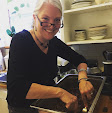
Author and educator Katherine Deumling.

Katherine spent her early childhood in West Germany, the daughter of a creative, efficient mother with a sprawling vegetable garden whose cooking centered around fresh produce and pantry staples, which became the inspiration for Katherine's own cook-with-you-have ethic. A post-college fellowship gave her the opportunity to travel to Italy and Mexico to study how and why people cook the way they do, then a decade of work with Slow Food—including a stint as Chair of Slow Food USA—expanded her awareness of food systems and regenerative agriculture, and gave her an enduring passion for the combination of pleasure and politics.

Her love of leftovers was born out of both necessity—her husband likes to take his lunch to work and she's the busy mother of a teenage son—as well as frugality. She figures that by using leftovers her family saves more than $1,500 per year by not buying lunches, plus minimizing food waste by using or repurposing perfectly good (and delicious) food. Then there's the time and effort saved by having lunches packed and ready to go the night before.

Cauliflower macaroni and cheese.

"Love Your Leftovers" continues Deumling's quest to give people what she terms "agency" in the kitchen, that is, to feel creative and effective when it comes to making food. The 17 dishes in the book, 13 of which are plant-based, are designed to boost cooks' personal satisfaction and to short-circuit what she calls "the tyranny of the recipe-based structure." If a recipe calls for a half-teaspoon of thyme, she said, some people give up because they don't want to make a trip to the store instead of simply leaving it out or trying another herb.

"Even smart people shut down in the kitchen," she said, because they've never been given permission to be creative and develop their own tastes rather than slavishly following the dictates of a recipe. Or as Deumling said, her aim is to encourage people "to beat the system" by making deliciousness part of their daily lives.

Cauliflower Mac'n'Cheese

Vegetables can make for great comfort food! This makes a lot and is even better the next day, heated up in a skillet with just a splash of olive oil on high heat. It develops a crust and is sublime!

2 Tbsp. olive oil
1 medium cauliflower, stems & florets chopped (about 8 cups)
1 lb. pasta (penne, rigatoni, rotini, corkscrew) 1 1/2-2 c. grated cheese (sharp cheddar, gruyere)
1 Tbsp. Dijon-style mustard
2 Tbsp. olive oil
1⁄2 tsp. chili flakes
1⁄4 tsp. grated nutmeg
Black pepper
1 3/4-2 c. hot pasta/cauliflower cooking water
1⁄2 c. bread crumbs

Preheat oven to 400°.

Bring a large pot of water to boil and add salt. Cook the cauliflower in the boiling water until very tender, about 15 minutes. Scoop the cauliflower out of the water with a slotted spoon and transfer to a food processor or blender. Add the pasta to the boiling water and cook until just al dente. Scoop out 2 cups of hot, starchy cooking water and then drain the pasta and put it in a 9" by 13" baking dish or other similar baking dish.

Carefully process the cauliflower with the 1 3/4 cups of cooking water, olive oil, cheddar, mustard, chili flakes, nutmeg and pepper. (You may have to work in batches.) If the sauce seems too thick, add the remaining liquid or a bit more water—it will thicken when baking. Taste and adjust seasoning. You want it to be quite strongly flavored. Pour the sauce over the pasta, toss, and spread mixture evenly in dish. (You can make the dish to this point, cover, and refrigerate for up to a day.) Sprinkle the top with breadcrumbs or additional grated cheese. Bake until the pasta is bubbling and the crumbs are browned, about 20 minutes if all your components were hot, 30 minutes if not. Pass under broiler for more browning if you’d like.

Serves 6+

Photos by Shawn Linehan from "Love Your Leftovers."

Tuesday, July 16, 2019

Mid-Summer Book Report: Child Brides, French Dirt, Norma Paulus


All it took to breeze through three-and-a-half books was a week spent in a rustic cabin on Mt. Hood accompanied by a spate of cooler-than-normal weather that "forced" me to spend more time indoors than out. Yes, we got out for hikes, but then retreated to the comfort of books and coffee and lapdogs.

The Secret Lives of Saints: Child Brides and Lost Boys in Canada's Polygamous Mormon Sect, by Daphne Bramham, is an exposé of the Fundamentalist Church of Jesus Christ of Latter-Day Saints (FLDS), "one of the largest of the fundamentalist Mormon denominations and one of the largest organizations in the United States whose members practice polygamy" (Wikipedia). Bramham, an award-winning journalist and author (as well as a personal friend), has been doggedly reporting on this cult for the Vancouver Sun for the last 15 years.

Starting with a history of the sect when it broke away from the mainline Mormon church (the Latter-Day Saints or LDS) when the LDS banned "plural marriage" in 1904, Bramham traces the evolution of the FLDS—with settlements in Utah, Arizona, British Columbia, Colorado, Texas and South Dakota, all governed by a self-proclaimed "Prophet"—to the 2007 trial and conviction of one of those prophets, Warren Jeffs, for being an accomplice to the rape of an underaged girl.

At the time of the book's publication in 2008, Bramham wrote:
"Prophet Warren Jeffs controls every aspect of the lives of more than eight thousand people, from where they live to whom and when they marry. Jeffs has banned school, church, movies and television. He has outlawed the colour red and even forbidden his followers to use the word "fun." Along with his trusted councillors, Jeffs has arranged and forced hundreds of marriages, some involving girls as young as fourteeen and men as old as or older than their fathers and grandfathers. Many of the brides have been transported across state borders as well as international borders with Canada and Mexico."
A page-turner, it chronicles the dangerously wacky, power-hungry men who turn a so-called religion to their own ends, damaging the lives of gullible men, women and children in the process. Bramham doesn't spare criticism of government officials of both countries for taking an infuriatingly hands-off approach to the commonly acknowledged abuses happening right under their noses. It's a gripping story, well-told and thoroughly documented. Highly recommended.

* * *

For something completely different, French Dirt: The Story of a Garden in the South of France, by Richard Goodman, begins with the author recalling how, as a 20-something aspiring writer, he was presented with the following classified ad by his Dutch girlfriend: "SOUTHERN FRANCE: Stone house in Village near Nimes/Avignon/Uzes. 4 BR, 2 baths, fireplace, books, desk, bikes. Perfect for writing, painting, exploring and experiencing la France profonde. $450 mo. plus utilities." With the adventurous spirit of youth, they rent the house for a year and move to a small village where Goodman is moved to start a garden on a small patch of ground loaned by a villager.

Far from the cutesy tales told of the quaint inhabitants of small villages in France or Italy—Peter Mayle and Frances Mayes being perhaps the best-known practitioners of the genre—this is the story of a young man falling in love with a garden and learning about himself in the process. Charming and well-told, it even received the unsolicited imprimatur of none other than M.F.K. Fisher herself:
"I possess a deep prejudice against anything written by Anglo-Saxons about their lives in or near French villages, especially in Provence. I really cannot stand the lip-licking enjoyment of local peasantry by these visitors from America and England. So, Richard, I thank you for breaking the spell. I like very much what you wrote. It did not sound supercilious at all. All my best always, M.F.K. Fisher"
I couldn't agree more.

* * *

The Only Woman in the Room: The Norma Paulus Story by Norma Paulus with Gail Wells and Pat McCord Amacher, startled me on many levels. As a native Oregonian who lived through the years covered by this biography and knew many of the names and issues described in it, I was fascinated to learn of the behind-the-scenes wheeling and dealing involved in some of the biggest headlines—think the bottle bill, saving Oregon's beaches for public access, the Land Conservation and Development Commission, which baked land use planning into our way of life—as well as more personal insights into pioneering Oregon luminaries like Tom McCall, L.B. Day, Betty Roberts and Gretchen Kafoury.

The book recounts that Paulus, a representative of a more moderate Republican party than we know today, and many in her party were pro-environment, advocated for women's rights—Oregon ratified the Equal Rights Amendment not once, but twice—and helped give Oregon its (now sadly diminished) reputation as a bastion of progressive government.

As the first woman elected to statewide office, as Secretary of State in 1976, Paulus was a practical yet visionary leader in her public career, though her dream to become Oregon's first woman governor was dashed in a bitter (if close) loss to Neil Goldschmidt in 1986; Barbara Roberts was to earn that distinction in 1991.

A chronicle of Oregon politics during a critical time in our history as well as the remarkable personal story of a woman's growth from humble beginnings to acclaim on a national stage, this is good read for longtime and newer Oregonians alike.

* * *

In case you're counting, the other (half) book, which I'd started before we arrived at the cabin and finished soon after, was the excellent Raw Material: Working Wool in the West by Stephany Wilkes, reviewed here.

Wednesday, June 19, 2019

Summer Reading List for Food-ophiles


Civil Eats, which I like to think of as a national version of Good Stuff NW (ahem…), has just put out its summer reading list of books about our food system, 21 New and Noteworthy Food and Farming Books to Read This Summer.

Included are a wide range of topics, from Black Food Geographies: Race, Self-Reliance, and Food Access in Washington, D.C. by Ashanté M. Reese, to Robyn Metcalfe's Food Routes: Growing Bananas in Iceland and Other Tales from the Logistics of Eating. There are a few more traditional(-ish) cookbooks, too, like Indian(-ish): Recipes and Antics From a Modern American Family by Priya Krishna with Ritu Krishna, and Ruffage: A Practical Guide to Vegetables, 100+ Recipes and 230+ Variations by Abra Berens. There's even a celebrity(-ish) tome from author and journalist Michael Pollan's mom and three sisters called Mostly Plants: 101 Delicious Flexitarian Recipes from the Pollan Family.

I also contributed a review to this collection, of an engaging book from first-time author Stephany Wilkes called Raw Material: Working Wool in the West (top photo) that describes her transition from high tech executive in Silicon Valley to itinerant sheep shearer in the American West. My review said, in part, that she "brings to life the cast of the interesting characters and ornery sheep she encounters on her journey to understand the ranchers and the land they steward, and [to] discover the terroir of wool."

Monday, January 28, 2019

The Revolutionary Art of Home Economics


"If home is where the heart is and if we’re all drawn to home, why do we feel so unrooted? Tell me what your notion of home is. Tell me what it feels like. And tell me who’s there, how many times you’ve moved. Because there’s this vision, this heart movement, but what are our true stories?"

When Harriet Fasenfest discusses the art of radical homemaking, she's not talking about taking your macaroni and cheese to the next level with sphericalized balls of sriracha—though feel free to steal that idea for the next edition of Modernist Cuisine, Max—or starting your next dinner party with readings from Marie Kondo's latest tome.

No, Harriet is talking about, oh, upending the myth of capitalism as necessary for a democracy to function and exposing the patriarchal system that set it up and perpetuates it.

So, not what you'd call cocktail party chatter.

She's offering a series of five intriguing monthly classes titled The Revolutionary Art of Home Economics starting on Saturday, February 2, and continuing through Saturday, June 1, from 11 am to 1 pm at Leven Community Center in Northeast Portland. In the class description, Fasenfest describes the sessions as investigating the transfiguration of land and labor from resources within the home economy into services and products within the capitalized market economy. She said this hands-on, participatory experience "will range from the historical to the personal, from budget making, pie charts, essay assignments, and food storage systems, to a bit of jam making in the garden, with the aim of elevating not only our understanding of the revolutionary art of home economics but it’s capacity to restore our lives and the life of the planet to sanity, joy and repair."

I first met Harriet when we lived in Sellwood and she had leased the Bertie Lou Café in 1982, a neighborhood joint that had been in operation since the 1940s. A single mom with a two-year-old son and no restaurant experience on her resumé, she walked in and started making blintzes along with other breakfast favorites in the diminuitive space. Discovered by restaurant reviewer Karen Brooks soon after it opened, and whose rave about the tiny gem drew crowds—a virtually unknown phenomenon at the time—and garnered Fasenfest ardent fans who followed her when she opened Harriet's Eat Now Café in a different location in Sellwood, then to Harriet's café in Old Town's Skidmore Building.

A marriage and a move to Georgia introduced her to Habitat for Humanity's founders Millard and Linda Fuller, where Fasenfest became Millard's travel coordinator as well as the couple's neighbor.

"We’d go to hear Jimmy [Carter], and I gave Rosalyn Carter my tomato chutney," she said of the period. "[The Fullers] really inspired me in terms of their heart. I was much taken by this thing called the Christian witness, although I know it’s not reserved [just for] Christians."

The sudden death of her husband from mad cow disease upended her life and resulted in a move back to Portland to regroup. She connected with Christy Eugenis, who at the time was creating an event space called the North Star Ballroom in an Italian Renaissance-style Odd Fellows lodge in North Portland. Fasenfest became director of its Performance Salon Series, organizing events combining art and performance with social activism.

That focus on activism led Fasenfest to contemplate starting her own salon series when, by chance, she ran across a corner space in what was then the nascent Alberta Arts District.

"As an old restaurateur I thought, oh man, that spot’s so freaking cute," she said of the space that would house Groundswell Productions. Fasenfest's son, who at the time was going to PNCA, thought it would be a great place for student art shows. "I thought well, maybe I could have my office and they could do some art shows and I can continue mounting my salon series."

The last thing on her mind was starting another café, but at the time the street only had a couple of coffee shops, and offering coffee and pastries would supplement the income from the events. So she reluctantly jumped back into the food business.

"But I didn’t want to cook, I was done with it. I just wanted to address social issues," she said. "People would come and say, 'Oh, these are really great!' and I’d go, 'This is a think tank, not a coffee shop!' People were, like, 'What’s up with her?'"

Selling the café pushed her to start Preserve, teaching classes focused on reviving the lost art of home preservation in a storefront on Alberta, then in Fasenfest's Northeast Portland home. In 2010  Fasenfest published a book on what she had begun calling "householding," preferring that term to "homemaking" or "home economics." Titled "A Householder's Guide to the Universe," it took up the banner of progressive homemaking and urban farming as a way to confront the political, social and environmental issues facing the world.

The book precipitated a deep dive into the history of home economics and Fasenfest began the daunting task of unraveling the strands that she felt had led to the global problems caused by our current capitalist economy.

"What happened to us as a people?" she remembers asking herself. "What happened to our relationships? Why do we make choices? What about the system makes it harder for us to be connected to each other? How were all my skills  and knowledge replaced by industry?

"I could teach till the cows come home, but people are busy or they think it’s kind of a hobby," she said. "They really don’t have the fire in the belly to shift from their lives of consumers in the market economy and shift to the home economy."

Seeking answers to those questions led her to begin a second book, one which she describes as a curriculum for understanding how we got here, and how to work our way out of it. "One part is history, then there are skills, then there are essays," she said. "I’m wanting all of us together to slowly deconstruct what the tethers are, where our home is."

Using the new book as a guide, the new class series will cost $150 for the five sessions. Contact Fasenfest via e-mail for more information or to sign up, or go to the School of Home Economics page on Facebook.

All photos courtesy Harriet Fasenfest.

Tuesday, September 04, 2018

Summer Book Report, Part II: Two in the Far North


Memoir. History. Love story. Ecological screed. A meditation on our place in nature. Astute political analysis. Even some murder and mayhem (of the natural world sort).

I've never read anything quite like Margaret Murie's Two in the Far North, which is, at its core, a memoir of her life growing up in pre-statehood Alaska, meeting her husband, Olaus, a wildlife biologist, and spending much of their lives together studying and working to preserve Alaska's wild places. It was a lifetime of effort and advocacy that eventually led to the creation of the Arctic National Wildlife Refuge (ANWAR) in 1960.

With one of her beloved sled dogs.

We meet Murie when she is just nine years old, at the point when she and her mother traveled from Seattle to meet her father, an assistant U.S. attorney for what was then called the Territory of Alaska. In the early 1900s, that meant a several-day journey via steamship from Seattle to Skagway, in Alaska's southeast panhandle, then another several days to travel by train to Whitehorse in Canada's Yukon. The next leg took the pair up the Yukon River to Dawson where they were met by Murie's father, and then traveling together up the Tanana River to Fairbanks on a river steamer.

The first woman to graduate from Alaska Agricultural College and School of Mines.

"In 1911 the river steamer was queen. There was a great fleet then, nearly all with feminine names, churning and chuffing their stern wheels up the rivers and sliding briskly down them. When the great two-stacker Mississippi-style steamer came in to any dock, she came like a confident southern beauty making a graceful curtsy at a ball. [These steamers] lived their lives between St. Michael at the mouth of the river and Dawson, sixteen hundred miles upstream." Arriving in Fairbanks, the family moved into the one vacant house which Murie describes as "way out on the edge of town," with only four rooms, a handpump in the kitchen and a woodstove that heated the house.

Murie's early life is described from her vivid memories growing up in the far north, cooking on that woodstove, walking to school even in fifty-below-zero weather and exploring the world of the gold rush town where "there were no others nearer than eight days by horse sleigh or ten days by river steamer."

Dressed for the trail.

Going off to college—in Portland, to Reed College, no less—at the age of fifteen, she traveled by dogsled accompanied only by a driver and his dogs for nine days, traversing frozen rivers and mountains and staying in rough-and-tumble roadhouses along the way. From this point on, Murie quotes extensively from her astonishingly descriptive diaries about meeting her husband and spending their honeymoon on a research expedition above the Arctic Circle, studying its flora and fauna with the idea that documenting this unexplored region could help to preserve it for future generations.

The camp on Lake Lobo on the Sheenjek River above the Arctic Circle.

This love of the wilderness, her enchantment with the natural world and the difficult, funny and moving experiences they had together that bring the times and places to life, putting flesh on the characters they meet along the way, some in the most unexpected circumstances. Murie is a storyteller of great warmth and humanity, and I can't recommend this book highly enough.

Read Part One of my summer book report, "Henry David Thoreau: A Life."

Photos from U.S. Fish and Wildlife Service and Alaska's Digital Archives.

Saturday, August 25, 2018

Summer Book Report, Part I: Thoreau (and Alaska)


No, in case, after reading this post's title, you're thinking, "Whaaaaat?"…Henry David never went to Alaska. (Just wanted to clear that up before we went any further. See end of this post for details.)

In fact, Thoreau rarely left the region surrounding Concord, Massachusetts—a few trips to Maine, New Jersey and Connecticut notwithstanding—preferring to make an intimate connection with the flora and fauna of his New England home. Despite that, in Henry David Thoreau, A Life, author Laura Dassow Walls places him squarely in the middle of the great debates and characters of his time, flying in the face of my impression of him as a hermitic recluse living in a hut by a pond.

Henry David Thoreau in 1856, age 39.

Thoreau was just shy of his 28th birthday when he moved from his family's home in town and into the simple cabin he built on Walden Pond, the subject of his most popular book. A little more than two years later, he returned to his family's home and lived there for much of the rest of his life. Thoreau earned his primary living as a surveyor, but pursued his writing, speaking tours and correspondence with the likes of poet and philosopher Ralph Waldo Emerson, a lifelong friend; the poet Walt Whitman; abolitionist Frederick Douglass; Margaret Fuller, a journalist and women's rights activist; and the well-known naturalist Louis Agassiz, with whom he had several very public disagreements.

Title page of Walden, drawing by his sister Sophia.

Despite recurring bouts of chronic tuberculosis which he'd contracted as a young man, he traveled widely throughout New England, lecturing on a range of topics, from Trancendentalism to the abolition of slavery—he raised money and defended the campaign of John Brown, even issuing a fiery defense after Harper's Ferry—and, of course, the need to conserve the nation's natural areas for future generations.

Immensely engaging and well-written, this biography is going on my own list of books I've loved. Walls quotes extensively from Thoreau's writing and personal journals but, rather than being pedantic, it drew me into his inner life and thoughts, breathing life into a colorful, fascinating man I only thought I knew.

The second book is one that has been on my favorites list since the first time I read it years ago, and is one I've given as a gift many times. Here's my review of Two in the Far North by Margaret Murie.

Monday, December 05, 2016

Great Gifting: Booking It for the Holidays


Several years ago, so long ago, in fact, that the internet was in its infancy—if the browser names Mosaic and Netscape Navigator ring any bells, you're in the right era—where carrying a powerful computer around in your hip pocket, one that could answer virtually any question within seconds, was a concept left to science fiction fantasists, and people at dinner parties had to scour actual books to settle arguments about the name of the guy who was in that movie or else argue for hours over the name of the dog that was sent into orbit by the Russians (Laika, for those who care).

A well-loved (and well-marked) book.

Our house was pretty handy for situations requiring reference material, so much so that one visitor dubbed it "the house of books" for the piles that were—and still are—a major part of our living room decor. So when the holidays roll around it's no surprise that books will fill many slots on our gift lists, both for receiving and giving. In no particular order, here are a few of my favorite food-centric tomes ideal for the bookish on your list. And feel free to add your own pick by clicking on the comments link below!

Buck Buck Moose by Hank Shaw. The third book by this self-described "hunter, angler, gardener, cook"—who is a superb writer on those topics as well as a good friend of mine—is a thorough compendium of hunting, cooking and eating "antlered things." Perfect for hunters, it's also a thoughtful treatise on how these animals are deeply intertwined with our history as a species. Carnivorous cooks will appreciate it, too, since his meticulously tested recipes are great even if you can't easily obtain venison—simply substitute beef, lamb or pork.

Life Without a Recipe by Diana Abu Jaber. Memoirs are slippery beasts, the good ones treading the fine lines between tell-all and tight-lipped, between my-life-is-so-fabulous and Blanche Dubois, cringe-inducing drama. Abu Jaber, a professor of writing and literature who splits her time between Portland and Florida, writes with skill about growing up the daughter of an American mother, a Jordanian father and a powerhouse of a German grandmother. In this, her second, memoir, she continues the journey she began in The Language Of Baklava, weaving "a book of love, death and cake."

Better from Scratch and Crackers & Dips by Ivy Manning. Prolific writer and author of cookbooks on subjects ranging from how to cook for a mixed-diet family to fixing easy weeknight vegetarian meals to one of the best farmers' market cookbooks around, these two slim volumes are packed with recipes so good they're already as well-thumbed as my grandmother's Joy of Cooking. Better from Scratch will stun you with how easy it is to make things you usually buy from the store—often for a premium price—like granola, beef jerky, graham crackers and kimchi. Ditto for Crackers and Dips, where you'll have fun, spend less and enjoy crunchy, sweet and savory treats made from whole grains, real butter, cheese, fresh spices and no preservatives.

Oysters and Crab by Cynthia Nims. Seattle writer and cookbook author Nims is passionate about the bounty of the Pacific Northwest, especially the creatures pulled from the depths of the waters off our own West Coast. In Oysters she describes in detail the biology of these amazing shellfish and how they help purify the waters they live in. She then moves on to suggest the best methods of buying, cooking (or not!) and eating them, with more than 30 recipes. Our West Coast Dungeness is the star of Crab, but she also covers its Atlantic and Gulf Coast cousins, delving into the history and importance of the commercial fishing industry, then quickly moving on to how to buy, clean and—with more than 50 recipes—how to cook these beauties.

My Beer Year by Lucy Burningham. This book by Portland beer writer Burningham has a long but delightful descriptor: "Adventures with hop farmers, craft brewers, chefs, beer sommeliers, and fanatical drinkers as a Beer Master in training." With wit (as well as Wit), it describes how this young writer and mom fell in love with beer to the point where she decided to become a Certified Ciccerone, going through the rigorous and arcane training and testing regimen to become a beer expert. (And you just thought knowing an IPA from a Porter made you that, right?) Full of character and plenty of characters, its a great book for the beer fanatic in your life.

Pure Beef by Lynne Curry. The current dietary advice, as Michael Pollan famously said, is to "eat food, not too much, mostly plants." But if we are going to eat protein, its important to eat animals raised humanely, with their feet on the earth and the sun on their backs. In other words, pasture-raised animals rather than those raised in crowded, confined conditions requiring daily doses of antibiotics to survive. To that end, I heartily recommend Joseph, Oregon, writer Lynne Curry's book on buying, cooking and eating grass-fed beef, an incredibly well-researched and thoroughly recipe-tested primer on how to get the most delicious results possible from these tasty beasts.

Virgin Territory by Nancy Harmon Jenkins. Dividing her time between a home on the coast of Maine and an olive farm in Tuscany, Jenkins shares her contagious passion for the flavors of the Mediterranean, a diet she is convinced is one of the most healthful and flavorful on the planet. I've tried several recipes from this book, and I can't argue with that premise.

Tartine Bread by Chad Robertson. If you have a bread baker in your life, or someone who's interested in learning to make bread, I can't recommend this book highly enough. My husband worked for two years to make what he considered the perfect artisan loaf, and was frustrated with what he felt were mediocre results until friends got him this book. It was a game-changer, and it apparently has some pretty good recipes for other good things to eat, though those pages remain remarkably unthumbed around here.

James Beard: A Biography by Robert Clark. As a fifth-generation Oregonian, I thought I knew plenty about native son James Beard. That is, until I read this biography of this world-famous cook, eater and bon vivant. A truly fascinating character in his own right, it follows Beard's upbringing in Portland in the late 1800s, his escape from his controlling-yet-supportive mother to New York and Europe and his lifelong love affair with the flavors and ingredients of the Northwest. In addition, it follows the evolution of the American palate with discussions that add depth and nuance to Beard's at times tragic yet joyful journey.

Wednesday, August 20, 2014

Fat City: Food Lovers Guide New Edition


Meandering through narrow cobblestone streets past shop windows piled with local pastries, sitting in cafés watching the locals exchange the latest gossip or exclaim over a new baby, even stopping in at a neighborhood deli to pick up fixings for a picnic lunch, it's fun to imagine what it would be like to live in the places that I visit. But when I get back home and walk into a New Seasons store or pick up fresh produce at the (year-round) farmers' market just blocks from home or meet a friend for a pint at any of hundreds of local brewpubs, other locales pale in comparison.

What I loved about Liz Crain's first guide to Portland's food scene when it came out in 2010 was the diversity of the places, products and people she included. There were some of the usual suspects, the popular places and people who get featured in every travel article and guide book to the city. But it was the under-the-radar, less-traveled neighborhood stores and less well-known folks that made it such a breakthrough piece of writing at the time.

On the first of September the second edition of this slim but comprehensive volume, the Food Lover's Guide to Portland, will be available, and it's packed with the same top-to-bottom listings as the first volume, but updated and expanded to include the explosion of new tastes and fresh faces on the city's food scene. From obscure corner shops like Tonalli's Doughnuts and Cream to tiny Cherry Sprout Produce to old line big hitters like Pastaworks and Stumptown Roasters, Liz has compiled a compendium of the best of the best.

Whether you're a local or tourist, or someone who just wants to read about what a vibrant local food scene can look like, you'll find it fascinating. I sure have.

Top photo: Elias Cairo of Olympic Provisions. Lower right: breads at little t American Baker.

Tuesday, March 04, 2014

Brassicas, the Book


When I was growing up the closest thing to a leafy green vegetable on my dinner plate was iceberg lettuce drowned with our family recipe for dressing, consisting of mayonnaise—Best Foods, of course—and ketchup, plus a sprinkling of garlic salt and dried basil. Any other vegetables that appeared were either canned or frozen, mostly peas, corn and beans.

When I first heard the word "brassicas"uttered, I had no idea what it meant. But the fact that it was spoken by Frank Morton, the jazz trumpeter of open-pollinated, organic seed-growers, meant that it was important. And that I should immediately find out what they were. Turns out they're a huge family of all kinds of leafy greens like kale, chard and mustards, along with familiar vegetables like broccoli, cauliflower, cabbage and Brussels sprouts.

Turned out I was exploring this family, Brassicaceae, at the same time that many chefs were starting to feature braised greens and salads made from kale, chard and mustards on their menus. Bunches of the immature buds of these cruciferous vegetables, often called raab or rabe, were starting to appear on farmers' market stands and stores' vegetables bins. Sweet with a touch of bitterness and incredibly versatile, they could go from a side dish to an entrée and were often best when simply sautéed or lightly dressed with oil and lemon.

So it was seriously exciting—and I understand if you think I may need to get out more—when my friend and fellow food writer Laura Russell announced she was writing a definitive guide to my new favorite genus. The result of years of exhaustive research and testing, Brassicas: Cooking the World's Healthiest Vegetables is a cookbook with more than 80 recipes, but it also delves into the history of this group of vegetables and their amazing health benefits, from vitamins and minerals to phytochemicals and glucosinolates. Plus you'll learn about how they act as antioxidants, anti-inflammatories and liver detoxifiers, among other health benefits. Available now for pre-order (it comes out April 8), I'm definitely adding this gorgeous book to my library.

Friday, November 29, 2013

Great Gifting: Bookin' It


Hello. My name is Kathleen and I love books.

A few years ago I heard someone say that they never traveled without a "flood book." That is, if they were on a trip and couldn't continue because the road was flooded—or the flight was delayed or a bus was late—they'd always have a book at the ready to help pass the time. We subscribe to that philosophy as well, and it's rare that you'll find either Dave or me without printed reading material of one kind or another on our person.

Several books by friends have come out in this past year, and any would make a fine flood book for the folks on your list.

Duck, Duck, Goose: Recipes and Techniques for Cooking Ducks and Geese, Both Wild and Domesticated by Hank Shaw. This book is a must-have for the hunters on your list. It's also a great choice for cooks who are interested in becoming more familiar with fowl that isn't chicken, especially since ducks and geese are becoming more available to we non-chef types. From hunting and processing wild birds to getting one from the grocery store that's ready to go, Shaw explains what to do with whole birds or parts, breasts to eggs to legs. And as readers of his previous book on foraging and hunting, Hunt, Gather, Cook, know, his recipes are easy enough for moderately experienced home cooks, with clear lists of ingredients and instructions. Holly Heyser's step-by-step photos of boning and other processes, plus mouth-wateringly gorgeous photos of finished dishes, illuminate Shaw's words and make this beautifully designed book a great one for the serious cook's shelf.

Pacific Northwest Cheese: A History by Tami Parr. Author of the premier blog about artisan cheese, the Pacific NW Cheese Project, as well as the first book about the Northwest's booming cheese scene, Artisan Cheese of the Pacific Northwest: A Discovery Guide, Parr's new book is the result of extensive research that shows our current bounty of local cheese is no fluke. Fans of cheese, along with NW history buffs, will appreciate the stories of early cheese-making operations established by the Hudson's Bay Company and the contributions by people like Mrs. Helen West of Tigard, who started the Red Rock Cheese Co. in 1919, distributing her cottage cheese to customers via the Oregon Electric Trolley line which ran along the back of her property. Historic photos of early cheesemaking and quaint labels give way to contemporary portraits of the artisan cheesemakers who formed the backbone of our current artisan industry. Appendixes include the history of cheesemaking in Alaska as well as an up-to-date list of current curdsters. A fascinating read.

The Mushroom Hunters: On the Trail of an Underground America by Langdon Cook. Mushroom hunting comes as naturally to many Northwesterners as pulling on their Danner boots. Even those of us who eschew the damp, dirty work of foraging the precious fungi from our forest floors anticipate the start of chanterelle season when stores and menues are packed with these gems. Cook, author of the blog and book Fat of the Land, takes readers behind the scenes into the murky, secretive world of the commercial mushroom hunters who supply markets and chefs with these seasonal treats. It's a truly amazing, and sometimes frightening, journey as Cook "follows the invisible food chain from patch to plate," interviewing new immigrants and scrappy geezers, and will appeal equally to those interested in food, natural history and outdoor adventure.

Crackers and Dips: More Than 50 Handmade Snacks by Ivy Manning. I don't know what it is, but my Portland neighborhood may have more food writers per square mile than anyplace in the country. I am fortunate that Ivy is one of those who lives close by, since, when she's working on an article or book and testing recipes, she will often call and ask if I want some of the results of her meticulous (and delicious) labors. It's especially great when she has to concoct recipes containing meat, since her husband, dubbed Mr. Tofu, is a confirmed vegetarian and there's often too much for her to consume on her own. (A situation that led to her previous book, The Adaptable Feast: Satisfying Meals for the Vegetarians, Vegans, and Omnivores at Your Table.) So I can personally testify to both the incredibly variety and insanely tasty recipes she presents in this latest effort. Easy enough for beginning cooks and interested kids, it also includes toppings and dips to serve with these crunchy snacks. You may never buy a cracker from the store again.

Salty Snacks: Make Your Own Chips, Crisps, Crackers, Pretzels, Dips, and Other Savory Bites by Cynthia Nims. This ode to snackage by my friend, Seattle writer Cynthia Nims, is a compelling argument on the savory side of the sweet versus salty debate. It's geared to a more adult palate but, like Ivy Manning's book (above), it would make a great gift for cooks who like to entertain.

Other suggestions: Pure Beef: An Essential Guide to Artisan Meat with Recipes for Every Cut by Eastern Oregon writer Lynne Curry is a comprehensive, eminently useful book for those of us wanting to move from industrially processed meat to a pastured product; includes recipes and shopping tips. The Gluten-Free Asian Kitchen: Recipes for Noodles, Dumplings, Sauces, and More by Laura B. Russell is a godsend for those who love Asian cuisine but can't get around its heavy dependence on wheat products; great resource. And one more, non-local but knee-slappingly funny sliver of a book, Nietzsche's Angel Food Cake: And Other "Recipes" for the Intellectually Famished by Rebecca Coffey is a collection of pseudo-recipes/essays with titles like "Ernest Hemingway's Battered Testicles" and "Geoffrey Chaucer's Stinking Bishop's Tart" that begs to be read out loud; perfect as a stocking stuffer or for foodies with (or who need) a sense of humor.

Read the other posts in this series: Gifts That Give Back, Mad Skills, Kids' Stuff and Good Eatin'.

Monday, May 16, 2011

Read It Forward


Enumerating the benefits of owning dogs has been done to death. Companionship, protection, even exercise are obvious. But incidental advantages can accrue as well, like the social circles, and subsequent friendships, that develop at the local dog park.

Another I've discovered in years of walking dogs is that you get to know your neighborhood really well, from who's fixing up their house to which elderly neighbor has passed away, or which new family is putting in raised beds and a chicken coop (a development that my dogs find particularly intriguing).

One development that's been particularly intriguing lately is a mailbox that's popped up in a parking strip next to a house that had recently sold (top photo). Labeled "BOOKS" in gold letters, opening it reveals a couple of stacks of well-thumbed pulp novels, mostly women's fiction of the type that book clubs dote on.

Questions arise of whether the books are there for the borrowing or the taking, if more than one person contributes to the trove or if there is a particular genre that the mailbox attracts, but you can bet I'll be checking it at regular intervals to see what appears there.

Monday, February 12, 2007

My Life in France

Unfortunately I haven't yet had that life, but at least I can read about someone who has. This is the well-reviewed and much talked about book by Julia Child's nephew that was written in collaboration with her in her last years. It's a book she'd wanted to write for many years but just hadn't gotten around to, and when her writer nephew offered to help get it done, she jumped at the chance.

Reviewing the voluminous letters she and her husband, the writer and artist Paul Child, had written to various friends and relatives while Paul worked for the American embassy in Paris and Marseille, Alex Prud'homme has done a marvelous job of telling their story in Julia's unforgettable voice. Forthright and funny, she goes from being an insecure new bride plopped in a strange land where she doesn't know the language to an indefatigable champion of the country's people and culture. It also tells the story of this loving but unlikely couple, Julia over six feet tall with horsey good looks and Paul a shorter, bald man ten years her senior.

A much more concise work than the hideously edited but fascinating biography, "Appetite for Life" by Noel Riley Fitch, this is a good introduction to a very human Julia Child before she became a revered (and caricatured) American icon.