

This past week I was invited to give a short, eight-minute talk about Portland's food scene to a gathering, called an "incubator," of project leaders from EcoDistricts, a Portland-based nonprofit supporting projects that make cities more sustainable. These were folks from around the country, with one crew from New Zealand, many of whom had never been to Oregon before. They asked me to cover "Portland's food, wine, craft beer and spirits culture and industry." With a nod to a former creative director of mine, I opted "to give them what they want, just not what they expect."
When you hear a mention of Portland’s food scene, I’m guessing what comes to mind are its booming restaurants, with tatted-up chef-dudes in sideways trucker hats putting bacon and foie gras into every course, including dessert. You might also be (justifiably) excited about the city’s much-touted cocktail culture, with bartenders vying for who’s the baddest in the land, shaking cocktails made from local spirits, with a lineup of housemade bitters and syrups displayed on the bar.
So I don’t mean to disappoint you, but that’s not the food scene I’m going to be talking about today. The food scene I’m interested in, and the one that I write about on my blog, Good Stuff NW, is the one that happens in the fields and rivers and in the ocean.

It’s the not-very-sexy but incredibly important story of how the harvest from those places gets to my plate.
It’s the story of farmers like Carol and Anthony Boutard of Ayers Creek Farm, transplants from Western Massachusetts who, after settling in Portland and working on land use issues for decades, decided, at the age of 50, to buy 140 acres of fields, oak savannah and wetland west of the city to start an organic farm. In the decade-plus that they’ve been farming, they’ve become known for the quality of their corn, an old New England variety that they’ve adapted to the growing conditions here in the Northwest, which they hand-shell and grind into polenta and dry to make popcorn. Then there are their Astiana tomatoes, named for the area of the Piedmont in Italy where they first tasted them and where Carol—legend has it—was so enamored of their flavor that she went dumpster-diving in the restaurant’s garbage to salvage a handful of seeds to bring back to their farm.
All of their hard work selecting seeds year after year is in pursuit of better flavor, and it shows in the legions of their loyal customers who can’t get enough of their dried beans, a South Asian green called fenugreek (that growing in the fields smells just like maple syrup), Italian chicories, garlic and other crops.

Ivan Maluski and Kendra Kimbirauskas.
This same dedication to soil and the health of the land—which also happens to result in incredibly flavorful food—is evident in the way that Kendra Kimbirauskas and her husband, Ivan Maluski, of Shimanek Bridge Farm in Scio raise their pigs, goats and chickens. A small-scale operation, they reject the confined, factory farm conditions and antibiotic-laden diets that most of America’s meat is raised in, raising all of their animals on pasture in a system called rotational grazing, where the animals are moved from one section to another in sequence and the pastures are allowed to regrow before the next group of animals is moved onto it.
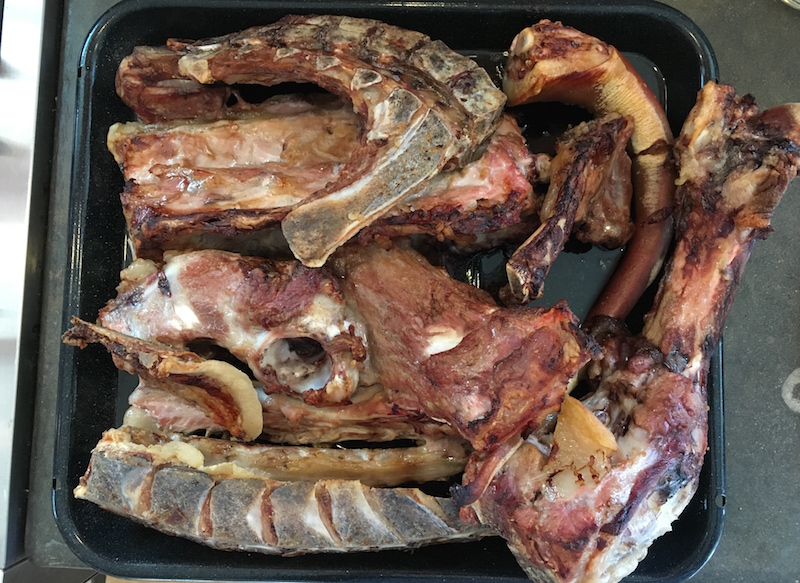
I recently bought half a pig from them and, with help, butchered it—an incredibly budget-friendly way to get a year’s supply of meat—and I can tell you that there is nothing as beautiful as the fat from a well-raised animal. Its flavor is clean and rich, offering more "good" fats and fewer "bad" fats. The meat is richer in antioxidants; including vitamins E, beta-carotene, and vitamin C and it doesn’t have traces of added hormones, antibiotics or other drugs.

And since we’re on the subject of the pursuit of flavor, Lane Selman, an agricultural researcher at Oregon State University, has started an innovative program called the Culinary Breeding Network, bringing together plant breeders, seed growers, fresh market farmers, chefs and produce buyers to talk about how to make our food more delicious. (Imagine that.)
Historically these various groups have had widely divergent agendas in developing the crops that we find in the produce section at the store or on our plates at a restaurant. Plant breeders and seed growers looked for germination rates, vigorousness of growth and consistency of product. Fresh market farmers and produce buyers wanted big yields, durability in shipping and shelf life. Chefs and home cooks wanted flavor and beauty on the plate.
So Lane’s effort, supported by OSU and the Organic Seed Alliance, has been to bring all these groups together to talk about how to grow food—using traditional plant breeding processes (think Mendel’s peas)—that will be profitable to grow and sell while not sacrificing flavor. Currently there are field trials happening on regional farms for sweeter carrots, amazing varieties of parsley that can taste minty or savory rather than cardboard-y, squashes of all descriptions, greens, a variety of purple broccoli, and a habanero pepper that has no heat but keeps an incredibly sweet, deep undertone.

Like many larger cities across the country, there’s also a vital urban agriculture scene in Portland that includes 51 community gardens covering more than 20 acres in the city, with more than 70 acres of land under cultivation commercially. In sizes ranging from small residential lots to larger plots of an acre or more and supporting themselves through CSA ( or community-supported agriculture) subscriptions, farmers’ market stands, restaurant clients, classes and even pop-up dinner events onsite, these small businesses are sought out by city folk like me anxious to support these entrepreneurial efforts.
And speaking of farmers’ markets, our metro area supports more than 60 farmers’ markets during the height of the season from June through September, with a dozen that continue through the winter months. Since I understand that some of you work on projects that address food access, I wanted to mention that in addition to the Oregon Food Bank, which has a network of 17 regional food banks and 960 partner agencies that serve 900,000 people a year, as well as education classes and community food system training, there is the Farmers Market Fund, recently awarded a-half-million dollar grant from the USDA for a program called Double Up Food Bucks. It is a SNAP (which used to be called food stamps) incentive program that offers farmers’ market vouchers for low-income families. These vouchers are available at 50 farmers markets across the state, giving a dollar-for-dollar match—up to $10—to purchase fruits and vegetables. The Fund also provides funds up to $200 to help purchase CSA shares from area farms.

SNAP and regular farmers' market tokens.
One of the best things about the SNAP benefits offered at farmers’ markets, at least to my mind, is that when someone uses their SNAP debit card to get tokens that they can then use like cash at market stalls, the tokens they get are barely distinguishable from non-SNAP tokens of other customers, eliminating the issues of shame and embarrassment that many low-income people often have to endure.
The poet, author, environmental activist, cultural critic and farmer, Wendell Berry, said that “eating is an agricultural act.”
I couldn’t agree more.




 Posts

