No, this isn't what you're thinking…there are no not grand musings about man v. the elements or figuring out how to crawl out of a crevasse or even how to dry flannel sheets so they don't turn into a wadded, crinkled mess (anyone else have this problem?). It's about what farmers do in winter, when the farmers' markets are few and far between, the crop selection trims to cold-tolerant species and the mud on their boots adds 10 pounds to each leg.
I was out at Ayers Creek Farm in Gaston on a recent Friday and Anthony and Carol were experimenting with a few new value-added products to add to their lineup of preserves, popcorn, polenta, frikeh and the like. This time it was hominy using their heirloom Roy's Calais Flint Corn and Amish Butter Corn varieties and a new preserve using jostaberries, a cross between a blackcurrant and a gooseberry that has an intense, tart flavor combined with a deep purple, almost black color.
First up was the hominy, which was first cooked in a mix of water and slaked lime—calcium hydroxide, also called cal in Mexico—then allowed to sit overnight where it would "bloom" in a process called
nixtamalization (say that six times fast). After rinsing
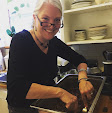
(right), some of each type of corn was put straight into canning jars, while another batch was cooked an extra hour before going into the jars to see which would have a better texture after pressure canning. As an added variation, half of each type had lemon juice added to the water to see how it might affect the color and flavor.
In a nod to caution, not to mention to avoid having the kitchen look like a battlefield with blood and glass and hominy littering the floor, the jars were only filled about three-quarters full
(top photo), since no one was sure how much the hominy might expand in the pressure cooker. This turned out to be a wise move, since the corn ended up almost filling the jars.

Anthony decided to wait a week before opening them to test for flavor and texture, then refine the final product from there. Actual processing, should the venture turn out, will take place under the watchful (and certified) eyes of Paul and Judy Fuller at
Sweet Creek Foods.

The jostaberry preserves were a much simpler operation, taking berries that had been macerating overnight in sugar and essentially cooking them down to concentrate their flavor and boil off any water. Anthony insisted on using a copper pot for the process, in this case a gorgeous hand-hammered beauty with a curved iron handle that they had picked up on a trip through Spain
(left).

Before cooking the berries were run through a grinder attached to Anthony's trusty KitchenAid mixer to remove the bulk of the seeds and pulpy parts, leaving juice and some fleshy bits for the jam. The Boutards never use pectin or solidifying agents in their preserves, preferring to let the fruit speak for itself, so the jam was very loose as it was poured into the jars. But after sitting overnight in our refrigerator the natural pectin in the berries firmed up nicely and it was the perfect texture for spreading on Dave's toasted sourdough
(right).
The flavor was a bowl-you-over rich, slightly tart mouthful of deliciousness, and I can't wait for it to start appearing (right, you guys?) at their stand at the Hillsdale market. It might just give their blackcap jam a run for the money as my favorite preserve ever. Though sadly, as I prepared to leave the science-lab-cum-farm-kitchen, I found that hammered copper bowl was a tad too large to sneak under my coat and home. Dang.



 Posts
Posts

