
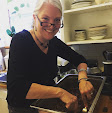

In yet another example of the old saw "it isn't what you know, but who you know that counts" my neighbor Bill, he of the pickled onions, bourbon cocktails and massive garden, has been evangelizing on the topic of shrubs ever since I'd met him. No, not "shrub" as in a bushy landscaping plant, but a fermented vinegar syrup made by combining fruit and flavoring ingredients like spices or herbs with vinegar.

I was finally inspired to dive in when I visited him in his kitchen and he showed me a bowl of cubed cantaloupe he'd mixed with sugar that was sitting on the counter, and a separate bowl of mint that had been bruised and combined with some white wine vinegar.
"Okay, now, that doesn't seem to scary, " I said to myself. And when he mentioned that all that remained to do was to leave it out overnight, then strain the solids off, combine them in a jar, and let it sit for a couple of weeks in the fridge, I got that heady feeling I remember from my childhood when I rode a two-wheeler for the first time.
So stay tuned for more shrubs made with different fruit—I'm jonesing to try it with the Ayers Creek Farm's Chester blackberries I have stashed in the freezer—and ideas for using it in "acidulated beverages."
Bill's Cantaloupe and Mint Shrub
1 1/2 lbs. cantaloupe
3/4 c. sugar
3/4 c. white wine vinegar
1/2 c. mint leaves
In a medium-sized non-reactive mixing bowl, combine the cantaloupe with the sugar. Cover and allow to macerate on the counter overnight.
Put the mint in a small non-reactive mixing bowl, add vinegar and muddle lightly to release oils. Leave on counter overnight.
Strain off liquids from both bowls and pour into lidded quart jar. (Lid should be slightly loose to release gasses.) Place in refrigerator for two weeks. Shake periodically, tightening lid before shaking. Loosen lid again when replacing in refrigerator.
* * *
"Bring Me a Shrubbery"
From Bill Rash
2 oz. bourbon
1 oz. shrub (above)
1/2 oz. lime
Mint sprig (optional)
Fill a cocktail shaker 3/4 full of ice. Add ingredients. Shake and strain into coupe glass. Garnish with sprig of mint.
* * *
And for a non-alcoholic drinking vinegar-based beverage, try this:
Refreshing Shrub Soda
2 oz. shrub
Club soda
Lemon wedge
Fill beverage glass with ice. Pour in shrub, then fill with club soda and stir to combine. Squeeze lemon wedge into the glass and drop it in.


 Posts
Posts

