Showing posts with label Farm Bill. Show all posts

Monday, January 14, 2019

Farm Bill 2018: Two Views


Months of "jockeying, hand wringing, and horse trading, largely behind closed doors" according to Oregon Congressman Earl Blumenauer, came to a close recently as the Farm Bill, the sweeping agriculture and nutrition legislation that comes up for renewal every five years, passed the House by a vote of 369 to 47. It was largely stripped of Republican demands for work requirements for people receiving food assistance through the Supplemental Nutrition Assistance Program (SNAP, formerly food stamps), which had stalled the bill for months.

Oregon Congressman Earl Blumenauer.

The bill that was passed largely continues the agricultural subsidies of previous bills, which are predominantly claimed by large corporate farms, and added a provision that said any member of an extended family who runs a "family farm" can annually receive $125,000 in subsidies ($250,000 if they are married) if they provide “active personal management only,” even from afar, according to an article from Taxpayers for Common Sense. This basically redefines a family farm as a managed operation where the manager doesn't even have to set foot on the farm in order to collect government subsidies, a clear boon to corporate-owned and industrial operations.

Blumenauer was one of three Democrats to oppose the bill, stating in a press release that it "pays too much to the wrong people to grow the wrong foods in the wrong places." He called it "a missed opportunity to make real improvements for farmers, the climate, and the food we eat every single day." The Oregon congressman has instead been pushing for what he calls the "Food and Farm Act," an alternative bill that comprehensively advances reforms on four principles: (1) focusing resources on those who need it most; (2) fostering innovation; (3) encouraging investments in people and the planet; and (4) ensuring access to healthy foods.

Clif Bar's Matthew Dillon.

A different view of the revised Farm Bill was presented by Matthew Dillon, senior director of agricultural policy and programs for Clif Bar & Company, in an op-ed he wrote for The Hill, a Washington, DC-based news outlet. Declaring that the bill as passed is a victory for the future of organic agriculture in the U.S., Dillon pointed to the fact that the bill "for the first time establishes permanent funding for organic research by authorizing $50 million in annual funding for the Organic Agriculture Research and Extension Initiative by the year 2023." The $50 million figure makes the program “baseline” or mandatory in the United States Department of Agriculture budget, creating more stability for organic researchers and farmers, he wrote.

"Demand for organic agriculture far outstrips supply, causing our country to import many organic crops that could be produced domestically," Dillon stated. "Capturing the more profitable value of organic production for American farmers is particularly important at a time when net farm incomes across the country have fallen down to the lowest level in 12 years, declining more than 14 percent this year, and showing little sign of turnaround."

Believing that support for organic research is critical in helping farmers transitioning to organic production, Dillon wrote that the guarantee of funding will aid farmers in keeping up with the most effective techniques for soil fertility and pest management. While he admitted that the farm bill will always have room for improvement, "this landmark new gain of stable funding for organic research is critical to the survival of organic farms and the expansion of organic acreage. It is good for rural communities, good for farmers, and good for the planet."

Blumenauer, for his part, takes both political parties and the Congress to task for its business-as-usual approach to the Farm Bill. "Every day that we continue the status quo, we delay improving and enriching communities, and helping families live healthier lives," he stated. "We can and must do better to help increase access to healthy food for all families.  This final bill fundamentally misses the mark on addressing critical reforms that communities across the country desperately need. Americans deserve a Farm Bill that works for them and their families—not corporate mega-farms. I will continue to lead the opposition to the current Farm Bill structure, fighting instead for a better outcome for all Americans."

Thursday, December 13, 2018

An Unexpected Accolade


My friends and family know better than to go to a farmers' market or food event with me, because I'll end up seeing people I know and chatting about "the latest this or did you hear that" until they want to pull their hair out and run screaming from the scene. Just the other day a friend and I were wandering through the Eat Oregon Now event, a pre-Christmas show of local producers and makers showcasing their food and food-related wares.

I got in a conversation with Lyf Gildersleeve about his essay on seafood trade wars and we got talking about the farm bill that was about to be voted on—my friend had wisely wandered off by this point—when he pulled out a little booklet from Earl Blumenauer. Titled "The Fight for Food: Why You Deserve a Better Farm Bill," it distills the complexities of this massive piece of legislation down into bite-sized pieces easily digestible for we normal folk.

It begins: "The Farm Bill is a law that helps determine: what we eat; how and where it's grown; and how we take care of the land it's grown in" with the purpose "to provide adequate food for the country, ensure fair prices for farmers and consumers, and protect the land." It then segues into a description of how it got from this original simple premise to "become distorted and distracted…giving too much to the wrong people to grow the wrong food in the wrong places." (You can get your own copy for a donation of $3.)

My point? In the back of the booklet is a collection of publications where you can learn more, listing books by acclaimed authors Dan Barber, Michael Pollan, Anna Lappé and Mark Bittman, along with websites like Civil Eats, Slow Food, the Food & Environment Reporting Network and the National Sustainable Agriculture Coalition blog.

The last item on the list? Good Stuff NW, the very blog you are reading right now. To say I was blown away to have it included on this list of some of the most important food folks in the country is the understatement of the decade. Holy moly!

What can I say but thanks, Earl, I'm honored. And here's to carrying on the fight for good food!

Wednesday, August 08, 2018

Guest Essay: Time to Zero in on the Farm Bill


This opinion piece from Congressman Earl Blumenauer, released on June 14, 2018, states that both the House and Senate versions of the Farm Bill—both have since passed their respective versions—maintain a deeply flawed status quo and weaken support for healthy food and sustainable farming. Blumenauer believes there is a better path forward. Please consider contacting your representatives in the Senate and the House regarding this issue.

Health care, climate change, economic development, and jobs are some of the major issues at the heart of current American politics. And there’s major legislation making its way through Congress right now that impacts all of these areas and every American who eats. Yet, most people know nothing about it.

Bigger isn't better.

The farm bill has flown under the radar for too long, with large agribusinesses and their lobbyists exercising an outsized influence on our nation’s food and farm policy while the rest of the country is left fighting for crumbs. That is, unless more people raise their voices.

As Congress works to reauthorize a new farm bill by September 30 [of 2018], it’s time for everyone to wake up and get involved.

Sadly, our current food and farm policies fail to meet the needs of the American people. We pay too much to the wrong people to grow the wrong food in the wrong places. The federal government spends an exorbitant amount of taxpayer dollars to help the wealthiest and most powerful agriculture operations get bigger and more profitable. Recent data shows that the bill’s high dollar farm subsidy programs paid the same 28,000 farmers $19 billion for 32 straight years.

Family farms mean business.

Meanwhile, small and medium-sized farmers and ranchers, the environment, and American families receive too little attention, too little concern, and too little help. This is unacceptable.

This Congress, unfortunately, only promises more of the same, and in some cases it has been working to make the situation worse.

In May, Republican leadership tried to force its farm bill through the House of Representatives. The legislation failed in a highly partisan, dramatic vote on the floor of the House. Several far-right Republicans, who want draconian changes to U.S. immigration policy, voted no. And every Democrat was unified in opposition to the bill’s blatant attack on those in need.

Everyone wins when everyone has access to good food.

The controversial bill drastically cuts Supplemental Nutrition Assistance Program (SNAP) benefits, enacts burdensome requirements for recipients, and forces them to attend an untested, unproven job-training program with strict penalties. While these cruel policies alone should be enough to defeat the House Republican farm bill, they are only the most obvious of many egregious provisions in the bill.

The House bill takes the “savings” from cutting programs benefiting the neediest Americans and puts much of it in the hands of corporate farms, helping them get even richer, all in the name of the farm “safety net.” But current farm subsidy programs are less of a safety net and more of a corporate welfare program. The House bill doubled down by creating new loopholes for those who don’t need more help. For example, a farmer’s nieces, nephews, or cousins who do not even live or work on the farm would become eligible for additional farm subsidies.

Sustainable farms benefit our health, our communities and our environment.

Rather than investing in family farmers who grow real and healthy foods, the legislation helps large operations grow six commodity crops—many of which we already have in excess and are made into unhealthy processed foods. The bill also shortchanges farmers’ markets and local food promotion programs. All of this together puts Americans at greater risk of health problems, such as diabetes and obesity. We are subsidizing a diet that is literally making Americans sick.

The House bill also threatens our environment by further removing incentives for farmers to protect sensitive land. It puts wildlife habitat and water quality at risk. Rather than offering meaningful reforms such as rewarding performance-based conservation, the bill instead proposes drastic cuts to urgently needed conservation programs while failing to do enough for sustainable farming practices.

One of the most outrageous provisions in the bill is the King amendment, which guts consumer, environmental, and animal welfare protections and allows any state with strong standards to be undercut by states with weaker protections. The Harvard Law School’s analysis of the provision should be deeply disturbing for those who want states to have the power to protect their residents.

Read the rest of the article posted on Civil Eats.

[Since Rep. Blumenauer wrote this, the deeply misguided House version described above passed on June 21, 2018, by a razor-thin margin of 213 to 211. The Senate version passed on June 28, 2018. Both houses of Congress need to vote on a final reconciled version by Sept. 30th. Please consider sharing your opinion on this critical legislation with your representatives in the Senate and the House.

Read Rep. Blumenauer's follow-up statement on the House and Senate-passed versions of the bill. For an explanation of the provisions of each version of the Farm Bill and what is required for passage, read the National Journal's excellent explainer.

Read my interview with Rep. Blumenauer on his solutions to the challenges facing Oregon and the nation's food system.

Posted with permission.

Friday, June 01, 2018

Guest Essay: The Farm Bill and Hungry Oregonians: Why Care?


When I was in college I needed food stamps—now called SNAP—for a few months to fill a gap in my budget, a situation familiar to many of us who, in a rough patch in our lives, have needed some sort of assistance. The following essay by Jacqui Stork, assistant manager of the Hillsdale Farmers' Market, explains the program, its importance in the lives of our fellow Oregonians, and the part it has in the larger national debate over the Farm Bill. You'll find links for more information at the end.

Administered by the USDA, the Supplemental Nutrition Assistance Program (SNAP) is the largest federal food assistance program, distributing roughly $637 million in benefits to its 42 million recipients in 2017. Using SNAP benefits is not uncommon: the federal government estimates that approximately 51% of Americans will participate in the program at some point during their lifetime.

Oregon has had higher proportion of individuals on SNAP than the U.S. average since 2000, and participation remains over 1.5 times higher than it was in 2006. This is partly explained by a still-lagging economy, but since the recession underemployment remains high and housing costs have skyrocketed. The high proportion also reflects a more positive trend: increased participation among eligible people. Historically, it has been difficult to apply for and receive SNAP benefits in Oregon, but that began to change in the late 1990s when lawmakers simplified the process and engaged in strategic outreach to increase participation and access. Now, nearly 100% of eligible Oregonians participate in the program. Last year nearly 15% of Oregon households received benefits.

Eligibility is based on monthly income, not long-term financial outlook or assets, which is important because many people cycle in and out of poverty or food-insecure status. A person's SNAP eligibility status and participation can therefore fluctuate over time. In fact, although millions of Americans rely on SNAP long-term for assistance and security, many utilize the program short-term to alleviate the effects of a financial crisis. Even a small monthly benefit can help provide financial freedom—food insecurity rates are nearly 30% lower among SNAP-participating households than they otherwise would be.

That being said, new research has indicated that, nationwide, the allowable benefit is inadequate for many families to sustain a healthful diet, and that increasing benefits could lead to improvements in health and economic vitality in the long term. Although the program is intended to be supplemental, SNAP benefits make up the bulk of many families' food budgets. The maximum allowable benefit falls well below the average cost of food (in Multnomah County it is $1.86 max benefit per meal versus $2.54 actual cost per meal), so people must still find ways to bridge that gap. Many depend on food pantries, like the one administered by Neighborhood House, or other food assistance programs to meet this need.

Benefits have been distributed using the Electronic Benefit Transfer, or EBT, card starting in the late 1990s, but SNAP and its benefits are still commonly referred to as "Food Stamps" thanks to a long history of paper vouchers redeemed for eligible food items. In Oregon, the EBT card is known as the "Oregon Trail" card. Many believe that this change has reduced stigma for participants because it allows retailers to use the same Point of Sale (POS) system as with debit or credit cards. In order for retailers to accept benefits, they must apply and become an approved site through the federal government. Additionally, retailers must use an approved POS device to run transactions. Over the past decade, there has been a push by the USDA to help farmers' markets become approved retailers by providing training resources and subsidization of these POS terminals. Today, the National Farmers' Market directory lists over 2,800 markets nationwide that accept SNAP benefits—up from 750 in 2008. This means more people are able to access the abundance of fresh, local products and that more money goes directly into the pockets of farmers and our local economies.

Funding for SNAP is allocated and approved through the omnibus Farm Bill, thus named because it consolidates the appropriation of funding for several programs and projects into a single package—a vote for one is a vote for all. Along with SNAP, the Farm Bill includes farm support policies (like subsidies, crop insurance, etc), international food aid, land use and many, many other things. In essence, this bill touches every part of our national food system and pairs the oft-conflicting missions of large federal agencies. After teaching a graduate-level course dedicated to the Farm Bill, Marion Nestle, a pioneer in food policy research, stated that "the bill not only lacked an overarching vision, but seemed designed to obfuscate how the programs actually worked."

Every five years Congress must re-authorize the Farm Bill, and our current bill is set to expire in September 2018. Each of the two previous bills faced many challenges on their way to passage: the 2008 bill was vetoed by President Bush and then expired nearly two years before another bill was passed in 2014, and we seem to be in the same boat in 2018.

So far, proposals for this year's bill seek to reshape SNAP, mostly by reducing its budget and reach. Earlier this year, the White House proposed a $26.9 million budget cut in addition to imposing new work requirements for eligibility. Perhaps the most shocking part of this White House plan was the suggestion that rather than providing financial benefits which allow people to shop for and choose their own food, the SNAP program should be based on food boxes doled out monthly. Unsurprisingly, the description of these proposed boxes did not include fresh produce—let alone local or organic options.

Last week the House voted on a bill that would impose strict work requirements while rolling back policies that allowed states some flexibility in providing waivers for these requirements. Additionally, while the bill doesn't reduce spending on SNAP, it does cut funding for benefits and nutrition education programs. An estimated 1.2 million people could lose their benefits under this proposal, and luckily it did not pass. Yet. A new vote has already been scheduled for next month (June). After that, the Senate will vote on a bill and the different versions must be reconciled before being sent to a White House that has shown little to no interest in providing support for the less fortunate.

All told, this process could extend well into 2019 and, given the hyper-partisan nature of our current democracy, this seems likely. Because the current bill expires in September, this means that programs could go without funding for a period of months (this happened during the delay of the 2014 Farm Bill).

To be sure, passage of a clean Farm Bill is imperative for issues far beyond SNAP. But, making it more difficult for millions of Americans to receive food assistance hurts families and communities by reducing access to nutritious and appropriate foods. There is still time to make sure that the final bill is one that supports our most vulnerable, rather than punishing them. Call your representatives in Congress to let them know where you stand before it is too late.

And, if you're interested, here is some additional reading on SNAP, the Farm Bill, and food assistance:

Thursday, November 16, 2017

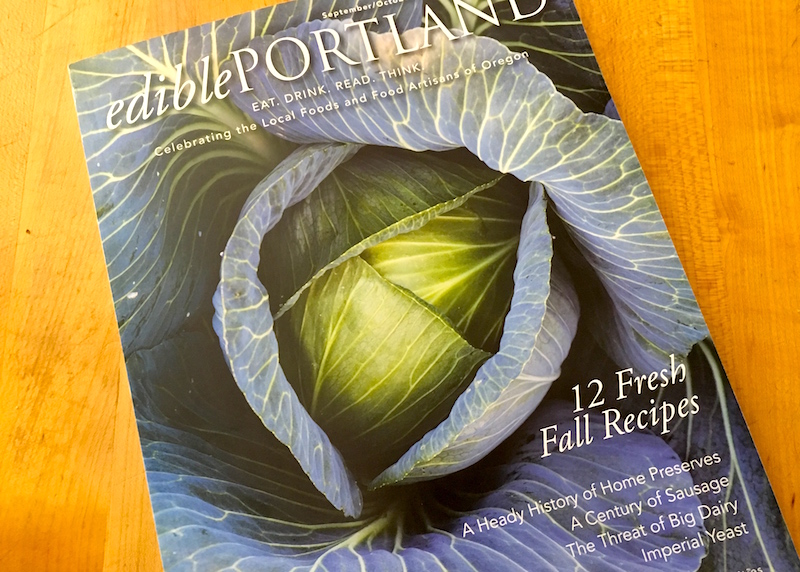
Food News: Farm Bill Reboot; Edible Portland Expires Under Cloud


Today Oregon Congressman Earl Blumenauer is hosting a broad range of experts and stakeholders for a forum titled “A Call for Reform: Fix the Farm Bill,” that focuses on the need to create a more visionary, equitable and cost-effective farm bill. The forum features Michael Pollan (top photo, center), author of The Omnivore’s Dilemma, who is delivering the keynote, followed by a panel discussion with a group of policy experts to discuss their ideas for the reform that he's calling The Food and Farm Act.

In an interview about his re-envisioned farm bill on the website Civil Eats, the congressman said that "we continue to pay too much to the wrong people to grow the wrong food in the wrong places" and that he's working to reform subsidies to support innovation and small-to-midsize farmers rather than large corporate agribusinesses.

As he told Good Stuff NW in an interview earlier this year, he's building a coalition of consumers, farmers and non-profits to provide "support for protecting the environment, water quality, habitat [and] things that help the farmer and have broader social and economic benefit. The big issue is that all the attention and subsidy is skewed toward things that don’t need it, and shortchanges things that do, upon which we’re heavily reliant."

One unique element of his efforts is a comic book, "The Fight for Food: Why You Deserve a Better Farm Bill," that explains why the Farm Bill matters to people who care about their food and talks about how they can get involved.

Read my interview with Rep. Blumenauer, part of "The Future of Our Food" series. Photo courtesy Rep. Earl Blumenauer's office.


* * *


Sad news came today that Alex Corcoran, owner and publisher of Edible Portland magazine, has announced that the magazine will cease publication after the current November/December issue.

Corcoran bought the magazine last year after Ecotrust, which had owned the publication since its inception in 2006, decided to cease publication after the Spring 2015 issue and put it up for sale. At the time that Corcoran bought it, Eric Thorkilsen, then-CEO of Edible Media, said, "Alex has a great track record of success managing Edible publications, starting with Edible Rhody [Edible Rhode Island] and continuing with Edible Seattle. His capacity to immerse himself in the local food community—forming solid relationships with small businesses and attracting a devoted readership—suggests a great future for Edible Portland."

The first edition under Corcoran's leadership was the September, 2016, issue. Corcoran initially posted an ad for the sale of the magazine, but because of contractual disagreements with Ecotrust, he has pulled the ad.

In an e-mail to Good Stuff NW, Carolyn Holland, VP of Engagement at Ecotrust, said that Corcoran "does not have the rights to sell the magazine. He has been in breach of his contract with Ecotrust since 2015 when he signed on to assume the license. While we were working with him to give him time to get it on track, now that he has decided to fold, the rights to magazine will revert to [Ecotrust]."

Mr. Corcoran declined a request to comment for this post.

* * *

UPDATE: I received the following update today (11/28) from Carolyn Holland at Ecotrust:

"Free Range Media, publisher of Edible Portland, is ceasing publication of the award-winning magazine at the end of 2017. According to a previous agreement, Edible Portland will return to its original owner and publisher, Ecotrust, which originally launched the magazine in 2006 as one of the first Edibles in the nation. Ecotrust will work with the national media organization Edible Communities, licensor of more than 90 Edible magazines across the United States and Canada, to find a new home for the magazine. Edible Portland boasts a devoted readership of more than 75,000 and has a solid base of both advertisers and contributors. Ecotrust is committed to supporting a smooth transition in ownership. If you are interested in becoming the publisher of Edible Portland, please contact Carolyn Holland, Ecotrust’s VP of Engagement, at 503.467.0754."

Read my recent article for Edible Portland, "Big Milk: Big Issues for Local Communities."

Correction: An earlier version of this post mistakenly stated that Edible Seattle was for sale. It is not. Corcoran is inviting a new publisher to start an Edible magazine in the South Sound area.

Sunday, March 26, 2017

The Future of Our Food: Rep. Earl Blumenauer on Putting Your Money Where Your Mouth Is


This series interviews farmers, food activists, politicians and policy wonks to try to get a handle on the seismic shift in our local food landscape due to the change of administrations in Washington.

Congressman Earl Blumenauer, a lifelong resident of Portland, Oregon, has devoted his entire career to public service. While a student at Lewis and Clark College, he spearheaded the effort to lower the voting age both in Oregon and at the national level. He ran for office and was elected to the Oregon Legislature in 1972, then in 1978 he was elected to the Multnomah County Commission. He ran for the Portland City Council in 1986, where his innovative accomplishments in transportation, planning and environmental programs helped Portland earn an international reputation as one of America’s most livable cities. After his election to Congress in 1996, Mr. Blumenauer became the chief spokesperson for Livable Communities: places where people are safe, healthy and economically secure. He also served on the Transportation and Infrastructure Committee, where he was a strong advocate for federal policies that address transportation alternatives, provide housing choices, support sustainable economies and improve the environment. He is currently a member of the Ways and Means Committee and the subcommittees on Health, Social Security and Trade. Every holiday season he makes a multitude—this year it was well over 200—of fruitcakes for friends and colleagues, saying this tradition, for him, is an exercise in connection, creation, and fellowship.

What are the critical issues affecting agriculture and our food system a) here in the Northwest and b) in the country as a whole?

The main problem we have is a massive system of agriculture support and fragmented policy that does not serve the broader interests for agriculture and nutrition. Oregon and Washington are particularly disadvantaged because it is skewed toward large industrial agriculture and processed food.

Oregon has a very diverse agricultural base, and it’s not dependent on large subsidies for major commodities like corn, rice, cotton, wheat, soy. We have some wheat, but in the rest of the country, the support flows to those major commodities. We have an agricultural base that, they’re called specialty crops, but it’s basically food and nursery, and our wine industry. These people don’t want federal subsidies [but] they would like support for innovation. They would like support for protecting the environment, water quality, habitat, things that help the farmer and have broader social and economic benefit. The big issue is that all the attention and subsidy is skewed toward things that don’t need it, and shortchanges things that do, upon which we’re heavily reliant.

I could take the next half hour and talk about how this administration’s devastating, cruel and inhumane policies on immigration threaten our wine industry, threaten our orchards, threaten the nursery industry, but I think the big issue for me is the mismatch between federal programs and priorities and the needs of most farmers and ranchers, especially in the Pacific Northwest.

Putting on your best prognosticating hat, what are the issues you think are going to be at the top of the list of the new administration, and how do you think they will address them?

It’s a big question mark. There has not been any sort of thoughtful, rational position paper that has emanated from either the Trump campaign or the Trump administration. When he convened some people early on, they weren’t exactly on the cutting edge of innovation and reform. But we truly don’t know. Mick Mulvaney, who’s the OMB (Office of Management and Budget) director, who’s been in charge of the slash-and-burn program, like the defunding of public broadcasting—Mick is not a fan of some of the wasteful agricultural subsidies. And who knows how that plays out?

In the Northwest, our farmers and ranchers are disadvantaged because we don’t have an effective program of crop insurance. It is so distorted and heavily subsidized that, in some cases, some commodity growers can plant crops they know will fail because they make so much from failure that it’s worth their while. At the same time, [for] people in the nursery industry [and] in the wine industry, there is no meaningful crop insurance for most of Oregon agriculture. [The system] doesn’t work for them. [Organic and sustainable farming] is another one of those areas where there ought to be some support from conservative forces. I don’t know where the administration is going to come down, but I’m working on a version of the Farm Bill that would make more sense for Oregon, and there are many conservative groups that are working with us to try and reform things like crop insurance. [Conservatives are involved in the issue] because no good is served by wasting money and not helping people who need it. So that’s something that I’ve found that they’re open to reforming to make it work better and, of course, save money. We all ought to be concerned about that.

What do we as citizens need to be paying attention to? What are the best sources for information on the issues?

The best source of information for us are the people who are in the field who are working on it now. Oregon has, as you know, a number of leaders in sustainable agriculture and national efforts for nurseries, for wine. They are quite innovative in organic. I think the best source for us all is to spend a little time with people who are trying to do it right. They’ve got some great observations. I’ve learned a lot from them and I think the more that we can connect to Oregon’s farmers and ranchers [who share] our values the better off we’re going to be.

In your opinion, what’s the most effective action citizens can take in the short term? In the long term?

I think the most effective action that citizens can take is to invest their time and money in the type of food that they think is worthy of it. Voting with your dollars to support farmers’ markets and value-added agriculture and being willing to spend a few pennies more to make sure that people who are taking a risk to do the right thing, that are being trailblazers, that are spending extra time and effort, that they’re supported. I think that if all of us voted to support the producers, the restaurants, the food products that mirror our values, that is in the short term is the single most important thing we can do. Help them be financially successful, show that there’s a market, and get used to enjoying the fruits of their hard work.

In the long term, I hope people will work with me to think through what a farm bill would look like just for Oregon. We’ve traveled the state for the last couple of years interacting with thousands of people, and we’ve got some pretty good recommendations that are being developed that we’re advancing. Those are the sorts of things that we want to get into the discussion of the next Farm Bill that I hope will be enacted.

We should [also] have a farm and food policy for Oregon. We should start by renaming the Department of Agriculture, like Jerry Brown did in California, the Department of Food and Agriculture. We ought to make sure that Oregonians who are in Congress are going to fight for provisions that are going to make a difference for us.

What organizations most need our support?

What I’m hoping that each Oregonian will do is to raise the need for sound food and farm policy with all the organizations that are impacted by food and farm policy. The people who are fighting hunger, like the Oregon Food Bank.

I had a meeting recently with probably two dozen environmental organizations that were sharing with me what their priorities were. We went all the way around the room and I heard from them and they are things that I care about, and I said none of you have mentioned the Farm Bill. Does anything in the Farm Bill affect your environmental priorities? People thought for a second, then they went around the room and everybody, every one of those organizations had a stake in the Farm Bill. People who care about conservation programs. People who care about water quality. People who care about wildlife. People who care about toxics. I mean, we went all the way around the room and everybody acknowledged that they had a stake.

There’s a move afoot back here in Washington, DC, to blow up the Affordable Care Act. I’ve been having dozens of meetings with people in the health sectors, we talk about their concerns and we compare notes and stuff, but in every one of those meetings, I ask, "What is your position on the Farm Bill?" And they think about it for a moment and [say] we have the food and farm policies that subsidizes a diet that literally makes us sick. It’s too expensive, especially for lower income people, seniors, to be able to have healthy food, and there are some subsidy programs we need more of. We don’t do a good enough job teaching children about where their food comes from, how to prepare it.

The Farm Bill has a tremendous impact on education. Everything from having healthy food in our schools to our prisons, to ecomomic development for small and beginning farmers. The average age of a farmer in the United States is pushing 60. It’s hard for young people to break into the market. The organizations that support family farms, the organizations that deal with economic development. Every organization that cares about the health and well-being of our people, our economy, and our environment should be involved with [the Farm Bill] and I think citizens ought to push on all the organizations that they have contact with to make sure they’re doing their part for a food and farm policy that works.

[As to the impression of most people that the Farm Bill is huge and intimidatingly complex], that’s a deliberate strategy. It’s complex and convoluted, and that way a small group of people can control the dialog and virtually nobody fully understands the Farm Bill.

This is an edited transcript of an interview I conducted with Congressman Blumenauer on Mar. 17, 2017.

Read the other posts in this series.