Showing posts with label xerces society. Show all posts

Saturday, July 27, 2019

Bumbles in My Back Yard!


Earlier this summer I was having a bit of a crisis. You see, for the last couple of summers we've had a very active bumblebee nest in our back yard. It's hidden behind a bed of hostas and a bleeding heart growing around the foundation of our garage, the entrance hidden under a scattering of oak leaves (see above).

Orange sacs on the bumblebee's back legs hold the pollen it has collected.

I was alerted to its presence when I was innocently watering the garden and suddenly heard a vibrant buzzing coming from a corner of the garden bed. Several fairly large bumblebees were circling around the area, looking for the intruder—me—who had apparently come a little too close to the nest.

Now, some people might freak out at the thought of a bees' nest in their back yard and call an exterminator. But knowing as I did that, in general, bumblebees are peaceful insects and will only sting when they feel cornered or when their hive is disturbed, I simply stepped back several feet and waited for them to realize I wasn't a threat. It also gave me a chance to see where they were returning to.

Of course my first act was not to look up the Wikipedia article on bumblebees. It was to call our long-suffering neighbor, who works for the Xerces Society and who puts up with my endless bee questions, along with the occasional accusation along the lines of "one of your friends just stung me!" He informed me that congratulations were in order because there was indeed a bumblebee nest under our garage and they seemed perfectly happy.

I felt like a new parent.

Busy as a bee collecting more pollen.

Which is why, when earlier this summer I observed no activity from the nest and very few bumblebees on the flowering shrubs and bushes on the block, I got a little panicky. When I consulted my neighbor (like I said, he puts up with a lot), he said it was possible that they had abandoned the nest, but with the unusually cool spring and early summer, they might just be late in appearing.

So I waited. And waited.

It was just about exactly when our neighbors' prodigious stand of lavender bushes burst into bloom that, joy of joys, I saw the bumbles return, buzzing happily from wand to wand, taking their gathered treasure back to the nest behind the garage. I was ecstatic. And yes, I texted our neighbor with the good news.

Saturday, April 21, 2018

Earth Day, 2018: Celebrate with the Bees!


What better way to celebrate Earth Day than with a tale of the simple joy brought to people by bees? The following essay  by Mace Vaughan, who co-directs the Xerces Society's Pollinator Conservation Program, was published here in 2015, and is just as relevant today as it was then.

In the summer of 2009, my family and I moved into a house across from the Sabin Elementary School in northeast Portland, Oregon. Our daughter started kindergarten at the school that fall. Sporadically, as other school parents learned of my work in pollinator conservation, they would ask me if I’d ever seen the “tickle bees.” I would respond with a polite “no,” unsure what they meant. Still, as the question continued to come up through the December holidays and into the late, wet winter, my curiosity grew. Everyone seemed to know about the tickle bees.

And then St. Patrick’s Day arrived. The sun shone and it was warm for a March afternoon. I sat in our dining room, working from home and enjoying the sounds of kids playing in the schoolyard across the street from our house. Every so often I would sneak a peek across the street to see if our daughter was running around, and that was when I spotted a boy, all alone, kneeling on the ground as he tried to catch something. He grabbed and lunged, attempting to seize it from the air. In that moment, it all came clear to me.

I waited until the kids had cleared out of the field, closed my computer, and walked across the street. And there, to my amazement, were the tickle bees of Sabin Elementary. Not tens, not hundreds, but thousands of gentle, ground-nesting bees were emerging all across the two-acre field. I was standing in a giant aggregation of mining bees, which turned out to be at least two species of the genus Andrena—christened the “tickle bees” by the students of Sabin.

For the next two months I watched as more and more bees emerged from the ground. Scattered across baseball diamonds, the bare dirt under park benches, and all across the soccer pitch were mounds of soil the bees had excavated from underground. They seemed to deepen their tunnels mostly at night; walking across the grounds in the morning you would see freshly dug dirt hiding the holes underneath. By the afternoon, the dirt was pushed aside as the females emerged to fly to the flowering maple trees, dandelions, and cherry and plum trees around the neighborhood. On an especially warm day, you couldn’t run across the field without bumping into these amazing insects.

As someone who has worked hard to convince people worldwide that insects are not a bunch of biting, stinging, crop-killing animals, but rather the drivers of healthy ecosystems, I was touched by the reception these bees received. For the two months the bees were active, parents and students regularly approached me with questions. I helped dozens of people discover what, for them, was a whole new world of ephemeral bees, with their golden stores of food and developing brood buried below soccer and kickball games.

Tickle bees are not unusual or uncommon. Every spring we receive calls at the office starting in early March from people wondering about the bees that are showing up in their lawns, whether they are safe, or just wanting to know what they are. Across the rest of the country, as spring comes on after this harsh winter, look for holes in the ground and bees flying. If you want to find your own tickle bees, go out on a warm spring day and watch sunny, south-facing slopes around your neighborhood. You might find your own aggregation of mining bees.

As for Sabin, five years later the tickle bees are going strong. As kids get older, they may lose interest. But each spring, a new group of kindergartners gets to meet the tickle bees and share something unique that their older classmates have cherished for years.

Watch an interview with Mace talking about the tickle bees of Sabin School.

Thursday, March 31, 2016

Food News: A Climate Solution; Herbicides in Wines; Neonicotinoid Pesticide Ban


Instead of fearing carbon, a Yale University lecturer is suggesting we farm it. In his recent book with the brain-numbing title The Carbon Farming Solution: A Global Toolkit of Perennial Crops and Regenerative Agriculture Practices for Climate Change Mitigation and Food Security, author Eric Toensmeier describes a system of "carbon farming" that is being developed in Veracruz, Mexico.

In an article about the book on GreenBiz.com, Toensmeier writes about an effort initiated by Ricardo Romero, a former cattleman who became concerned about the degradation of his pastureland from traditional ranching practices. He started a small cooperative called Las Cañadas which is demonstrating that a combination of methods like planting native trees, reintroducing cattle—a technique called silvopasture—as well as managed grazing, fodder banks and planting certain perennial crops, can feed people, build more fertile soils and contribute to ecosystem health without forcing communities to radically change their diets.

While not claiming that this is a turn-key solution to climate change, he posits that it is a step in the right direction and, if adopted globally along with a massive reduction in fossil fuel emissions, could contribute substantially to changing our current situation.

* * *


Before you toast the end of climate change as described above—it is, after all, just being modeled on a small scale—you might want to know that the herbicide glyphosate, the active ingredient in Monsanto's Roundup and recently declared a "probable carcinogen" by the World Health Organization, has been found in random testing of 10 California wines.

A study, initiated by the group Moms Across America after 14 brands of German beer were found to have traces of the herbicide, and described in an article in the Digital Journal, found that that the wines, including some organic wines, had residues that exceeded the limit of .1 micrograms per liter allowed for drinking water.

"Using the Microbe Inotech Lab of St.Louis, Missouri…a total of 10 different wines from large and small vineyards in the Napa Valley, Sonoma and Mendocino counties in California were tested. According to the final report, the contamination of conventional wine was 28 times higher than organic wine."

The article goes on to state that "wine growers on conventional farms say that glyphosates are probably in the manure and/or fertilizers they use from animals fed genetically modified grains" and that "one big concern is for the folks who buy organic products, expecting to get what they are paying for." It says that the organic wine was probably contaminated by overspray, or "drift," from neighboring farms using the herbicide.

Cheers!

* * *


Efforts to ban neonicotinoid pesticides, the systemic neorotoxin linked to global bee die-offs, got a boost last week from the state of Maryland, according to an article in the Washington Post. Governor Larry Hogan, a Republican, is expected to sign legislation passed by both houses of the state legislature to "ban stores from selling products laced with neonicotinoids to homeowners who tend to lather too much [of the pesticide] on trees and gardens."

Maryland's ban only applies to non-commercial uses of the pesticide, leaving "farmers and professionals who better understand how to apply them in a way that poses a lesser threat to bees…exempted by the law when it takes effect in 2018." Anyone who remembers the 2013 poisoning of more than 50,000 bees in Oregon by a commercial landscape company may disagree with this assumption.

Of this move by Maryland, Aimée Code of the Xerces Society, a national organization that promotes invertebrate conservation, said, "This is a great step forward to curb the use of chemicals that are causing dramatic harm in the environment."

Last year the Portland City Council banned pesticides containing neonicotinoids on city-owned property despite heavy pressure from industry lobbyists, though the pesticide is still widely available from suppliers and nurseries for use by commercial companies and private individuals. Wholesale nurseries routinely apply it on bedding plants used in commercial landscaping and for home gardens.

Here in the Northwest, Code said that while large nurseries often sell plants that are bred to "look pretty" but are often treated with pesticides because they are more susceptible to pests, smaller nurseries stock more native plants that aren't as vulnerable to local pests. In a win-win for pollinators and gardeners, she said that "our native bees prefer native plants" because they have higher levels of the pollen and nectar the bees are seeking.

So when you're out shopping for plants for your gardens, ask your local garden center if the plants you're interested in were treated with neonicotinoids, and consider purchasing native plants. Our bees will thank you!

Photo of bumblebee by Beth Nakamura for the Oregonian.

Friday, February 05, 2016

Food News: Campbell's Labels GMOs, USDA Drops Grass-Fed Standards, EPA Indicts Neonicotinoids


In what might be considered a tipping point in the battle over labeling genetically modified organisms (GMOs) in food products, Reuters reported that the Campbell's Soup Company "will label all its U.S. products for the presence of ingredients derived from genetically modified organisms." The company went a step further, announcing that it will break ranks with its peers and withdraw from any efforts to prevent such labeling.

In a press release on the company's website, Campbell's states that "it is necessary for the federal government to provide a national standard for labeling requirements to better inform consumers about this issue. The company will advocate for federal legislation that would require all foods and beverages regulated by the Food and Drug Administration (FDA) and the U.S. Department of Agriculture (USDA) to be clearly and simply labeled for GMOs. Campbell is also supportive of a national standard for non-GMO claims made on food packaging."

While a timeline to begin labeling its products has not been announced, it has prepared labels that will be used to comply with Vermont's recent passage of a GMO labeling law that will take effect in July 2016. The company said that if a national standard for labeling is not enacted quickly, "it was prepared to label all its U.S. products for the presence of ingredients that were derived from GMOs and would seek guidance from the FDA and approval by the USDA."

* * *


If you find yourself standing in front of your market's butcher case trying to decide between a grass fed steak and one from a cow that was raised conventionally, your decision has just become much more fraught.

The National Sustainable Agriculture Coalition reported that a battle between two federal agencies has led to the revocation of the standard for labeling grass fed meat. The USDA's Agricultural Marketing Service (AMS) "rescinded the labeling standard for grass fed meat, which was developed over the course of four years and finalized in 2006 with the support of national farm and consumer organizations."

This is a result of an internal turf battle that erupted between the AMS and the USDA's Food Safety Inspection Service (FSIS) over an internal legal decision that the AMS did not have the legal authority to establish the standard in the first place, instead declaring that the authority to make the decision rested solely with the FSIS.

This leaves farmers and meat producers to either revert to a previous, less rigorous grass fed meat standard or to develop one on their own, which could lead to a mish-mash of competing standards and claims, leaving the consumer to have to figure out which producer is telling the real story.

"Meat labeling just became even more confusing for farmers and consumers," Ferd Hoefner, policy director for the NSAC, is quoted as saying. "USDA is revoking a label standard that had widespread farm and consumer support. Actions such as this take us into a Wild West situation, where anything goes and both farmers and consumers lose."

* * *


The Xerces Society reports that an Environmental Protection Agency (EPA) report has found that one widely used neonicotinoid insecticide, imidacloprid, is a threat to pollinators. A preliminary risk assessment states that this neonicotinoid "potentially poses risk to hives when the pesticide comes in contact with certain crops that attract pollinators" even when used in legal applications.

Neonicotinoid insecticides affect the central nervous systems of insects, causing paralysis and death, and have been linked to colony collapse disorder in bees. The insecticides were at the center of the deaths of 50,000 bees in Oregon when blooming linden trees were sprayed with the insecticide, and have been implicated in subsequent large bee kills.

Addressing the effect of neonicotinoids on bees, Lori Ann Bund of the Center for Biological Diversity said in an article in the Oregonian that "bees who are exposed to even tiny levels experience hits to their neurological function. They can't find they way back to the hive, they have less foraging success, they can't communicate effectively, and they can't fight off wasps. Those are the impacts that are really significant on the population scale."

The Xerces Society, while noting some significant problems with parts of the EPA assessment, said that "the EPA’s preliminary assessment recognizes significant risks from the legal use of imidacloprid. If these risks are to be reversed, the EPA must suspend the use of imidacloprid until we know if and how it can be used without threatening bees and other pollinators."

Campbell's photos from Reuters and Campbell's Soup Co. Photo of cattle from USDA.

Tuesday, June 16, 2015

Why Celebrate Pollinators?


Oranges. Vegetables. Flowers. Nuts. None of these everyday items we take for granted would exist without the pollinators that make it possible for these plants to reproduce.

A bumblebee collecting pollen.

To put it in perspective, it's been estimated that pollinators are responsible for one out of three bites of food we humans eat. This week, June 15 through 21, is National Pollinator Week, a few days to appreciate these creatures and the huge part they play not only in our survival, but that of the planet. Responsible for the reproduction of 85% of the flowering plants around the world, they're critical for pollinating the plants that become food or habitat for other species. In addition, they themselves are a source of food for many birds and other wildlife.

Just who are these guys that we barely notice? Pollinators include bees, butterflies, moths, hummingbirds, some bats, some beetles, flies and wasps. Here are some simple steps that you can take to show your appreciation:
  • Plant native milkweed to help create monarch butterfly habitat.
  • Buy organic products whenever possible and talk with farmers at the farmers' market about what they do to create pesticide-free, flower-rich habitat on their farms.
  • When buying nursery plants for your garden, look for labels that say they haven't been treated with bee-killing pesticides like neonicotinoids.
For more information on pollinators, check out the Xerces Society, an organization dedicated to researching and the protecting pollinators and other invertebrates. Read more about the dangers of neonicotinoid pesticides.

Saturday, May 23, 2015

A Pollinator Garden: A Mother & Son Perspective


In honor of Mother's Day, which was marked earlier this month, the Xerces Society published this perspective on pollinator gardening. Alice Vaughan wrote a lovely narrative of her bee garden on Cape Cod in Massachusetts. Alice's son, Mace, who co-directs the Xerces pollinator program and is a contributor to Good Stuff NW, added his memories of sharing in the garden.

Alice's View of Her Garden

I have always enjoyed gardening. I love being among the plants and the bees that come to visit them. A few years ago I saw that Xerces was offering plants for sale that attracted bees. I was very excited. We had a bit of land along our driveway on which orange daylilies and ivy fought for dominance; a rather boring area, I had always thought. So, as soon as I heard of the Xerces offer, I knew I had to clear that area and plant a bee garden.

In the years since, the garden has thrived. I have expanded it with the help of our son, Mace, adding not only more plants that attract bees, but some of my personal favorites, as well. (Who says all of the plants in a bee garden have to attract bees?)

This garden is a joy to me. I stand in it in the spring and summer, close my eyes, and the world around me hums and vibrates with the bees, large and small. They are amazing to watch going about their work every day, or curled up to rest occasionally. Each time I drive in, I pause and roll down the window just to say hello and listen in appreciation of their lives in our world.

Mace's View of the Garden

The bee garden my mom describes is a place—almost a sanctuary—that connects us across a continent. Spring, summer and fall, I love hearing stories about new bees or new plants in the garden—on the last call, I learned that the milkweed was already 4 inches high! My dad makes sure to send photos, always with the date and time attached. And, when I visit, I enjoy adding plants or pulling weeds under the direction of my mom, or just watching the bees and sharing their hidden stories with my family.

This garden connects us. This is not unusual: gardens bring together families, neighbors, communities, nature. The garden is a way to share work and place, whether it is families working in the backyard to raise a small crop, community gardens that bring a neighborhood together, or a wildlife habitat that attracts bees, butterflies, and birds closer to home.

We are a private family, and I worried that this peek at a gift that I share with my family would somehow violate a trust. As I've put these words down, however, I think that this glimpse into our lives is okay. I'm struck by how lucky I am to share this experience with my mom, and I hope it helps inspire you to create a garden for pollinators and share it with the people you love.

Photos by Mace Vaughan.

Wednesday, April 22, 2015

The Tickle Bees of Sabin Elementary School


What better way to celebrate insects on Earth Day than with a tale of the simple joy brought to people by bees? The following essay was written by Mace Vaughan, who co-directs the Xerces Society's Pollinator Conservation Program.

In the summer of 2009, my family and I moved into a house across from the Sabin Elementary School in northeast Portland, Oregon. Our daughter started kindergarten at the school that fall. Sporadically, as other school parents learned of my work in pollinator conservation, they would ask me if I’d ever seen the “tickle bees.” I would respond with a polite “no,” unsure what they meant. Still, as the question continued to come up through the December holidays and into the late, wet winter, my curiosity grew. Everyone seemed to know about the tickle bees.

And then St. Patrick’s Day arrived. The sun shone and it was warm for a March afternoon. I sat in our dining room, working from home and enjoying the sounds of kids playing in the schoolyard across the street from our house. Every so often I would sneak a peek across the street to see if our daughter was running around, and that was when I spotted a boy, all alone, kneeling on the ground as he tried to catch something. He grabbed and lunged, attempting to seize it from the air. In that moment, it all came clear to me.

I waited until the kids had cleared out of the field, closed my computer, and walked across the street. And there, to my amazement, were the tickle bees of Sabin Elementary. Not tens, not hundreds, but thousands of gentle, ground-nesting bees were emerging all across the two-acre field. I was standing in a giant aggregation of mining bees, which turned out to be at least two species of the genus Andrena—christened the “tickle bees” by the students of Sabin.

For the next two months I watched as more and more bees emerged from the ground. Scattered across baseball diamonds, the bare dirt under park benches, and all across the soccer pitch were mounds of soil the bees had excavated from underground. They seemed to deepen their tunnels mostly at night; walking across the grounds in the morning you would see freshly dug dirt hiding the holes underneath. By the afternoon, the dirt was pushed aside as the females emerged to fly to the flowering maple trees, dandelions, and cherry and plum trees around the neighborhood. On an especially warm day, you couldn’t run across the field without bumping into these amazing insects.

As someone who has worked hard to convince people worldwide that insects are not a bunch of biting, stinging, crop-killing animals, but rather the drivers of healthy ecosystems, I was touched by the reception these bees received. For the two months the bees were active, parents and students regularly approached me with questions. I helped dozens of people discover what, for them, was a whole new world of ephemeral bees, with their golden stores of food and developing brood buried below soccer and kickball games.

Tickle bees are not unusual or uncommon. Every spring we receive calls at the office starting in early March from people wondering about the bees that are showing up in their lawns, whether they are safe, or just wanting to know what they are. Across the rest of the country, as spring comes on after this harsh winter, look for holes in the ground and bees flying. If you want to find your own tickle bees, go out on a warm spring day and watch sunny, south-facing slopes around your neighborhood. You might find your own aggregation of mining bees.

As for Sabin, five years later the tickle bees are going strong. As kids get older, they may lose interest. But each spring, a new group of kindergartners gets to meet the tickle bees and share something unique that their older classmates have cherished for years.

Watch a video from KATU-TV of Mace talking about the tickle bees at Sabin School.

Sunday, April 20, 2014

Tickle Bees Star at Sabin School


If you've noticed little bees buzzing in your grass, with tiny piles of dirt pushed up around little holes in bare patches, you might be lucky enough to be hosting Andrena bees, also known as miner bees. Sabin School, in northeast Portland, noticed that there was a large population of bees in the ball field adjacent to their school. Rather than calling in exterminators, they called the Xerces Society, a non-profit organization that works to preserve invertebrates and their habitats.

After examining the bees, to the relief of school officials and parents, the society told them they had a species of non-stinging bees in the family Andrenidae. In fact, the field was home to one of the largest populations of the bees that the Xerces Society had documented. Now the bees are not only the subject of science classes at the school, but they've been named the school's official mascots, the Tickle Bees.

Recently, local television station KATU came out to talk with Mace Vaughan, director of the Xerces Society's pollinator program, to talk about the bees.

Friday, April 11, 2014

Ask Before You Buy: Bee-Friendly Plants Might Kill Instead


There's a lot of buzz about the importance of pollinators to our food system and a big push for home gardeners to include more bee-friendly plants. Some of your neighbors, like mine, might be looking to get their yards officially certified as officially bug-friendly habitats. So it's time to start making lists of the plants and seeds we need, then head to the nursery, right?

Well, pause a moment in that list-making, friends, because what you may not be aware of is that some of those lovely plants at the nursery labeled as "bee friendly" might actually be harmful or even toxic to pollinators. Remember last year when a Wilsonville landscaping company sprayed dozens of blooming linden trees, killing more than 50,000 bumblebees? The insecticide they used to spray the trees—apparently without reading the instructions, which strictly forbade using it on trees in bloom and which the company was subsequently fined a bit more than $2,800, about a nickel a bee—is one that is often used on landscaping plants.

Called a neonicotinoid, or "neonic" (pron. NEE-oh-nick), it's a systemic chemical that's absorbed by the plant and dispersed through the plant tissues, including pollen and nectar. Developed to target nerve impulses in insects and other invertebrates, neonicotinoids are deemed "safe" since harm to humans and other mammals is minimal. However, neonicotinoids are toxic to bees and many other beneficial insects and can linger in the soil for months or even years, where they can be picked up by the next season’s plants.

Even when used according to printed instructions, the concentration of neonicotinoids in garden products can be dozens of times greater than the amounts found on farm crops. This means that bees can be exposed to lethal doses of neonicotinoids in gardens. Even if bees are not killed outright, smaller, nonlethal doses can impact their health, causing bumblebee colonies to grow more slowly, produce fewer queens and impair honeybees' ability to fly, navigate and forage for food.

Only one nursery in the Portland area, Garden Fever on NE Fremont, has pulled all pesticides containing this group of chemicals from its shelves. At any of the other garden stores it's important to ask staff people if the plant you're buying has been treated with systemic pesticides at the wholesale nursery or grower, or if that grower uses neonicotinoids in spray form or as granules (since they can travel through the air or linger in soil). If the staff doesn't know or isn't sure, you can call the distributor, but your best bet would be to buy organic plants and starts to be sure.

Above all, according to Mace Vaughan, Pollinator Program Director at the Xerces Society, "folks should be looking for alternatives to pesticides, which means using no long-lived neonics and learning how to apply the least harmful methods." He highly recommends consulting Metro's Natural Gardening website. (Download Metro's natural gardening guide.)

If you want to take that a step further and get active in the effort to classify neonicotinoid pesticides as "restricted use" in Oregon—which would mandate that any commercial use (e.g. at a greenhouse) requires a trained applicator—you should contact your state representative. As it stands now, Vaughan says, "if I owned a nursery in this state, my 11-year-old daughter could go out and spray everything with neonics. Common sense dictates that trained applicators should be the only ones do this, which dovetails with the new law (HB4139) passed in the last legislative session requiring that trained applicators learn about bee protection."

For more information on neonicotinoids and their use, download the Xerces Society's brochure, Protecting Bees from Neonicotinoid Insecticides in Your Garden.

Top photo: buff-tailed bumblebee (bombus terrestris) by Alvesgaspar from Wikimedia Commons.

Wednesday, November 20, 2013

Great Gifting: Kids' Stuff


It's hard enough thinking of gifts for Aunt Ilda or Cousin Terence, but when it comes to kids my mind goes completely blank. A trip to Toys R Us is out of the question—I wouldn't even go there for my own kid—and the incredibly plastic aisles at the local department store, with their shelves overflowing with trucks and action figures for boys and pink ponies and princesses for girls make me despair for our future.

Parents are usually a good resource for suggestions, but I've got a few to consider, too:

Cooking classes: The classes from Melinda and Susana at Portland's Culinary Workshop are open to all ages, from making Asian dumplings to learning how to create delicious vegetarian entrées. A certain level of motor skills is probably a good thing, but these gals are so dexterous at getting folks excited about food that they can handle any age, from young to ancient. Gift certificates are available for individual classes or you can pick an amount and let your giftee choose the class.

Science books: The Xerces Society has books that'll get the budding entomologist on your list wanting to head outside with a magnifying glass. From dragonflies to bees to beetles, the books on their list are both fascinating for young readers and affordable for givers. Plus a portion of each sale goes to support this great organization.

Butterfly poster: This stunning Butterfly Alphabet Poster was created several years ago by Norwegian photographer Kjell Sandved from details of his photographs of butterfly wings. Gorgeous and educational…it doesn't get better than that!

Kids farm camps: The wonderful Zenger Farm is a working farm and education center on SE Powell. It's offering Winter Cooking Camps for kids in 4th to 6th grade over the Christmas holidays (they'll also be offering camps and classes this summer) where kids can learn to cook with fresh ingredients as well as see where and how it grows. I only wish there had been camps like this when I was a kid! Gift certificates are available by contacting Allison O’Sullivan.


Goldiblox: Designed by a woman engineer to get little girls excited about engineering, Goldiblox combines stories and design challenges that make it fun to explore physics, math and science. We can only hope some of them decide to go on to a career making all our lives better. (Watch Goldiblox creator Debbie Sterling's inspiring TED presentation.)

Read the other posts in this series: Gifts That Give Back, Mad Skills, Bookin' It and Good Eatin'.

Friday, July 12, 2013

The Buzz: Banning the Bee-Killers


Fifty thousand bees killed in a Wilsonville parking lot. Millions of bees killed in a single event in Canada. All laid to the use pesticides containing a group of chemicals called neonicotinoids, which are used in many commercial sprays and can even be purchased in most hardware stores and nurseries under various trade names.

Today Oregon Congressman Earl Blumenauer joined Xerces Society executive director Scott Hoffman Black in introducing the Save American Pollinators Act. The legislation suspends the registration of any neonicotinoid for use in seed treatment, soil application or foliar treatment on bee-attractive plants until the Environmental Protection Agency reviews these chemicals and makes a new determination about their proper application and safe use.

The fact that neonicotinoids are known to kill pollinators like bees and other beneficial insects is not news. The European Union banned neonicotinoids earlier this year, noting the chemicals, which attack the insects' nervous systems, could be directly related to falling bee numbers. Neonicotinoids were originally thought to be a "silver bullet" pesticide because they are absorbed into the plant tissues, meaning they aren't washed off by rain and they remain in the tissue for a significant period after application.

Unfortunately for the insects that depend on the plants for their survival, the chemicals are also found in the flower nectar and pollen when the plant blooms. The University of Minnesota’s Dr. Marla Spivak, a leading global authority on bee health, said that in addition, neonicotinoids "are long-lasting in soil and they readily move into water. If the Oregon event is an indication of what is happening more widely, we will begin to see catastrophic threats to food security and the pollination of wild plants."

The announcement of the Save the Pollinators Act was announced in Portland, Oregon, at Garden Fever, a local nursery that has pulled all products containing neonicotinoids from their shelves.

* * *

Meet Representative Earl Blumenauer and express your support for the Save the Pollinators Act at the Sabin Neighborhood Bee-Friendly Garden Tour, an event to celebrate bee-friendly gardening with a tour of neighborhood backyards and gardens. It's also a great way to learn more about how to make your yard and garden more friendly to pollinators!

Details: Sabin Neighborhood Bee-Friendly Garden Tour. Sun., July 14, 11 am-3 pm. Rep. Blumenauer will kick off the tour at 11:15 am at the garden of Diane Benson, 3926 NE 11th Ave. Call 503-232-6639, ext. 102, for information about the event.

More information on the killing of 50,000 bees in Wilsonville.

Top photo from the Xerces Society. Bumble bee photo by Motoya Nakamura for The Oregonian.

Friday, June 21, 2013

The Buzz: Dead and Dying Bees Still Being Found


In a press release, Rich Hatfield, a biologist with the Xerces Society, estimated that over 50,000 bumble bees were killed in the Wilsonville tragedy, a number that represents more than 300 wild colonies.

“Each of those colonies could have produced multiple new queens that would have gone on to establish new colonies next year," he said. "This makes the event particularly catastrophic.”

Volunteers making nets to wrap trees.

An earlier report stated that the Oregon Department of Agriculture (ODA) confirmed that the bee deaths were caused by the bees coming into contact with dinotefuran, the active ingredient in the pesticide Safari, made by the Valent Corporation. A neonicotinoid, it contains a powerful neurotoxin that, according to the instructions, should never be applied to a blooming tree full of pollinators as it was in the case of the linden trees in Wilsonville.

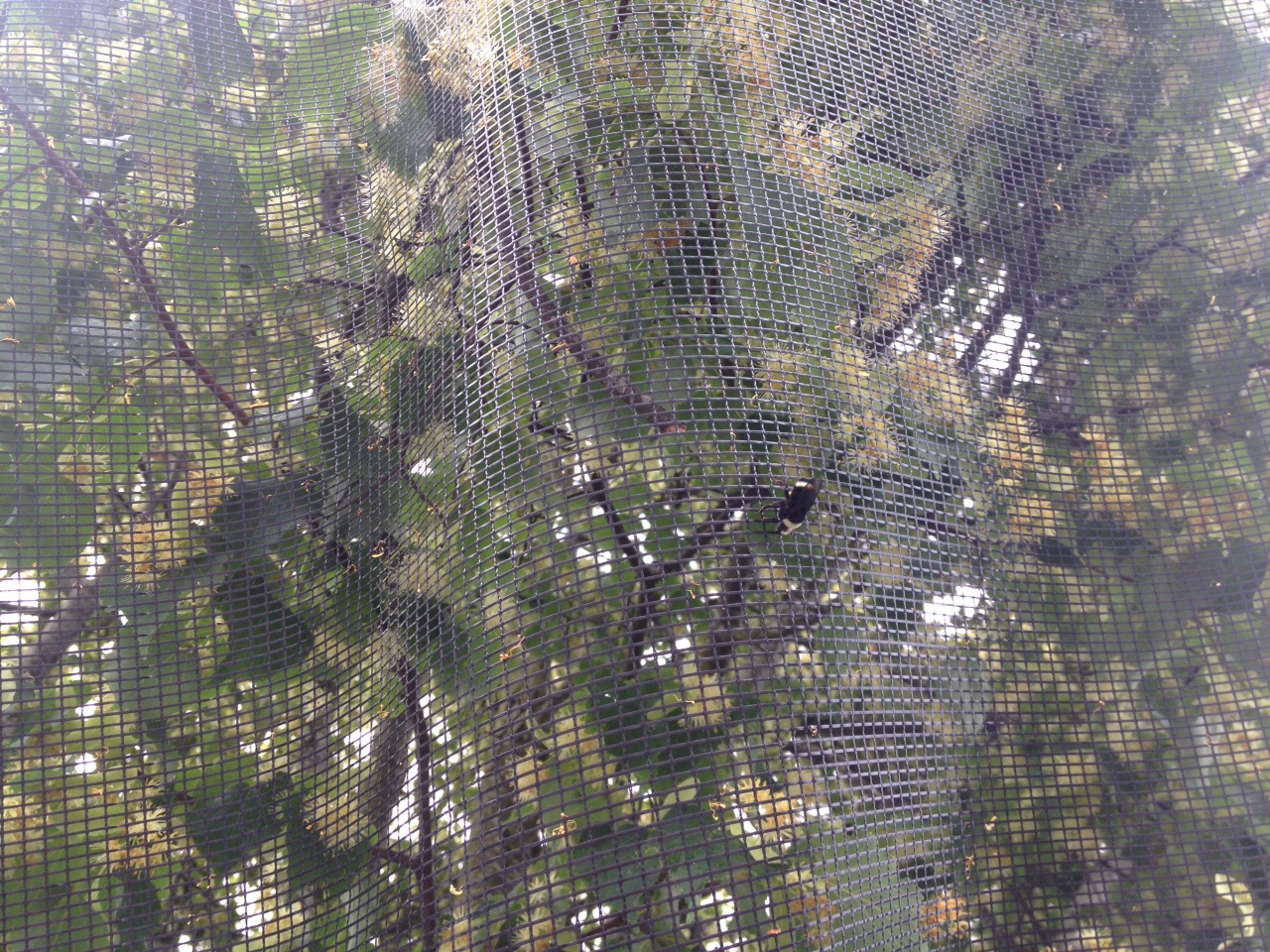
The city of Wilsonville, along with staff from the Xerces Society and the ODA, have been working feverishly to cover the trees with nets to keep the bees from coming into contact with the poison. Workers estimate that all 50 trees should be covered by the end of the day on Friday.


Update: 7 am, 6/24/13 Mace Vaughan, Pollinator Program Dir. for the Xerces Society, posted on the Xerces Facebook page: ""By 5 pm on Friday (June 21), the City of Wilsonville, with help from boom trucks and crews from at least four nearby cities, the Oregon Dept. of Agriculture and Xerces Society had covered all 55 poisoned trees in netting. Amazing!! We cannot thank the City of Wilsonville enough for their rapid response!"

Read the first report in this series: "City Steps in to Save Bees"

Video and photos courtesy Mace Vaughan, Pollinator Program Dir., Xerces Society.

The Buzz: City Steps in to Save Bees


The City of Wilsonville and the Xerces Society are wrapping 50 linden trees in netting to help save bees from the misapplication of the pesticide Safari, a powerful neonicotinoid made by the Valent Corporation, that has killed more than 25,000 bees so far in this one event.

Wrapping trees with protective netting.

The landscaping company that did the spraying, which has yet to be named, sprayed the 30-foot trees while they were in full bloom, a use specifically prohibited by the instructions that come with the pesticide. No legal action has been initiated as of today, but the city and the Xerces Society are in discussions with the property owners and the property manager, Elliot & Associates.

Neonicotinoids, a class of neuro-active insecticides chemically related to nicotine, are still legal in the United States, but have been banned in Europe due to evidence of a connection to honey-bee colony collapse disorder.

Xerces Society staff helps with netting.

Ironically, this tragic occurrence coincided with the beginning of National Pollinator Week, meant to "raise awareness about the importance of bees, birds and other pollinator species to agriculture, forest and grassland environments and other ecosystems," according to Agriculture Secretary Tom Vilsack.

Xerces Society Executive Director Scott Black, in an interview, said that to prevent future events like this, "we need to take action to protect native pollinators" from "the use and over use of toxic insecticides."


Update: Noon, 6/21/13 The Oregon Department of Agriculture (ODA) confirmed in a press release that the bumblebees were poisoned by dinotefuran, the active ingredient in Safari, the neonicotinoid sprayed on the trees. According to the press release, "ODA continues its active investigation of the incident to determine if the pesticide application was in violation of state and federal pesticide regulations."


Update: 3 pm, 6/21/13 Rich Hatfield, biologist for the Xerces Society, now estimates that more than 50,000 bees were poisoned in Wilsonville in the largest mass bumblebee death on record. (Read the post.)

Read the second report in this series: "Dead and Dying Bees Still Being Found"

Photos by Mace Vaughan, Pollinator Program Director of the Xerces Society.

Saturday, December 15, 2012

Great Gifting: Give a Little, Get a Lot


Making lists, checking them twice…and don't get me started on the whole naughty or nice thing. It's just all too much to keep track of!

So I say opt out, walk away, leave it at the door. No one I know needs more stuff, and the idea of the holidays (and, come to think of it, life in general) is to give joy, spread peace and love and generally try to make the planet a better place, right?

And who wouldn't like—instead of smiling politely and wondering how long they have to display a gift before it goes in the Goodwill pile—to know that they're helping to further the work of those doing good in the world?

There are lots of folks in our community laboring to do just that every day, and are deserving of support for their efforts. Here are a few of my favorites. Please consider giving a gift in the name of your loved ones!
  • Zenger Farm: A working urban farm that models, promotes and educates the community about sustainable food systems, environmental stewardship, community development and access to good food for all. They also provide training for immigrant and refugee farmers in language and business skills as well as urban agriculture.
  • Friends of Family Farmers: Building a strong and united voice for Oregon’s independent family farmers, food advocates, and concerned citizens who are working to foster an approach to agriculture that respects the land, treats animals humanely, sustains local communities, and provides a viable livelihood for family farmers.
  • Organic Seed Alliance: Advances the ethical development and stewardship of the genetic resources of agricultural seed. This is accomplished through collaborative education, advisory services and research programs with organic farmers and other seed professionals.
  • Farmers Market Fund: Improving access for underserved communities to food grown by local farmers and provide opportunities to learn about the benefits of fresh, local food. The Fresh Exchange program provides a dollar-for-dollar match to Supplemental Nutrition Assistance Program (SNAP) users at three neighborhood farmers markets. In Willamette Week Give Guide under Health & Wellness section.
  • Farmers Ending Hunger: Utilizing the productive resources of Oregon’s farmers to fight hunger, FEH relies on the Oregon Food Bank’s network of social-service programs to distribute locally grown, high-quality food to hungry individuals. To date, more than 7.9 million pounds of fresh produce and commodities like wheat have been donated.  In Willamette Week Give Guide under Social Action section.
  • Xerces Society: Protecting wildlife through the conservation of invertebrates and their habitat. For 40 years, the Society has been at the forefront of invertebrate protection, working with farmers here in Oregon and worldwide, harnessing the knowledge of scientists and the enthusiasm of citizens to implement conservation programs. Perfect for the bug-lover in your circle!

Sunday, July 22, 2012

Livin' in the Blurbs: To Bee or Not To Bee…


First chickens, then goats. Now being into bees is the latest preoccupation among urban agriculturists in this most ag-obsessed city. In its third year, the Tour de Hives not only celebrates this industrious pollinator, it gives enthusiasts (wannabees?) the opportunity to learn what's going on in the backyards of other apiarists and learn the secrets of their success. Coinciding with National Bee Day on August 18 and organized by the Zenger Farm Bee Group, the tour will feature hives in the North, Northeast, Southeast and Gladstone areas. Best of all, the day is capped by lifting pints and discussing the finer points of beekeeping at the Lucky Lab pub. Now to organize an urban pig tour followed by a smoke-off…

Details: Tour de Hives organized by the Zenger Farm Bee Group. Sun., Aug. 18, 1-4 pm; post-event gathering at Lucky Lab at 915 SE Hawthorne, 4-6 pm. Tickets $5-$15 sliding scale with preregistration.

* * *

For those too squeamish (or allergic) to want to put in their own beehives, there are ways to promote these infinitely useful invertebrates. One Northeast neighborhood has organized the Sabin Bee-Friendly Front Garden Tour that shows how easy and beautiful it is to plant a bee-friendly habitat. With 30 neighborhood homes participating, the tour is self-guided and you can peruse the gardens at your leisure all summer long. Even more helpful, there's an audio track available narrated by the homeowners themselves talking about their gardens. It's a great opportunity to learn a lot with little effort other than taking a walk through this lovely area.

Details: Sabin Bee-Friendly Garden Tour. Map available online or at Livingscape, Garden Fever or the Backyard Bird Shop Fremont location. Narrated audio track can be heard at 503-205-0326. For more information e-mail Diane Benson.

* * *

And if the above activities aren't enough for you, or you get insanely inspired and become convinced bees are your new life's calling, there are several places you can get your bee on, learn more about hives and talk to your heart's content with other bee enthusiasts. (Don't you love living in Portland?) Check out these places for information:

Monday, April 09, 2012

Tickle Bee Time!


Dave saw him first. Our neighbor, Mace, was on his knees in the school field across the street. No, he hadn't lost a contact lens or dropped his keys.

You see, Mace is a bee guy, and he was giddy over the Andrena sitiliae that had just made their annual appearance in the field. The school kids call them "tickle bees" for the way they feel when they crawl on your skin without biting or stinging.

Mace's assistant, a budding entomologist.

Mace, the pollinator program director (like I said, "bee guy") for the Xerces Society, has been helping to educate the kids about these little bees and their importance in the local ecosystem. He's working on a video about the bees to use at the school and to help illustrate the importance of pollinators on his nationwide lecture, so I'll post that when it's available.

Until then, enjoy these little guys for what they signify. As Mace said, "It's a sure sign that spring is officially here."

Wednesday, June 08, 2011

A Bee, See?


The other day I was invited to tag along as my neighbor, Mace Vaughan, Pollinator Program Director of The Xerces Society, inspected the hive at a nearby neighbor's home.

The hive had swarmed into a nearby tree (left) a couple of days before. Another box, or "super" in beekeeping terminology, had been added to give them more room, and Mace wanted to take a look. Mace's daughter came along and that's her you hear in the video.

Note that the guys are just wearing hoods and veils, but no other protection and neither was stung. The bees completely ignored me, though I was standing nearby and wasn't protected at all. Fascinating!