Showing posts with label mace vaughan. Show all posts

Saturday, April 21, 2018

Earth Day, 2018: Celebrate with the Bees!


What better way to celebrate Earth Day than with a tale of the simple joy brought to people by bees? The following essay  by Mace Vaughan, who co-directs the Xerces Society's Pollinator Conservation Program, was published here in 2015, and is just as relevant today as it was then.

In the summer of 2009, my family and I moved into a house across from the Sabin Elementary School in northeast Portland, Oregon. Our daughter started kindergarten at the school that fall. Sporadically, as other school parents learned of my work in pollinator conservation, they would ask me if I’d ever seen the “tickle bees.” I would respond with a polite “no,” unsure what they meant. Still, as the question continued to come up through the December holidays and into the late, wet winter, my curiosity grew. Everyone seemed to know about the tickle bees.

And then St. Patrick’s Day arrived. The sun shone and it was warm for a March afternoon. I sat in our dining room, working from home and enjoying the sounds of kids playing in the schoolyard across the street from our house. Every so often I would sneak a peek across the street to see if our daughter was running around, and that was when I spotted a boy, all alone, kneeling on the ground as he tried to catch something. He grabbed and lunged, attempting to seize it from the air. In that moment, it all came clear to me.

I waited until the kids had cleared out of the field, closed my computer, and walked across the street. And there, to my amazement, were the tickle bees of Sabin Elementary. Not tens, not hundreds, but thousands of gentle, ground-nesting bees were emerging all across the two-acre field. I was standing in a giant aggregation of mining bees, which turned out to be at least two species of the genus Andrena—christened the “tickle bees” by the students of Sabin.

For the next two months I watched as more and more bees emerged from the ground. Scattered across baseball diamonds, the bare dirt under park benches, and all across the soccer pitch were mounds of soil the bees had excavated from underground. They seemed to deepen their tunnels mostly at night; walking across the grounds in the morning you would see freshly dug dirt hiding the holes underneath. By the afternoon, the dirt was pushed aside as the females emerged to fly to the flowering maple trees, dandelions, and cherry and plum trees around the neighborhood. On an especially warm day, you couldn’t run across the field without bumping into these amazing insects.

As someone who has worked hard to convince people worldwide that insects are not a bunch of biting, stinging, crop-killing animals, but rather the drivers of healthy ecosystems, I was touched by the reception these bees received. For the two months the bees were active, parents and students regularly approached me with questions. I helped dozens of people discover what, for them, was a whole new world of ephemeral bees, with their golden stores of food and developing brood buried below soccer and kickball games.

Tickle bees are not unusual or uncommon. Every spring we receive calls at the office starting in early March from people wondering about the bees that are showing up in their lawns, whether they are safe, or just wanting to know what they are. Across the rest of the country, as spring comes on after this harsh winter, look for holes in the ground and bees flying. If you want to find your own tickle bees, go out on a warm spring day and watch sunny, south-facing slopes around your neighborhood. You might find your own aggregation of mining bees.

As for Sabin, five years later the tickle bees are going strong. As kids get older, they may lose interest. But each spring, a new group of kindergartners gets to meet the tickle bees and share something unique that their older classmates have cherished for years.

Watch an interview with Mace talking about the tickle bees of Sabin School.

Thursday, March 31, 2016

Food News: A Climate Solution; Herbicides in Wines; Neonicotinoid Pesticide Ban


Instead of fearing carbon, a Yale University lecturer is suggesting we farm it. In his recent book with the brain-numbing title The Carbon Farming Solution: A Global Toolkit of Perennial Crops and Regenerative Agriculture Practices for Climate Change Mitigation and Food Security, author Eric Toensmeier describes a system of "carbon farming" that is being developed in Veracruz, Mexico.

In an article about the book on GreenBiz.com, Toensmeier writes about an effort initiated by Ricardo Romero, a former cattleman who became concerned about the degradation of his pastureland from traditional ranching practices. He started a small cooperative called Las Cañadas which is demonstrating that a combination of methods like planting native trees, reintroducing cattle—a technique called silvopasture—as well as managed grazing, fodder banks and planting certain perennial crops, can feed people, build more fertile soils and contribute to ecosystem health without forcing communities to radically change their diets.

While not claiming that this is a turn-key solution to climate change, he posits that it is a step in the right direction and, if adopted globally along with a massive reduction in fossil fuel emissions, could contribute substantially to changing our current situation.

* * *


Before you toast the end of climate change as described above—it is, after all, just being modeled on a small scale—you might want to know that the herbicide glyphosate, the active ingredient in Monsanto's Roundup and recently declared a "probable carcinogen" by the World Health Organization, has been found in random testing of 10 California wines.

A study, initiated by the group Moms Across America after 14 brands of German beer were found to have traces of the herbicide, and described in an article in the Digital Journal, found that that the wines, including some organic wines, had residues that exceeded the limit of .1 micrograms per liter allowed for drinking water.

"Using the Microbe Inotech Lab of St.Louis, Missouri…a total of 10 different wines from large and small vineyards in the Napa Valley, Sonoma and Mendocino counties in California were tested. According to the final report, the contamination of conventional wine was 28 times higher than organic wine."

The article goes on to state that "wine growers on conventional farms say that glyphosates are probably in the manure and/or fertilizers they use from animals fed genetically modified grains" and that "one big concern is for the folks who buy organic products, expecting to get what they are paying for." It says that the organic wine was probably contaminated by overspray, or "drift," from neighboring farms using the herbicide.

Cheers!

* * *


Efforts to ban neonicotinoid pesticides, the systemic neorotoxin linked to global bee die-offs, got a boost last week from the state of Maryland, according to an article in the Washington Post. Governor Larry Hogan, a Republican, is expected to sign legislation passed by both houses of the state legislature to "ban stores from selling products laced with neonicotinoids to homeowners who tend to lather too much [of the pesticide] on trees and gardens."

Maryland's ban only applies to non-commercial uses of the pesticide, leaving "farmers and professionals who better understand how to apply them in a way that poses a lesser threat to bees…exempted by the law when it takes effect in 2018." Anyone who remembers the 2013 poisoning of more than 50,000 bees in Oregon by a commercial landscape company may disagree with this assumption.

Of this move by Maryland, Aimée Code of the Xerces Society, a national organization that promotes invertebrate conservation, said, "This is a great step forward to curb the use of chemicals that are causing dramatic harm in the environment."

Last year the Portland City Council banned pesticides containing neonicotinoids on city-owned property despite heavy pressure from industry lobbyists, though the pesticide is still widely available from suppliers and nurseries for use by commercial companies and private individuals. Wholesale nurseries routinely apply it on bedding plants used in commercial landscaping and for home gardens.

Here in the Northwest, Code said that while large nurseries often sell plants that are bred to "look pretty" but are often treated with pesticides because they are more susceptible to pests, smaller nurseries stock more native plants that aren't as vulnerable to local pests. In a win-win for pollinators and gardeners, she said that "our native bees prefer native plants" because they have higher levels of the pollen and nectar the bees are seeking.

So when you're out shopping for plants for your gardens, ask your local garden center if the plants you're interested in were treated with neonicotinoids, and consider purchasing native plants. Our bees will thank you!

Photo of bumblebee by Beth Nakamura for the Oregonian.

Saturday, May 23, 2015

A Pollinator Garden: A Mother & Son Perspective


In honor of Mother's Day, which was marked earlier this month, the Xerces Society published this perspective on pollinator gardening. Alice Vaughan wrote a lovely narrative of her bee garden on Cape Cod in Massachusetts. Alice's son, Mace, who co-directs the Xerces pollinator program and is a contributor to Good Stuff NW, added his memories of sharing in the garden.

Alice's View of Her Garden

I have always enjoyed gardening. I love being among the plants and the bees that come to visit them. A few years ago I saw that Xerces was offering plants for sale that attracted bees. I was very excited. We had a bit of land along our driveway on which orange daylilies and ivy fought for dominance; a rather boring area, I had always thought. So, as soon as I heard of the Xerces offer, I knew I had to clear that area and plant a bee garden.

In the years since, the garden has thrived. I have expanded it with the help of our son, Mace, adding not only more plants that attract bees, but some of my personal favorites, as well. (Who says all of the plants in a bee garden have to attract bees?)

This garden is a joy to me. I stand in it in the spring and summer, close my eyes, and the world around me hums and vibrates with the bees, large and small. They are amazing to watch going about their work every day, or curled up to rest occasionally. Each time I drive in, I pause and roll down the window just to say hello and listen in appreciation of their lives in our world.

Mace's View of the Garden

The bee garden my mom describes is a place—almost a sanctuary—that connects us across a continent. Spring, summer and fall, I love hearing stories about new bees or new plants in the garden—on the last call, I learned that the milkweed was already 4 inches high! My dad makes sure to send photos, always with the date and time attached. And, when I visit, I enjoy adding plants or pulling weeds under the direction of my mom, or just watching the bees and sharing their hidden stories with my family.

This garden connects us. This is not unusual: gardens bring together families, neighbors, communities, nature. The garden is a way to share work and place, whether it is families working in the backyard to raise a small crop, community gardens that bring a neighborhood together, or a wildlife habitat that attracts bees, butterflies, and birds closer to home.

We are a private family, and I worried that this peek at a gift that I share with my family would somehow violate a trust. As I've put these words down, however, I think that this glimpse into our lives is okay. I'm struck by how lucky I am to share this experience with my mom, and I hope it helps inspire you to create a garden for pollinators and share it with the people you love.

Photos by Mace Vaughan.

Wednesday, April 22, 2015

The Tickle Bees of Sabin Elementary School


What better way to celebrate insects on Earth Day than with a tale of the simple joy brought to people by bees? The following essay was written by Mace Vaughan, who co-directs the Xerces Society's Pollinator Conservation Program.

In the summer of 2009, my family and I moved into a house across from the Sabin Elementary School in northeast Portland, Oregon. Our daughter started kindergarten at the school that fall. Sporadically, as other school parents learned of my work in pollinator conservation, they would ask me if I’d ever seen the “tickle bees.” I would respond with a polite “no,” unsure what they meant. Still, as the question continued to come up through the December holidays and into the late, wet winter, my curiosity grew. Everyone seemed to know about the tickle bees.

And then St. Patrick’s Day arrived. The sun shone and it was warm for a March afternoon. I sat in our dining room, working from home and enjoying the sounds of kids playing in the schoolyard across the street from our house. Every so often I would sneak a peek across the street to see if our daughter was running around, and that was when I spotted a boy, all alone, kneeling on the ground as he tried to catch something. He grabbed and lunged, attempting to seize it from the air. In that moment, it all came clear to me.

I waited until the kids had cleared out of the field, closed my computer, and walked across the street. And there, to my amazement, were the tickle bees of Sabin Elementary. Not tens, not hundreds, but thousands of gentle, ground-nesting bees were emerging all across the two-acre field. I was standing in a giant aggregation of mining bees, which turned out to be at least two species of the genus Andrena—christened the “tickle bees” by the students of Sabin.

For the next two months I watched as more and more bees emerged from the ground. Scattered across baseball diamonds, the bare dirt under park benches, and all across the soccer pitch were mounds of soil the bees had excavated from underground. They seemed to deepen their tunnels mostly at night; walking across the grounds in the morning you would see freshly dug dirt hiding the holes underneath. By the afternoon, the dirt was pushed aside as the females emerged to fly to the flowering maple trees, dandelions, and cherry and plum trees around the neighborhood. On an especially warm day, you couldn’t run across the field without bumping into these amazing insects.

As someone who has worked hard to convince people worldwide that insects are not a bunch of biting, stinging, crop-killing animals, but rather the drivers of healthy ecosystems, I was touched by the reception these bees received. For the two months the bees were active, parents and students regularly approached me with questions. I helped dozens of people discover what, for them, was a whole new world of ephemeral bees, with their golden stores of food and developing brood buried below soccer and kickball games.

Tickle bees are not unusual or uncommon. Every spring we receive calls at the office starting in early March from people wondering about the bees that are showing up in their lawns, whether they are safe, or just wanting to know what they are. Across the rest of the country, as spring comes on after this harsh winter, look for holes in the ground and bees flying. If you want to find your own tickle bees, go out on a warm spring day and watch sunny, south-facing slopes around your neighborhood. You might find your own aggregation of mining bees.

As for Sabin, five years later the tickle bees are going strong. As kids get older, they may lose interest. But each spring, a new group of kindergartners gets to meet the tickle bees and share something unique that their older classmates have cherished for years.

Watch a video from KATU-TV of Mace talking about the tickle bees at Sabin School.

Sunday, April 20, 2014

Tickle Bees Star at Sabin School


If you've noticed little bees buzzing in your grass, with tiny piles of dirt pushed up around little holes in bare patches, you might be lucky enough to be hosting Andrena bees, also known as miner bees. Sabin School, in northeast Portland, noticed that there was a large population of bees in the ball field adjacent to their school. Rather than calling in exterminators, they called the Xerces Society, a non-profit organization that works to preserve invertebrates and their habitats.

After examining the bees, to the relief of school officials and parents, the society told them they had a species of non-stinging bees in the family Andrenidae. In fact, the field was home to one of the largest populations of the bees that the Xerces Society had documented. Now the bees are not only the subject of science classes at the school, but they've been named the school's official mascots, the Tickle Bees.

Recently, local television station KATU came out to talk with Mace Vaughan, director of the Xerces Society's pollinator program, to talk about the bees.

Friday, April 11, 2014

Ask Before You Buy: Bee-Friendly Plants Might Kill Instead


There's a lot of buzz about the importance of pollinators to our food system and a big push for home gardeners to include more bee-friendly plants. Some of your neighbors, like mine, might be looking to get their yards officially certified as officially bug-friendly habitats. So it's time to start making lists of the plants and seeds we need, then head to the nursery, right?

Well, pause a moment in that list-making, friends, because what you may not be aware of is that some of those lovely plants at the nursery labeled as "bee friendly" might actually be harmful or even toxic to pollinators. Remember last year when a Wilsonville landscaping company sprayed dozens of blooming linden trees, killing more than 50,000 bumblebees? The insecticide they used to spray the trees—apparently without reading the instructions, which strictly forbade using it on trees in bloom and which the company was subsequently fined a bit more than $2,800, about a nickel a bee—is one that is often used on landscaping plants.

Called a neonicotinoid, or "neonic" (pron. NEE-oh-nick), it's a systemic chemical that's absorbed by the plant and dispersed through the plant tissues, including pollen and nectar. Developed to target nerve impulses in insects and other invertebrates, neonicotinoids are deemed "safe" since harm to humans and other mammals is minimal. However, neonicotinoids are toxic to bees and many other beneficial insects and can linger in the soil for months or even years, where they can be picked up by the next season’s plants.

Even when used according to printed instructions, the concentration of neonicotinoids in garden products can be dozens of times greater than the amounts found on farm crops. This means that bees can be exposed to lethal doses of neonicotinoids in gardens. Even if bees are not killed outright, smaller, nonlethal doses can impact their health, causing bumblebee colonies to grow more slowly, produce fewer queens and impair honeybees' ability to fly, navigate and forage for food.

Only one nursery in the Portland area, Garden Fever on NE Fremont, has pulled all pesticides containing this group of chemicals from its shelves. At any of the other garden stores it's important to ask staff people if the plant you're buying has been treated with systemic pesticides at the wholesale nursery or grower, or if that grower uses neonicotinoids in spray form or as granules (since they can travel through the air or linger in soil). If the staff doesn't know or isn't sure, you can call the distributor, but your best bet would be to buy organic plants and starts to be sure.

Above all, according to Mace Vaughan, Pollinator Program Director at the Xerces Society, "folks should be looking for alternatives to pesticides, which means using no long-lived neonics and learning how to apply the least harmful methods." He highly recommends consulting Metro's Natural Gardening website. (Download Metro's natural gardening guide.)

If you want to take that a step further and get active in the effort to classify neonicotinoid pesticides as "restricted use" in Oregon—which would mandate that any commercial use (e.g. at a greenhouse) requires a trained applicator—you should contact your state representative. As it stands now, Vaughan says, "if I owned a nursery in this state, my 11-year-old daughter could go out and spray everything with neonics. Common sense dictates that trained applicators should be the only ones do this, which dovetails with the new law (HB4139) passed in the last legislative session requiring that trained applicators learn about bee protection."

For more information on neonicotinoids and their use, download the Xerces Society's brochure, Protecting Bees from Neonicotinoid Insecticides in Your Garden.

Top photo: buff-tailed bumblebee (bombus terrestris) by Alvesgaspar from Wikimedia Commons.

Friday, June 21, 2013

The Buzz: Dead and Dying Bees Still Being Found


In a press release, Rich Hatfield, a biologist with the Xerces Society, estimated that over 50,000 bumble bees were killed in the Wilsonville tragedy, a number that represents more than 300 wild colonies.

“Each of those colonies could have produced multiple new queens that would have gone on to establish new colonies next year," he said. "This makes the event particularly catastrophic.”

Volunteers making nets to wrap trees.

An earlier report stated that the Oregon Department of Agriculture (ODA) confirmed that the bee deaths were caused by the bees coming into contact with dinotefuran, the active ingredient in the pesticide Safari, made by the Valent Corporation. A neonicotinoid, it contains a powerful neurotoxin that, according to the instructions, should never be applied to a blooming tree full of pollinators as it was in the case of the linden trees in Wilsonville.

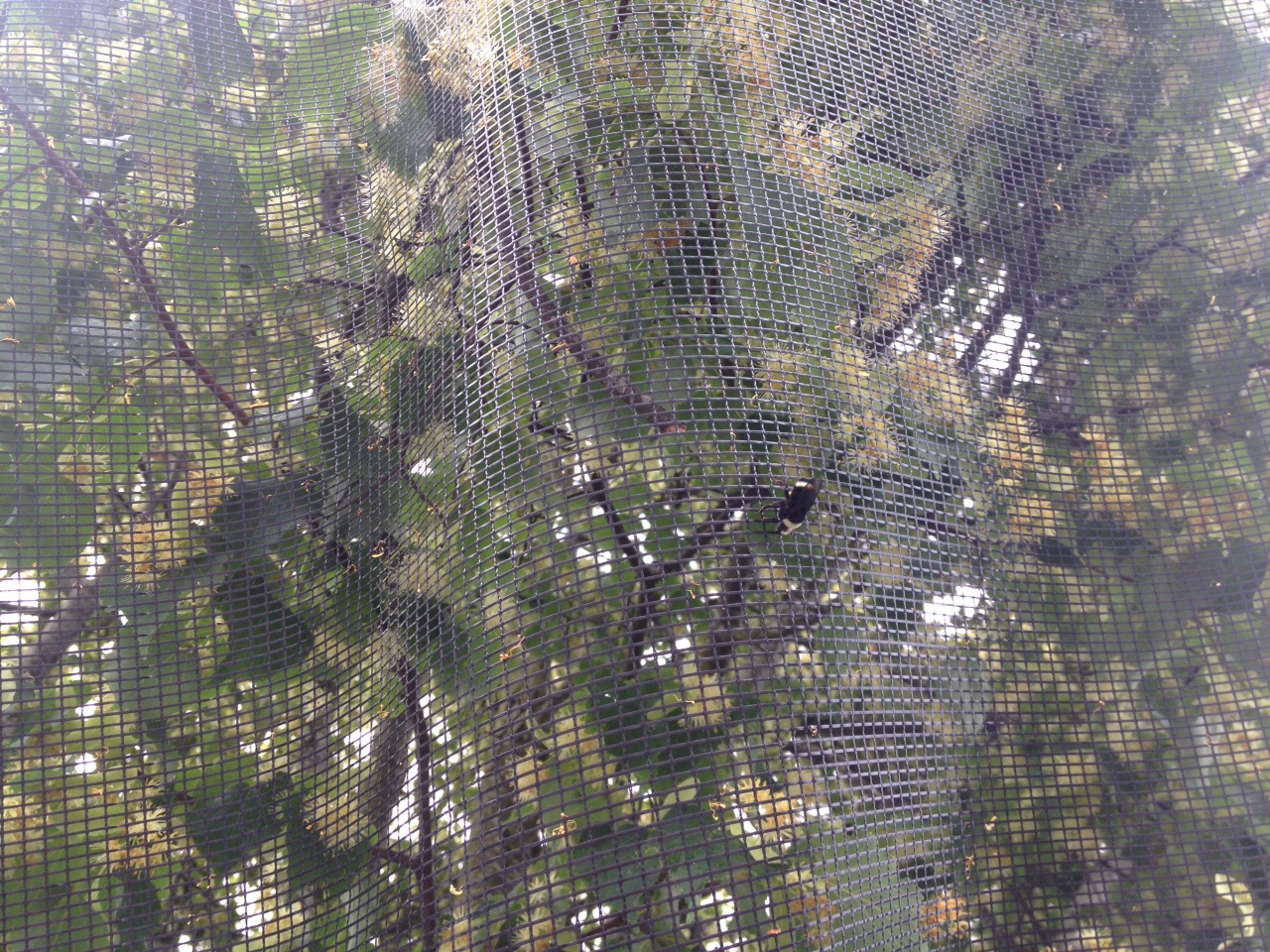
The city of Wilsonville, along with staff from the Xerces Society and the ODA, have been working feverishly to cover the trees with nets to keep the bees from coming into contact with the poison. Workers estimate that all 50 trees should be covered by the end of the day on Friday.


Update: 7 am, 6/24/13 Mace Vaughan, Pollinator Program Dir. for the Xerces Society, posted on the Xerces Facebook page: ""By 5 pm on Friday (June 21), the City of Wilsonville, with help from boom trucks and crews from at least four nearby cities, the Oregon Dept. of Agriculture and Xerces Society had covered all 55 poisoned trees in netting. Amazing!! We cannot thank the City of Wilsonville enough for their rapid response!"

Read the first report in this series: "City Steps in to Save Bees"

Video and photos courtesy Mace Vaughan, Pollinator Program Dir., Xerces Society.

The Buzz: City Steps in to Save Bees


The City of Wilsonville and the Xerces Society are wrapping 50 linden trees in netting to help save bees from the misapplication of the pesticide Safari, a powerful neonicotinoid made by the Valent Corporation, that has killed more than 25,000 bees so far in this one event.

Wrapping trees with protective netting.

The landscaping company that did the spraying, which has yet to be named, sprayed the 30-foot trees while they were in full bloom, a use specifically prohibited by the instructions that come with the pesticide. No legal action has been initiated as of today, but the city and the Xerces Society are in discussions with the property owners and the property manager, Elliot & Associates.

Neonicotinoids, a class of neuro-active insecticides chemically related to nicotine, are still legal in the United States, but have been banned in Europe due to evidence of a connection to honey-bee colony collapse disorder.

Xerces Society staff helps with netting.

Ironically, this tragic occurrence coincided with the beginning of National Pollinator Week, meant to "raise awareness about the importance of bees, birds and other pollinator species to agriculture, forest and grassland environments and other ecosystems," according to Agriculture Secretary Tom Vilsack.

Xerces Society Executive Director Scott Black, in an interview, said that to prevent future events like this, "we need to take action to protect native pollinators" from "the use and over use of toxic insecticides."


Update: Noon, 6/21/13 The Oregon Department of Agriculture (ODA) confirmed in a press release that the bumblebees were poisoned by dinotefuran, the active ingredient in Safari, the neonicotinoid sprayed on the trees. According to the press release, "ODA continues its active investigation of the incident to determine if the pesticide application was in violation of state and federal pesticide regulations."


Update: 3 pm, 6/21/13 Rich Hatfield, biologist for the Xerces Society, now estimates that more than 50,000 bees were poisoned in Wilsonville in the largest mass bumblebee death on record. (Read the post.)

Read the second report in this series: "Dead and Dying Bees Still Being Found"

Photos by Mace Vaughan, Pollinator Program Director of the Xerces Society.

Monday, April 09, 2012

Tickle Bee Time!


Dave saw him first. Our neighbor, Mace, was on his knees in the school field across the street. No, he hadn't lost a contact lens or dropped his keys.

You see, Mace is a bee guy, and he was giddy over the Andrena sitiliae that had just made their annual appearance in the field. The school kids call them "tickle bees" for the way they feel when they crawl on your skin without biting or stinging.

Mace's assistant, a budding entomologist.

Mace, the pollinator program director (like I said, "bee guy") for the Xerces Society, has been helping to educate the kids about these little bees and their importance in the local ecosystem. He's working on a video about the bees to use at the school and to help illustrate the importance of pollinators on his nationwide lecture, so I'll post that when it's available.

Until then, enjoy these little guys for what they signify. As Mace said, "It's a sure sign that spring is officially here."

Wednesday, June 08, 2011

A Bee, See?


The other day I was invited to tag along as my neighbor, Mace Vaughan, Pollinator Program Director of The Xerces Society, inspected the hive at a nearby neighbor's home.

The hive had swarmed into a nearby tree (left) a couple of days before. Another box, or "super" in beekeeping terminology, had been added to give them more room, and Mace wanted to take a look. Mace's daughter came along and that's her you hear in the video.

Note that the guys are just wearing hoods and veils, but no other protection and neither was stung. The bees completely ignored me, though I was standing nearby and wasn't protected at all. Fascinating!