Showing posts with label fritter chronicles. Show all posts

Saturday, March 01, 2014

Fritter Chronicles: Tuna or Kale, It's All Good!


Contributor Jim Dixon of Real Good Food is a fritter fanatic, and he's back on track sharing his recipes for some phenomenal fritter satisfaction.

Sicilian Fritters with Oregon Albacore (Polpette di Tonno con Fiore di Finocchio)

These small tuna won’t be running for another 6 months, but Oregon albacore in a can or jar* is in season all year. Buy it canned in its own juice (and don’t drain it off!). If you can’t find any at your favorite market, order directly from the folks who catch it. In Sicily a mix of tuna and swordfish often goes into these, but they’re great with just the canned albacore.

At the fish market in Palermo.

Dump the fish and the juices in the can into a bowl and flake it with a fork. For each can of fish (typically 6-7 ounces), mix in an egg, a chopped shallot, about a tablespoon of bread crumbs, pinch of salt, and a teaspoon or so of fennel pollen (fiore, flower, in Italian). If the mixture seems dry, add another egg.

Use two soup spoons to form walnut-sized “meatballs.” I make mine more flat than round, but only because it’s a little easier than rolling them into balls. Pan fry in extra virgin olive oil until brown. Traditionally served in a simple tomato sauce, they’re pretty good plain.

* Sweet Creek Foods also has Oregon albacore, and is available at New Seasons and other markets.

Kale Fritters

These are the best thing to do with leftover cooked vegetables of any kind. But it's also pretty easy to drop a bunch of greens in a pot of boiling water. Any of the leafy kales—green, red, or Italian—work well, but I prefer the Italian for both flavor and texture. Drop a bunch into a pot of salted water and cook for about 5 minutes (or microwave for a few minutes). You want the kale wilted and partially cooked.

Kale fritters frying in olive oil.

Chop the kale into small pieces, the stem ends even smaller than the leafy ends. Use the whole stem, but make sure the thicker pieces are chopped small. You can do it in the processor, but I think the hand-cut texture is much better.

Combine the chopped kale in bowl with about a quarter cup of breadcrumbs, roughly the same amount of grated Parmigiano Reggiano cheese, 2-3 cloves of minced garlic, a nice pinch of salt and a couple of eggs. Mix well, then see if you can form a small, walnut-sized fritter using two soup spoons. If it won’t hold together, add another egg or two (and if it’s really soupy, more breadcrumbs).

Use the two spoons (the classic quenelle technique) to make the fritters, sliding each into hot extra virgin olive oil as you make it. Gently flatten each fritter, cook over medium until nicely browned, then flip and cook the other side. Sprinkle with flor de sal after they come out of the pan. These are good hot or cold, and they reheat in a skillet nicely. A little Crystal hot sauce is a nice touch.

Thursday, December 06, 2012

Latkes, Fritters, Cakes…Whatever, Just Make 'Em!


No matter what you call them, you can count on Jim Dixon of Real Good Food to be on top of the fried goodness of the season!

I made these recently and wanted to get you the recipe before Chanuka starts on Saturday!

Smoky Sweet Potato & Beet Latkes

Mine were roughly 2 parts sweet potato, 1 part beet, but don’t worry too much about exact measurements. I also peeled the beets, but not the sweet potatoes. And while the orange-fleshed roots are often labeled as yams, they’re really sweet potatoes. You could use the white-fleshed version, but I think the orange ones are sweeter. Golden beets, similar to the pinkish Chioggia beets, are also sweeter; unlike the earthier-tasting red beets, they don’t stain everything in the kitchen.

Make these just like potato latkes (grate the roots, combine with egg and flour, add salt, fry in extra virgin olive oil). Add a teaspoon or more of pimenton, the smoky Spanish paprika. Use a lower cooking temperature, too. The extra sugars in both the sweet potatoes and beets caramelize more quickly and they’ll burn if you’re not careful.

For more details on all things latke, at least from the Real Good Food perspective, start at Secular Latkes. Or go right the basic latke recipe (you can skip the squeezing step with sweet potatoes).

Monday, December 19, 2011

Fritter Chronicles: Secular Latkes

As regular readers of GoodStuffNW know, contributor Jim Dixon of RealGoodFood is all about the fritters. He's made them from everything from corn to dandelion greens to farro to favas. Here's his take on that all-time Hanukkah classic, latkes.

I’m just a country goy, but I love latkes and Hanukkah starts this week. Whether you celebrate anything at all this time of year, these eastern European potato fritters make winter delicious. And the oil in the miracle of the oil that Hanukkah celebrates was, of course, olive oil. (Bonus spelling trivia: Chanuka vs Hanukkah.)

Instead of copying my favorite latke recipes here, you can go to my secular latke page and find links for basic potato lakes (below), my Tex-Mex version and the super treyf sweet potato bacon latkes. Oy!

Basic Potato Latkes

Grate a couple of russet potatoes into a large mixing bowl. Grab a handful of the grated spuds and squeeze them over the sink, getting as much moisture out as you can. Repeat until you’ve squeezed the whole bowl.

Add an egg, a couple of tablespoons of flour (I use flour; tradition says matzoh meal, but I don’t usually have any when I feel like making latkes), a good pinch of sea salt and a finely chopped medium onion. Cover the bottom of a heavy skillet with a slick of extra virgin olive oil, and heat it over medium until it just starts to shimmer. Carefully add large spoonfuls of the latke mix to the hot oil, gently flatttening as you go. Keep the latkes small, about 2 inches across max.

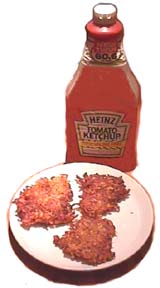
Cook until brown (3-4 minutes), carefully flip, and brown the other side. I like mine with ketchup.

Wednesday, June 23, 2010

Frittering Is Good!


I love contributor Jim Dixon's recipes because they're easy, seasonal and oh-so-tasty. He's also a fiend for fritters, the best part being they don't need to be deep-fried! Look for his RealGoodFood booth most Saturdays at the Portland Farmers' Market at PSU filled with his incredible olive oils, vinegars, beans and grains.

I must be slipping. I haven’t included a recipe for fritters for weeks (although the pork balls from earlier are really just meat fritters). I still cook and eat some version of these little fried things (called “subrich” in Piemontese dialect and based on a recipe from Faith Willinger’s Italian vegetable cookbook) at least once weekly. Here are a couple I’ve made recently.

Dandelion Green and Herb Fritters

Drop a bunch of dandelion greens into well-salted boiling water, cook for about 2 minutes, then remove, cool and squeeze out as much water as you can. Chop into small pieces.

Mix with about a cup, maybe more, of fresh herbs. I used what I’ve got in my garden: sage, oregano, rosemary and sorrel. Mint would be good, too. Add a finely chopped spring onion (I have these in the garden; shallot, garlic or plain onion work, about a couple of tablespoons total). Grated Parmigiano Reggiano is good, but not absolutely necessary. Add a little salt.

Mix in a couple of eggs and about a cup of breadcrumbs. The mixture can be a little wet, but should hold together enough to form walnut-sized lumps using two tablespoons. Slide the lumps into reasonably hot olive oil (enough to cover the bottom of your skillet, and they should sizzle a bit). Use the spoon to gently flatten the fritters, let cook undisturbed for a few minutes, then turn. You want them nicely browned. Sprinkle with flor de sal and eat immediately.

Sardine and Potato Fritters

Combine a tin of good sardines (I used olive oil-packed) with a couple of potatoes that you’ve cooked, peeled, and crumbled into a bowl. I used yellow spuds, poked and microwaved for about 4 minutes each. Mix in a couple of cloves of finely chopped garlic and, if you’ve got them, some salt-packed capers that you’ve soaked and rinsed.

Follow the directions above for adding eggs and breadcrumbs; cook the same way, too.

Here's a recipe for Jim's squash fritters. Top photo from CookThink.com.

Tuesday, September 29, 2009

Fritter Chronicles: Can't Get Enough


What's not to like about corn? It's sweet, it makes a fun sound and it's happy being a main course, side dish or condiment. Now contributor Jim Dixon of Real Good Food's foments on his fritter fascination with a recipe that includes this versatile vegetable.

I had some leftover corn on the cob, and while I’d planned to do a simple corn and tomato salad, I ended up making corn calas, a rice fritter we’d had when we ate at Cochon in New Orleans. I’ve said before how familiar the simple Cajun food seemed, and the calas sure seemed related to all the other fritters I make.

Calas traditionally were sort of rice beignets, deep fried and served with sugar or cane syrup. These are pan fried, more like corn cakes.

Corn and Rice Calas
Adapted from Real Cajun: Rustic Home Cooking from Donald Link's Louisiana

Combine the kernels cut from 2-3 ears of cooked corn with half an onion, finely diced, a diced frying pepper (like a Jimmy Nardello, although any sweet or even a hot pepper would work), a couple of eggs, a cup or so of cooked rice, and a few tablespoons each of flour and corn meal. Season with sea salt, freshly ground pepper and healthy dash of cayenne.

Heat a heavy skillet and add enough olive oil to cover the bottom. Drop spoonfulls of the batter into the skillet and flip when nicely browned. Sprinkle with flor de sal.

Tuesday, February 17, 2009

A Fritter Affliction


Contributor Jim Dixon of RealGoodFood has been plagued, as happens often with those of the foodie persuasion, with a passion for fried hunks of dough. We sympathize and send our condolences, wishing him a recovery in due time.

My fritter affliction continues. They’re fairly easy, cook quickly and are perfect to eat in the kitchen while the rest of dinner is cooking. Lately I’ve been making the little fried things with squash and cornmeal (actually the finely ground corn from Ayers Creek Farm, available periodically at the Hillsdale Sunday Farmers Market). Here’s what I do:

Squash Fritters

Peel, seed and cube a butternut squash. Put the cubes in a glass bowl with about a quarter cup of water, cover and microwave for 4-5 minutes or until easily mashed (if you’re microwave-averse, steam them). Combine about a cup and half of the mashed squash with an equal amount (more or less) of ricotta, about a half cup each of cornmeal and bread crumbs, a couple of eggs, a handful of grated Parmigiano, a finely chopped shallot, and salt. The mixture should hold together but not be too dry.

Use two soup spoons or your hands to form patties about the size of an egg or walnut, slide them into a skillet slicked with a generous amount of good olive oil, flatten gently with a fork, and cook until nicely browned on both sides. Sprinkle with flor de sal and eat immediately.

Photo from The Leftover Queen.