Showing posts with label hummus. Show all posts

Sunday, December 30, 2018

Rave-Worthy Party Dip in Ten Minutes? Yes, It's Hummus


In my view, hummus is one of those intensely flavorful, iconic cultural touchstones that has been bastardized beyond recognition. Just think of the little plastic containers you see in the grocery store of roasted pepper hummus, artichoke hummus and—I swear I'm not making this up—Thai coconut curry hummus.

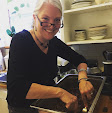
Linda Dalal Sawaya, local Portland artist, writer and author of Alice's Kitchen: Traditional Lebanese Cooking, a collection of recipes handed down from her Lebanese mother and grandmother, describes her family's "Hommus" this way:

"Our family loves hommus bi tahini best when it is tangy, the way Mama and Sitto made it. We garnish it with a liitle olive oil. In Lebanon, pomegranate seeds, whole garbanzo beans, and a drizzle of olive oil might be the garnish. Chopped fresh mint and olive oil also make a lovely garnish."

Sublime made from scratch with quality ingredients.

With her recipe, she describes her mother—fans of the pesto scene in the recent documentary Salt, Fat, Acid, Heat with Samin Nosrat, take note—mashing garbanzo beans by hand the traditional way.

Back when I was in college, hummus was the barely edible, dry stuff you brought to parties in college because it was widely available and a cheap way to feed your friends. I'd give my own efforts an "okay" rating back then and, even at that, it was way better than most of the stuff sold at even the most effete grocery stores, which ranged from chemical-tasting to having that certain je-ne-sais-quoi cardboard flavor. Even here in Portland, there are still very few who make a decent version, outside of Middle-Eastern restaurants like Ya Hala or Hoda's, both of which also make their own pita bread.

Soak overnight, drain, cook. Easy!

Later, my yearnings for truly good homemade hummus were granted with a recipe that my parents brought back from their pre-retirement sojourn in Liberia (yes, in Africa) where they met several Lebanese couples who were teachers at the college my parents worked for. My mother, being a discerning sort and knowing a good thing when she tasted it, begged a couple of recipes from them that she shared on their return home.

Ever since, our lives and the success of many a gathering have been aided and abetted by her ingenuity. I hope you agree her efforts weren't in vain.

Hummus

This is best made from dried chickpeas (garbanzo beans) that have been soaked overnight, drained and then cooked in fresh water for an hour or so until tender. For the best flavor, I highly recommend Ayers Creek Farm's organic Tualatin Chick Peas, available at Rubinette Produce. The following recipe makes approximately three cups of hummus.

Taratoor sauce:
2 small garlic cloves
1/2 c. tahini paste (sesame butter)
1/4 c. lemon juice
1/2 tsp. salt

Hummus:
1 15-oz. can garbanzo beans or 2 c. cooked chickpeas
2 tsp. salt
3 garlic cloves
1/4 c. lemon juice
1/4 c. water

You can make this in one step by placing all the ingredients in the food processor and processing till it all turns to a smooth consistency. Garnish with a drizzle of olive oil and a sprinkling of paprika (or better yet, Spanish pimenton) or the traditional sumac.

The taratoor by itself makes a terrific sauce for pork or meats, or drizzle it over rice or vegetables, or as a dipping sauce with appetizers like stuffed grape leaves.

Sunday, October 05, 2014

The Hummus Among Us


I totally agree with contributor Jim Dixon of Real Good Food: store-bought hummus is ridiculously expensive and producers don't always use the best ingredients, while making it at home is so easy, costs so little and is way more flavorful. This version adds roasted peppers to give it an extra flavor boost…try some sweet red peppers from the farmers' market like Jimmy Nardellos, Italian peppers or Cubanelles.

I used to sell garbanzos grown by Haricot Farms, the same folks who grow the rojo chiquito red beans. But they haven't been available for the past few years (I suspect they all go to the Truitt Bros. for canning). So when I learned that Koda Farms, producers of Kokuho Rose rice (Mark Bittman called it the "best rice grown in America."), also grows garbanzos, I ordered a bag. They're small, organically grown and delicious.

Hummus with Roasted Chiles


If you have a food processor, there's no reason to buy hummus at the store. It never has enough tahini, anyway, and it's almost always made with fake extra virgin olive oil (the blends of refined and virgin olive oils often labeled "extra virgin"). This version includes some roasted chiles, but you can leave them out for traditional hummus.


In your processor combine 2 cups of cooked garbanzos, 1/2 cup of roasted chiles (available now in varying levels of heat at the farmers market; substitute roasted red bell peppers [recipe] or roast your own chiles), 1/2 cup of tahini, 1/4 cup extra virgin olive oil, 2 coarsely chopped garlic cloves, 1 teaspoon ground cumin, 1 teaspoon salt, and the juice of a lemon (or 2 tablespoons Katz Sparkling Wine vinegar). Process until smooth, adding a little of the garbanzo cooking water if you like a thinner spread. Drizzle with more extra virgin, dust with paprika (I like the smoky note from Spanish pimenton) and eat with bread or anything else that will scoop it up.

You can find Jim and the products he loves on most Mondays at his Real Good Food "warehouse," from 4-7 pm at Activspace, 833 SE Main St. #122. Look for the "olive oil" sign out front.

Sunday, April 20, 2008

Committing Hummus-cide


Hummus, in my view, is a much-maligned quantity. It was the barely edible, dry stuff you brought to parties in college because it was "ethnic" but in reality was a cheap way to feed your friends. And there are still very few who make a decent version, outside of Middle-Eastern restaurants like Ya Hala or Hoda's who also make their own pita bread.

I'd give my own efforts an "OK" rating back then and, even at that, it was way better than most of the stuff sold at even our most effete grocery stores, which range from chemical-tasting to having that certain je-ne-sais-quoi cardboard flavor.

Then all was made better by a recipe that my parents brought back from their pre-retirement sojourn in Liberia (yes, in Africa) where they met several Lebanese couples, teachers at the college they were working for. My mother, being a resourceful sort and knowing a good thing when she tasted it, begged a couple of recipes from them that she shared when she eventually returned home.

Ever since, our lives and the success of many a gathering have been aided and abetted by her ingenuity. I hope you agree her efforts weren't in vain.

Hummus

Taratoor sauce:
2 small garlic cloves
1/2 c. tahini paste (sesame butter)
1/4 c. lemon juice
1/2 tsp. salt

Hummus:
1 15-oz can garbanzo beans or 2 c. cooked beans
2 tsp. salt
3 garlic cloves
1/4 c. lemon juice

You can make this in one step by placing all the ingredients in the food processor and processing till it all turns to a smooth consistency. Add water if necessary to keep it blending (I don't). Garnish with a drizzle of olive oil and a sprinkling of paprika (or better yet, Spanish pimenton) or the traditional sumac.

The taratoor by itself makes a terrific sauce for pork or meats, or drizzle it over rice, vegetables or appetizers like stuffed grape leaves.