Showing posts with label food waste. Show all posts
Tuesday, May 01, 2018
10 Easy Ways to Eat Less Meat
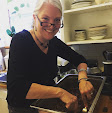
Oregon's Lynne Curry wrote the book, quite literally, on cooking with grassfed beef. A new edition of Pure Beef was issued last year and has just been listed as one of Oregon's Top 10 Cookbooks by Travel Oregon. So when she offered to share her tips for eating less meat and using grassfed or pasture-raised instead of conventional—a strategy that's better for us, for the planet, and supports small farmily farmers—I jumped at the chance! (See the end of the post for a free guide to where to find pasture-raised meat in Oregon.)
My strategies show you how to eat less meat even when you are eating it. So, if you’re looking to slim down the portions of meat you eat without giving it up completely, I’ve got 10 ideas to guide you.
1. Skewer it. Grilled meat on a stick is a worldwide favorite, often in the form of a kebab or satay. Sliced into ribbons or cubed and marinated in anything from teriyaki to garlicky yogurt, a little bit of meat becomes a meal when served over a pile of noodles or rice with ample fresh vegetables. Freezing the meat for 20 minutes eases close cutting. Plan on one meat kebab and two to three sticks of satay per person.
2. Stretch it. Depression-era cooks knew how to make a pound of ground meat feed many. Make your mixture roughly three parts meat (ground beef, turkey, pork, lamb, veal or combination) to one part breadcrumbs, oatmeal, bulgur, rice, quinoa or any other cooked grains or even legumes. Add chopped onion, an egg for binding, seasonings and spice it up as you like for classic meatloaf, exotic meatballs, burgers or sliders that go far.
3. Wrap it. Tacos are the model, but you can fold minced, cooked meat up in crepes, roti, rice paper rolls, tender lettuce leaves and nori, to name a few. Or, make a meat filling to encase in a dough—from pastries and empanadas to samosas and egg rolls. One cup of finely chopped or shredded meat makes six to eight portions to accompany with salsa, chutney or ginger-soy dipping sauce.
4. Serve it on the bone. Eating meat on the bone satisfies a primal urge and gives the feeling of satiety with relatively small amounts of meat. Whether it’s pork ribs, chicken wings or flanken-style short ribs, this is a meal to pile on sides of coleslaw and baked beans, steamed rice and vegetables or mounds of mashed potatoes. Cut between the bones of back ribs, spare ribs or racks to make single-serving portions.
5. Mince it. Hand-chopped raw or leftover meat is the basis for some of the world’s classic dishes—think fried rice and corned beef hash. Combine meat with cooked grains to stuff and bake into eggplant, peppers, cabbage leaves or acorn squash. The token protein—be it bacon or roast beef—serves as a major flavor boost. Or, serve slivers of meat in tiny amounts to fashion bibimbap or a stir-fry.
6. Stew it. No amount of meat is too small—like a ham hock to season a pot of beans or a couple of chicken thighs simmered in coconut-milk—to make stew. In a pot chock full of seasonal vegetables or legumes, the cheapest, toughest cuts have a lot to offer (all the better if there’s bone). And the more ingredients you add, the less meat you need in a belly-filling meal. Shred the cooked meat to disperse it into the stew before serving.
7. Stuff it. There is no better side dish for roasted meats than stuffing. Rolling the stuffing inside any boneless meat cut not only fancies up the presentation but bulks up portion sizes considerably. Butterfly larger cuts, like pork loin and turkey breast, or pound flank steak and chicken breast to 1/4-inch thick with a meat mallet or heavy rolling pin. Season a bread or grain-based stuffing well before rolling it up and securing the roll with toothpicks for oven roasting or grilling. Serve in one-inch-thick slices with extra stuffing on the side and add a gravy, if you like.
8. Slice it thin. When holidays and other special occasions call for a large roast or thick steaks, you still don’t have to go big on the meat. With a sharp slicing knife, make 1/4-inch thick slices of ham, for example, and serve it with all the trimmings. Instead of serving a whole steak, plate slices with a generous salad; that single cut will serve three to four. Portion the leftovers in resealable bags for the freezer for a month’s worth of ready-made sandwich fillings. A sandwich may be the most familiar form for protein portion control—so long as you follow the meat-moderate panini approach and not the Carnegie Deli’s.
9. Flavor with it. A single slice of bacon or a ham hock can flavor an entire pot of soup or stew. Split pea soup and Southern-style collard greens are both great examples of how a little bit of meat goes a long way. Or even no meat and just the fat, as in a pot of clam chowder flavored with salt pork or chicken soup that starts with schmaltz. Rendered fat from bacon, chicken and beef is one of the tastiest cooking mediums around—and if it comes from pastured animals, it’s loaded with nutrients like omega-3s.
10. Bone broth it. You’ve heard of this trend by now, of course. A nourishing broth made from bones, it is a perfect example of whole animal eating and limiting food waste, too. You can request bones from your butcher or reserve bones in the freezer from T-bone steaks or a whole roast chicken to make your own bone broth. It’s also great that more companies are offering good-quality chicken and beef bone broths and making good use of all those bones.
Read the full post and get more of Lynne's handy tips, including recipes, for eating less (and better) meat that supports Oregon's small family farmers. Find a farmer near you with this handy Oregon Pasture Network Product Guide.
Photos by Lynne Curry.
Labels:
food waste,
Forage,
Lynne Curry,
meat
Saturday, October 14, 2017
Farm Bulletin: A Proper Scolding
A previous post extolling the value of greens on root vegetables prompted contributor Anthony Boutard of Ayers Creek Farm to pen this (gentle) scolding. Message received, sir.
As a traditionally schooled market farmer—my father grew and delivered vegetables to the great Covent Garden Market all through the Battle of Britain and regaled his children with lore of the old market and its vendors—I was amused to see you perpetuating the “leave the tops on root vegetables” myth. This practice leads to a decline in the root’s quality, flavor and texture, even in short-term storage.
The reason is biological. When plants are out of the sunlight, they must still keep the leaf blade tissues alive, which requires energy and moisture. Maintaining the tops in the absence of sunlight means that sugars and nutrients are moved from the root to support the leaves, and water as well, as part of the respiration process. In fact, the leaves will pump out more moisture through respiration than a severed stem, that’s their job. That is why celery is stored with its leaves trimmed, leaving just the stalks, assuring a longer storage life. The roots with their herbage attached may “look fresher” but the leaves are actually consuming the root before you do.
Flavor and texture of the roots are determined by tasting a sample, not beholding the pretty greens. Bear in mind variety and culture are the most important determinants of quality, and many roots actually develop their flavors in storage, belying the notion that a “fresh" root is the better vegetable. Roots harvested after the frost will taste sweeter. Varieties with rattiest looking greens in the field can have spectacular flavor; there is no correlation between "fresh looking" leaves of the plant and the quality of its root. Verdant greens on a carrot may be an indicator of over-use of nitrogen rather than a healthy plant per se.
Traditional gardeners and farmers knew this fact going back at least to Pliny, based on simple observation even in the absence of a firm grasp of the biological processes involved. The discerning vendors at Covent Garden would have summarily rejected Cecil’s roots if they were delivered with a messy bunch of useless herbage attached. For historical perspective, the Baroque still life painter Juan Sanchez Cotán, and the market scenes of Pieter Aertsen (top illustration) and Joachim Beuckelaer from the 16th century, show the root vegetables properly trimmed to a short stalk. They were painting from life and felt no compunction to pretty up the roots with lush greens.
At market, we always sold our roots with tops trimmed to 1/2”, or about 14mm, of stalk. No one ever complained about freshness and in cool weather the roots stored nicely on the back stoop for weeks. The notorious “woody core” only results when the top of the root is removed. This leads to desiccation of the root’s core. A hard trim is often used for parsnips because the sap in the tops causes a nasty rash when the skin is exposed to sunlight (phytophotodermititus). To avoid any risk, some farmers trim them back too hard. For the customer the sap isn’t a problem because it dries and seals the stalk. The other vegetable commonly cut back to the root is the rutabaga because the tops rot and have an awful stench. To keep rutabagas from drying out, they are often coated in wax.
Regarding the value of the greens attached to the root, this is another glorious bit of 21st century goofiness. The greens associated with roots are just not in the same league, from a culinary or nutritional perspective, as those of the same vegetables bred for their greens. The development of a bifurcated vegetable selection, for example, knob celery and pascal celery, beet and chard, turnip and rapa/raab, rutabaga and cabbage, root chicory and heading chicory, root parsley and leaf parsley, Florence fennel and non-bulbing fennel, are a testament to this understanding extending back millennia. I always think its funny when people think they have discovered something that was missed in 3,000 years of food development and breeding that have formed the vegetable selection we enjoy today.
And regarding all the scolding about food waste that has proliferated of late in the food press, the best practice is to field trim the roots and leave the tops for nature. They belong in the farmer’s field where they continue to provide food and shelter. The superfluous greens and stems are only wasted if they are removed from the farm. Our daughter wryly notes that serving up the greens from root vegetables is the culinary equivalent of wearing a hair shirt to display virtue. She cringes when friends proclaim they are serving greens that would otherwise have gone into the compost. Many years ago I noted the importance of leaving excess crops in the field where they are valuable as a supplement to a cover crop. [See Ayersini's translation of Carolystra and Antonocoles, from the respected Gastonian Folio. - KAB] There are real issues of food waste, but serving greens best left in the field is a hollow virtue. A good green grocer should be trusted enough that the flashy and ill-advised show of “toppery" is unnecessary. It is, in fact, even a bit déclassé, dare I say.
Incidentally, the restaurants always thank us for the careful job we do trimming our roots and fennel. Chefs are happy to glean value from a delivery, but they hate paying for and disposing of compostable herbage that should have been left at the farm. The custom of displaying roots and bulbs with their tops has become entrenched in the last 20 years or so as an aesthetic gesture, probably an artifact of the proliferation of famers’ markets, but it runs counter to science with respect to food quality. Someday, perhaps, the scientifically validated wisdom of my father and the vendors he sold to at Covent Garden, and Aertsen's women of the Flemish vegetable markets carefully tending their goods, will return.
Labels:
Anthony Boutard,
Ayers Creek,
Farm Bulletin,
food waste,
greens,
root vegetables
Subscribe to:
Posts (Atom)


