Showing posts with label farmers. Show all posts
Monday, March 18, 2019
Care About Your Food? Then Show Up in Salem!
In the last two years, we've all learned the value of just showing up. Two years ago, not showing up to vote cast this country into the nightmare we are living through right now. And showing up to a rally for women's rights demonstrated to the world the power and importance of women's voices. In the mid-term elections just last fall, sending postcards to complete strangers urging them to vote, and exercising our own franchise changed the balance of power on a national level.
Showing up, and learning the power of collectively putting our bodies where our beliefs are, has meant that from local school boards to state legislatures to the halls of Congress, our representatives are now more…well…representative of everyone in our communities.
Part of putting our energy into making change together also means getting involved in issues we care about, and I'd highly recommend that if you care about where your food comes from and about the small family farmers who work every day to produce the food we put on our tables, then you should make every effort to get yourself and your families to Salem on Wednesday, March 27. Not only will you get to meet many of those family farmers and show them you've got their backs, you'll have an opportunity to participate in the democratic process by meeting with your representatives in the legislature and tell them how important good, clean food is to your family.
If you're wondering what the heck the legislature has to do with your food, just take a glance at the issues before the current session: a moratorium on the factory farm mega-dairies that are spewing unregulated toxic emissions into the state's air and groundwater; a ban on aerieal spraying of toxic pesticides; bills that will support beginning farmers and encourage retiring farmers to keep their farms in food production rather than selling them for development; and a ban on the use of bee-killing neonicotinoid pesticides that are at least partially to blame for the collapse of pollinators. And those are just a few of the dozens of bills under consideration.
If you've never set foot in the Oregon's Capitol building, it's high time you did. And what better reason than to support the farmers whose labor we all depend on multiple times a day? Get more info and sign up here, and you can sign up to join a carpool to the event from Bend, Grants Pass, Amity, Portland, Monmouth, Corvallis, Springfield and other communities around the state. You even get lunch in the deal!
All you have to do is show up.
Monday, May 01, 2017
Good Farmers Have Happy Animals
Cinnamon and her piglets.
Yesterday was the appointed day for that long-awaited visit, and with the morning promising (mostly) blue skies and reasonable temperatures—woohoo!—I jumped in Chili and drove out to the farm. Even if you don't have a farm to visit, I can testify that the drive to Corbett via the Old Columbia River Highway is spectacular this time of year, lushly green from all the rains and with the Sandy River running thick with runoff from the many streams that feed into it.
Primarily a livestock-based operation, Linda and Mike raise pigs, chickens, turkeys, guinea fowl and rabbits for meat, and milk three cows and several goats twice a day. They also have laying hens, and sell raw milk and eggs out of a refrigerator on their porch to a regular clientele who come to the farm. Located on 10 acres of hilly terrain above Smith Creek, the couple run the farm on a rotational grazing system, moving the groups of animals to fresh pasture in a series of paddocks so that the health of the pastures is maintained and, hopefully, improved.
Scooter.
When I pulled up, Linda took me to the barn to meet their resident goat, Scooter, paralyzed as a kid when she got tangled in some of the electrified netting they use as movable fencing. Even though she can't stand or move her back legs much, she gets around the farm quite ably—it actually reminded me of Wyeth's "Christina's World"—though Linda mentioned they're looking for a set of wheels so she can be more comfortable and mobile. (If you know of anyone with a cart, give me a shout!)
Also in the barn was a set of several-week-old goat triplets staring down at us from their perch on bales of hay about eight feet off the ground. After a meet-and-greet, we went out to meet the new piglets and their mama, a sow named Cinnamon, who was busy showing them how to properly root in the grass.
Perching triplets.
The wonderful part about visiting farms and talking with farmers who care about their animals the way that Mike and Linda do, is seeing them pointing out the individual characteristics of each animal, laughing at their behaviors, telling stories and being genuinely engaged with them. It's heartening in a time when agriculture seems to be turning more and more toward an industrial model, when a living being—the animals and often the humans who work there—seem to be treated as no more important than a widget.
Thanks, Mike and Linda, for caring and for sharing your farm with me!
Thursday, April 06, 2017
Your Food, Your Legislature: Do-Or-Die Time
Your Food, Your Legislature is a series of reports giving Oregon consumers a heads-up on issues before the current session of the legislature that affect the food we are putting on our tables, as well as providing you with contact information to voice your opinion on those issues.
The 2017 Oregon legislative session is half over, which means it's make-or-break time for bills to move out of committees or die if they don't get the support needed to go to the legislature for a vote. There are bills that directly affect our food system and the farmers we depend on to put food on our tables, so it's urgent that you act now.
Regulating air contaminants from mega-dairies, SB 197, has just taken on new urgency with the approval last week of Lost Valley Farm, a California-owned, 30,000-cow mega-dairy in the town of Boardman on the Columbia River, joining North Dakota-based Threemile Canyon Farms, a 70,000-cow factory farm nearby. This bill is based on the Dairy Air (no, I didn't make that up) Quality Task Force recommendations from 2008—never enacted—that called for the adoption of a combination of voluntary and regulatory measures to monitor and control the emissions from larged Concentrated Animal Feeding Operations (CAFOs).
Young supporters of Oregon farmers rally at the State Capitol in Salem.
Since 2008, elevated concentrations of ammonia from Threemile Canyon Farms has been linked to acid deposits in the Columbia River Gorge, and nitrogen compounds are contributing to elevated levels of ozone in the vicinity. Acid rain falls frequently and a permanent haze hangs over the area. If these problems aren't dealt with now, especially with the addition of Lost Valley Farm and the pollution from both facilities' open-air cess-pits (one of several covers 20 acres of land), the cost of clean-up could run into the millions for Oregon's taxpayers, not to mention the degradation of the quality of life and safety of the area's residents.
Oregon has lost nearly 75% of its small dairies since 2001, when the first mega-dairy opened in the state and started flooding the market with cheap, factory farm milk, driving down prices to the point where smaller family-run operations couldn't make a living. With neighboring states (California, Washington and Idaho) establishing tougher environmental standards, these out-of-state-owned mega-dairies and their polluting systems are flocking to Oregon.
Farmers and supporters rally in Salem.
To act now, contact your state legislators, especially your Senators, and urge them to support this bill, currently in the Senate Environment and Natural Resources Committee. It must move out of that committee by Tuesday, April 18, or it will die. Call or e-mail and tell your legislators who you are, where you live, what you do and why it's important for them to act on this bill. If you can, also contact the members of the committee, listed below. They are under tremendous pressure from mega-dairies—with their mega-money—and agribusiness lobbyists who are against any attempt at regulating their industries.
- Sen. Alan Olsen: phone 503-986-1720; e-mail
- Sen. Michael Dembrow: phone 503-986-1723; e-mail
- Sen. Floyd Prozanski: phone 503-986-1704; e-mail
- Sen. Chuck Thomsen: phone 503-986-1726; e-mail
Here is the message I sent in an e-mail to the Senators listed above: "I am an Oregon resident and I am contacting you to ask that you pass SB 197 out of your committee and send it to the legislature for a vote. Oregon’s air quality should not be compromised by out-of-state mega-dairies flocking here to take advantage of our lax regulatory system. Thank you."
Local regulation of genetically engineered crops (HB 2469): This bill allows counties in Oregon to protect farmers within their boundaries from contamination of their crops by genetically engineered (GE) crops. It effectively repeals a bill dubbed the "Monsanto Protection Act" that was signed into law in 2013 by then-Governor John Kitzhaber that took away the rights of local communities to set local food and agriculture policies. If passed, it allows counties to once again regulate or ban GE crops to protect farmers growing traditional crops, and it would leave in place an existing ban on GE crops that passed in Jackson County on May 20, 2014.
Oregon farmers and supporters rally in Salem.Maintaining funding for farm-to-school programs (HB 2038): Currently, Governor Kate Brown’s proposed two-year budget cut all funding for Farm-to-School programs. In 2015, the Legislature provided over $5 million in funding for a farm-to-school program, but because Oregon is facing a severe budget shortfall of roughly $1.8 billion, top Legislative budget writers earlier this year proposed significant cuts to the program. This bill appropriates funds to the Department of Education for grant programs allowing school districts to purchase Oregon food products and to pay for costs related to food-based, agriculture-based and garden-based educational activities.
Tax credit for renting farmland to beginning farmers (HB 2085). This bill creates a beginning farmer tax credit to encourage landowners to rent land to beginning farmers, with higher rates given for organic practices. Despite growing demand for locally grown food, Oregon is in the midst of land crisis. The state lost nearly 25% of its beginning farmers (those in business fewer than 10 years) between 2007 and 2012, according to the USDA. The average age of farmers in Oregon is now 60 years old, and fast-rising farmland prices are raising serious questions about who will grow our food in the future.
Read the other posts in this series. Find your legislators here.
Friday, February 24, 2017
Your Food, Your Legislature: Genetically Engineered Crops; Farm-to-School Funding
Your Food, Your Legislature is a series of reports giving Oregon consumers a heads-up on issues before the current session of the legislature that affect the food we are putting on our tables, as well as providing you with contact information to voice your opinion on those issues. Thanks to Ivan Maluski of Friends of Family Farmers for help on details of the pending legislation. The sponsors of legislation are listed on the information pages of the bills (links above), and links are provided for their offices. You can find your own legislators here if you want to contact them about these or other issues.
We're one month into the six month-long 2017 session of the Oregon Legislature. Today is the deadline for drafts of proposed legislation to be completed, then legislators will have until Tuesday to take them to the House and Senate desks for introduction. The bills of particular concern to Oregon farmers and consumers are outlined below.
Genetically engineered sugar beet.
Additionally, I will be moderating a panel on these issues and others at the Friends of Family Farmers InFarmation gathering on Tuesday, Feb. 28, at 6:30 pm at Holocene, 1001 SE Morrison. Make plans to attend and get more information on these bills and other issues, as well as ask any questions you may have.
Allowing local communities to protect farmers whose crops may be at risk of contamination from genetically engineered (GE) seed or products (HB 2469). This bill will allow counties in Oregon to protect farmers within their boundaries from contamination of their crops by genetically engineered (GE) crops. It effectively repeals a bill dubbed the "Monsanto Protection Act" that was signed into law in 2013 by then-Governor John Kitzhaber that took away the rights of local communities to set local food and agriculture policies. On Feb. 8 a press conference was held in the State Capitol in Salem laying out the case for these two bills and the history behind it (video here; press conference starts at 11:35 mark). Sponsors are currently working to secure committee hearings on this bill.
Strengthening the ability of farmers to hold patent-holders of GE crops financially accountable when unwanted presence of their products is found on farmers’ land (HB 2739). This bill clarifies that the responsibility of contamination of a farmer's crops by another farmer's GE crops lies with the patent-holder, allowing the court to award prevailing plaintiff costs, attorney fees and triple the economic damages. In many cases in the past, the farmer who is the victim of contamination has not only lost his crops, but has been successfully sued by the patent-holder for "stealing" the GE crops. In addition, in some cases organic farmers have lost their organic certification due to this kind of contamination by GE crops, essentially putting them out of business. Oregon farmers deserve to have legal recourse in the event of this kind of contamination.
Portland's Sabin School Garden Program.
Ensuring continued funding for Oregon's Farm-to-School program (HB 2038). This bill appropriates funds to the Department of Education for grant programs allowing school districts to purchase Oregon food products and to pay for costs related to food-based, agriculture-based and garden-based educational activities. Currently, Governor Kate Brown’s proposed two-year budget contains no funding for Farm-to-School. In 2015, the Legislature provided over $5 million in funding for a farm-to-school program. However, this funding expires in July 2017, and because Oregon is facing a severe budget shortfall of roughly $1.8 billion, top Legislative budget writers earlier this year proposed significant cuts to the program.
See the first post in this series for other bills affecting farmers and consumers in Oregon this session. For more information, read the entire series here.
Tuesday, July 21, 2015
Your Food, Your Legislature: Wins, Losses and Draws
Key pieces of legislation that would have affected the food we put in our shopping baskets and serve to our families were in play in the session of the state legislature that just concluded. Up for debate were issues on genetically engineered (GE) crops, antibiotics in animal feed, urban agriculture and a loan program to help beginning farmers, among many others.
Unprecedented efforts by concerned citizens—including readers of Good Stuff NW—and small farm organizations helped to offset some of the lobbying and money thrown around by out-of-state agribusiness interests, resulting in big wins for family farmers and consumers, but there were also some disappointing losses. Here's the wrap-up.
Wins
Loans for beginning farmers (aka Aggie Bonds): With the average age of an Oregon farmer nearing 60, HB 3239 will make a big difference in bringing younger farmers online quickly. It expands the types of loans issued by NW Farm Credit Services, as well as seller-financed loans. Through HB 5005, the Legislature authorized up to $10 million in state bonding authority to support dozens of lower-interest rate beginning farmer loans over the next two years.
Agritourism: The ability of Oregon farmers to educate more people about farming and farm practices and earn income from those visits without fearing liability claims was given a big boost by SB 341. As long as risks are clearly posted, it provides protection for farms engaged in agritourism including U-pick, corn-mazes, hay rides, farm stays and more.
Farm-to-school programs: Oregon's children will be eating healthier meals at school thanks to HB 2721*. Funding for the popular program will increase from $1.2 million to $4.5 million over the next two years and was expanded to cover school meal programs statewide.
OSU Extension: This critical agricultural service will get $14 million in new funding with HB 5024, reversing a decade of staff and budget cuts. It allows the University to hire new positions to support farmers statewide, including beginning farmer support, pollinator health, sustainable grazing management, fermentation sciences and more.
Losses
Genetically engineered (GE) crops: Significant legislation to give the Oregon Department of Agriculture (ODA) the authority to keep genetically engineered crops away from non-genetically engineered crops was dropped after Gov. Kitzhaber, who had favored this effort, resigned, and when out-of-state industrial interests worked to quash efforts to revive it.
Farm antibiotics reform: A major battle was waged over SB 920, which would have limited the use of "medically important" antibiotics—i.e. those used on humans—on otherwise healthy animals by Oregon's livestock industry. An outpouring of support from consumers (and readers of Good Stuff NW), as well as support by the medical community and many of the Oregon's livestock producers was strongly opposed by the state’s biggest corporate factory farms and out-of-state agricultural pharmaceutical companies.
Draws
Urban agriculture: While this bill didn’t pass, there was a strong show of support in the legislature for HB 2723, which would have encouraged the establishment of urban agriculture incentive zones, where lower property tax rates could be offered for small-scale urban farms. This suggests future legislation may be in the mix.
Regulation of canola: Canola is a major concern for the specialty seed industry, organic producers and fresh market vegetable growers due to issues of crop contamination. HB 3382 is a setback to those concerns because it allows 500 acres of canola to be grown per year between 2016 and 2019, a period previously subject to a "no-canola" moratorium. However, the bill also requires more comprehensive research on the harmful impacts of canola and for the ODA to present recommendations on rules needed to protect the specialty seed industry from canola in the future.
* * *
Read the rest of the posts in the Your Food, Your Legislature series.
Thanks to Ivan Maluski and Friends of Family Farmers for help with understanding and reporting on these important issues. I couldn't have waded through the reams of legislative data without their input.
* In the closing hours of the session, HB 2721 was folded into appropriation measures SB 5507 and 5501.
Tuesday, May 12, 2015
Your Food, Your Legislature: The Fight Takes Shape
The following is an edited version of an original report that was published on the Friends of Family Farmers' Muckboots in the Capitol blog. The numbered title of each bill (in bold) is linked to an overview on the state website. It is critical that you let your legislators know what you think about the issues that concern you. Find links at the bottom of this post to do that.
In the Good Corner
House Bill (HB) 3239: Also known as the "Aggie Bonds" bill, this is legislation that would expand loans to beginning farmers. It passed 58-1 on the House floor in mid-April, passed the Senate Business committee and is on the Senate floor awaiting action. Update: This bill passed the Senate on May 13, 2015, on a bipartisan vote of 30-0.
Senate Bill (SB) 341: This bill would protect agritourism providers from legal liability when they invite members of the public onto their property for both commercial and non-commercial activities, but will also require clear warning signs and outline other basic safety steps agritourism providers must take. It passed the entire Senate in a resounding bipartisan 29-0 vote.
SB 920: This bills seeks to limit the use of "medically important" antibiotics—i.e. those used on humans—on otherwise healthy animals by Oregon's livestock industry. (See my post, The Personal Gets Political.) It is now in the Senate Rules Committee, but is being strongly opposed by the state’s biggest corporate factory farms and out-of-state agricultural pharmaceutical companies. This is despite growing evidence of widespread problems and regulatory failures related to recurring outbreaks of antibiotic resistant disease as happened at Foster Farms, featured in an article by Lynne Terry titled A Game of Chicken: USDA Repeatedly Blinked When Facing Salmonella Outbreaks Involving Foster Farms.
HB 2723: This bill encourages the development of urban agriculture by giving tax incentives to property owners who allow small-scale urban agriculture on their property for five-year increments. It passed the full House on a 50-10 vote, and is now headed to the Senate where it will likely be amended to limit eligible farm size so that the new tax incentive primarily encourages smaller scale agricultural operations.
HB 2721: If passed into law, this bill would provide $5 million in funding for farm-to-school programs—a major increase from the $1.2 million currently—making funding available to every school district in Oregon to purchase local farm goods and locally processed foods for inclusion in school meal programs. It is currently awaiting action in the Ways and Means Committee.
SB 657: This bill would provide $16 million for OSU Extension and Ag Research Programs for small and beginning farmers support, pollinator health, food safety, water quality protection and help with research needs on crop rotation, reducing pesticide use, fermentation sciences and sustainable management techniques. It is currently awaiting action in the Ways and Means Committee.
SB 204: Originally a much broader bill to promote conservation activities on working farms and forests, it has been scaled back to create a task force to look at issues around working lands conservation and to establish a Clean Water Fund to support greater protection for riparian areas on farms, including through long-term easements. It is also in the Ways and Means Committee.
In the Bad Corner
HB 2674, HB 2675, SB 207: These bills, introduced by Gov. Kitzhaber, would have enacted some common-sense regulation to better protect Oregon’s vast non-genetically engineered agricultural industries from poorly regulated genetically engineered (GE) crops. They were essentially abandoned when Kitzhaber resigned, and there are currently no bills alive in Salem to strengthen state oversight over GE crops in Oregon.
HB 3382: Introduced on behalf of a handful of canola growers unhappy with a 2013 bill. Despite being only halfway through the bill's three-year research program and having no research results available, HB 3382 authorizes 500 acres of commercial canola production per year from 2016-2019. Worse, the bill says there will be no cap on canola acreage beginning in 2019 and contains no restrictions on genetically engineered canola, effectively putting the Willamette Valley’s specialty seed, fresh market vegetable and organic industries at great risk. (See my series on canola in the Willamette Valley.)
HB 2666: If passed, this legislation would place mining for aggregate (gravel) on farmland above agricultural uses on farmland, putting high value Oregon farmland at risk of being lost forever to mining activities. It is currently in the House Rules Committee and, because of idiosyncratic rules, is not subject to normal legislative deadlines, and may be the subject of behind-the-scenes negotiating and arm-twisting from mining interests.
It is critical that you speak up about the issues that concern you, so please consider contacting your legislators. Find your legislators and let them know what you think. And stay tuned for further updates as the 2015 session progresses!
Read the other posts in this series, Opening Salvos, The Good, The Bad and The Ugly, The Personal Gets Political and Hanging in the Balance.
Wednesday, March 18, 2015
Your Food, Your Legislature: The Good, the Bad and the Ugly
The following is an edited version of an original report that was published on the Friends of Family Farmers' Muckboots in the Capitol blog. The numbered title of each bill (in bold) is linked to an overview on the state website.
The Good
House Bill (HB) 3239: The "Aggie Bonds" bill was introduced with bipartisan co-sponsorship on February 27. It builds on 2013’s Beginning and Expanding Farmer Lending Program (aka Aggie Bonds) by expanding the definition of "lender" to include both NW Farm Credit Services and what are called seller-carried financing contracts, when a landowner agrees to carry the loan for the beginning farmer. This bill will help provide lower interest loans for qualifying beginning farmers.
HB 2446: The raw milk advertising bill would repeal the Oregon Department of Agriculture’s (ODA’s) ban on advertising legally available raw milk. Oregon allows small batch raw milk production if it is sold directly to consumers on-farm, but prohibits advertising of this legally available farm product, which severely limits farmers' ability to reach consumers.
The ODA had been directing some farmers to remove information about raw milk from their website, threatening them with penalties. Cast Iron Farm in McMinnville sued the ODA with help from the Institute for Justice, arguing that the advertising ban was an unconstitutional restriction on the First Amendment right of free speech. ODA settled the suit and agreed to not enforce the ban and introduced HB 2446 to repeal it.
The Good and Bad
Senate Bill (SB) 341: Similar to laws on the books in over 20 other states, this bill would protect agritourism providers—farmers and ranchers—from lawsuits and legal liability when customers come onto their property and are injured through no fault of the owners. This is based on the customer's presumed acceptance of the "inherent risks" of being on a farm or ranch.
The bill requires posting of clear signs, inspection of equipment and other steps to ensure baseline safety standards are being met. The goal is to help support agritourism activities in Oregon, which can be an important "value-added" source of income for farms, and it includes actives like U-Pick, harvest-your-own, pumpkin patches and educational activities.
On the "bad" side, this bill was firmly opposed by the powerful Oregon Trail Lawyers Association during the committee hearing. That means there will be a lot of extra work to do to ensure it gets a full public hearing rather than the lower-level "informational hearing" it received, and a committee vote.
HB 2674 and HB 2675: These two bills would give the ODA authority to set up "control areas" and other designations to keep genetically engineered (GE) crops from contaminating non-GE crops. The bills would also require that ODA gather information on the use of genetic engineering in agriculture in Oregon to fill in substantial data gaps that make responsible management difficult.
The bill got a generally cool reception from the House Rural Communities, Land Use and Water Committee, including from legislators who voted for a bill in 2013 that put ‘exclusive regulatory power’ over GE crops in the hands of the state, while preventing local communities from enacting their own GE regulations. The committee chair announced he would form a ‘work group’ to see if any ideas from the legislation can garner enough support to move forward and pass the committee.
The Ugly
SB 25: This bill would exempt a number of counties in Oregon from the statewide land use planning system, including requirements for citizen involvement and protecting farmland from development. This could lead to a loss of valuable farmland and make it harder for farmers to compete for land against developers and other interests when land prices are driven up. The bill received a hearing in the Senate Environment and Natural Resources Committee on February 23.
HB 2449: This bill would extend the sunset on bioenergy tax credits and amend a number of the credits. The Oregon Department of Energy has proposed a significant reduction in the amount of tax credit that would be available to animal manure digesters. These tax credits have primarily benefited large factory farms, providing an unnecessary and costly taxpayer subsidy for these operations in the name of "green energy."
Unfortunately, this proposed change has not gone unnoticed by the the large-scale dairy operations that benefit most from the current tax credit. Several amendments to keep the tax credit high for manure digesters have been proposed and, if adopted, may not only support existing factory-scale farms that have significant manure management and air pollution problems, but would amount to a taxpayer handout for new large-scale factory farms that may want to set up shop in Oregon as long as they install a manure digester.
On March 5, the House Energy and Environment Committee heard testimony on this bill, which Friends of Family Farmers, among others, supports as written without the amendments.
Click here for more information on the bills that are coming up before the Legislature this session. Find your legislators and let them know what you think. And stay tuned for further updates as the 2015 session progresses!
Read the other posts in this series, Opening Salvos, The Personal Gets Political and The Fight Takes Shape and Hanging in the Balance.
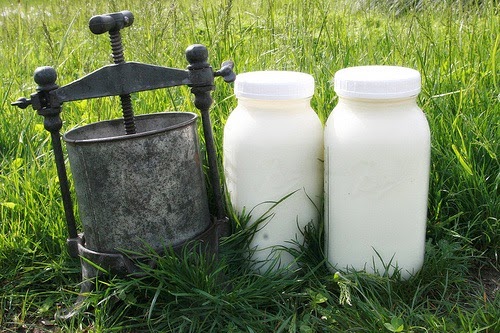
Photos: Evan and Rachel of Boondockers Farm; raw milk from Cast Iron Farm; manure digester from Farm Energy Images.
Wednesday, January 21, 2015
Your Food, Your Legislature: Opening Salvos
This blog is about my ongoing journey to discover the connections between what's going on in the field and what I put on my table. It took me awhile to realize part of that road makes a detour through the halls of the Capitol building in Salem. In other words, the decisions that our elected officials make about agriculture in Oregon directly affect what I'm going to feed my family, whether I buy it at the farmers' market or the grocery store.
With the opening of the 2015 regular session of the state legislature, I thought it might be helpful to sit down with Ivan Maluski, the Director of Friends of Family Farmers, an organization working to promote and protect socially responsible agriculture in Oregon, and get the bullet points on what's he's paying attention to this session.
Senate Bill 207: Authorizes the Oregon Department of Agriculture to establish control areas to allow for the regulation of genetically engineered crops to prevent conflicts with growers of non-GMO crops.
The ability of communities to make decisions about their local food systems as well as assuring farmers that the integrity of their crops is protected is at the center of this bill. The federal system for regulating genetically modified organisms (GMOs) is an "outdated patchwork" according to Maluski, who said that protecting non-GMO crops is a hot topic nationally. He added that no other state has taken a leadership position on this issue, and doing so would put Oregon at the forefront of the debate.
The bill basically gives the ODA the authority to establish legally binding isolation distances between GMO and non-GMO crops, necessary because pollen and seed from GMO crops can potentially contaminate fields of non-GMO crops. It's clear that Oregon industries like organic farms, organic seed producers and conventional vegetable growers can be potentially devastated by contamination from GMO crops.
For instance, last November the Salem Statesman Journal reported that Monsanto Co. reached a $2.4 million settlement with Pacific Northwest wheat farmers who sued after unapproved genetically modified wheat was discovered growing in Eastern Oregon. According to the article, the discovery of the wheat had prompted Japan and South Korea to temporarily suspend some wheat orders, a disastrous situation in any industry.
* * *
House Bill 2598: Prohibits the use of medically important antibiotics on healthy food-producing animals for non-therapeutic purposes such as growth promotion and disease prevention. Requires documentation of reporting of antibiotic use in large concentrated animal feeding operations in Oregon.
Simply put, this bill says that large factory farms will only be able to use antibiotics on sick animals. Currently, concentrated animal feeding operations (CAFOs) routinely use antibiotics on healthy animals to promote faster growth and for disease prevention (rather than treatment when an animal is actually sick). OSPIRG is currently taking the lead in this effort, positioning it as an important public health issue, since overuse of antibiotics in food-producing animals—meat animals in particular—is causing existing antibiotics used to combat human illness to lose their effectiveness. A prominent example of this was the outbreak of antibiotic-resistant salmonella traced to Foster Farms chicken that sickened hundreds across the country in 2014.
* * *
Senate Bill 204: Establishes a new Working Forests and Farms Advisory Program to provide low interest loans, loan guarantees and grants to help maintain or restore conservation benefits on working forests and farms.
In essence this bill would provide loans, loan guarantees and grants to keep existing farmland in production and encourage farmers to pass their land on to a new generation of farmers rather than convert farmland to non-farm uses. Considering the average age of a farmer in Oregon is 58, it's critical for the continuation of our local food supply to keep farmland in production and provide avenues for new farmers to get onto the land.
* * *
Other issues that may come up this session are:
- Establishing pilot projects to give Supplemental Nutrition Assistance Program (SNAP, formerly known as food stamps) recipients regular access and incentives to purchase fresh fruits and vegetables.
- Creating incentive areas and reducing roadblocks to the development of urban agriculture enterprise zones on underutilized city lots.
- Promoting agritourism through liability protections for farmers who want to offer public access to their property.
- Allowing farms to advertise raw milk sold on their farms. Currently farms are not even allowed to put that information on their websites.
Click here for more information on the bills that are coming up before the Legislature this session. Find your legislators and let them know what you think. And stay tuned for further updates as the 2015 session progresses!
Read the other posts in this series, The Good, The Bad and the Ugly, The Personal Gets Political , The Fight Takes Shape and Hanging in the Balance.
Photos of Oregon Capitol building and CAFO from Wikipedia.
Thursday, August 11, 2011
Less Stress, Better Lives
It was a case of unintended consequences.
The Bush recession, in addition to throwing millions of middle class Americans out of work and decimating retirement funds, made life much harder for small farmers who depended on selling the meat from the animals they raised. That's because many smaller, local slaughterhouses closed, leaving farmers with no choice but to truck their animals hours away to a larger slaughter facility. Catering to large producers, small farmers were often crowded out of line at these large facilities.
Not only did they have to spend more time getting their animals to the slaughterhouse, high gas prices made it prohibitively expensive. As outlined in the video above, a group of farmers in Pierce County, Washington, got together and developed their own solution: a USDA-approved mobile slaughter unit.
Note: No animals are shown being killed in the video above.
Labels:
farmers,
mobile slaughter,
pbs newshour,
pierce county,
slaugher
Subscribe to:
Posts (Atom)