Showing posts with label Bette Sinclair. Show all posts

Sunday, October 25, 2015

Marie Equi: Hero of Oregon's Radical Past


I first heard of Marie Equi, one of the first woman physicians in Oregon and a radical activist, from my friend Bette Sinclair, who lives in Equi's former home in the Goose Hollow neighborhood. Chagrined that I'd never heard of this incredibly accomplished and important figure in our state's history, and eager to find out more, I was glad to hear that a biography was being published by OSU Press. My friend, writer and editor Angie Jabine, recently wrote a review of the book for Oregon Arts Watch.

Born in 1872 to an East Coast, working-class immigrant family, Marie Diana Equi seemed destined to become just another New Bedford millworker. But by 1891 she was homesteading with her Wellesley-educated girlfriend near The Dalles, where she made national headlines after publicly horsewhipping a corrupt school superintendent.
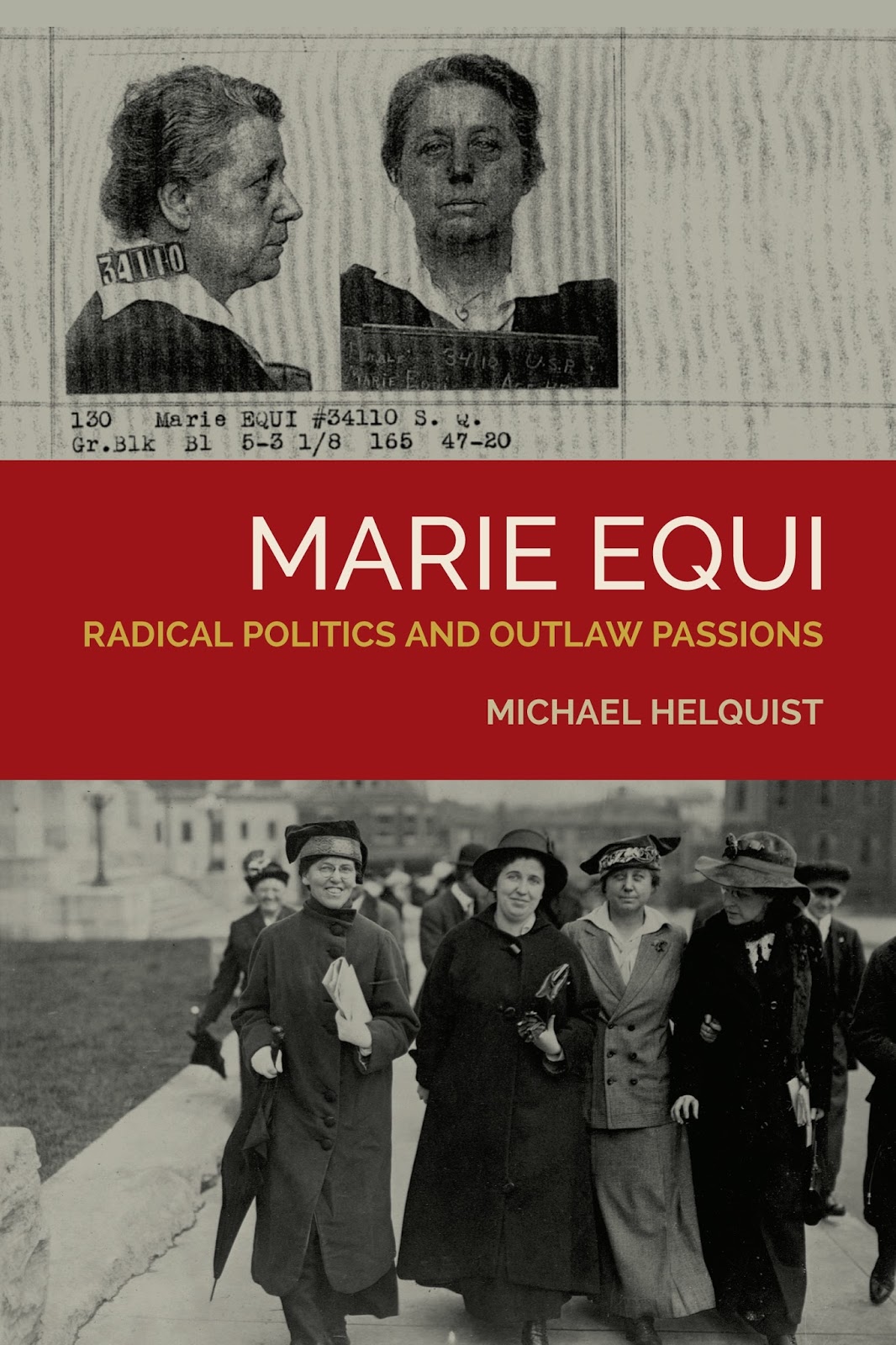
A new biography of this remarkable Oregonian.

As one of Oregon’s first female physicians, Equi led an acclaimed relief mission to San Francisco in the wake of the 1906 earthquake and fire. She also performed then-illegal abortions, and she was arrested with Margaret Sanger in 1916 for distributing birth control pamphlets. She led workers’ protests and strikes and called herself a Radical Socialist and anarchist. She was convicted of sedition for opposing U.S. involvement in World War I and served nearly 10 months in San Quentin. On returning to Portland, she cohabited with the labor activist—and future Communist Party USA chairwoman—Elizabeth Gurley Flynn.

Dr. Marie Equi.

You’d think a figure as memorable as Marie Equi would be at least as familiar to Oregon history lovers as, say, Sacajawea, John Reed, or Abigail Scott Duniway. One of Equi’s contemporaries called her “the most interesting woman that ever lived in this state, certainly the most fascinating, colorful, and flamboyant.” But up until now, she seems to have been erased from the record, her story primarily scattered among old newspaper clippings and unpublished oral histories by those who befriended her in her later years.

A vivid new biography from Oregon State University Press [titled Marie Equi: Radical Politics and Outlaw Passions] ought to change all that. In a thoughtful yet page-turning account of Equi’s life and times, social historian Michael Helquist has portrayed not just a remarkably gutsy woman but also an era of street-level activism that makes today’s Occupy protests look like a barn dance.

Read the rest of this terrific review and find out how the U.S. Justice Department's surveillance of Equi's "seditious" activities became a main source for biographic information about her.

Photo at top is from the Oregon Historical Society that is captioned, in part, "Dr. Marie Equi and her adopted daughter Mary outside of the Federal Courthouse on the day of Dr. Equi's unsuccessful appeal, October, 1920."

Tuesday, November 13, 2012

Bluehour: Rocking the Noon Hour


I miss the lunches I used to have with my mother in the little mezzanine lunch spot in the Lipman Wolfe department store downtown. When I was a child, coming "into town" involved wearing a pretty dress, white anklets, black patent leather Mary Janes and even white cotton gloves—it was, after all, the era of Jackie Kennedy and her pillbox hat. I'd order exotic fare like chicken salad with slivered almonds, or little tea sandwiches that I'd eat half-distractedly as I looked over the railing at the shoppers on the floor below.

The dining room at Meier and Frank has a similar hold on my memory, with its quiet, plush draperies, the older women sitting at "their" tables, the heavy (i.e. real) silverware, the solicitous staff who'd worked there for decades. Neither place had a menu that rose much above old school favorites like meatloaf or creamed vegetables, but they seemed fancy, even rich, to my small-town girl self.

Crab cake sandwich.

Both are now relegated to the once-upon-a-time category, but once in awhile I find myself wanting to stray from the of-the-moment hipster hangouts and cafés and go someplace with a quiet grace, lovely service and, please god make it so, terrific food. And no place in town fits that bill better than Bluehour, Bruce Carey's flagship that in the last year or so has been experiencing a renaissance under chef Thomas Boyce.

The new winter menu was being featured when my friend Bette Sinclair invited a group there for lunch recently, including a rich and velvety celery root soup, a strikingly fresh trout salad on a bed of greens and winter chicory, and a crunchy and completely filling crab cake sandwich with what looked like a whole avocado sliced in it. A star was Boyce's housemade tortellini lightly sauced with fresh tomatoes and herbs, the pasta perfectly tender and with a creamy, luscious filling that oozed out when bitten.

Trout salad.

Not to brag, but I won the jackpot when I ordered the potato gnocchi with rabbit sugo. Gnocchi, when made correctly, is often described as "pillowy." But I'm here to say that pillows are a harsh metaphor for what Boyce is making in his kitchen. His gnocchi are like little clouds, the white, fluffy kind that you see floating in perfectly blue summer skies. They practically evaporate, melting into the sauce to make a creamy mouthful.

Boyce stopped by the table to chat, and was kind enough to spill the beans on his method: cook the potatoes—always russets, he said—until they're just a bit overdone, which means they'll be a little drier. They should be riced while they're still warm, then allowed to cool to room temp. At that point add the flour. If they're too warm when the flour is added, they get clumpy; if too cool they absorb too much moisture from the air. Above all, don't work them too much. That's it.

Very old school, but very special. And most definitely a place to take your (well-behaved) child or niece or nephew to lunch. It may well be a memory they'll carry with them for decades.